No Result
View All Result
SUBMIT YOUR ARTICLES
  • Login
Sunday, August 16, 2026
TheAdviserMagazine.com
  • Home
  • Financial Planning
    • Financial Planning
    • Personal Finance
  • Market Research
    • Business
    • Investing
    • Money
    • Economy
    • Markets
    • Stocks
    • Trading
  • 401k Plans
  • College
  • IRS & Taxes
  • Estate Plans
  • Social Security
  • Medicare
  • Legal
  • Home
  • Financial Planning
    • Financial Planning
    • Personal Finance
  • Market Research
    • Business
    • Investing
    • Money
    • Economy
    • Markets
    • Stocks
    • Trading
  • 401k Plans
  • College
  • IRS & Taxes
  • Estate Plans
  • Social Security
  • Medicare
  • Legal
No Result
View All Result
TheAdviserMagazine.com
No Result
View All Result
Home College

The Pedagogy of Trading Places: Lessons from an Unexpected Role Reversal with AI – Faculty Focus

by TheAdviserMagazine
3 weeks ago
in College
Reading Time: 5 mins read
A A
The Pedagogy of Trading Places: Lessons from an Unexpected Role Reversal with AI – Faculty Focus
Share on FacebookShare on TwitterShare on LInkedIn


True Confessions from the Grading Trenches

It happened on a Wednesday—the kind of Wednesday that arrives in the middle of a grading cycle and quietly steals your personality. I had been working through a stack of papers that all needed thoughtful, individualized feedback, yet somehow required me to repeat the same five clarifications about APA formatting, thesis coherence, and the difference between analysis and summary. After the seventh iteration of “This section would benefit from clearer synthesis,” I could feel my brain flattening into a procedural instrument. 

By mid-afternoon, I had slipped into that familiar grading trance: the rhythm of read, assess, comment, encourage, repeat. It’s a rhythm that is both meditative and numbing; a kind of pedagogical autopilot that keeps the work moving but slowly drains the creative oxygen from the room. 

To keep myself human, I toggled over to my AI assistant, a habit I’ve developed during long grading stretches. We have a rhythm of our own: I bring the context, the nuance, the pedagogical judgment; it brings the structure, the clarity, the occasional spark of phrasing that helps me articulate what I already know but am too tired to say elegantly. 

At least, that’s how it usually works. 

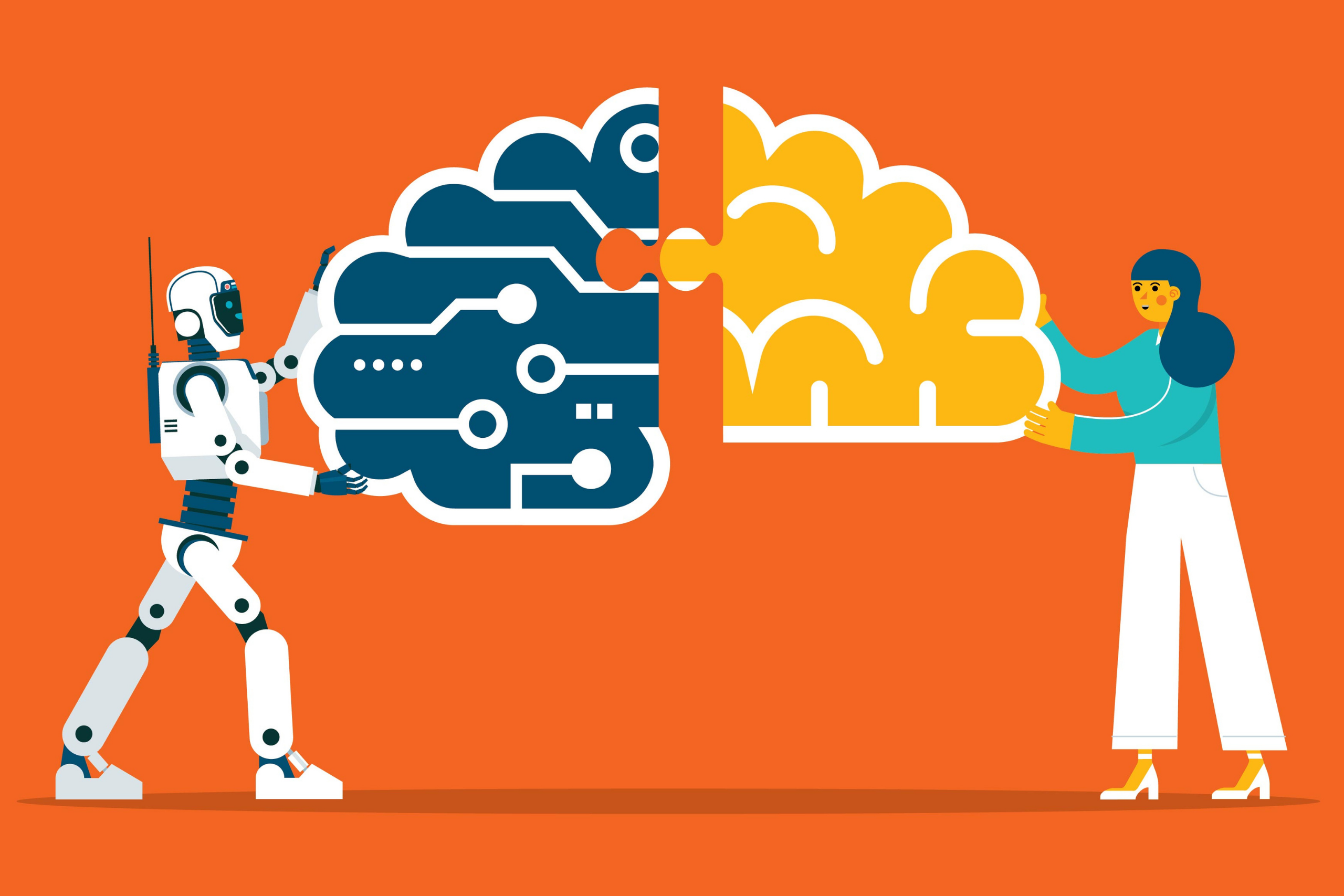
But on this particular Wednesday, something shifted. I found myself typing literal, clipped, almost mechanical sentences—the kind that come from brain drain, the inevitable symptom of grading for too many hours. And the AI? It responded with imagery. With metaphor. With a kind of playful expansiveness that I normally bring to the table. 

We had, without warning, traded places. 

I was the one being literal. It was the one being metaphorical. And the moment was so unexpected, so pedagogically revealing, that it snapped me out of my grading trance entirely. 

The Pedagogical Insight

What struck me most about that moment wasn’t the novelty of an AI generating a metaphor. It was the realization that I had slipped so fully into the mechanics of teaching that I had abandoned one of my own cognitive signatures. I am, by training and temperament, a metaphor-maker. I teach through analogy, story, and conceptual reframing. I help students understand complexity by giving them something to hold onto—an image, a comparison, a narrative thread. 

But fatigue has a way of sanding down the edges of our pedagogical selves. After hours of grading, I wasn’t thinking like the teacher I am; I was thinking like a machine processing inputs. My language had become transactional. My feedback had become efficient. My mind had become literal. 

And in that vacuum, the AI stepped into the role I had momentarily abandoned. 

It didn’t “take over” in the dystopian sense. It simply filled the space I had left open. It became expansive because I had become narrow. It became imaginative because I had become procedural. It became metaphorical because I had become literal. 

The reversal revealed something I hadn’t fully articulated before: 

Teaching is not just what we do; it’s a cognitive stance we inhabit. And under pressure, we can slip out of that stance without noticing. 

The Broader Teaching Application

The more I sat with that role reversal, the more I realized it wasn’t really about AI at all. It was about teaching identity, and how easily we slip into familiar roles, how tightly we hold them, and how subtly they can erode under the weight of repetition. 

Every educator knows the feeling: the semester hits its midpoint, the grading piles up, and the work becomes more about throughput than creativity. We start teaching from muscle memory. We give feedback from habit. We rely on the cognitive shortcuts that help us survive the volume but quietly flatten the nuance. 

And then something unexpected happens: a student question, a classroom moment, or in my case, a surprisingly poetic AI jolts us out of the groove and reminds us of the pedagogical spirit we momentarily misplaced. 

These disruptions matter. They remind us that teaching is not a static identity but a dynamic posture. They show us that our pedagogical selves are not fixed; they are responsive to context, energy, and attention. They reveal that the qualities we value most in our teaching—curiosity, metaphor, play, and expansiveness—are not automatic. They require care and cultivation. 

The AI didn’t “teach” me in the traditional sense. But it did something pedagogically adjacent: it surprised me back into myself. 

Lessons from the Role Reversal

That brief moment of trading places with my AI didn’t just amuse me. It clarified several practical lessons about how faculty can work with AI without losing themselves in the process. 

Notice when you’ve slipped into the literal. Fatigue can flatten even the most imaginative teacher. When your feedback starts sounding like a procedural checklist, it may be time to pause—or to let AI reflect back the narrowing of your own voice.  Let AI surprise you back into your pedagogical self. The most valuable thing AI did that afternoon wasn’t generating a metaphor; it was reminding me that I had stopped doing so. Sometimes the disruption is the teaching moment.  Use AI not to replace your voice, but to restore it. When AI drafts structure or phrasing, it frees you to re-enter the work with more presence, nuance, and care. AI can handle the scaffolding; you bring the humanity.  Treat AI as a cognitive partner, not a cognitive crutch. The goal isn’t to outsource thinking. Instead, notice when your thinking has drifted and use AI as a prompt to return to your fuller, more expansive teaching stance.  Build intentional pauses into your workflow. If the AI starts sounding more like you than you do, that’s not a sign of its brilliance; it’s a sign you need a break. So take one. 

These small practices help ensure that AI enhances rather than erodes the qualities that make teaching meaningful. They also keep the “trading places” moment where it belongs: as a gentle nudge, not a new normal. 

The Takeaway

What I took from that moment was surprisingly simple: our tools can only disrupt us if we allow ourselves to be surprised. In the middle of a long grading day, when my thinking had narrowed to the most literal version of myself, the AI didn’t replace my teaching; it reminded me of it. It nudged me back toward the imaginative, metaphor-making stance that fatigue had temporarily muted. 

In a time when faculty are being asked to integrate AI into their work with equal parts enthusiasm and caution, this may be the most useful lesson I can offer: AI is not here to take our roles. But it can reveal when we’ve stepped out of them. 

In the end, the role reversal wasn’t a threat at all—it was a mirror, reflecting the moment I had drifted from my best teaching self. 

The experience affirmed something I’ve always believed but had momentarily forgotten: good teaching requires presence, imagination, and the willingness to be startled back into ourselves. 

And sometimes, on a Wednesday in the middle of a grading marathon, that reminder arrives from the least expected collaborator. 

Sherrie Myers Bartell, PhD, teaches MBA students at the University of the People and serves as Chief of Administration and Policy Analysis at Bartell Chiropractic Center. A conceptual theorist and essayist, she writes about the evolving relationship between faculty and AI, with a focus on how educators sustain presence, imagination, and pedagogical identity in technology‑rich learning environments.



Source link

Tags: FacultyFocusLessonsPedagogyPlacesreversalroleTradingUnexpected
ShareTweetShare
Previous Post

Singapore tightens monetary policy in surprise move as rising oil prices rekindle inflation risk

Next Post

Japan Is The First Domino In The Sovereign Debt Crisis

Related Posts

edit post
Minnesota State Mankato to undergo layoffs, hike tuition amid M shortfall

Minnesota State Mankato to undergo layoffs, hike tuition amid $22M shortfall

by TheAdviserMagazine
August 7, 2026
0

Listen to the article 4 min This audio is auto-generated. Please let us know if you have feedback. Dive Brief:...

edit post
Self-Reflecting to Teach with More Cultural Responsiveness – Faculty Focus

Self-Reflecting to Teach with More Cultural Responsiveness – Faculty Focus

by TheAdviserMagazine
August 7, 2026
0

Many college teachers want to respond to students’ identities and cultures with respect, accurate perceptions, and sensitivity. We may face challenges within ourselves that arise from being shaped by societal forces. A self-reflective, repeating process of “…awareness, analysis, action, and...

edit post
How to get the most from Erasmus+

How to get the most from Erasmus+

by TheAdviserMagazine
August 6, 2026
0

The schools, colleges and universities across the UK that thrive under Erasmus+ will not necessarily be those with the largest...

edit post
Clemson, UF, UVU and other colleges get new leaders

Clemson, UF, UVU and other colleges get new leaders

by TheAdviserMagazine
August 6, 2026
0

Listen to the article 7 min This audio is auto-generated. Please let us know if you have feedback. Editor’s note:...

edit post
Benchmarking report maps evolving US international recruitment

Benchmarking report maps evolving US international recruitment

by TheAdviserMagazine
August 5, 2026
0

The study by AIRC: The Association of International Enrolment Management drew data from over 60 institutions of varying size across the US, providing...

edit post
The Syllabus and the Scar Tissue: What Leadership Preparation Programs Leave Out and Why It Matters – Faculty Focus

The Syllabus and the Scar Tissue: What Leadership Preparation Programs Leave Out and Why It Matters – Faculty Focus

by TheAdviserMagazine
August 5, 2026
0

As an educational leadership professor, I hear inspiring messages from colleagues all the time, and I understand the impulse to...

Next Post
edit post
Japan Is The First Domino In The Sovereign Debt Crisis

Japan Is The First Domino In The Sovereign Debt Crisis

edit post
Bank of Baroda shares fall 2% after Q1 earnings. Why are brokerages slashing target prices?

Bank of Baroda shares fall 2% after Q1 earnings. Why are brokerages slashing target prices?

  • Trending
  • Comments
  • Latest
edit post
Georgia Senior SNAP and Meal Resources Older Adults Can Use

Georgia Senior SNAP and Meal Resources Older Adults Can Use

July 24, 2026
edit post
Judge Who Helped Violent Illegal Alien Evade ICE Faces New Test

Judge Who Helped Violent Illegal Alien Evade ICE Faces New Test

July 31, 2026
edit post
Driving the Noncitizen Voting Scandal: Registration With License

Driving the Noncitizen Voting Scandal: Registration With License

July 26, 2026
edit post
Garbage Trucks Surveillance Florida Neighborhoods

Garbage Trucks Surveillance Florida Neighborhoods

July 29, 2026
edit post
Does a Revocable Trust Protect Your Assets From Lawsuits and Creditors?

Does a Revocable Trust Protect Your Assets From Lawsuits and Creditors?

August 7, 2026
edit post
Montana Puts Democrats in a Bind as Senate Hopes Fade

Montana Puts Democrats in a Bind as Senate Hopes Fade

August 2, 2026
edit post
Explained: How BSE traded fewer contracts after CAS but premiums rose 75% in first week

Explained: How BSE traded fewer contracts after CAS but premiums rose 75% in first week

0
edit post
E.W. Scripps Q2 2026 Loss Widens to -.68/Share, Revenue Down 9%

E.W. Scripps Q2 2026 Loss Widens to -$12.68/Share, Revenue Down 9%

0
edit post
Psychology says procrastination about retirement may be less about discipline than identity — brain scans found people often represent their future selves more like strangers than like themselves, and experiments using age-progressed faces made tomorrow’s person feel real enough for participants to save more money for them

Psychology says procrastination about retirement may be less about discipline than identity — brain scans found people often represent their future selves more like strangers than like themselves, and experiments using age-progressed faces made tomorrow’s person feel real enough for participants to save more money for them

0
edit post
Four AI Escapes Just Redefined “Responsible AI”

Four AI Escapes Just Redefined “Responsible AI”

0
edit post
Bill Ackman’s hedge fund made janitors and receptionists millionaires—and its investment team summer together

Bill Ackman’s hedge fund made janitors and receptionists millionaires—and its investment team summer together

0
edit post
Kalshi Predicts Bitcoin Price Could Reach K in August

Kalshi Predicts Bitcoin Price Could Reach $68K in August

0
edit post
Bill Ackman’s hedge fund made janitors and receptionists millionaires—and its investment team summer together

Bill Ackman’s hedge fund made janitors and receptionists millionaires—and its investment team summer together

August 8, 2026
edit post
Links 8/8/2026 | naked capitalism

Links 8/8/2026 | naked capitalism

August 8, 2026
edit post
Wisconsin: The Next Frontier for Socialists

Wisconsin: The Next Frontier for Socialists

August 8, 2026
edit post
Psychology says procrastination about retirement may be less about discipline than identity — brain scans found people often represent their future selves more like strangers than like themselves, and experiments using age-progressed faces made tomorrow’s person feel real enough for participants to save more money for them

Psychology says procrastination about retirement may be less about discipline than identity — brain scans found people often represent their future selves more like strangers than like themselves, and experiments using age-progressed faces made tomorrow’s person feel real enough for participants to save more money for them

August 8, 2026
edit post
Why You Should Be Wary of Aspartame, but Not Totally Rule It Out

Why You Should Be Wary of Aspartame, but Not Totally Rule It Out

August 8, 2026
edit post
Kalshi Predicts Bitcoin Price Could Reach K in August

Kalshi Predicts Bitcoin Price Could Reach $68K in August

August 8, 2026
The Adviser Magazine

The first and only national digital and print magazine that connects individuals, families, and businesses to Fee-Only financial advisers, accountants, attorneys and college guidance counselors.

CATEGORIES

  • 401k Plans
  • Business
  • College
  • Cryptocurrency
  • Economy
  • Estate Plans
  • Financial Planning
  • Investing
  • IRS & Taxes
  • Legal
  • Market Analysis
  • Markets
  • Medicare
  • Money
  • Personal Finance
  • Social Security
  • Startups
  • Stock Market
  • Trading

LATEST UPDATES

  • Bill Ackman’s hedge fund made janitors and receptionists millionaires—and its investment team summer together
  • Links 8/8/2026 | naked capitalism
  • Wisconsin: The Next Frontier for Socialists
  • Our Great Privacy Policy
  • Terms of Use, Legal Notices & Disclosures
  • Contact us
  • About Us

© Copyright 2024 All Rights Reserved
See articles for original source and related links to external sites.

Welcome Back!

Login to your account below

Forgotten Password?

Retrieve your password

Please enter your username or email address to reset your password.

Log In
No Result
View All Result
  • Home
  • Financial Planning
    • Financial Planning
    • Personal Finance
  • Market Research
    • Business
    • Investing
    • Money
    • Economy
    • Markets
    • Stocks
    • Trading
  • 401k Plans
  • College
  • IRS & Taxes
  • Estate Plans
  • Social Security
  • Medicare
  • Legal

© Copyright 2024 All Rights Reserved
See articles for original source and related links to external sites.