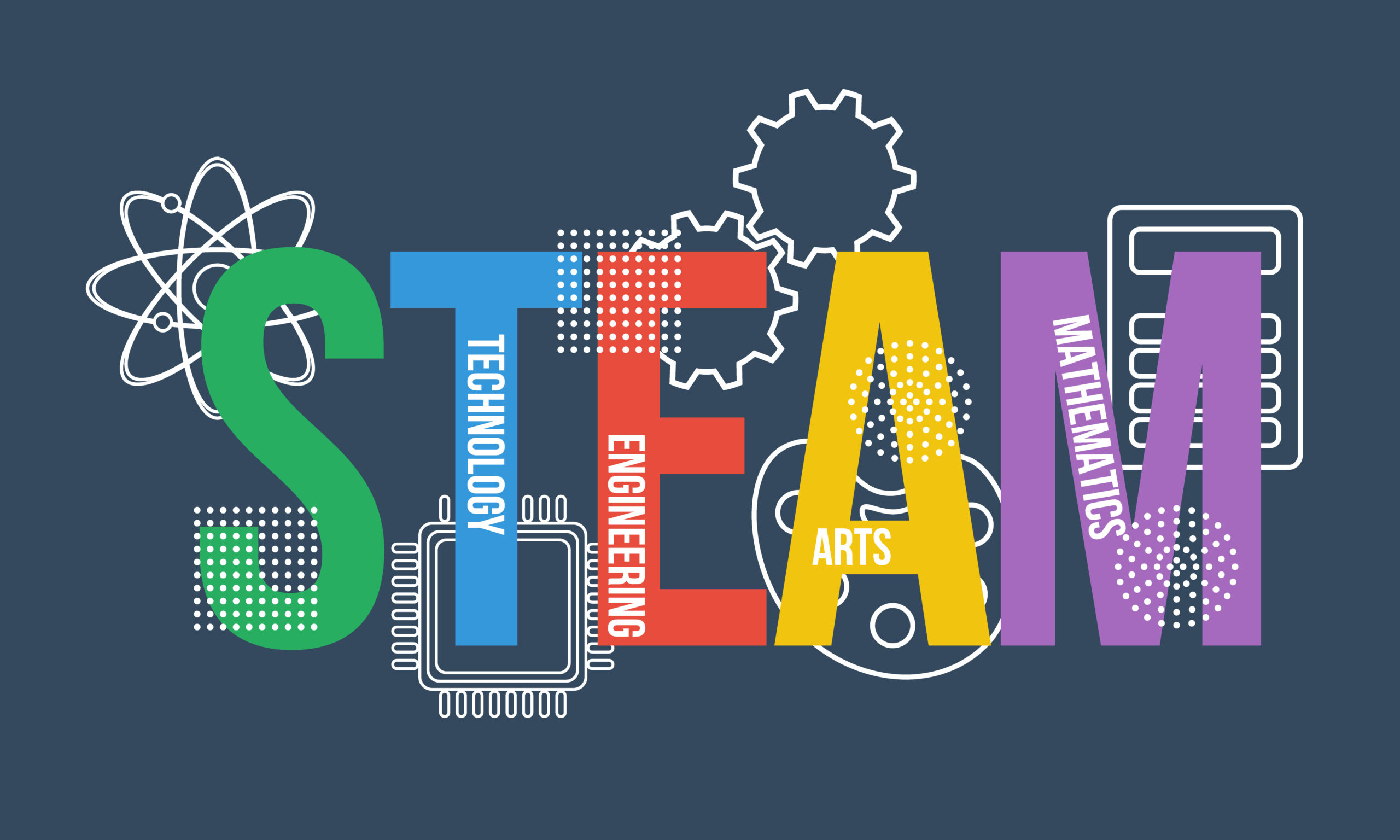
Teaching in the 21st century is a far cry from the “sage on the stage” model of years past. Today, teachers act more like engineers of learning, crafting experiences that prepare students for complex, real-world challenges (Barbuceanu, 2020). In elementary classrooms, the STEAM approach science, technology, engineering, arts, and mathematics, offers a framework for integrating multiple disciplines in ways that are meaningful, engaging, and future-focused. But translating theory into practice can be challenging. Effective strategies for course design, active learning, online teaching, diversity and inclusion, and teaching with technology, grounded in STEAM education principles, are required.
In the rapidly evolving landscape of higher education, effective teaching extends beyond the mere delivery of content. Today’s teachers are expected to design courses that foster engagement, critical thinking, collaboration, and creativity while integrating technology and promoting diversity and inclusion. Drawing from both theoretical foundations, such as constructivist learning theories and Puentedura’s (2006) SAMR (Substitution, Augmentation, Modification, Redefinition) model for technology integration, and practical classroom strategies, the following guidance provides actionable advice for teachers across disciplines.
Strategies for Course Design, Active Learning, Technology, and Inclusive Teaching
Effective STEAM course design begins with clear, student-centered learning outcomes. To effectively apply STEAM education, teachers need to switch from traditional teaching methods to more student-centered methods where learners play a leading role (Kalogiannakis et al., 2021). Think less about covering content and more about the skills students will use to solve problems. Start with essential questions like: “How can we use engineering and art to address real-world environmental challenges?” or “What patterns in math help us understand the natural world?” Align lessons, activities, and assessments with these outcomes, incorporating interdisciplinary connections wherever possible. Active learning strategies are crucial for student engagement and knowledge retention. Techniques such as think-pair-share, concept mapping, and problem-based learning encourage students to process and apply information collaboratively. Small-group discussions allow for peer-to-peer learning, which is particularly effective in courses requiring critical thinking and synthesis of ideas.
Encouraging participation requires creating a classroom climate where all voices are valued. Setting expectations for engagement early, using low-stakes participation activities, and providing structured formats such as discussion boards or breakout groups in online or hybrid courses can foster inclusivity. Teachers should also be mindful of varied communication styles; some students participate more effectively in writing than speaking, so offering multiple avenues for input ensures broader engagement.
Online Teaching and Technology Integration
Technological innovations have enabled new possibilities to support teaching and learning practices (Valtonen et al., 2022). Online and hybrid learning environments require thoughtful design to maintain engagement. Following the SAMR model, teachers can leverage technology in ways that enhance or transform learning. At the substitution level, digital tools replace traditional formats, for instance, posting notes online instead of distributing printed handouts. At the augmentation level, technology improves the task, such as using interactive simulations to reinforce concepts. Modification and redefinition levels involve more transformative integration, including collaborative digital projects, multimedia presentations, and virtual labs that would be impossible in a traditional setting (Hamilton, 2016).
Effective online instruction also relies on communication and structure. Clear instructions, consistent navigation, and predictable schedules reduce cognitive load and student frustration. Incorporating discussion boards, interactive polls, and collaborative documents encourages active participation and peer-to-peer learning. Teachers should also consider accessibility, providing closed captions, transcripts, and materials in multiple formats to support diverse learners.
Inclusive Teaching
Inclusive teaching practices are essential for fostering equity and engagement. This includes recognizing and valuing students’ diverse backgrounds, experiences, and perspectives. Teachers can incorporate culturally responsive pedagogy by integrating diverse voices into course content, offering flexible assignment options, and facilitating discussions that respect differing viewpoints.
Creating inclusive classrooms also involves proactive strategies for participation. Structured turn-taking, anonymous polling, and small-group discussions allow students who might be marginalized or less confident to contribute meaningfully (Norman, 2020). Teachers should reflect on potential biases in assessment design and grading to ensure fairness and transparency.
Beyond course management systems and presentation tools, teachers can harness technology to enhance critical thinking, collaboration, and creativity. Examples include:
Digital concept mapping tools for organizing and visualizing ideas. Collaborative platforms like Google Suite or Microsoft Teams for group projects. Interactive simulations and virtual labs to model complex systems. Multimedia production tools for student-created presentations or portfolios.
Teachers should remain mindful of the pedagogical purpose behind technology use; technology should serve learning goals rather than dominate instructional design.
Conclusion
Effective STEAM education requires a blend of well-structured course design, active learning strategies, technology integration, inclusive practices, and assessments. Teachers who prioritize student-centered learning, leverage technology thoughtfully through frameworks such as SAMR, and cultivate an inclusive and reflective classroom culture are best positioned to engage students and promote deep, transferable learning. Implementing these strategies helps prepare learners not only to succeed academically but also to navigate complex real-world challenges, fostering skills that extend beyond the classroom. Developing students’ higher-order thinking skills requires activities that challenge them to analyze, evaluate, and synthesize information. Problem-based learning, case studies, debates, and design challenges are effective approaches. Teachers can further encourage creativity by allowing students to select project formats, integrate multiple disciplines, or pursue self-directed inquiries.
Encouraging a growth mindset enhances students’ willingness to take risks and learn from mistakes. Teachers can model reflective thinking, provide opportunities for iterative work, and celebrate process as well as product, reinforcing resilience and curiosity. By emphasizing both theoretical understanding and practical applications, teachers can create dynamic and impactful learning experiences. The integration of technology, inclusive practices, and active learning strategies ensures that teaching remains relevant, engaging, and equitable, equipping students with the knowledge, skills, and dispositions necessary for lifelong learning and success.
Dr. Donna Graham is a university professor and dissertation chair. Dr. Graham holds a BA in Psychology and Education from Rosemont College, an MS in Counseling from Villanova University, an MEd in Educational Technology from Rosemont College and a Doctorate in Philosophy from Capella University.
Dr. Saeda Hammad earned her PhD in General Psychology from Grand Canyon University. Dr. Hammad currently serves as the Director of the Talented and Gifted Program at a STEAM-focused private school.
References
Bărbuceanu, C. D. (2020). Teaching the digital natives. Revista De Stiinte Politice, (65), 136–145.
Hamilton, E. R., Rosenberg, J. M., & Akcaoglu, M. (2016). The substitution augmentation modification redefinition (SAMR) model: A critical review and suggestions for its use. TechTrends, 60, 433–441.
Kalogiannakis, M., Papadakis, S., & Zourmpakis, A. I. (2021). Gamification in science education. A systematic review of the literature. Education Sciences, 11(1), 22.
Norman, T. R. (2020). Creating inclusive classrooms through culturally responsive pedagogy. Rowan University.
Puentedura, R. (2006). Transformation, technology, and education [Blog post]. Retrieved from http://hippasus.com/resources/tte/.
Valtonen, T., López-Pernas, S., Saqr, M., Vartiainen, H., Sointu, E. T., & Tedre, M. (2022). The nature and building blocks of educational technology research. Computers in Human Behavior, 128, 107123.