Listen to the article
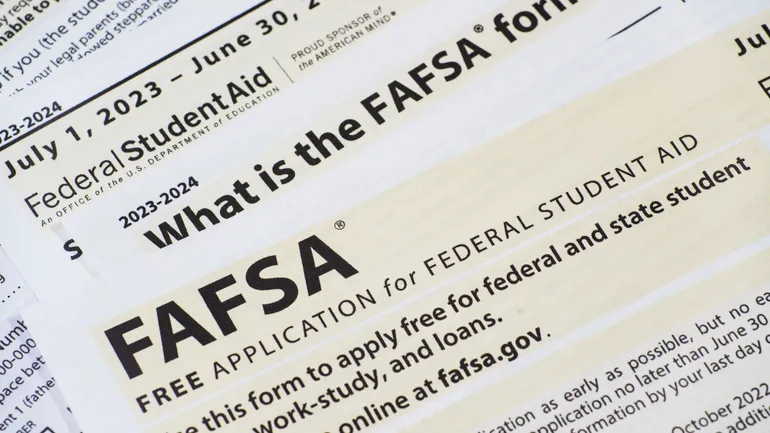
The U.S. Department of Education has launched a new disclosure feature that warns students who fill out the Free Application for Federal Student Aid if they’re interested in colleges whose graduates have relatively low earnings, the agency said Monday.
“Families deserve a clearer picture of how postsecondary education connects to real-world earnings, and this new indicator will provide that transparency,” U.S. Education Secretary Linda McMahon said in a Monday statement. “Not only will this new FAFSA feature make public earnings data more accessible, but it will empower prospective students to make data-driven decisions before they are saddled with debt.”
When students fill out the FAFSA, they list colleges in which they’re interested. Under the new policy, once they complete the form, the Education Department will show first-year undergraduate students a “lower earnings” disclosure if one or more of those colleges has relatively poor student financial outcomes.
Students submitting the form digitally will see a yellow warning box notifying them that some of their selected colleges show “lower earnings,” stating: “Students graduating from some of the schools you selected don’t always earn more money than people with only a high school diploma.”
To determine this, the Education Department will compare the median earnings of a college’s students four years after graduation to the median earnings of high school graduates in the same state. For colleges that have a majority of out-of-state students, their graduates will be compared against the national median earnings of high school graduates.
The new notice uses information from the College Scorecard, a public database of colleges and their student outcomes.
When students click on their earnings disclosure, they will see earnings information for all the colleges they listed. They will then be able to either change which colleges they listed or leave their selections as-is. The warning does not impact whether colleges are eligible for federal student aid.
The new policy took effect Sunday.
“This indicator is designed to inform — not limit — student choices,” Nicholas Kent, Under Secretary of Education, said in a statement Monday. “It’s one additional resource students can use — alongside factors like cost, mission, location, and personal interests — to identify the path that best aligns with their goals.”