No Result
View All Result
SUBMIT YOUR ARTICLES
  • Login
Monday, July 27, 2026
TheAdviserMagazine.com
  • Home
  • Financial Planning
    • Financial Planning
    • Personal Finance
  • Market Research
    • Business
    • Investing
    • Money
    • Economy
    • Markets
    • Stocks
    • Trading
  • 401k Plans
  • College
  • IRS & Taxes
  • Estate Plans
  • Social Security
  • Medicare
  • Legal
  • Home
  • Financial Planning
    • Financial Planning
    • Personal Finance
  • Market Research
    • Business
    • Investing
    • Money
    • Economy
    • Markets
    • Stocks
    • Trading
  • 401k Plans
  • College
  • IRS & Taxes
  • Estate Plans
  • Social Security
  • Medicare
  • Legal
No Result
View All Result
TheAdviserMagazine.com
No Result
View All Result
Home College

The Pedagogy of Trading Places: Lessons from an Unexpected Role Reversal with AI – Faculty Focus

by TheAdviserMagazine
11 hours ago
in College
Reading Time: 5 mins read
A A
The Pedagogy of Trading Places: Lessons from an Unexpected Role Reversal with AI – Faculty Focus
Share on FacebookShare on TwitterShare on LInkedIn


True Confessions from the Grading Trenches

It happened on a Wednesday—the kind of Wednesday that arrives in the middle of a grading cycle and quietly steals your personality. I had been working through a stack of papers that all needed thoughtful, individualized feedback, yet somehow required me to repeat the same five clarifications about APA formatting, thesis coherence, and the difference between analysis and summary. After the seventh iteration of “This section would benefit from clearer synthesis,” I could feel my brain flattening into a procedural instrument. 

By mid-afternoon, I had slipped into that familiar grading trance: the rhythm of read, assess, comment, encourage, repeat. It’s a rhythm that is both meditative and numbing; a kind of pedagogical autopilot that keeps the work moving but slowly drains the creative oxygen from the room. 

To keep myself human, I toggled over to my AI assistant, a habit I’ve developed during long grading stretches. We have a rhythm of our own: I bring the context, the nuance, the pedagogical judgment; it brings the structure, the clarity, the occasional spark of phrasing that helps me articulate what I already know but am too tired to say elegantly. 

At least, that’s how it usually works. 

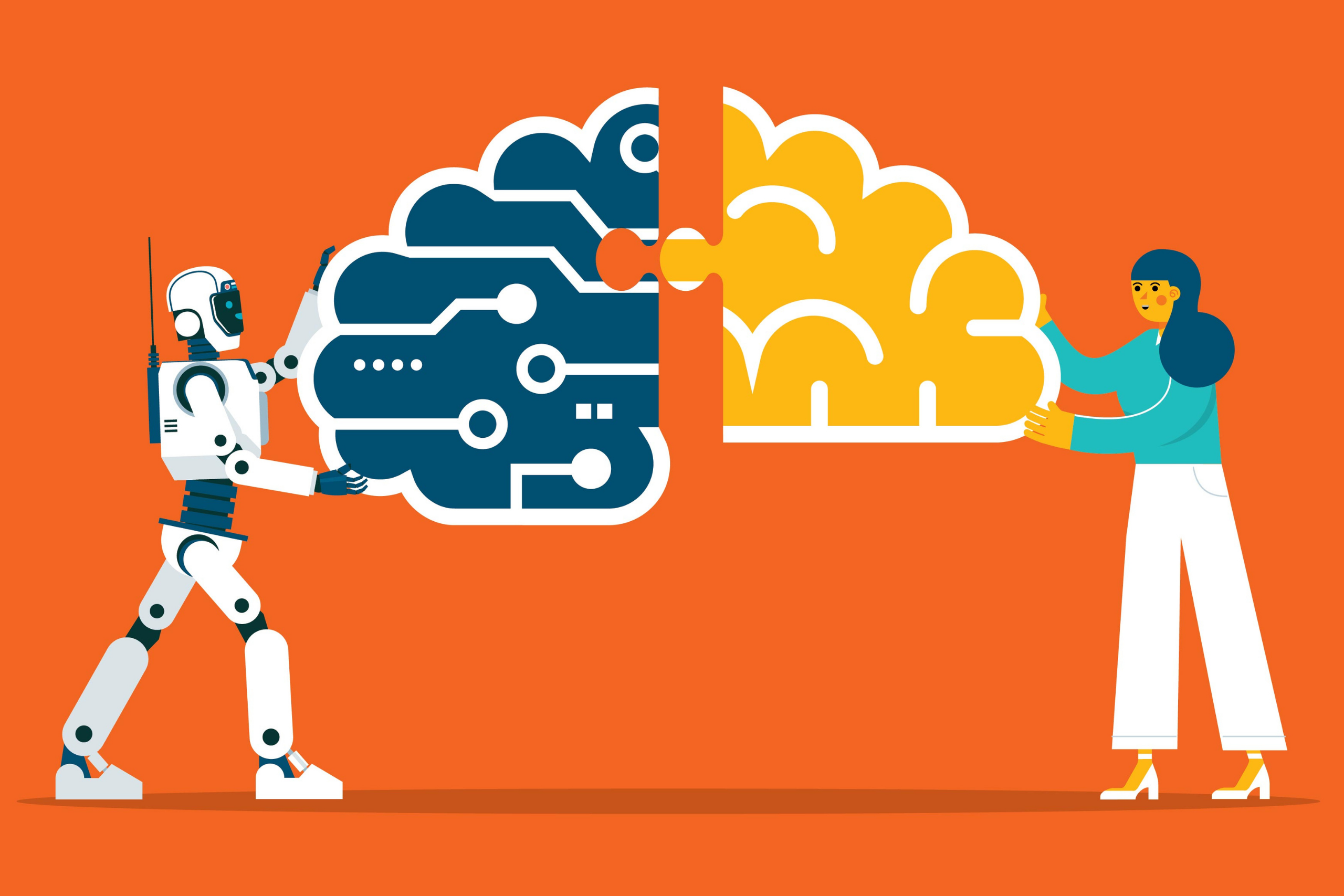
But on this particular Wednesday, something shifted. I found myself typing literal, clipped, almost mechanical sentences—the kind that come from brain drain, the inevitable symptom of grading for too many hours. And the AI? It responded with imagery. With metaphor. With a kind of playful expansiveness that I normally bring to the table. 

We had, without warning, traded places. 

I was the one being literal. It was the one being metaphorical. And the moment was so unexpected, so pedagogically revealing, that it snapped me out of my grading trance entirely. 

The Pedagogical Insight

What struck me most about that moment wasn’t the novelty of an AI generating a metaphor. It was the realization that I had slipped so fully into the mechanics of teaching that I had abandoned one of my own cognitive signatures. I am, by training and temperament, a metaphor-maker. I teach through analogy, story, and conceptual reframing. I help students understand complexity by giving them something to hold onto—an image, a comparison, a narrative thread. 

But fatigue has a way of sanding down the edges of our pedagogical selves. After hours of grading, I wasn’t thinking like the teacher I am; I was thinking like a machine processing inputs. My language had become transactional. My feedback had become efficient. My mind had become literal. 

And in that vacuum, the AI stepped into the role I had momentarily abandoned. 

It didn’t “take over” in the dystopian sense. It simply filled the space I had left open. It became expansive because I had become narrow. It became imaginative because I had become procedural. It became metaphorical because I had become literal. 

The reversal revealed something I hadn’t fully articulated before: 

Teaching is not just what we do; it’s a cognitive stance we inhabit. And under pressure, we can slip out of that stance without noticing. 

The Broader Teaching Application

The more I sat with that role reversal, the more I realized it wasn’t really about AI at all. It was about teaching identity, and how easily we slip into familiar roles, how tightly we hold them, and how subtly they can erode under the weight of repetition. 

Every educator knows the feeling: the semester hits its midpoint, the grading piles up, and the work becomes more about throughput than creativity. We start teaching from muscle memory. We give feedback from habit. We rely on the cognitive shortcuts that help us survive the volume but quietly flatten the nuance. 

And then something unexpected happens: a student question, a classroom moment, or in my case, a surprisingly poetic AI jolts us out of the groove and reminds us of the pedagogical spirit we momentarily misplaced. 

These disruptions matter. They remind us that teaching is not a static identity but a dynamic posture. They show us that our pedagogical selves are not fixed; they are responsive to context, energy, and attention. They reveal that the qualities we value most in our teaching—curiosity, metaphor, play, and expansiveness—are not automatic. They require care and cultivation. 

The AI didn’t “teach” me in the traditional sense. But it did something pedagogically adjacent: it surprised me back into myself. 

Lessons from the Role Reversal

That brief moment of trading places with my AI didn’t just amuse me. It clarified several practical lessons about how faculty can work with AI without losing themselves in the process. 

Notice when you’ve slipped into the literal. Fatigue can flatten even the most imaginative teacher. When your feedback starts sounding like a procedural checklist, it may be time to pause—or to let AI reflect back the narrowing of your own voice.  Let AI surprise you back into your pedagogical self. The most valuable thing AI did that afternoon wasn’t generating a metaphor; it was reminding me that I had stopped doing so. Sometimes the disruption is the teaching moment.  Use AI not to replace your voice, but to restore it. When AI drafts structure or phrasing, it frees you to re-enter the work with more presence, nuance, and care. AI can handle the scaffolding; you bring the humanity.  Treat AI as a cognitive partner, not a cognitive crutch. The goal isn’t to outsource thinking. Instead, notice when your thinking has drifted and use AI as a prompt to return to your fuller, more expansive teaching stance.  Build intentional pauses into your workflow. If the AI starts sounding more like you than you do, that’s not a sign of its brilliance; it’s a sign you need a break. So take one. 

These small practices help ensure that AI enhances rather than erodes the qualities that make teaching meaningful. They also keep the “trading places” moment where it belongs: as a gentle nudge, not a new normal. 

The Takeaway

What I took from that moment was surprisingly simple: our tools can only disrupt us if we allow ourselves to be surprised. In the middle of a long grading day, when my thinking had narrowed to the most literal version of myself, the AI didn’t replace my teaching; it reminded me of it. It nudged me back toward the imaginative, metaphor-making stance that fatigue had temporarily muted. 

In a time when faculty are being asked to integrate AI into their work with equal parts enthusiasm and caution, this may be the most useful lesson I can offer: AI is not here to take our roles. But it can reveal when we’ve stepped out of them. 

In the end, the role reversal wasn’t a threat at all—it was a mirror, reflecting the moment I had drifted from my best teaching self. 

The experience affirmed something I’ve always believed but had momentarily forgotten: good teaching requires presence, imagination, and the willingness to be startled back into ourselves. 

And sometimes, on a Wednesday in the middle of a grading marathon, that reminder arrives from the least expected collaborator. 

Sherrie Myers Bartell, PhD, teaches MBA students at the University of the People and serves as Chief of Administration and Policy Analysis at Bartell Chiropractic Center. A conceptual theorist and essayist, she writes about the evolving relationship between faculty and AI, with a focus on how educators sustain presence, imagination, and pedagogical identity in technology‑rich learning environments.



Source link

Tags: FacultyFocusLessonsPedagogyPlacesreversalroleTradingUnexpected
ShareTweetShare
Previous Post

Singapore tightens monetary policy in surprise move as rising oil prices rekindle inflation risk

Next Post

Japan Is The First Domino In The Sovereign Debt Crisis

Related Posts

edit post
Education Department rescinds disparate impact regulations

Education Department rescinds disparate impact regulations

by TheAdviserMagazine
July 24, 2026
0

Listen to the article 5 min This audio is auto-generated. Please let us know if you have feedback. Dive Brief:...

edit post
Should the UK capital’s higher ed institutions be ‘Londonmaxxing’?

Should the UK capital’s higher ed institutions be ‘Londonmaxxing’?

by TheAdviserMagazine
July 24, 2026
0

Last week, Sadiq Khan joined forces with the capital’s universities, conservatoires, specialist institutions and research centres to make the case...

edit post
AI in Admissions: please don’t do it just because you can

AI in Admissions: please don’t do it just because you can

by TheAdviserMagazine
July 24, 2026
0

New tools promise faster processing, better student-course matching and improved risk assessment. The Uni Guide, for example, uses AI to...

edit post
The fine art of talking about college budgets

The fine art of talking about college budgets

by TheAdviserMagazine
July 24, 2026
0

Listen to the article 5 min This audio is auto-generated. Please let us know if you have feedback. ANAHEIM, Calif....

edit post
Each Student Has a Different Door: What I Learned About Learning Styles from Andrew Cohen — and from My Own Students – Faculty Focus

Each Student Has a Different Door: What I Learned About Learning Styles from Andrew Cohen — and from My Own Students – Faculty Focus

by TheAdviserMagazine
July 24, 2026
0

After attending a summer workshop on learning strategies led by Professor Andrew Cohen, I returned to my Spanish classrooms at Northwestern...

edit post
Top Hat Earns Spot on TIME’s World’s Top EdTech Companies 2026 List

Top Hat Earns Spot on TIME’s World’s Top EdTech Companies 2026 List

by TheAdviserMagazine
July 22, 2026
0

Top Hat has been named one of TIME’s World’s Top EdTech Companies 2026, recognizing its leadership in helping educators create...

Next Post
edit post
Japan Is The First Domino In The Sovereign Debt Crisis

Japan Is The First Domino In The Sovereign Debt Crisis

edit post
Bank of Baroda shares fall 2% after Q1 earnings. Why are brokerages slashing target prices?

Bank of Baroda shares fall 2% after Q1 earnings. Why are brokerages slashing target prices?

  • Trending
  • Comments
  • Latest
edit post
Georgia Senior SNAP and Meal Resources Older Adults Can Use

Georgia Senior SNAP and Meal Resources Older Adults Can Use

July 24, 2026
edit post
New Jersey Tax-Relief Events: Three July Dates Near Seniors

New Jersey Tax-Relief Events: Three July Dates Near Seniors

July 13, 2026
edit post
Bristlecone pines growing in the White Mountains of California germinated before the Great Pyramid was built, and the oldest one alive today, nicknamed Methuselah, has been quietly adding rings for 4,855 years in soil so poor almost nothing else survives beside it

Bristlecone pines growing in the White Mountains of California germinated before the Great Pyramid was built, and the oldest one alive today, nicknamed Methuselah, has been quietly adding rings for 4,855 years in soil so poor almost nothing else survives beside it

July 8, 2026
edit post
Retail giant exits U.S. fashion after multi-million-dollar scandal

Retail giant exits U.S. fashion after multi-million-dollar scandal

July 1, 2026
edit post
Top Democrats Are Trapped in a Catch 22

Top Democrats Are Trapped in a Catch 22

July 6, 2026
edit post
2 judges suspended in separate cases after being indicted on criminal charges

2 judges suspended in separate cases after being indicted on criminal charges

July 9, 2026
edit post
Fuel prices stemming from the Iran war reshapes daily life in the U.S., Chile, Turkey and Nepal

Fuel prices stemming from the Iran war reshapes daily life in the U.S., Chile, Turkey and Nepal

0
edit post
Paradise Lost, Government Gained | Mises Institute

Paradise Lost, Government Gained | Mises Institute

0
edit post
Poolin Files Chapter 11 As Bitcoin Miner Moves Toward M Asset Sale

Poolin Files Chapter 11 As Bitcoin Miner Moves Toward $52M Asset Sale

0
edit post
BJ’s Restaurants Q2 2026 Earnings Preview — July 30, Street Expects alt=

BJ’s Restaurants Q2 2026 Earnings Preview — July 30, Street Expects $0.89 EPS

0
edit post
‘Bernie Bros’ vs the World – What Are Democrats Doing?

‘Bernie Bros’ vs the World – What Are Democrats Doing?

0
edit post
The Pedagogy of Trading Places: Lessons from an Unexpected Role Reversal with AI – Faculty Focus

The Pedagogy of Trading Places: Lessons from an Unexpected Role Reversal with AI – Faculty Focus

0
edit post
BJ’s Restaurants Q2 2026 Earnings Preview — July 30, Street Expects alt=

BJ’s Restaurants Q2 2026 Earnings Preview — July 30, Street Expects $0.89 EPS

July 27, 2026
edit post
Fuel prices stemming from the Iran war reshapes daily life in the U.S., Chile, Turkey and Nepal

Fuel prices stemming from the Iran war reshapes daily life in the U.S., Chile, Turkey and Nepal

July 27, 2026
edit post
Blackstone credit arm nears deal for HSBC’s Australian loan book – report

Blackstone credit arm nears deal for HSBC’s Australian loan book – report

July 27, 2026
edit post
Saylor: Rejecting Bitcoin’s Bank and Market Integration ‘Dooms It to 1% of Its Potential’

Saylor: Rejecting Bitcoin’s Bank and Market Integration ‘Dooms It to 1% of Its Potential’

July 27, 2026
edit post
Apple options are doing something unusual into earnings

Apple options are doing something unusual into earnings

July 27, 2026
edit post
Links 7/27/2026 | naked capitalism

Links 7/27/2026 | naked capitalism

July 27, 2026
The Adviser Magazine

The first and only national digital and print magazine that connects individuals, families, and businesses to Fee-Only financial advisers, accountants, attorneys and college guidance counselors.

CATEGORIES

  • 401k Plans
  • Business
  • College
  • Cryptocurrency
  • Economy
  • Estate Plans
  • Financial Planning
  • Investing
  • IRS & Taxes
  • Legal
  • Market Analysis
  • Markets
  • Medicare
  • Money
  • Personal Finance
  • Social Security
  • Startups
  • Stock Market
  • Trading

LATEST UPDATES

  • BJ’s Restaurants Q2 2026 Earnings Preview — July 30, Street Expects $0.89 EPS
  • Fuel prices stemming from the Iran war reshapes daily life in the U.S., Chile, Turkey and Nepal
  • Blackstone credit arm nears deal for HSBC’s Australian loan book – report
  • Our Great Privacy Policy
  • Terms of Use, Legal Notices & Disclosures
  • Contact us
  • About Us

© Copyright 2024 All Rights Reserved
See articles for original source and related links to external sites.

Welcome Back!

Login to your account below

Forgotten Password?

Retrieve your password

Please enter your username or email address to reset your password.

Log In
No Result
View All Result
  • Home
  • Financial Planning
    • Financial Planning
    • Personal Finance
  • Market Research
    • Business
    • Investing
    • Money
    • Economy
    • Markets
    • Stocks
    • Trading
  • 401k Plans
  • College
  • IRS & Taxes
  • Estate Plans
  • Social Security
  • Medicare
  • Legal

© Copyright 2024 All Rights Reserved
See articles for original source and related links to external sites.