No Result
View All Result
SUBMIT YOUR ARTICLES
  • Login
Sunday, July 26, 2026
TheAdviserMagazine.com
  • Home
  • Financial Planning
    • Financial Planning
    • Personal Finance
  • Market Research
    • Business
    • Investing
    • Money
    • Economy
    • Markets
    • Stocks
    • Trading
  • 401k Plans
  • College
  • IRS & Taxes
  • Estate Plans
  • Social Security
  • Medicare
  • Legal
  • Home
  • Financial Planning
    • Financial Planning
    • Personal Finance
  • Market Research
    • Business
    • Investing
    • Money
    • Economy
    • Markets
    • Stocks
    • Trading
  • 401k Plans
  • College
  • IRS & Taxes
  • Estate Plans
  • Social Security
  • Medicare
  • Legal
No Result
View All Result
TheAdviserMagazine.com
No Result
View All Result
Home Market Research Startups

How does a bundle of glass fibres thinner than a garden hose, lying on the ocean floor under four kilometres of water, carry more than 95 percent of all intercontinental internet traffic?

by TheAdviserMagazine
3 days ago
in Startups
Reading Time: 6 mins read
A A
How does a bundle of glass fibres thinner than a garden hose, lying on the ocean floor under four kilometres of water, carry more than 95 percent of all intercontinental internet traffic?
Share on FacebookShare on TwitterShare on LInkedIn


The answer is optical amplification, wavelength multiplexing, and roughly 600 active submarine cables spanning about 1.4 million kilometres of seafloor — a network built, owned, and repaired mostly by private companies including Google, Meta, and Tata Communications, and carrying, by every serious estimate, more than 99 percent of international data traffic. Satellites handle the rest. The cable itself, in deep water, is about the diameter of a garden hose. Inside it are hair-thin strands of glass that carry pulses of laser light. Those pulses are what your bank transfer, your video call, and your streaming episode of anything actually are, on the leg between continents.

The physics is old. The engineering is not.

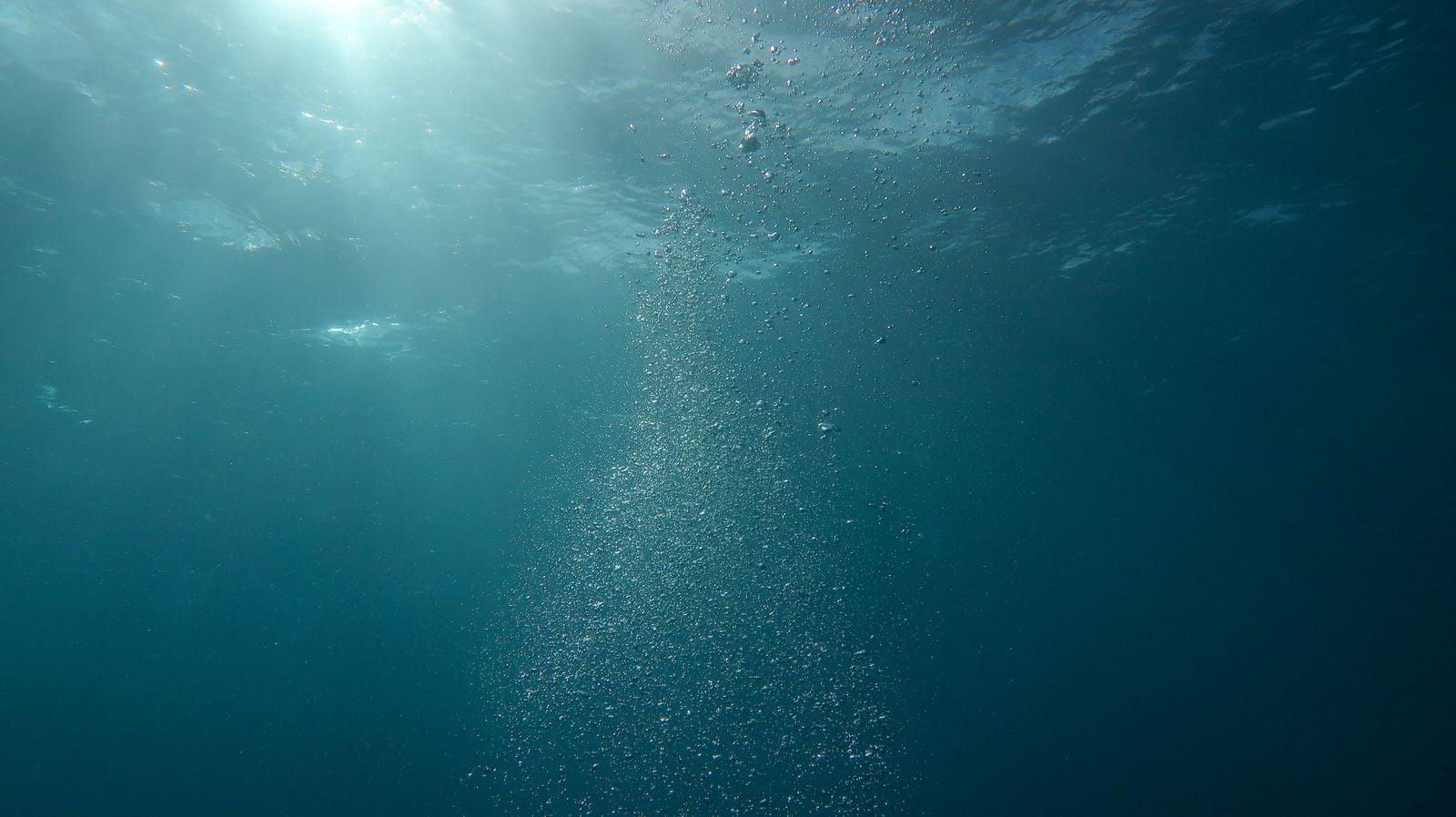
Photo by Aleksandr Sochnev on Pexels

The failure state: copper, static, and a delay you could hear

Before glass, there was copper. The first transatlantic telephone cable, TAT-1, went into service in 1956. It could carry 36 simultaneous voice calls between North America and Europe. Thirty-six. For the entire continent. A three-minute call from New York to London cost about $12 in 1956 money — several days of wages for most people. Signals fainted over distance and had to be shouted back to life by electronic repeaters spaced along the line.

Copper had a ceiling and everyone building networks knew it. Every doubling of capacity meant thicker cable, more repeaters, more power pumped in from shore. By the 1970s, engineers were chasing a different idea: send information as light through impossibly clear glass. If the glass was pure enough, a photon could travel kilometres before it lost its shape.

The purity is the part most people never grasp. If seawater were as transparent as modern telecom-grade silica, you could see the bottom of the Mariana Trench from the surface on a sunny day. That is the material lying on the seabed right now.

The turn: TAT-8 and the first optical crossing

In 1988, a consortium led by AT&T, British Telecom, and France Telecom laid TAT-8, the first fibre-optic cable across the Atlantic. It carried 280 megabits per second — roughly 40,000 simultaneous phone calls, more than a thousand times TAT-1’s capacity, on a cable about the same physical size. Cost per call collapsed. The economics of what the internet could become suddenly existed.

Then came the trick that turned a fast pipe into a firehose: wavelength-division multiplexing. Instead of sending one colour of laser light down a fibre, engineers learned to send dozens, then hundreds, of slightly different colours simultaneously, each carrying its own independent data stream. A single hair-thin fibre in a modern cable can now push more than 20 terabits per second. A cable typically bundles 16 to 24 fibre pairs. Do the multiplication and a single cable — the garden-hose bundle — can move well over 300 terabits per second. That is the entire streaming output of Netflix at global peak, several times over, through one cable.

How the pulse actually survives 6,000 kilometres of ocean

Light dims. Even in the purest silica ever manufactured, a photon loses about half its energy every 15 kilometres. Across an ocean, that would leave nothing.

The fix is the erbium-doped fibre amplifier. Every 50 to 80 kilometres along a submarine cable sits a small pressure-housed unit containing a short length of fibre laced with erbium ions. A pump laser excites those ions. When the weakened signal passes through, the ions dump their energy into the signal, boosting it back to strength — without ever converting the light into an electrical signal and back. The pulse stays a pulse the whole way.

Power for those amplifiers is delivered as a constant DC current, up to about 10,000 volts, pumped down a copper conductor sheathed around the fibre bundle from shore stations at either end. If a cable is cut, both landing stations detect the voltage collapse within milliseconds and can pinpoint the break to within about a kilometre using optical time-domain reflectometry — essentially, sending a pulse and timing the echo.
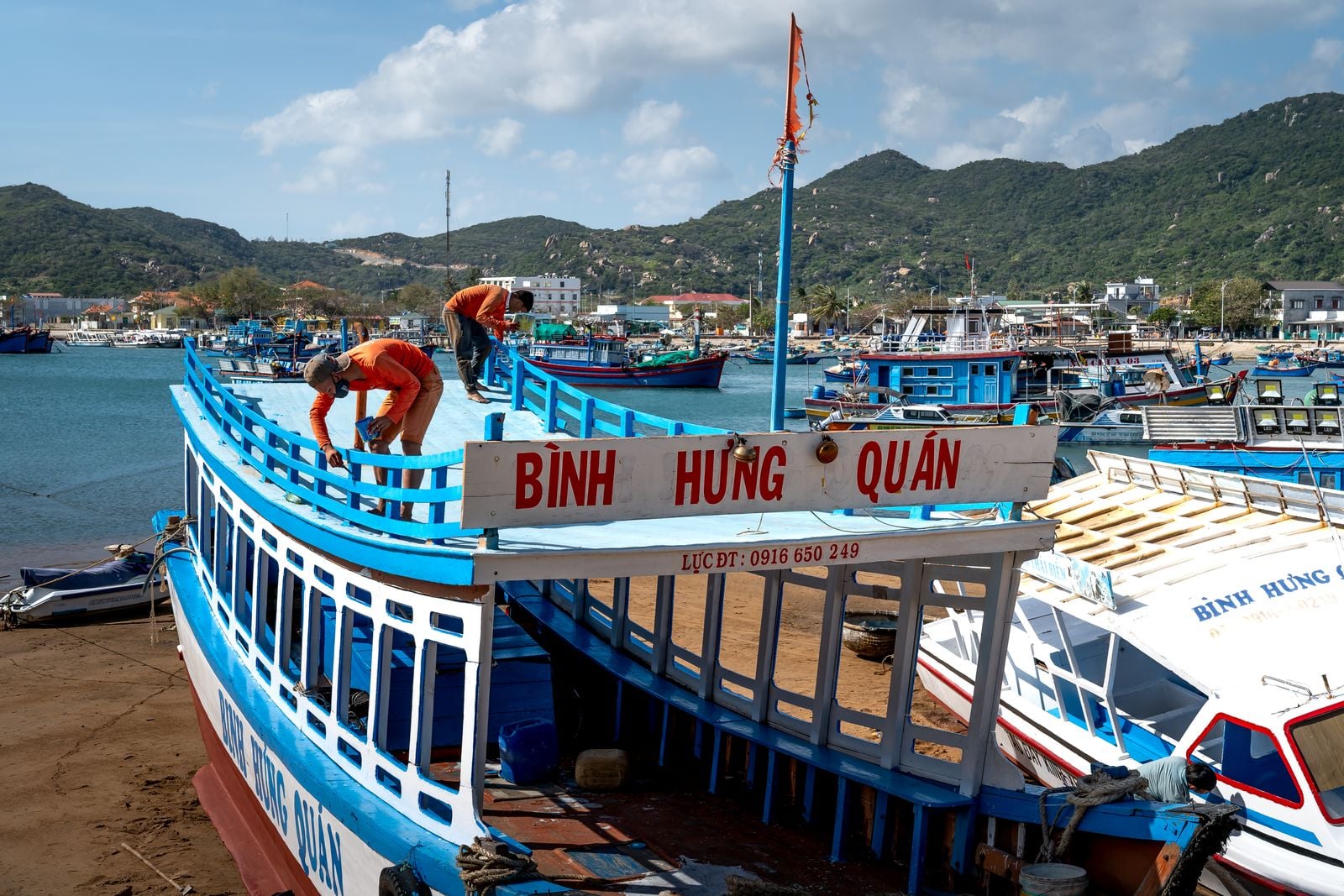
cable repair ship deck
Photo by Quang Nguyen Vinh on Pexels

What the cable is actually made of

The core is glass. Around the glass sits a steel tube for crush resistance, wrapped in a copper conductor for power, then layers of steel wire armour, and finally a waterproof polyethylene jacket. In deep water — beyond about 2,000 metres — the cable is lightly armoured and laid directly on the seabed, because at those depths there are no trawlers, no anchors, no realistic threats aside from the occasional undersea landslide.

In shallow water it is a different story. Near coasts, cables are buried one to three metres below the seabed by robotic sea ploughs that ride behind the laying ship, cutting a trench and dropping the cable in as they go. The reason is not sharks. According to a detailed engineering explainer published by News24, shark bites on modern armoured cable are vanishingly rare. The real enemies in shallow water are ship anchors and bottom trawlers dragging steel across the seabed. Most cable faults come from fishing gear or anchors.

Who owns it, who fixes it, who never sleeps

The ownership map has quietly shifted. For most of the 20th century, submarine cables were built by consortia of national telecoms — the same companies that ran your landline. Today, the biggest builders are the hyperscalers. Google has stakes in more than 30 cables. Meta co-owns 2Africa, which at roughly 45,000 kilometres is the longest submarine cable ever built, linking 33 countries around the African continent, Europe, and the Middle East. Amazon and Microsoft are close behind. Tata Communications operates one of the largest independent global networks.

Repair, by contrast, has stayed strangely small. There are only about 60 dedicated cable repair ships in the world. Each is a specialised vessel with a moon pool, dynamic positioning, and grapnels designed to lift a severed cable from four kilometres down. When a cable breaks in the middle of the Pacific, the nearest ship might be three weeks away. The ship steams to the fault, drags a grapnel across the seabed, snags the cable, hauls it up, cuts out the damaged section, splices in a fresh length in a shipboard clean room, tests the join, and lowers the whole thing back down. A single repair takes one to three weeks on station.

The International Telecommunication Union and the US Federal Communications Commission have both moved this year to redraw rules on cable resilience — the ITU targeting the shortage of repair ships and permit delays, the FCC tightening reporting requirements for cable operators serving American landing stations. Japan is subsidising NEC to acquire new cable-laying and repair vessels. Everyone with a coastline is looking at the fleet count and doing the arithmetic.

The Red Sea, the Baltic, and the anchors that keep dragging

In early 2024, three cables in the Red Sea were cut in quick succession, briefly slowing internet traffic between Europe and Asia. The Houthi movement denied responsibility. The most likely culprit, according to subsequent forensic reporting, was the anchor of the abandoned cargo ship Rubymar, which had been drifting after a missile strike. In the Baltic, cables between Sweden, Finland, Estonia, and Germany have been severed multiple times over the past two years by ships whose anchors happened to be down at exactly the wrong moment. Investigators in Helsinki and Stockholm have called it what it looks like: sabotage with plausible deniability.

Writing in The Diplomat, analysts have argued that the seabed is now a contested strategic space — not just for cables but for power links, gas pipelines, offshore wind, and even the first experimental undersea data centres. The piece notes that dragged anchors can serve as cover for deliberate sabotage, making undersea networks vulnerable to political manipulation and coercion. Around Taiwan, the Matsu and Penghu island cables have been severed repeatedly, and local authorities have detained Chinese vessels suspected of deliberate damage.

What happens when a country loses a cable — and who benefits

When Tonga’s single submarine cable was cut by the Hunga Tonga volcanic eruption in January 2022, the country of roughly 100,000 people spent five weeks reduced to a trickle of satellite bandwidth. Banks stopped clearing. Remittances from Tongans working abroad — a substantial share of household income — could not arrive. The economic hit was estimated in the tens of millions of dollars for a single cable break in one small nation.

Silicon Canals has previously explored the political economy of internet shutdowns — how the losses and, occasionally, the gains from a country going dark are distributed. Cable cuts sit at the involuntary end of that same spectrum. The difference is that no minister has to sign the order.

The parts that are still unresolved

Redundancy is uneven. Western Europe and the US East Coast have dozens of cables coming ashore; a single fault causes a rerouting most users never notice. West Africa, small island states in the Pacific, and parts of the Arctic remain single-cable dependent. Cable landing stations — the buildings on shore where fibre meets the terrestrial network — cluster in a handful of chokepoints: Marseille, Fortaleza, Mumbai, Singapore, Fujairah. Attack the building and you do not need to touch the ocean.

Repair ship capacity is the other quiet problem. The global fleet is ageing. Several vessels were built in the 1980s. Training a splicer — someone who can join two ends of a submarine cable in a rolling ship’s clean room and get the light through — takes years. The industry is small, specialised, and largely invisible until something goes wrong.

Silicon Canals has written about other infrastructure stories where the machinery outlasted the empires that built it. Undersea cable is the opposite: a system that most people never picture, running underneath the ocean floor, in glass so pure it barely exists, moved and repaired by a fleet you could count on your fingers and toes. It works. Almost all the time. Every message you send abroad tonight will pass through it. Somewhere off the coast of Cornwall or Alexandria or the Cape, a laser is being pumped through erbium, and a pulse is being lifted back to life for the eightieth time, on its way to a landing station where the light finally becomes electricity again, and then, at last, becomes you.




Source link

Tags: BundlecarryfibresFloorGardenglasshoseIntercontinentalInternetkilometresLyingoceanPercentThinnertrafficWater
ShareTweetShare
Previous Post

Wall Street is treating Nvidia GPUs like aircraft collateral — and a $35B syndication is quietly testing whether the credit markets agree

Next Post

Cheques and Balances: Former Forex.com and Invast Director Sentenced Over Suspected Scam Proceeds

Related Posts

edit post
The company behind Singha beer removed one of its heirs from every executive role days after an abuse allegation went public — a reckoning Asian family dynasties usually avoid

The company behind Singha beer removed one of its heirs from every executive role days after an abuse allegation went public — a reckoning Asian family dynasties usually avoid

by TheAdviserMagazine
July 25, 2026
0

On May 19, Boonrawd Brewery — the family-owned company behind Singha, the beer brand nearly synonymous with Thailand — announced...

edit post
Uniti AI Raises M to Put AI Agents in Every Corner of Property Operations – AlleyWatch

Uniti AI Raises $12M to Put AI Agents in Every Corner of Property Operations – AlleyWatch

by TheAdviserMagazine
July 24, 2026
0

Real estate is one of the world’s most operationally intensive industries, yet the work of running a portfolio – answering...

edit post
Singapore’s millionaire density hit 1 in 6 households — and the mental health data is telling a very different story about what that wealth is buying

Singapore’s millionaire density hit 1 in 6 households — and the mental health data is telling a very different story about what that wealth is buying

by TheAdviserMagazine
July 23, 2026
0

One in six households in Singapore now hold at least a million US dollars in investable assets, the highest millionaire...

edit post
People who reply to trivial texts within seconds but go quiet for days when a message actually matters have often built two separate systems: one automated and always open, one with a gate they can only open slowly, and only for themselves

People who reply to trivial texts within seconds but go quiet for days when a message actually matters have often built two separate systems: one automated and always open, one with a gate they can only open slowly, and only for themselves

by TheAdviserMagazine
July 23, 2026
0

The strange thing is not that some people reply quickly. Most of us do, at least when the message is...

edit post
KelAI Raises M to Build an Autonomous Research Engine for Hedge Funds – AlleyWatch

KelAI Raises $5M to Build an Autonomous Research Engine for Hedge Funds – AlleyWatch

by TheAdviserMagazine
July 23, 2026
0

Institutional investing has long operated on a simple but costly constraint: research capacity scales with headcount, and headcount scales slowly....

edit post
The quiet reason some adults keep a drawer of pens, notepads, and unopened stationery they never use may have less to do with clutter and more to do with the self who once believed the right tools would finally make the writing happen

The quiet reason some adults keep a drawer of pens, notepads, and unopened stationery they never use may have less to do with clutter and more to do with the self who once believed the right tools would finally make the writing happen

by TheAdviserMagazine
July 23, 2026
0

A drawer of unused stationery can behave less like household clutter and more like a fossil bed. Each layer records...

Next Post
edit post
Cheques and Balances: Former Forex.com and Invast Director Sentenced Over Suspected Scam Proceeds

Cheques and Balances: Former Forex.com and Invast Director Sentenced Over Suspected Scam Proceeds

edit post
The generation that grew up with rotary phones, party lines, and having to knock on a neighbour’s door isn’t nostalgic for inconvenience, they remember when reaching another person required just enough effort to make the contact feel intentional

The generation that grew up with rotary phones, party lines, and having to knock on a neighbour's door isn't nostalgic for inconvenience, they remember when reaching another person required just enough effort to make the contact feel intentional

  • Trending
  • Comments
  • Latest
edit post
Georgia Senior SNAP and Meal Resources Older Adults Can Use

Georgia Senior SNAP and Meal Resources Older Adults Can Use

July 24, 2026
edit post
New Jersey Tax-Relief Events: Three July Dates Near Seniors

New Jersey Tax-Relief Events: Three July Dates Near Seniors

July 13, 2026
edit post
Retail giant exits U.S. fashion after multi-million-dollar scandal

Retail giant exits U.S. fashion after multi-million-dollar scandal

July 1, 2026
edit post
Bristlecone pines growing in the White Mountains of California germinated before the Great Pyramid was built, and the oldest one alive today, nicknamed Methuselah, has been quietly adding rings for 4,855 years in soil so poor almost nothing else survives beside it

Bristlecone pines growing in the White Mountains of California germinated before the Great Pyramid was built, and the oldest one alive today, nicknamed Methuselah, has been quietly adding rings for 4,855 years in soil so poor almost nothing else survives beside it

July 8, 2026
edit post
Same Portfolio. Same Retirement. A 10-Mile Move Costs One Couple ,000 A Year

Same Portfolio. Same Retirement. A 10-Mile Move Costs One Couple $10,000 A Year

June 27, 2026
edit post
Top Democrats Are Trapped in a Catch 22

Top Democrats Are Trapped in a Catch 22

July 6, 2026
edit post
Kohl’s  off  Instant Savings: Hot Deals on Nike, Beach Towels, Dutch Ovens, Luggage, plus more! {Ends Sunday}

Kohl’s $10 off $25 Instant Savings: Hot Deals on Nike, Beach Towels, Dutch Ovens, Luggage, plus more! {Ends Sunday}

0
edit post
How does a bundle of glass fibres thinner than a garden hose, lying on the ocean floor under four kilometres of water, carry more than 95 percent of all intercontinental internet traffic?

How does a bundle of glass fibres thinner than a garden hose, lying on the ocean floor under four kilometres of water, carry more than 95 percent of all intercontinental internet traffic?

0
edit post
Channel Data Management: A Strategic Guide to Decision-Grade Data

Channel Data Management: A Strategic Guide to Decision-Grade Data

0
edit post
When a long-short strategy is right for a client

When a long-short strategy is right for a client

0
edit post
Trimble Jumps 5.4% Amid Sector-Wide Rally

Trimble Jumps 5.4% Amid Sector-Wide Rally

0
edit post
NTPC board approves raising up to Rs 12,000 cr via NCD issue

NTPC board approves raising up to Rs 12,000 cr via NCD issue

0
edit post
Costs of U.S. grid buildout soaring alongside demand for power, to pose headache for consumers

Costs of U.S. grid buildout soaring alongside demand for power, to pose headache for consumers

July 25, 2026
edit post
Channel Data Management: A Strategic Guide to Decision-Grade Data

Channel Data Management: A Strategic Guide to Decision-Grade Data

July 25, 2026
edit post
France deploys giant military cargo plane to dump flame retardants as wildfires displace 250,000

France deploys giant military cargo plane to dump flame retardants as wildfires displace 250,000

July 25, 2026
edit post
Figma vs. IBM: What Revenue Growth Trends Tell Investors About the Young Software Design Company and the Veteran Artificial Intelligence Tech Giant

Figma vs. IBM: What Revenue Growth Trends Tell Investors About the Young Software Design Company and the Veteran Artificial Intelligence Tech Giant

July 25, 2026
edit post
Trump pulls back after Iran crosses his red line as US military breaks two-week streak of airstrikes

Trump pulls back after Iran crosses his red line as US military breaks two-week streak of airstrikes

July 25, 2026
edit post
Samsung Wallet is getting native stablecoins

Samsung Wallet is getting native stablecoins

July 25, 2026
The Adviser Magazine

The first and only national digital and print magazine that connects individuals, families, and businesses to Fee-Only financial advisers, accountants, attorneys and college guidance counselors.

CATEGORIES

  • 401k Plans
  • Business
  • College
  • Cryptocurrency
  • Economy
  • Estate Plans
  • Financial Planning
  • Investing
  • IRS & Taxes
  • Legal
  • Market Analysis
  • Markets
  • Medicare
  • Money
  • Personal Finance
  • Social Security
  • Startups
  • Stock Market
  • Trading

LATEST UPDATES

  • Costs of U.S. grid buildout soaring alongside demand for power, to pose headache for consumers
  • Channel Data Management: A Strategic Guide to Decision-Grade Data
  • France deploys giant military cargo plane to dump flame retardants as wildfires displace 250,000
  • Our Great Privacy Policy
  • Terms of Use, Legal Notices & Disclosures
  • Contact us
  • About Us

© Copyright 2024 All Rights Reserved
See articles for original source and related links to external sites.

Welcome Back!

Login to your account below

Forgotten Password?

Retrieve your password

Please enter your username or email address to reset your password.

Log In
No Result
View All Result
  • Home
  • Financial Planning
    • Financial Planning
    • Personal Finance
  • Market Research
    • Business
    • Investing
    • Money
    • Economy
    • Markets
    • Stocks
    • Trading
  • 401k Plans
  • College
  • IRS & Taxes
  • Estate Plans
  • Social Security
  • Medicare
  • Legal

© Copyright 2024 All Rights Reserved
See articles for original source and related links to external sites.