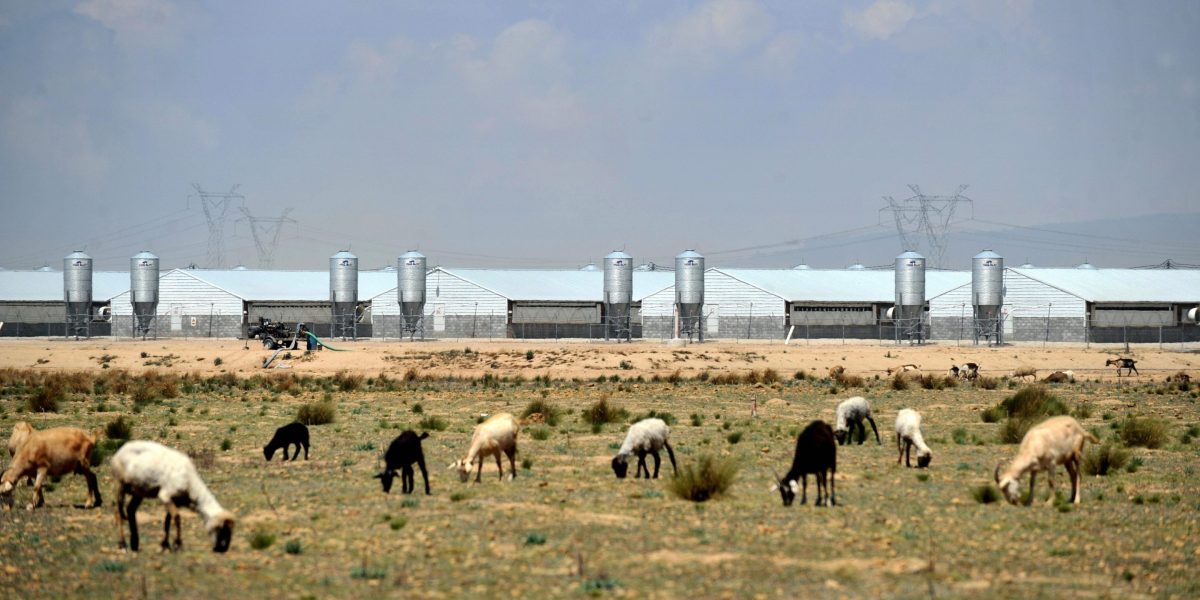
Where the internet physically lives is being redrawn, and what’s pulling it isn’t engineers — it’s electricity. Across the industry, the biggest new data-centre campuses are chosen first for access to cheap, plentiful power. The old draw of a nearby talent pool now comes a distant second.
Iowa cornfields, an Irish suburb near Dublin, and a stretch of Northern Virginia have become anchors of global computing for reasons that have more to do with the grid than with universities.
Power has gone from a background detail to the main thing developers worry about, though it hasn’t crowded out everything else. And at least one of these three regions is a data-centre capital despite a power shortage rather than because of a surplus.
The old logic: infrastructure followed talent
The usual story about tech geography is that clusters form around people. Silicon Valley grew out of Stanford and a dense pool of engineers. Boston’s Route 128 leaned on MIT. Austin drew talent to the University of Texas and a low cost of living. The workers came first, the thinking goes, and the buildings, money and infrastructure followed.
For the software industry, that still mostly holds. For the data centres that store and process what that industry produces, it does not. A giant modern data-centre campus is not a talent cluster in any real sense. In 2023, Virginia, the world’s largest data-centre market, supported only a modest number of data-centre jobs for the scale of the buildings; the buildings are enormous, the workforce inside them isn’t.
Power became the constraint
What changed is the electricity bill. AI uses far more power than the web services that came before it. That has turned energy into the first question a developer asks about any site.
The International Energy Agency projects that global data-centre electricity use could roughly double, from about 415 terawatt-hours in 2024 to around 945 by 2030, with AI the main driver. The IEA also estimates that power used by AI-focused servers is will grow about 30% a year, against roughly 9% for ordinary servers.
These are projections, not certainties, and the IEA flags plenty of uncertainty about how fast AI is adopted and how the grid keeps up. In wealthy countries, where power demand had been flat for decades, the IEA reckons data centres now account for more than 20% of electricity demand growth to 2030.
Iowa: the cleanest case
Iowa is where the “grid headroom” idea actually holds. The state ran on cheap wind long before the AI boom, with wind now around 63% of its electricity, one of the highest share of any state. That surplus of cheap, low-carbon power, plus open land and low building costs, is what pulled the big names in.
Google, Microsoft, Meta and Apple have all built cloud campuses in Iowa, and the state counts around 27 facilities operating or being built. The draw is a bundle, not one lever: open land, low costs, tax breaks, and, in the reporting, cheap renewable energy above all. Nobody is moving to Iowa for its supply of machine-learning PhDs.
Northern Virginia: first-mover, now grid-strained
It is the world’s largest data-centre market, and roughly 70% of global internet traffic is thought to pass through Ashburn’s “Data Center Alley” on a given day. But it did not win that position on spare electricity. It won on history: decades of accumulated fibre and internet infrastructure that made each new arrival more valuable than the last. Rich Miller, who founded Data Center Frontier, has described the region’s Equinix campus as one that “quickly became the web’s busiest meeting place, creating a powerful network effect in which each new connection adds to the value of its digital ecosystem”.
In Northern Virginia the “grid headroom” story inverts: far from sitting on spare capacity, the region is running short of it. Under-construction capacity fell 29% year-on-year in 2025 even as demand kept climbing — a market hitting its ceiling.
Nearly two-thirds of new US capacity is now built outside established hubs like Northern Virginia and Silicon Valley. The world’s largest market is a monument to first-mover advantage, and it is now hitting the very constraint the newer hubs are chasing.
Ireland: when demand outstrips supply
Ireland became one of Europe’s main data-centre hubs on the back of tax policy, transatlantic fibre and the big US platforms — until the grid caught up with it. Data centres used about 22% of Ireland’s electricity in 2024, a share the grid operator has forecast could rise toward 31% by 2034.
Rather than using spare capacity, those data centres strained the grid so hard that the regulator stopped connecting new ones. Around Dublin, Ireland ran a de facto freeze on new data-centre connections from 2021, amid warnings of rolling blackouts. That freeze was only lifted in December 2025, and under the new rules new facilities must source at least 80% of their yearly demand from new renewable projects in Ireland. A region routinely called a data-centre capital arrived there in spite of a grid that ran out of power.
What the pattern actually shows
Taken together, the three cases suggest a more measured picture. Power is now necessary but not sufficient. Iowa had cheap wind, land and tax breaks. Northern Virginia had legacy fibre and network effects, and is only now finding the limits of its grid. Ireland had everything except spare power, and its capital status came with a five-year connection freeze attached. In every case the winning bid was a bundle, and electricity has moved to the front of that list without displacing everything else on it.
What has genuinely changed is the ranking. For a generation, power was something a developer could take for granted while optimising for talent, fibre or incentives. In the AI era it is the lead constraint, the thing that can stop a site before anything else gets a hearing. The Belfer Center notes that AI-driven demand is now outpacing available capacity in some regions, forcing project delays and private power deals.
If that holds, the next data-centre map will be drawn wherever new generation comes online first. Energy policy is now doing the work talent policy used to.