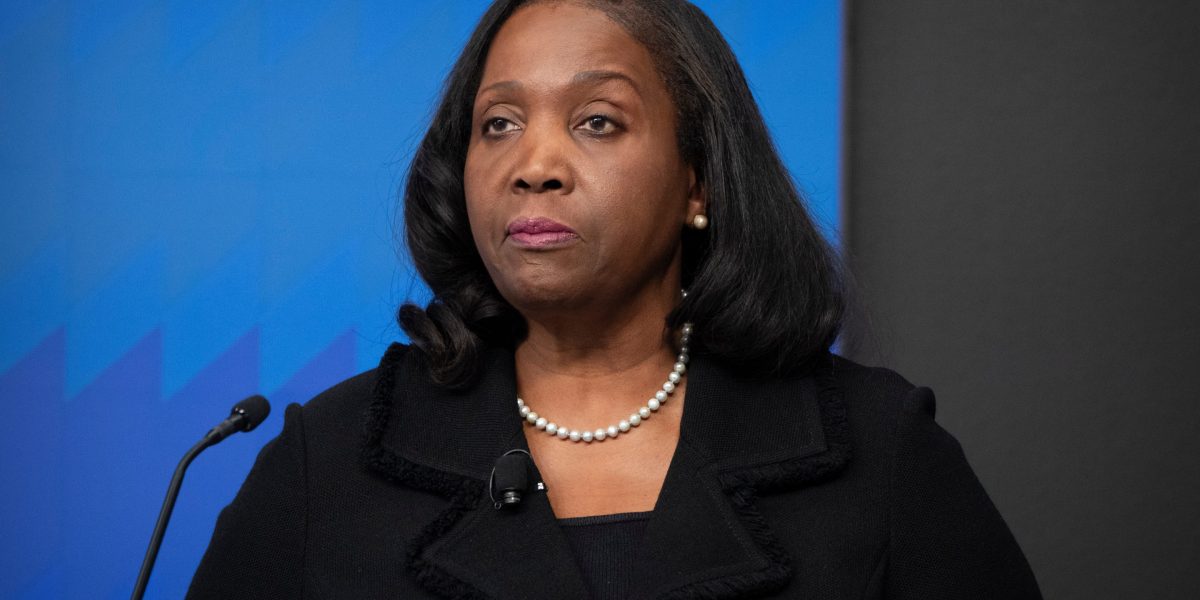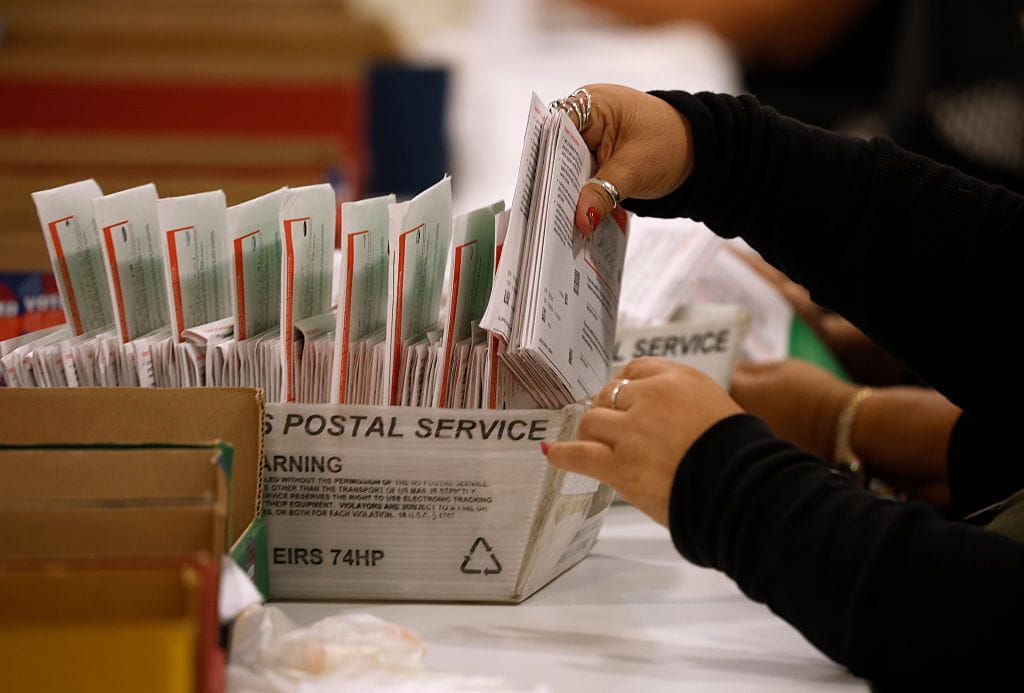
On Monday, June 29, everyone waited for a possible Supreme Court decision on birthright citizenship. As it turned out, that was not issued, but another significant election-related case was decided – and it’s a blow to President Donald Trump’s quest to tighten election security. In a 5-4 decision, with the majority opinion authored by Trump-appointed Justice Amy Coney Barrett, the Court struck down a challenge to a Mississippi law that allows mail-in, or absentee, ballots that arrive after Election Day to be counted.
Joining Barrett in the decision were Chief Justice John Roberts and the three left-leaning associate justices, Sonia Sotomayor, Elena Kagan, and Ketanji Brown Jackson.
The implications of this Supreme Court opinion go well beyond the state of Mississippi, which is one of 14 states that allow late-arriving mail-in ballots to be counted if they are postmarked on or before Election Day.
The Murky Mail-In Ballot Record
Mail-in ballots, while entirely justifiable for certain voters, such as military personnel stationed or deployed away from their home voting jurisdictions, do not appear to have any other legitimacy. And there’s a great deal of credible suspicion – backed up by multiple election fraud charges and convictions – that ballots mass-mailed to ordinary Americans who are entirely capable of getting to their local polling stations are being used for nefarious purposes.
It has always been acknowledged that Democrat voters are more likely to utilize mail-in ballots than Republicans. However, much of the suspicion surrounds late dumps of mail-in ballots in several past elections that favored the Democrat candidate overwhelmingly – often eliminating whatever lead the Republican candidate had up until then.
Executive Director of the Honest Elections Project (HEP), Jason Snead, wrote in a statement to the Daily Caller News Foundation, “As Justice Alito makes clear in his dissent, watching ballots trickle in after Election Day and flip races does nothing but damage public trust in our system of government.”
Justice Brett Kavanaugh, who joined the dissent, made a similar observation during oral arguments for the Mississippi case back in March: “If the apparent winner the morning after the election ends up losing due to late-arriving ballots, charges of a rigged election could explode.”
Supreme Court Split
The majority Supreme Court opinion, in this case, was based on the constitutional reality that the states, and not the federal government, have most of the say over how elections are conducted. In her opinion, Justice Barrett wrote:
“Three federal statutes set the day for the election of Representatives, Senators, and the President. A Mississippi law permits the counting of absentee ballots postmarked by election day but received up to five days later. We must decide whether the federal election-day statutes preempt Mississippi’s law. They do not.”
Barrett, whether one likes the majority opinion or not, did succinctly summarize her reasoning with this remark: “The election-day statutes say nothing about ballot receipt, and we cannot add to the words Congress chose.”
However, Snead disagrees. “Today’s ruling from the Supreme Court is deeply disappointing and misses the mark.” He added, “Federal law is clear: all ballots must be received by Election Day to be counted. The Court missed a major opportunity to reinforce election integrity and instead sides with California-style chaos.”
Opinion polls indicate most Americans support various attempts to restore election integrity, such as requiring an ID to vote and not counting absentee ballots that arrive after Election Day. A poll commissioned by HEP and conducted by CRC Research in March showed 83% of likely US voters do not think those late ballots should be counted. A similarly large majority of those polled, 78%, said Election Day should be the deadline for receiving mail-in ballots. That number includes 68% of Democrat voters.
Trust Under Threat
If this isn’t a Supreme Court failing, then it is a legislative one. But Republicans cannot craft and pass bills that would make federal elections more secure without Democrats’ votes – and the latter have shown they have no interest in tightening the rules, apparently preferring a sort of free-for-all when it comes to Americans electing their representation in Washington, DC.
To say the system is broken is putting it mildly when few voters on either side of the political divide appear to have much faith in the integrity of election results. Because without voters’ trust in the process, it is flawed, regardless of any other facts or circumstances.
Among the voting population, the will is there to fix the problems. On Capitol Hill, not so much – and that means Congress itself is also on the American people’s “do not trust” list.