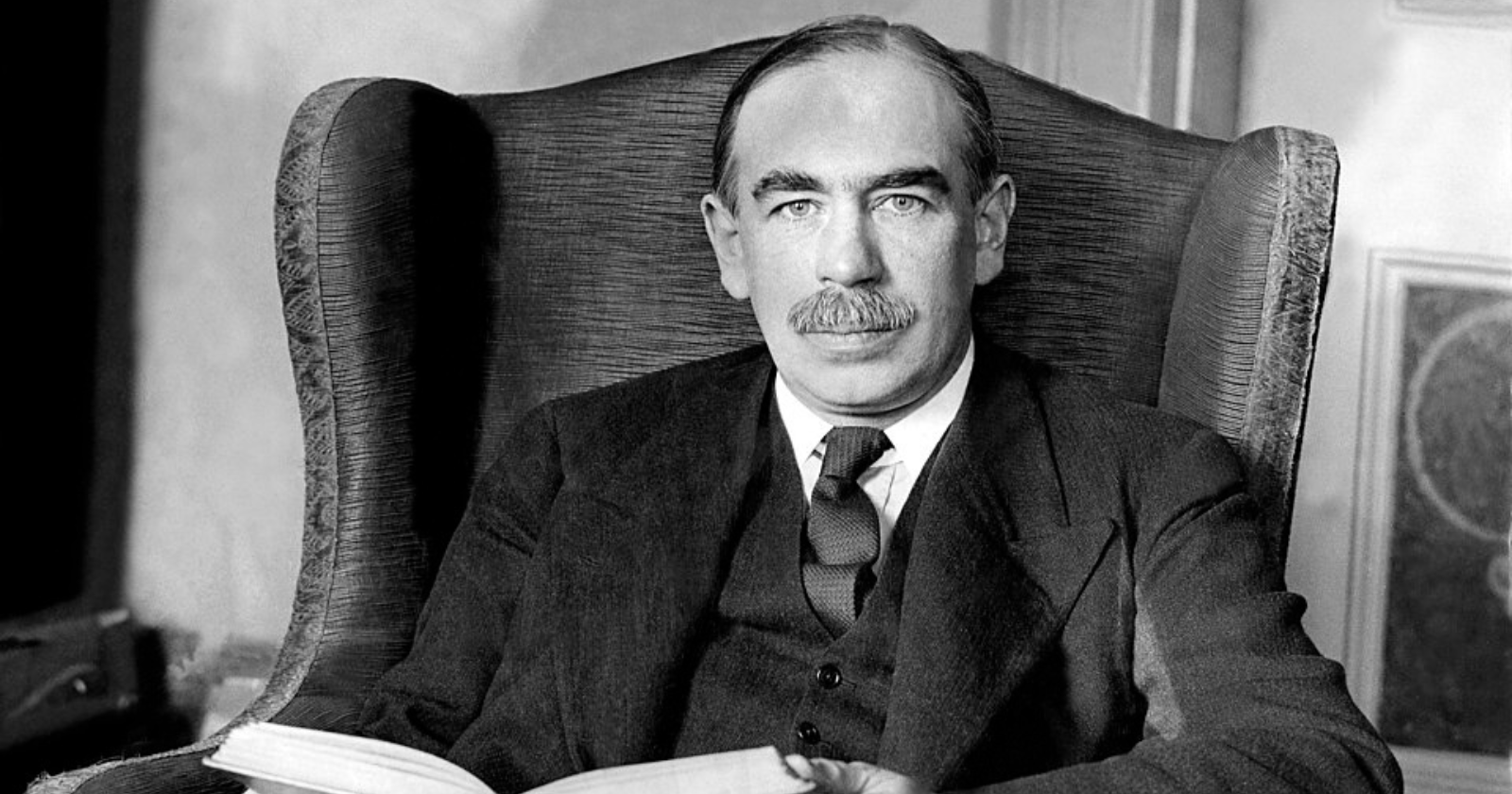
It is unusual for a prediction to be half right and half wrong at the same time, but that is basically what happened in the case of John Maynard Keynes.
The technology arrived. The leisure did not.
In 1930, as British unemployment was climbing toward Depression-era levels, Keynes wrote a short essay called Economic Possibilities for our Grandchildren. He skipped the present and looked a hundred years out. His reasoning was simple. Technical efficiency was compounding. Capital was accumulating. By 2030, he argued, the standard of life in advanced economies would be four to eight times what it was in 1930. Once basic needs were comfortably met, the rational thing for people to do was work less. “Three-hour shifts or a fifteen-hour week may put off the problem for a great while,” he wrote. “For three hours a day is quite enough to satisfy the old Adam in most of us!”
The U.S. Bureau of Labor Statistics, summarizing a recent reappraisal of the essay, puts the verdict cleanly: “He was right about the large increases in wealth that have occurred, but there has still been no shift in people’s preferences towards increasing leisure and the 15-hour workweek.” The wealth came. The fifteen-hour week did not.
What perhaps Keynes did not anticipate was how good we would be at finding new things to want. Each productivity gain that could have been taken as time off was, instead, taken as more output, more income, more stuff to buy, more rungs to climb. Houses got bigger. Cars got newer. The basket of “basic needs” quietly expanded to include things that would have looked exotic if not completely alien to a working-class household in 1930 — a second car, an annual trip abroad, a streaming subscription for every interest. And the appetite for status — the part Keynes specifically worried about as a desire for superiority — turned out to be far more durable than he likely hoped. Though he did warn us:
“Needs of the second class, those which satisfy the desire for superiority, may indeed be insatiable; for the higher the general level, the higher still are they.”
There are exceptions worth noting. A UK four-day-week pilot ran sixty-one companies through a six-month experiment in which staff kept full pay for four days of work instead of five. Ninety-two percent of the participating companies kept the policy when the trial ended. Revenue held. Burnout dropped. It is not a fifteen-hour week, but it is the first credible glimpse in a long time of what voluntarily taking productivity gains as time, rather than as money, might actually look like.
I am not living Keynes’s prediction either. I work, more or less, the same hours as I did when I had a desk in Irish finance — possibly a bit more. The difference is not the hours; it is the autonomy over them. I have, in the years since, also discovered that my actual capacity for the load-bearing kind of work — sitting down and writing something from scratch — caps out at around three hours a day. Past that, the screen is still on, but the work is editing, sorting, admin, deciding. The fifteen-hour deep-work week, by that measure, is closer to my reality than I would have guessed. What I have not done — and I think this is closer to Keynes’s actual point — is let the rest of the day go.
A century in, the verdict splits cleanly. The machines have probably kept their side of the bargain. We did not. The harder problem, it turns out, was never the technology — it was what to do with ourselves once the technology was finished doing the work.