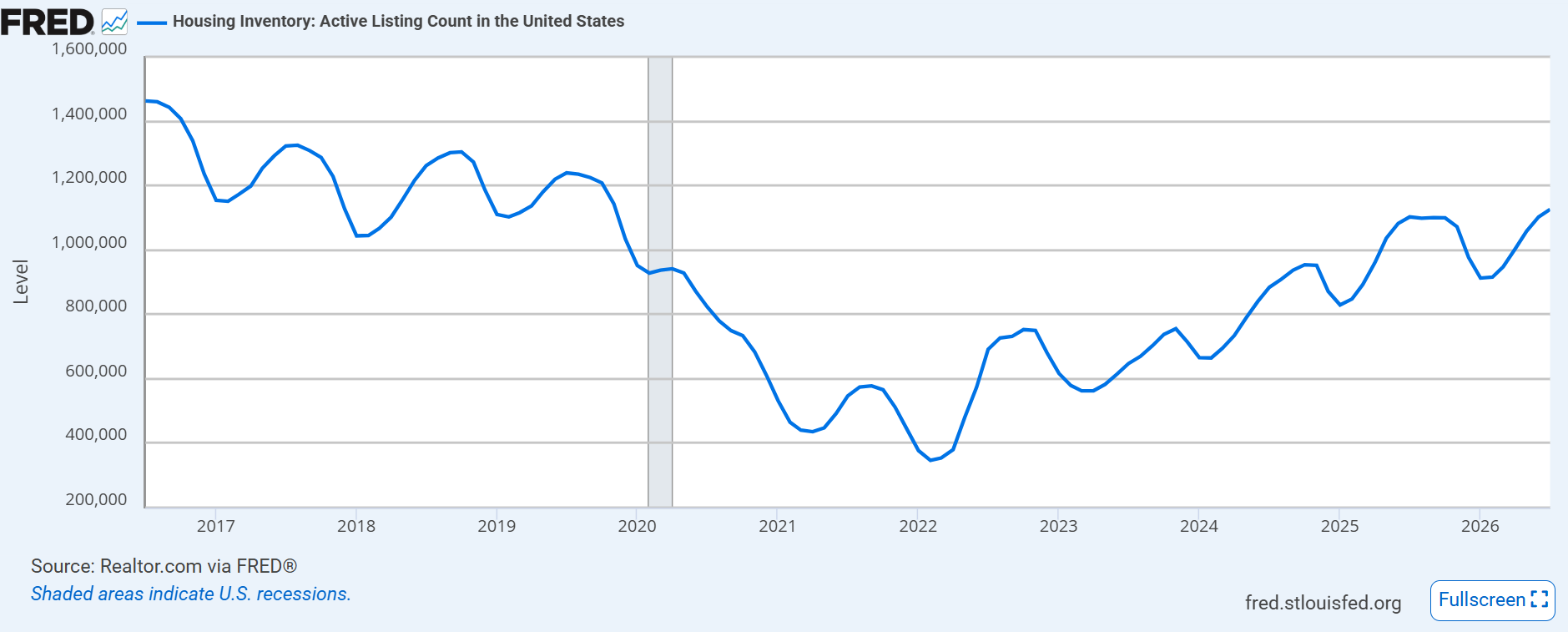
Dave:At the start of 2026, there was a general consensus among experts and forecasters about what would happen in the housing market this year, modest price growth, lower rates, and improving sales. But that consensus has been blown up. With a continuing conflict in Iran, accelerating inflation and a Fed on hold, expectations have been reshuffled and major institutions and analysts are changing their forecast for 2026. So today on On the Market, we’ll talk through every major forecast, how it’s changed, what is likely to happen for the rest of 2026, and what it all means for you. Hey, everyone. Welcome to On The Market. I’m Dave Meyer, investor, analyst, and chief investment officer at BiggerPockets. Today on the show, we’re going to be addressing the shifting expectations in the housing market because at the beginning of the year, forecasters for the most part were aligned on what was to be expected.Market rates would come down a little bit, sales volume would go up a little bit and prices would grow but modestly. But those expectations are now changing as conditions on the ground have changed. With a new Fed share joining in the next couple of days, the war in Iran, resurging inflation and the corresponding increased likelihood that the Fed is going to pause cuts, put that on top of AI and labor market fears. All of that is forcing forecasters to rethink their predictions. So today in the show, we’re going to see how those major predictions have changed and discuss what it means for the housing market. I’ll also let you know if my personal forecast has changed. As a reminder, I said that rates would stay between five and a half and six and a half percent with an average of around 6.15. I said sales would pick up modestly to about 4.1 million for existing home sales.And I actually, I guess, sort of bucked the trend of major forecasters and said that national home prices would actually fall this year. Most of them, as we’ll go through in a minute, said that prices were going to grow. I actually think they’re going to come down a litle bit, or that’s what I said at the beginning of the year. I always give a range, my range for this year, by the way, was somewhere between plus 2% and negative 4% on the low end. I said my best guess was negative 1% year over year. Have I changed my mind now in May of 2026? I will share that, but first let’s talk about the big forecasters like Zillow, NAR, Fannie Mae, and JP Morgan. First up, let’s talk about NAR. This is the National Association of Realtor and I’m doing them first because they were sort of the most bullish out of any of the forecasters about a housing market recovery at the beginning of the year.I think they made their predictions back in December, but for all of 2026, they said that they thought existing home sales were going to pick up a lot, 14%. That’s a lot. Last year were about four million, so they’re saying it was going to get to about four and a half million. That was probably the boldest increase. They were thinking that the housing market was going to get a little bit of life back into it. They saw prices rising 4% and rates coming down to about 6%. Now back in April, just a couple of weeks ago in April of 2026, they actually updated their forecast pretty notably. They slashed their forecast for volume growth. Basically, they thought we were going to see a real significant recovery in the number of transactions, which would be great for the whole industry. If you’re an agent, a loan officer, you’re probably really hoping for that and NAR was saying that was coming.Now they have slashed that forecast down to just 4% volume growth. So they’re still thinking that it’s going to be up, but it’ll be up to maybe 4.1, maybe 4.2 million instead of the 4.5 million they were projecting. Just for reference, about five and a quarter million is normal. So even they weren’t saying we’re getting back to normal, but they thought we’d get a big jump there. Now, interestingly, even though they have downgraded their sales volume forecast, they’re actually holding their price forecast the same. They’re saying 4% still is what they’re expecting. They acknowledge that lower consumer confidence and a softer job market, it’s holding up pretty well, but it is softer than it was last year, are continuing to hold back buyers. But at the same time, inventory growth is modest. It’s pretty flat year over year. So when I see that, I think that’s pretty balanced, but they think that combination, even with the slower demand, is going to lead to 4% year over year growth.So this was a major walkback on terms of volume in my opinion. This is a major downshift in what they think sales volume’s going to do, but they’re holding flat with prices. So that’s NAR. Next, let’s go to Fannie Mae, the mortgage giant. They pretty surprising here. I was pretty surprised by what I see here. They revised their price forecast for 2026 up. They think prices are going to go up more than what they had originally forecasted. They had forecasted 3% price growth across 2026. Now they think that we’re going to see 3.4% in quarter two, 3.8% in quarter three, and then 3.2% in quarter four. So it’s not crazy. When you see, oh, they went from three to 3.6, 3.5 in terms of their annual forecast, that isn’t a lot. It’s not going to change your net worth that much. But I think it’s pretty unusual given what we’ve seen going on that a big institution like this would upgrade their sales forecast.So I was pretty surprised to see that, especially because they increased their mortgage rate forecast. They were expecting 5.7% by year and now they’re saying 6.2%. So they’re saying affordability is going to get worse, but prices are going to grow faster. I mean, that can happen if inventory growth just goes negative, right?That could happen. Right now, inventory growth is about flat. So it’s possible, but I was generally surprised to see this. I think out of the forecast we’re going to talk about, which are NAR, Fannie Mae, Zillow, and JP Morgan, this is definitely the most bullish I think because even though NAR is saying 4% growth, which is higher, they walk back some expectations. But Fannie Mae is saying, “We’re seeing what’s going on in 2026 and we think prices are going up more than the conditions warranted at the beginning of the year.” So that I think is a pretty bullish stance about the housing market.So that’s what we got two pretty bullish takes on the housing market, in my opinion, from NAR and Fannie Mae. But we got two more to go over. We got to talk about Zillow and JP Morgan and we’ll do that right after we get back from this quick break. Stick with us.Welcome back to On The Market. I’m Dave Meyer going through updated forecasts for 2026. Before the break, I told you that NAR and Fannie Mae both see prices growing faster than inflation relatively. They’re predicting a pretty good year for the housing market, three to 4%. That’s a normal year. Long-term average appreciation is like 3.5%. It’s kind of what they’re saying is going to happen, normal year in the housing market. What about Zillow? People knock on Zillow and say that they’re really bullish. They hate this estimate, but Zillow has actually been one of the more bearish forecasters for the last year or two. At the beginning of the year, they were only forecasting 0.7% home value growth. So let’s just call it 1% for rounding. 1% growth much lower than Fannie Mae and NAR. And they have actually revised their home price downward. So NAR kept it flat.Fannie Mae increased their forecast, Zillow downgraded it. So they’re at 0.7%. Now they’ve downgraded it as of April 2026 to 0.3%. So it was kind of flat. Now they’re basically going even flatter. Zillow, I would say, is not really revising much. I think going from 0.7% to 0.3% is basically saying the same thing. They think flat home price growth and they’re basically sticking with that. Just if you’re curious, they also in this report put out their rent growth forecast. They think single family rent’s going to go up 2% for the rest of the year and multifamily rent growth at 1% for the rest of the year. And they still think existing home sales are about 4.13. So up a litle bit from last year, that’s now about in line with what NAR is saying and about what I said at the beginning of the year about 4.1%.Last forecast we were going to go into before we talk about what this all means and my take on all of this is JP Morgan. So they were relatively bearish. They said flat. Zero national price growth in 2026 is what they predicted at the beginning of the year and they basically haven’t upgraded it. They’ve quote said the size of the housing shortage has been overemphasized and they actually just think it’s staying flat. So when you look at these four major forecasters, these are some of the most notable, reputable forecasts in the industry, you’re no longer seeing a lot of consensus. You’re actually seeing a big divergence with NAR and Fannie Mae saying prices are going to go up 4%, whereas Zillow and JPMorgan are saying closer to flat. Let’s go kind of closer to where I’ve been. And this may not seem like a big difference, but I think it matters.I think this is a big difference because it’s the difference between real home price growth and not. And when I say real home price growth, what I mean is inflation adjusted home price growth. Because if you believe NAR or Fannie Mae, you’re saying that home prices are going to keep up with inflation. That’s a strong reason to buy real estate, right? And on an average $400,000 home, if it goes up 4%, that’s $16,000 in equity, right? That really matters versus something that’s flat. If you believe something that’s flat, you’re going to take a very different approach to buying real estate if you think the market’s going to be flat this year into next year, or perhaps you’re like me and think they’re going to go down modestly. So that stuff really matters. Before I give you my updated forecaster, I do want to just call out there are some people who are calling for a crash, but I have not found any forecasters who maintain their own economic models who have ways of measuring inventory and demand and supply and balance between supply and demand and all these things.I have not seen anyone forecast a major crash there. I mean, we’ve had guests like Melody Wright, she thinks that prices could come down double digits. I’ve not seen anyone else really saying that. Of course, there are people on TikTok and social media who just say prices are going to crash. They’re going to be worse. It’s going to be the worst in 2008. None of them offer data. None of them offer actual evidence of any of this stuff happening. I would tell you, I stand to gain nothing by hiding that information from you, but I cannot find it. There is no evidence of it, right? We talk about foreclosures. We talk about delinquency rates on the show. We would see it there. It’s not there. So that’s the major thing to remember that even though there is this divergence here, the band of what can happen is not forecasted to be very big.I’m actually one of the most negative. I’m saying it could be down 1%, maybe down 2%. That’s one of the more negative forecasts I’ve seen. On the upside, maybe plus 4%, but I’m not seeing any extremes. Now, everyone could be wrong. Everyone could be missing it, but I just want to show you that the people who look at the data here see it in this band between negative 2% plus 5%. Where it falls in that does matter a lot and I’ll talk about that in just a minute, but I just kind of want to anchor everyone and provide that context that we’re not talking about dramatic shifts in either direction or at least that’s not very likely. The other thing I promise I will get to my own forecast. The other thing I do want to mention though is of course this is regional, right?I am talking about on a national basis. I know people often say when I talk about the national stuff, they’re like, housing is regional. It absolutely is. I talk about on the show, I give you regional data all the time, try and help people understand how to go gather that regional data for themselves. But what often happens in the housing market is you can take some of the national trends and apply them to your market. So I’m not saying that this is true everywhere, but generally speaking, if the housing market is going to go down one or 2% this year, you can expect that most markets in the country will see declining appreciation rates. Now that might mean for some markets it goes from plus five to plus three, it’s still positive. In some markets that might go from negative five to negative seven, but there is some truth that there is a correlation generally to the national housing market with most markets.Of course there are outliers. I am not saying that there are difference. We talk about these regional differences a lot, but they have held up for years and they probably will for the foreseeable future. The so- called Rust Belt, you see this in parts of Western New York and parts of New England, parts of the Midwest still doing well. They have low inventory growth. Many of them still have inventory below pre-pandemic levels and prices are forecasted to grow in most of those markets. But like I said, even those ones that are growing forecasted to grow less than they did last year. Markets in the Sunbelt, Florida, Texas, Arizona, still facing affordability challenges, probably going to continue to see prices decline in most of those places. So make sure to remember that when I’m forecasting this stuff, you should look at this for yourself. Zillow actually does city by city forecast.You can go check those out. You can go Google this for yourself. A lot of local housing companies will make these kinds of forecasts, so you can go check them out for yourself. But remember, no matter what you do, remember that this stuff is regional and you need to do that research for yourself. Finally, I will get to my forecast because as you can see, everyone’s changing their forecast and I want to share you how my thinking has evolved, but we do have to take one more quick break. We’ll be right back.Welcome back to On The Market. I’m Dave Meyer, giving updated forecast for the 2026 housing market. We’ve talked about how there’s kind of a divergence so far in major forecasters with NAR and Fannie Mae predicting a pretty good price year with three to 4% appreciation, whereas JP Morgan and Zillow are projecting pretty much flat, 0% price growth this year. My forecast, as a reminder, I said I thought prices would be somewhere between negative four and positive two. So I’ve been more negative than most people on this stuff. I said that rates would be between five and a half and six and a half percent because if you follow this show, you know my thesis is mostly about affordability and I thought home sales would increase modestly to about 4.1%. With those things, let’s just break them down. Rates, I don’t see them coming down that much.I know NIR, even in their recent study said they see rates coming down below 6% by the year and I don’t see it. I mean, hopefully they’re right, but I don’t really see where that comes from, right? Every day that the war in Iran drags on, that becomes less likely. If you look at the inflation prints from last month, if you look at the PPI, the producer price index, if you look at the CPI, the consumer price index, if you look at PCE, all of those things are pointing to increased accelerating inflation and all of the reports I’ve seen say that even if the strait of hormones open tomorrow, we’d see oil prices stay high for the rest of the year and the strait of hormones is not open. So when does inflation fall? I don’t know, but I think expecting rates to go back down below 6%, optimistic thinking.I know I’ve been pessimistic about this for four straight years, but I’ve kind of been right and I don’t have a lot of optimism for rates right now. How does it come down? It either needs to be inflation comes down to like 2.5%, probably not going to happen. We go into significant recession. I think there’s a chance of recession this year, significant recession by end of the year, not looking likely at this point, right enough to bring rates down below 6%. Maybe it could happen. It could happen or quantitative easing. That’s what could get us into the low fives, 5%, probably not going to happen. So maybe we get a recession of rates come down, but I just don’t see that happening. So I’m sticking with my mortgage rate prediction of 5.5 to 6.5%. I said I thought 6.15 would be about our average. I like it.I’m sticking with it. All right, next home sales. I said 4.1%.Briefly at the beginning of the war in Iran, I thought pending sales could go lower. I thought maybe we were going to hit 3.9%, but I’m happy to say I think those fears weren’t warranted at that point and I’m sticking with it. I’m still staying with my forecast here. I think one to 2% growth in home sales here, we might get 4.1, 4.2% here. I’m staying there. Then in terms of home sales, I’m going to stay the most bearish here. I’m sorry, I think prices are going to go down a little bit. Right now they’re at like 0.7. If you look at the Case Schiller, 0.7, Redfin has plus 1% year over year. So to believe that prices are going to go up to three or 4% year over year, like for NAR or Fannie Mae, you have to see that housing market getting stronger from here and I don’t see that happening.Obviously in some markets and I’m happy that we’re not seeing the bottom fallout because we definitely aren’t. But I just think with rates hovering around 6.5%, we’re not going to see a lot of demand growth and we are seeing some moderation of inventory growth, but I do think we’ll see inventory go up a little bit more. There’s going to be, in my opinion, a little bit of distress, not a ton. Some of these deals might happen off market. We’re going to see more of that in my opinion, but whether it’s looking at the data or just talking to people in these markets, I think it’s kind of just this psychological shift that has happened in the market where buyers know they have the power now. They are not going to bid up the price of homes. They’re looking for deals. They are looking for value and that does not mean the bottom is falling out, but I think the trend is towards people trying to get deals under list price, which you should by the way, if you’re trying to buy.That’s the advantage of being in the market right now is you can do this.I think more and more agents are seeing this, more and more investors are seeing this, more and more home buyers are seeing this. And so even though I don’t think there’s going to be massive changes in demand and supply, I think the trend is towards discounting. The trend is towards negotiating and that’s why I believe even from here, home prices are going to be relatively flat. Like I said at the beginning of the year, but if I had to pick a little bit up or a little bit down, I’m picking a little bit down. So with that, I’m not changing my forecast at all. I’m not trying to be arrogant here. I’m just looking at the data. I think, man, mortgage rates five and a half, 6.5%. That sounds pretty good. Averaging a litle bit above six. Modest home sales increase? Yeah, I hope so.And prices, I think they’re going to be close to flat. And if I had to pick, I’d say they’re going to be a little bit negative. But I think if I had to just give some general advice, like I could be wrong, I will be wrong at points in the future. I’ve been good on this the last couple of years, but I will be wrong in the future. But I think whoever you believe, if you’re inclined to believe me or NAR or Fannie Mae or Zillow, whatever, remember that no one is predicting a lot of appreciation. And so when I hear investors underwriting for three or 4% appreciation, or I hear agents saying, “Yeah, it’s average 4% appreciation over the last couple of years, that’s going to continue.” I don’t like it. I don’t recommend that. Even if you think NAR is right, I would recommend you underwrite like me, not because I’m some genius, but because I’m more conservative, right?Because I’m thinking as an investor here, not someone who works for the National Association of Realtors or the biggest mortgage company in the country. Not saying they’re biased, but I’m just saying I am biased towards investors, right? I am biased towards thinking like an investor. I’m giving you my honest take of where I think things are going to go, but I think as investors, it makes more sense to take the pessimistic view, not so you stay out of the market, but so you have disciplined underwriting. If you want to underwrite like NAR and Fannie Mae and think that you’re going to get this three, four, 5% appreciation and you’re wrong, that can really hurt. But if you underwrite like me and think prices are going to go down a little bit and you’re wrong, you’re fine. You’re actually better than fine. You’re doing great. If you say prices are going to go down 1% and Fannie Mae is right and it goes up 3%, you’re golden, right?Because you found a deal that worked even with prices going down and now when prices go up, that’s just the cherry on top. So that’s really where I recommend because you’re going to hear a lot of forecasts, a lot of different opinions. I’m not saying you got to agree with me. What I am saying is I really recommend underwriting and approaching new deals assuming the pessimistic case here. I know you can still find deals with that kind of underwriting. So if you can find deals like that underwriting conservatively, why wouldn’t you? Why would you underwrite deals at three or 4% and use that as your metric for finding deals when you don’t have to, when you can be a little safer, when you can take a little bit more risk off the table. That’s my recommendation regardless of what you think of any of these individual forecasts.So that’s it. That’s how I see the market shaping up for the rest of 2026, at least as of now, but of course things are changing really fast and if I do change my opinion or my forecast, you will be the first to know I will put an episode about that out ASAP, but I want to know your predictions. What do you think of prices and sales volumes and mortgage rates for the rest of the year for the rest of 2026? Where will we be sitting in December 2026? Let me know in the comments. Thank you all so much for watching this episode of On The Market. I’m Dave Meyer. I’ll see you next time.
Help us reach new listeners on iTunes by leaving us a rating and review! It takes just 30 seconds and instructions can be found here. Thanks! We really appreciate it!
Interested in learning more about today’s sponsors or becoming a BiggerPockets partner yourself? Email [email protected].