No Result
View All Result
SUBMIT YOUR ARTICLES
  • Login
Saturday, August 1, 2026
TheAdviserMagazine.com
  • Home
  • Financial Planning
    • Financial Planning
    • Personal Finance
  • Market Research
    • Business
    • Investing
    • Money
    • Economy
    • Markets
    • Stocks
    • Trading
  • 401k Plans
  • College
  • IRS & Taxes
  • Estate Plans
  • Social Security
  • Medicare
  • Legal
  • Home
  • Financial Planning
    • Financial Planning
    • Personal Finance
  • Market Research
    • Business
    • Investing
    • Money
    • Economy
    • Markets
    • Stocks
    • Trading
  • 401k Plans
  • College
  • IRS & Taxes
  • Estate Plans
  • Social Security
  • Medicare
  • Legal
No Result
View All Result
TheAdviserMagazine.com
No Result
View All Result
Home Market Research Economy

The Market Keeps Escaping: Private Credit, Real Risk, and the Infinite Regress of Financial Regulation

by TheAdviserMagazine
3 months ago
in Economy
Reading Time: 5 mins read
A A
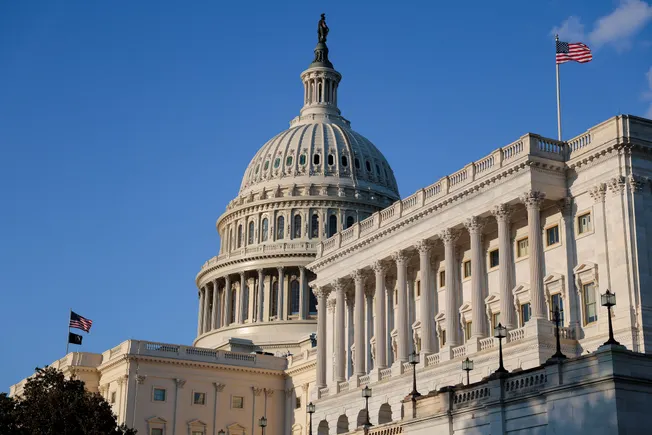
The Market Keeps Escaping: Private Credit, Real Risk, and the Infinite Regress of Financial Regulation
Share on FacebookShare on TwitterShare on LInkedIn


Every major financial regulation eventually produces the market it was trying to prevent. The Investment Company Act of 1940 was sensible enough in its original intent. Its practical effect, forty years later, was a capital drought: private equity and venture capital firms were legally capped at 100 investors, choking off funding for the growing businesses that needed it most. Congress fixed the problem by creating another regulatory structure—the Small Business Investment Incentive Act of 1980, which established Business Development Companies. In this framework, publicly-traded funds that could lend to private mid-sized businesses under SEC oversight. It worked; BDCs channeled capital to companies too large for community banks and too small for public bond markets.

Then came 2008, and another round of regulation, and another capital shortage, and another market workaround. Today that workaround has grown into a nearly $2 trillion industry that regulators call “shadow banking”—with all the sinister implications that phrase carries. The IMF wants to oversee it. Congress is considering disclosure requirements. And somewhere in a think tank, someone is already drafting the framework that will produce the next workaround, twenty years from now.

This is not a cycle of greed. It is spontaneous order doing what it always does: finding the path around the obstruction. The shadow is not a creature of finance. It is the shape of the wall. But some of what is living in that shadow today is genuinely dangerous, and understanding the difference requires being honest about both.

What Dodd-Frank Actually Did to Credit

The post-2008 regulatory apparatus rested on a reasonable diagnosis: banks had been too thinly capitalized and too willing to make leveraged loans they later packaged and sold. The solution—Dodd-Frank and the Basel III capital framework, implemented jointly from 2013—required banks to hold substantially more capital against leveraged and commercial loans. The cost of that lending at regulated banks rose sharply. The demand for it did not.

Private credit assets under management in North America stood at $170 billion in 2007. By 2024, they had reached $1.24 trillion—a sevenfold increase in 17 years. BDC assets alone grew from under $30 billion to $438 billion by the end of 2024. This is capital following demand across a regulatory boundary that regulation itself drew. Mid-sized businesses still needed financing for acquisitions, equipment, and working capital. They found new lenders. The lenders found new structures. The market kept moving.

The Knowledge That Banks Were Forced to Abandon

What private credit markets have genuinely gotten right is something the regulated banking system, optimized for originate-to-distribute, structurally cannot do: it actually learns the business it lends to. A University of Chicago analysis of direct lending found that private credit lenders secure loans with blanket liens—claims on the firm’s continuation value—in 79 percent of cases, compared to under 15 percent for banks. This is not recklessness. It reflects how deeply these lenders know their borrowers. You only bet on a firm’s future when you understand it well enough to believe in it.

This is Hayek’s knowledge problem in its most concrete financial form. The dispersed, relationship-specific information about a borrower’s true creditworthiness—management quality, competitive position, cash flow resilience—cannot be encoded in a standardized capital requirement. It lives in the judgment of a lender who has spent time with the company. When regulation pushes that lender out of the market, the knowledge leaves with them. When the market builds a new channel, that knowledge returns—imperfectly, unevenly, but genuinely.

The Risk Is Real — and Austrian Theory Explains Why

Here is where intellectual honesty requires slowing down. The Federal Reserve’s own analysis warned that private credit fund managers, under pressure to deploy capital within fixed timelines, might “choose riskier deals, offer more covenant-lite loans, or more generally reduce underwriting standards.” That prediction has materialized. Covenant-lite loans now represent 93 percent of new institutional leveraged loan issuance—structures that omit the periodic financial tests that historically gave lenders early warning when a borrower’s performance deteriorated. Without those tripwires, lenders often discover trouble only when a payment is missed or liquidity has nearly run out.

The headline default figures look contained, but stress is accumulating in less visible forms. Selective defaults—covenant waivers, distressed debt exchanges, and out-of-court restructurings—outpaced conventional defaults five-to-one in 2024. Payment-in-kind loans, where interest rolls into principal rather than being paid in cash—what one analysis calls “pencil yield,” income accrued on paper but never actually received—now account for 11 to 12 percent of BDC loan holdings. In the lower-middle market, borrowers with less than $10 million in EBITDA show covenant default rates above 31 percent, yet loans are still marked at 98.7 percent of par. That smoothness is not a sign of health, it is a sign of infrequent and self-serving valuation.

None of this should surprise anyone familiar with Austrian business cycle theory. The Federal Reserve held rates near zero for over a decade. Institutional investors, unable to generate adequate returns from conventional fixed income, flooded into private credit funds in search of yield. That pressure—dry powder in private credit has nearly quadrupled since 2014—forced managers to deploy capital into increasingly-marginal deals on increasingly generous terms. This is malinvestment—not of individual bad actors, but of an entire asset class responding rationally to a price signal that had been systematically distorted by central bank policy. The bust is being attributed to shadow banking. The origin belongs elsewhere.

The IMF’s Complaint Is Self-Incriminating

The IMF’s April 2024 Global Financial Stability Report concluded that private credit’s rapid growth and opacity warrant much closer regulatory oversight. The technical concerns are real: infrequent valuations, limited transparency, and interconnections between private funds and the regulated banking system through back-leverage structures are genuine vulnerabilities. The roughly $214 billion in bank loans extended to private credit funds means the supposed wall between shadow and regulated finance is partially illusory.

What the IMF does not address is its own role in building the conditions that made all of this inevitable. A decade of near-zero interest rates—pursued by central banks operating under frameworks the IMF endorsed—created both the supply pressure and the demand pull that inflated this market to its current scale. The Fund helped construct the distortion and now proposes to regulate the response to it. Each intervention creates the conditions that make the next seem necessary. The shadow does not shrink as the perimeter expands, it relocates.

What Honest Austrian Analysis Requires

The Austrian framework does not offer private credit a free pass. It offers a more accurate diagnosis than either its cheerleaders or its regulators are providing. Fund managers will tell you that private credit is relationship-driven, covenant-protected, and resilient through cycles. That was largely true of the asset class in 2015. It is considerably less true today, after a decade of capital inflows drove covenant standards from tighter than public markets to effectively indistinguishable from them. Competition for deals compressed the very protections that made direct lending attractive in the first place.

Regulators will tell you that more oversight and disclosure will make the system safer. But disclosure requirements will not reverse the structural distortions caused by suppressed interest rates, nor restore the covenant protections that competitive pressure eroded. They will redirect activity—as they always do—into whatever structures sit just outside the new perimeter.

What built the fragility now accumulating in private credit portfolios was not a lack of regulation. It was a decade of artificially-cheap money that compressed yield everywhere and forced capital into increasingly-marginal risks. The market grew because it served a genuine need the regulated system had abandoned. It accumulated risk because the price signal that should have constrained that growth—the interest rate—had been distorted beyond recognition. Fixing the signal would do more for financial stability than any disclosure regime. The wall produced the shadow. The central bank inflated the bubble inside it. Regulators are now proposing to build a bigger wall.



Source link

Tags: CreditEscapingfinancialInfinitemarketprivateRealRegressregulationRisk
ShareTweetShare
Previous Post

Home Chef Meals Discount Code: 18 FREE Meals + Free Shipping + Dessert for Life!

Next Post

Can the IRS Deny Your Installment Agreement Because of Home Equity? – Houston Tax Attorneys

Related Posts

edit post
Get Your Free August Rothbard Giveaway The Case for a 100 Percent Gold Dollar!

Get Your Free August Rothbard Giveaway The Case for a 100 Percent Gold Dollar!

by TheAdviserMagazine
August 1, 2026
0

What is the Mises Institute? The Mises Institute is a non-profit organization that exists to promote teaching and research in...

edit post
Gold, Socialism, and the Crisis of the Dollar

Gold, Socialism, and the Crisis of the Dollar

by TheAdviserMagazine
August 1, 2026
0

Mark Thornton opens this triple-header episode with a live Radio Rothbard appearance from Mises University, joining Ryan McMaken to discuss...

edit post
Links 8/1/2026 | naked capitalism

Links 8/1/2026 | naked capitalism

by TheAdviserMagazine
August 1, 2026
0

The (super)natural history of haloes Sacred Images Project (Micael T) How To Be a Little Less of an Idiot AporiaLab...

edit post
Challenges to the Unsustainable Exploitation of Human Beings and Nature Converged Across Civilizations

Challenges to the Unsustainable Exploitation of Human Beings and Nature Converged Across Civilizations

by TheAdviserMagazine
August 1, 2026
0

Yves here. This video continues the discussion between John Bellamy Foster and Lynn Fries over Marx’s oft-ignored environmental thinking. Here,...

edit post
Coffee Break: Science again, Dr. Fauci, Polio, Ancient Art, and a Parting Shot

Coffee Break: Science again, Dr. Fauci, Polio, Ancient Art, and a Parting Shot

by TheAdviserMagazine
July 31, 2026
0

Part the First: They Really Are Serious About Destroying American Science (but that has been clear from the beginning).  The...

edit post
These Fed alternative indicators show inflation is at lowest in years

These Fed alternative indicators show inflation is at lowest in years

by TheAdviserMagazine
July 31, 2026
0

People shop for groceries at a store in Brooklyn on July 13, 2026 in New York City. Spencer Platt |...

Next Post
edit post
Can the IRS Deny Your Installment Agreement Because of Home Equity? – Houston Tax Attorneys

Can the IRS Deny Your Installment Agreement Because of Home Equity? - Houston Tax Attorneys

edit post
Accel Entertainment Shareholders Back Board, Executive Pay at Annual Meeting

Accel Entertainment Shareholders Back Board, Executive Pay at Annual Meeting

  • Trending
  • Comments
  • Latest
edit post
Georgia Senior SNAP and Meal Resources Older Adults Can Use

Georgia Senior SNAP and Meal Resources Older Adults Can Use

July 24, 2026
edit post
New Jersey Tax-Relief Events: Three July Dates Near Seniors

New Jersey Tax-Relief Events: Three July Dates Near Seniors

July 13, 2026
edit post
Bristlecone pines growing in the White Mountains of California germinated before the Great Pyramid was built, and the oldest one alive today, nicknamed Methuselah, has been quietly adding rings for 4,855 years in soil so poor almost nothing else survives beside it

Bristlecone pines growing in the White Mountains of California germinated before the Great Pyramid was built, and the oldest one alive today, nicknamed Methuselah, has been quietly adding rings for 4,855 years in soil so poor almost nothing else survives beside it

July 8, 2026
edit post
Retail giant exits U.S. fashion after multi-million-dollar scandal

Retail giant exits U.S. fashion after multi-million-dollar scandal

July 1, 2026
edit post
Top Democrats Are Trapped in a Catch 22

Top Democrats Are Trapped in a Catch 22

July 6, 2026
edit post
Judge Who Helped Violent Illegal Alien Evade ICE Faces New Test

Judge Who Helped Violent Illegal Alien Evade ICE Faces New Test

July 31, 2026
edit post
Market Talk – July 30, 2026

Market Talk – July 30, 2026

0
edit post
XRP Scam Ring Arrested After Stealing M From 71 Investors

XRP Scam Ring Arrested After Stealing $9M From 71 Investors

0
edit post
Bipartisan group of senators introduce bill to ban legacy admissions

Bipartisan group of senators introduce bill to ban legacy admissions

0
edit post
Fiverr cancels plans to lease space on Wix campus

Fiverr cancels plans to lease space on Wix campus

0
edit post
Goldman traders are on pace for a record year. A close-up look at how they’re doing it

Goldman traders are on pace for a record year. A close-up look at how they’re doing it

0
edit post
How to save ,000 in 6 months

How to save $5,000 in 6 months

0
edit post
XRP Scam Ring Arrested After Stealing M From 71 Investors

XRP Scam Ring Arrested After Stealing $9M From 71 Investors

August 1, 2026
edit post
Amid fears of Iranian cyberattacks, Michigan joins Minnesota in reporting hackers hit water systems

Amid fears of Iranian cyberattacks, Michigan joins Minnesota in reporting hackers hit water systems

August 1, 2026
edit post
A 2022 study tracking university students’ daily experiences for a week found introversion predicted neither preference for nor enjoyment of solitude, while a separate trait, dispositional autonomy, consistently predicted who found time alone enjoyable

A 2022 study tracking university students’ daily experiences for a week found introversion predicted neither preference for nor enjoyment of solitude, while a separate trait, dispositional autonomy, consistently predicted who found time alone enjoyable

August 1, 2026
edit post
Onchain, In Court: What Happened In Crypto Legal News This Week

Onchain, In Court: What Happened In Crypto Legal News This Week

August 1, 2026
edit post
Egypt is carving a man-made river across the desert to grow food where nothing grew before

Egypt is carving a man-made river across the desert to grow food where nothing grew before

August 1, 2026
edit post
Goldman traders are on pace for a record year. A close-up look at how they’re doing it

Goldman traders are on pace for a record year. A close-up look at how they’re doing it

August 1, 2026
The Adviser Magazine

The first and only national digital and print magazine that connects individuals, families, and businesses to Fee-Only financial advisers, accountants, attorneys and college guidance counselors.

CATEGORIES

  • 401k Plans
  • Business
  • College
  • Cryptocurrency
  • Economy
  • Estate Plans
  • Financial Planning
  • Investing
  • IRS & Taxes
  • Legal
  • Market Analysis
  • Markets
  • Medicare
  • Money
  • Personal Finance
  • Social Security
  • Startups
  • Stock Market
  • Trading

LATEST UPDATES

  • XRP Scam Ring Arrested After Stealing $9M From 71 Investors
  • Amid fears of Iranian cyberattacks, Michigan joins Minnesota in reporting hackers hit water systems
  • A 2022 study tracking university students’ daily experiences for a week found introversion predicted neither preference for nor enjoyment of solitude, while a separate trait, dispositional autonomy, consistently predicted who found time alone enjoyable
  • Our Great Privacy Policy
  • Terms of Use, Legal Notices & Disclosures
  • Contact us
  • About Us

© Copyright 2024 All Rights Reserved
See articles for original source and related links to external sites.

Welcome Back!

Login to your account below

Forgotten Password?

Retrieve your password

Please enter your username or email address to reset your password.

Log In
No Result
View All Result
  • Home
  • Financial Planning
    • Financial Planning
    • Personal Finance
  • Market Research
    • Business
    • Investing
    • Money
    • Economy
    • Markets
    • Stocks
    • Trading
  • 401k Plans
  • College
  • IRS & Taxes
  • Estate Plans
  • Social Security
  • Medicare
  • Legal

© Copyright 2024 All Rights Reserved
See articles for original source and related links to external sites.