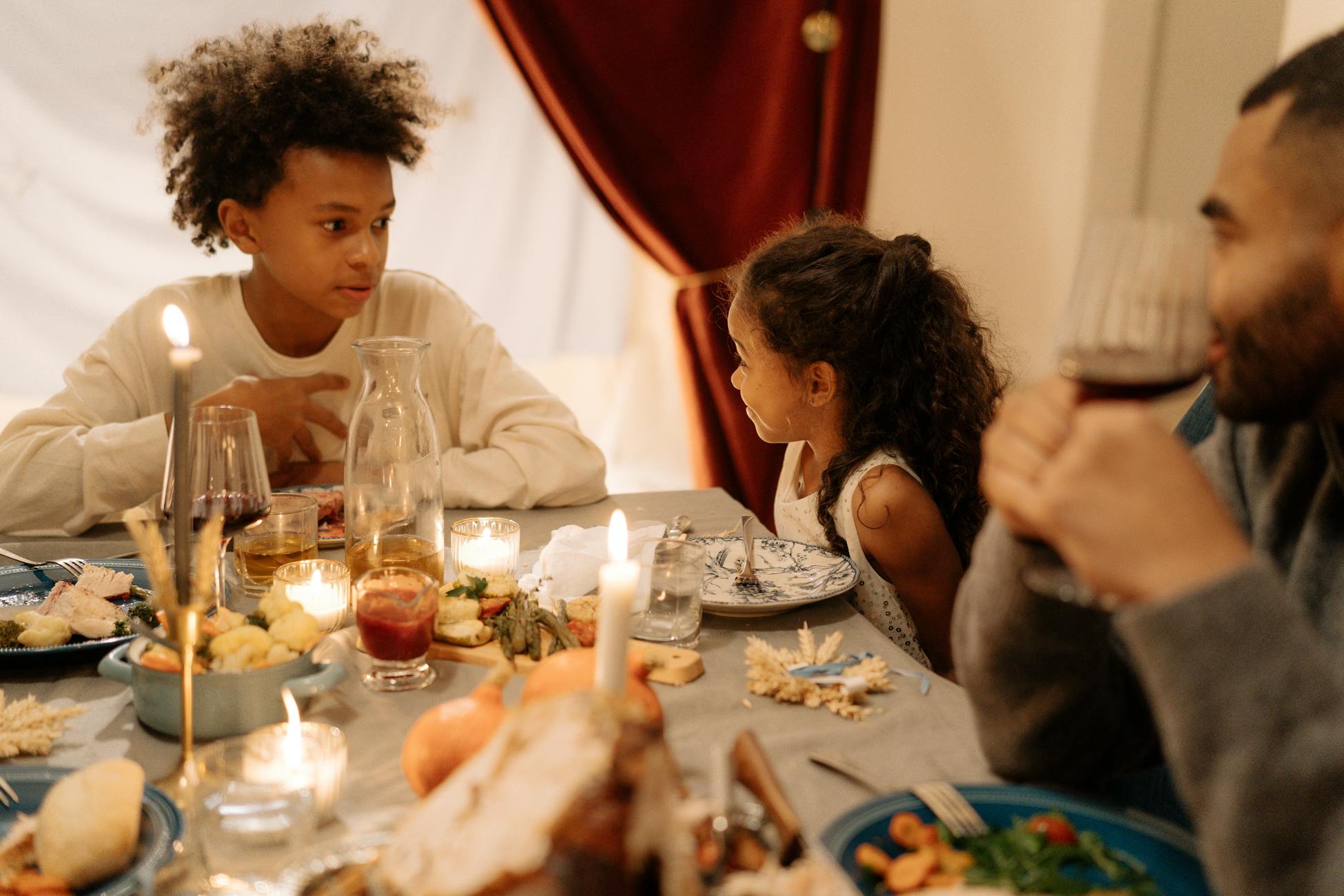
My aunt asked me about my running last Christmas. Three times. Once before lunch, once during, once on the way out the door. “Are you still doing that running thing?” I said yes each time, and each time she nodded warmly and moved on to ask my brother the same question she’d asked him last year. I love her. She loves me. And I left that house feeling like a ghost wearing my own face.
Look, the loneliest people I know aren’t single, isolated, or living alone in studio apartments. They’re the ones who go home for Christmas to a house full of family who love them, ask all the right surface questions, and somehow leave every conversation feeling more invisible than they did before they walked in. You can sit at a long table on a Sunday afternoon, pass dishes, hear your name said warmly, and still feel like the person they’re addressing is someone you used to be. Someone whose photograph still hangs on the wall.
This contradicts what most of us have been told about loneliness. The standard narrative is about isolation, empty apartments, missed calls, the elderly widow who hasn’t had a visitor in weeks. That picture is real, but it’s not the whole picture. There’s another kind of loneliness that doesn’t show up in any census data, and it’s the one I find myself writing about more and more: the loneliness of being surrounded.
The questions that prove they don’t know you
Pay attention to what your family asks you. Not whether they ask, they probably do. What they ask.
How’s your health. How’s work. Are you sleeping enough. What are you up to this weekend. Are you still doing that running thing. When are you coming home next.
These are logistics questions. They map your surface, your schedule, your body, your geographic location. They confirm you’re alive and functioning. None of them require you to actually exist as a person with an interior life. You could answer all of them with a spreadsheet.
What they almost never ask: what are you thinking about lately. What’s changed in how you see things. What did you used to believe that you don’t anymore. Who are you becoming. What scares you. What’s the question you can’t stop turning over in your head.
Those questions imply you’re still in motion. The logistics questions assume you’re a fixed object they already understand, and they just need a status update.
Why this hurts more than being alone
Solitary loneliness has a clean shape to it. You know what it is. You’re by yourself, you’d like company, the gap is obvious. There’s a strange dignity in it.
The loneliness of being unseen in familiar company is something else entirely. Loneliness is the experience of disconnection, a whole-body feeling shaped less by who’s physically near you and more by whether the connection registers as real. You can be in a room of seven people who share your DNA and feel a more specific ache than you would alone in your apartment, because the alone version doesn’t come with the dissonance of being addressed without being recognized.
This is the part that messes with people. If you say it out loud, I feel lonely around my family, you sound ungrateful. You have a family. They call you. They include you. They send birthday messages. What more do you want?
What you want is to be known by them. Not loved as a memory. Known as you currently exist.
The frozen image problem
Here’s what I think is actually happening, psychologically. Families form an image of you somewhere between the ages of about twelve and twenty-two, the years they had the most continuous, daily contact with you. That image hardens. It becomes the version of you they carry around in their heads.
Then you leave. You go to university, move cities, move countries, build a career, fall in love, have a crisis, recover from the crisis, develop a worldview, change your worldview, become someone. And during all of that, the image they’re carrying doesn’t update. It can’t, because they weren’t there for the updates.
Some psychologists and writers have explored how people who feel lonely in their own families aren’t difficult or ungrateful, they’re often being loved as someone they no longer are. That’s the trap. The love is real. It’s just aimed at a previous version. And being loved-but-not-seen produces a specific exhaustion that being unloved doesn’t.
I notice this in my own life now that I live between Saigon and Singapore. When I go back to Melbourne, my brothers are sharp, they’ve stayed close, the image gets refreshed. But more distant relatives still ask me about things I haven’t cared about in a decade. They ask about psychology because I studied psychology. They don’t ask what Buddhism has actually meant to me, or what becoming a father has cracked open, or what I’m afraid of now that I wasn’t afraid of at twenty-five. Those questions would require curiosity. Logistics questions don’t.
The role you got assigned
Most families assign roles early. The smart one. The funny one. The sensitive one. The reliable one. The screw-up. The quiet one. I was the easy child, the one who didn’t make trouble, didn’t take up space, learned early to manage my own emotional weather silently so nobody else had to.
The role becomes a script. The questions you get asked are the ones the script accommodates. Nobody asks the funny one if they’re depressed. Nobody asks the reliable one if they want to burn it all down. Nobody asks the quiet one what they actually think, because the quiet one’s job is to be quiet.
Some people simply learned that expressing what was happening internally turned the conversation into a referendum on whether they were allowed to feel it at all. So they stopped trying. The script holds. Everyone seems fine. Family dinners proceed.
And the loneliness gets worse, not better, the more time passes. Because every interaction that confirms the old role makes it less likely you’ll ever break out of it. By thirty-five, by forty-five, you’ve spent decades being addressed as a character who stopped resembling you somewhere around your second year of university.
The myth of “at least you have family”
People who live alone get told to fix their loneliness by getting more people in their life. People who live surrounded by family are often told to be grateful or that they should feel less lonely because they have family around them, even when those relationships feel superficial.
People who live alone often report less loneliness than people in unhappy households, because solo living forces you to build a network of chosen relationships that actually engage with who you are now. The alternative, the household that runs on routine and proximity without curiosity, generates a kind of loneliness that’s harder to name precisely because it looks, from the outside, like the absence of a problem.
I’ve written before about how the people who appear most resilient are often the ones who’ve quietly accepted that nobody around them is going to ask the questions that would let the resilience drop. The two patterns share a root. If your environment doesn’t have room for who you actually are, you build environments inside yourself.

What older adults are showing us
The data on loneliness in later life is brutal, and it doesn’t sort the way you’d expect. The TILDA longitudinal study on Irish older adults found that loneliness in later life correlates with an increased risk of wishing for one’s own death, and the people experiencing it weren’t necessarily isolated. Many were embedded in families. The protective factor wasn’t proximity to relatives. It was meaningful engagement: religious community, regular conversation that mattered, being asked questions that required a real answer.
I came across a video recently from Justin Brown that explores the flip side of this—how our Western obsession with being “special and unique” ironically creates the very isolation we’re trying to escape, leaving us surrounded by people yet fundamentally unknown.
Which suggests that one decent conversation with someone who actually wants to know you is doing more psychological work than fifteen check-in calls about your blood pressure, not because depth is rare, but because most of our daily exchanges have been hollowed out into logistics.
What to do if this is you
I’ll be careful here, because I don’t think the answer is to march into your next family gathering demanding to be seen. That tends to go badly. The script is older than you, and other people are equally trapped in it.
What I’ve found useful is smaller. Three things.
First, stop expecting the people who knew you at sixteen to be the ones who know you at thirty-eight. Some of them might catch up. Most won’t. That’s not because they don’t love you. It’s because the version of you they have is the version they got the most data on, and you stopped sending data a long time ago.
Second, find the one or two people in your life, they don’t have to be family, who ask the other kind of question. The ones who want to know what you’re thinking, what’s shifting, who you’re becoming. Tend that ground carefully. Chronic loneliness in adulthood often isn’t about lacking people. It’s about lacking the kind of people in front of whom you’re allowed to stop performing.
Third, become someone who asks better questions. If you’ve felt the specific ache of being addressed without being recognized, you already know what the antidote sounds like. Use it on the people around you. Ask your sibling what they’re afraid of. Ask your father what he used to believe that he doesn’t anymore. Ask your friend what’s actually changed in them this year. You’ll be amazed how many people have been waiting their whole adult life for someone to ask.
Honestly, I’ve stopped buying the “both things can be true” line on this one. Yes, family dinner can be warm. But warm isn’t the bar. If you spend every Sunday being addressed as someone you stopped being fifteen years ago, that’s not a quirk of family life you graciously accept, that’s a slow erosion you’re calling peace.
So here’s where I land. Stop protecting the surface. Ask the harder question at the table and see who shows up. Some people will rise to it, and you’ll find out your father has been waiting decades for someone to ask. Others won’t, and you’ll have your answer about where to spend your good hours. Either way you’ll know something real, which is more than another round of “how’s the running” was ever going to give you.