Listen to the article
A growing number of Republican-controlled states have introduced legislative and policy proposals that would allow their public colleges to leave their long-standing accreditors for a newly founded accrediting body.
The Commission for Public Higher Education, a nascent accrediting body, is moving to potentially take on those and other public institutions as members. The CPHE is financially backed by the state of Florida and the Trump administration and overseen largely by state university system appointees, a model that’s raised alarms among some critics.
Recent state legislation has aimed to make it easier for colleges to move to CPHE or other accreditors.
Under recent Florida statute, for instance, public colleges must switch their accreditors by 2032. Meanwhile, states like Iowa and Louisiana are considering policies to move their institutions to the new commission’s purview.
Six public university systems in Republican-leaning states formed CPHE last June, which is working to accredit 10 colleges to start. Those institutions will need to be accredited under another existing accreditor as well until the CPHE receives federal recognition in order to continue receiving federal funding.
CPHE emerged after two of the founding systems had public spats with their accreditor over shared governance and conflict of interest concerns. It also formed as Republican-controlled states have tried to assert more control over the curriculum and operations of public colleges and universities.
From the commission’s perspective, it would be reasonable for public colleges to switch to CPHE because its initial standards were crafted specifically for institutions that share similar missions, governance structures and finances, said Cameron Howell, a CPHE senior advisor.
“In this environment, it makes sense for a new accreditor to specialize” in certain kinds of colleges and universities rather than their locations, Howell said.
Yet some accreditation experts and higher ed advocates fear the new commission would hand states control over the same accreditor that in turn decides whether their public universities are meeting its requirements.
“You can just see the conflict of interest there,” said Isaac Kamola, director of the American Association of University Professors’ Center for the Defense of Academic Freedom.
Threats to independence and academic freedom?
The State University System of Florida joined Texas A&M University, the University of North Carolina, the University of South Carolina, the University of Tennessee, and the University of Georgia systems as founders of CPHE. Florida lawmakers gave $4 million to help start the commission.
So far, CPHE buy-in has been better than expected, said Howell.
Interest from public institutions in joining the accrediting body surpassed the commission’s business plan, which forecast an initial cohort of just six to eight universities, Howell said. The commission capped the first group at 10 institutions — the maximum number they believed they could handle, he said.
“What we’re describing makes good sense to institutions in terms of policy and process,” said Howell.
Despite what Howell described as heavy interest in CPHE, it must first be recognized by the Education Department before its stamp of approval allows colleges to access federal funds — and that process takes years. The commission plans to file for recognition in late 2027, Howell said.
However, the timetable could be affected by expected Education Department regulations that could speed up the federal recognition process for emerging accreditors.
“You can just see the conflict of interest there.”

Isaac Kamola
Director, American Association of University Professors’ Center for the Defense of Academic Freedom
CPHE’s board of directors currently consists of six individuals nominated by the six founding systems and two public members that were elected by the board. The public members — a role meant to provide an independent and outside perspective to accrediting boards — are former Georgia State University President Mark Becker and former University of Colorado Denver Chancellor Michelle Marks.
Such a move could make the governing body less insular and could help root out conflicts of interest, Howell said.
“It demonstrates that there are individuals with decision making power who do not have ties to the university systems that founded the commission or to the states where those systems are located,” said Howell. “There are people making decisions who are not associated with the institutions in question, and strictly speaking, don’t have a conflict of interest.”
But the makeup of CPHE’s board gives pause to Matthew Boedy, president of AAUP’s Georgia conference. According to Boedy, its leadership would essentially give state politicians control over the accreditor, allowing them to put pressure on everything from faculty hiring and courses to textbooks, student support services and DEI initiatives.
“Accreditation is supposed to be independent and supposed to have a watchdog effect on universities and university systems,” said Boedy.
Some experts have also raised concerns about academic freedom. Academic freedom only works when institutions have autonomy from those in power that is protected through self-regulation, said Kamola.
“Accreditation was formed as the process for doing that,” he said.
Historically, accreditation has been set up to ensure that institutions meet certain standards before they can be eligible for federal money, Kamola said. But it’s also a process of peer-review — whereby the profession, which is a community of scholars, regulates itself, he said.
Howell said an additional public member could be added to the commission’s board down the road, as could members from other university systems. That would dilute any single board member’s authority and make it more difficult for any one state to exert outsized influence, he said.
Board members also have a fiduciary duty to put the commission’s interest over personal or institutional interests, Howell said. And they must recuse themselves if they have a conflict of interest, he added.
As CPHE continues down its path toward recognition, state lawmakers could pursue more legislation aimed at accreditation reform given the national debate on the issue, said Peter Lake, a law professor at Florida’s Stetson University who has expertise in accreditation standards.
In response to red states pushing their public colleges to join CPHE, some blue or purple states could react in a variety of different ways including moving to block their public institutions from such accreditation maneuvers, he said.
“Right now, a lot of people don’t fully understand what the implications may be,” said Lake.
How hard is it to switch accreditors?
The conservative-led movement to overhaul the accreditation system started after the first Trump administration finalized regulations in 2019 that eliminated the traditional geographic boundaries of the seven major accreditors. The rule aimed to create more competition in the accreditor marketplace and reduce the regulatory burden on colleges and accreditors, the Department of Education stated at the time.
Following the regulatory overhaul, opportunities emerged for universities to choose new accreditors more focused on the specific ways they operate, said Kevin Kinser, an education professor at Penn State University.
But just a few institutions have so far changed accreditors since those regulations took effect in 2020 — including the University of Arizona and Brigham Young University–Hawaii, said Jan Friis, senior vice president for government affairs at the Council for Higher Education Accreditation, an accreditation advocacy group.
“The ability to change accreditors has been around for a number of years, but very, very few institutions have done it,” said Friis.
That’s because accreditors and institutions build a rapport over time, said Friis. Accreditors understand the context their institutions operate under and the institutions understand their accreditor’s obligations, he said.
In addition, the process of switching accreditors can be expensive for colleges because they may need to pay two accreditors for a period and devote additional faculty and staff time to preparing for two reviews simultaneously, said Friis.
“You’re basically having to do the work for two accreditors during that interim time period,” said Kinser. “It’s not like you flip a switch and one goes off and the other goes on. You have to do a lot of stuff with both switches on.”
The second Trump administration, meanwhile, has continued the push to give colleges more accreditation options.
You’re basically having to do the work for two accreditors during that interim time period. It’s not like you flip a switch.
Kevin Kinser
Education professor, Penn State University
Trump signed a 2025 executive order that, among other things, resumed the Education Department’s review of new accreditors and ordered the agency to streamline the recognition process. And the Education Department is hashing out new regulatory language with key stakeholders — including representatives for students, colleges and accreditors — to overhaul the accreditation system.
The Education Department also awarded several grants to groups forming new accrediting agencies, including CPHE. The $1 million award to CPHE will enable the commission to not charge dues and fees to the institutions it accredits until it receives federal recognition, said Howell.
Florida sparks accreditation reform push
The state-led movement to change accreditors has come as GOP lawmakers attempt to more tightly control their public colleges.
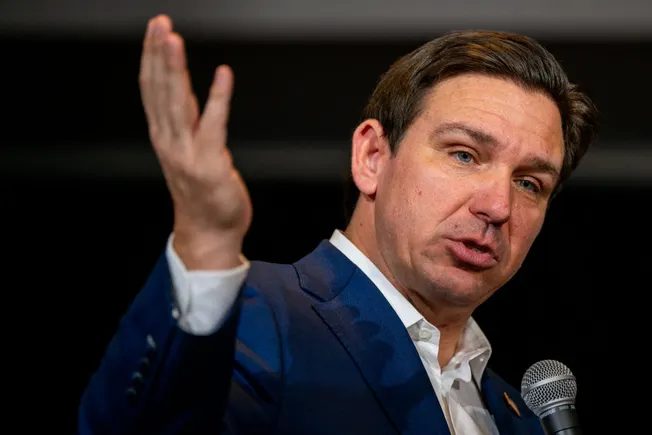
In Florida, for instance, the state passed a 2023 law that blocked public colleges from spending money on diversity, equity and inclusion initiatives. When announcing the launch of CPHE two years later, Florida Gov. Ron DeSantis publicly opposed accreditors’ diversity standards, claiming that the state’s public colleges were told they wouldn’t be accredited unless they “do DEI.”
But the accreditor that’s historically overseen Florida universities, the Southern Association of Colleges and Schools Commission on Colleges, decided against establishing a DEI standard in 2023.
“Accreditation is supposed to be independent and supposed to have a watchdog effect on universities and university systems.”
Matthew Boedy
President, AAUP’s Georgia conference
Still, SACSCOC has publicly sparred with the state.
For example, it raised conflict of interest concerns in 2021 about the selection process for Florida State University’s next president.
At the time, Richard Corcoran — who served on the state system’s governing board, which appoints university presidents — was among the finalists to be Florida State’s next leader. Corcoran ultimately did not get the post, but he was later named president of the New College of Florida.
Following the public spat, Florida lawmakers passed a law in 2022 forcing state public institutions to switch accreditors every cycle, which runs 10 years for SACSCOC.
“Florida’s students deserve a quality, affordable education and don’t need ideological activists and political organizations determining what they should learn,” DeSantis said in a statement when he signed the legislation.
Florida lawmakers later watered down the law to mandate that public colleges switch accreditors just once before the end of 2032.
“Florida saw this as something it didn’t want to continue indefinitely,” Kamola said. The state passed the law as a shock-and-awe move designed to destabilize the accreditation process, he said, but in practice “they realized that this turns out to be bad policy,” he said.
Many public institutions in Florida are now looking to leave or have already left SACSCOC for other accreditors, including the Higher Learning Commission, and eventually CPHE, Friis said.
Late last year, the University of Central Florida, the College of the Florida Keys and Florida SouthWestern State College became the first public institutions in the state to gain initial accreditation from HLC.
Growing momentum among red states
Other states have also passed or introduced laws and policies that would allow their public universities to switch to CPHE or another accreditor.
Like Florida, North Carolina enacted a law in 2023 mandating its public colleges switch accreditors every cycle. Lawmakers passed the measure after SACSCOC inquired into concerns about whether UNC-Chapel Hill created a new civics life school without adequately involving faculty — potentially running counter to higher ed’s shared governance model.
The state quietly amended the law in 2025 by rolling back the requirement to change accreditors. Instead, the law now gives the state’s public colleges the option to stay with their current accreditor or pursue a different one. The statute lists CPHE as among the accreditors they can switch to.
Neither the governor’s office, nor the chairs of the state’s Senate and House higher education committees responded to requests for comment.
Likewise, Kansas enacted legislation last year that allows its public universities to change their accreditor. Iowa, meanwhile, is considering legislation requiring its state universities to seek accreditation specifically with CPHE.
Iowa’s governor signed legislation last year that permitted state universities to be accredited by any federally recognized accreditor — striking language mandating that they be accredited by the Higher Learning Commission.
And a task force assembled by Louisiana Gov. Jeff Landry has also recommended the state’s public universities join CPHE — a move that would require legislation. State lawmakers in Louisiana introduced a bill earlier this year that would allow the state’s public institutions to leave the SACSCOC for another accreditor.
Some states with public systems, meanwhile, allow state institutions to switch their accreditors by vote of their governing bodies, said Lake. Georgia’s university system is largely constitutionally independent from the state so the decision to allow its institutions to move to the commission is coming from the system’s board of regents, Boedy said.
The new accreditation landscape will “upset the apple cart for a lot of institutions,” Lake said.
“We’re about to see the most significant reformation of accrediting standards and accrediting bodies we have seen in most people’s lifetimes in higher ed,” he said.










-1024x683.jpg "The Key Battles for Senate Control Are Set")