No Result
View All Result
SUBMIT YOUR ARTICLES
  • Login
Saturday, June 20, 2026
TheAdviserMagazine.com
  • Home
  • Financial Planning
    • Financial Planning
    • Personal Finance
  • Market Research
    • Business
    • Investing
    • Money
    • Economy
    • Markets
    • Stocks
    • Trading
  • 401k Plans
  • College
  • IRS & Taxes
  • Estate Plans
  • Social Security
  • Medicare
  • Legal
  • Home
  • Financial Planning
    • Financial Planning
    • Personal Finance
  • Market Research
    • Business
    • Investing
    • Money
    • Economy
    • Markets
    • Stocks
    • Trading
  • 401k Plans
  • College
  • IRS & Taxes
  • Estate Plans
  • Social Security
  • Medicare
  • Legal
No Result
View All Result
TheAdviserMagazine.com
No Result
View All Result
Home College

Building Confidence and Finding Your Professional Voice

by TheAdviserMagazine
2 months ago
in College
Reading Time: 5 mins read
A A
Building Confidence and Finding Your Professional Voice
Share on FacebookShare on TwitterShare on LInkedIn


Jirsak/Shutterstock

For years, I stayed silent in team meetings and larger group discussions. The fear of speaking up, combined with lingering doubt about whether I had something valuable to contribute, kept me on the sidelines. This is common for early-career professionals.

Finding your professional voice — and feeling comfortable in your own skin at work — doesn’t happen overnight. It takes time, practice, and the right conditions. Looking back, there are several experiences that helped me gradually find my voice. As you navigate your own journey to speaking up, these reflections may offer some guidance and reassurance.

It’s okay to be quiet at first. Confidence isn’t developed overnight.

“[In the early career stage], many individuals are still calibrating their sense of competence and belonging in professional environments,” said Rubab Jafry O’Connor, a professor in the Tepper School of Business at Carnegie Mellon University.

She explains that two factors tend to drive hesitation. “First, there’s a fear of judgment — the concern that speaking up may expose gaps in knowledge or invite criticism. Second, there can be a silent pressure to contribute something “perfect” or highly insightful, which can be paralyzing.”

While these feelings are common, O’Connor said that “early-career professionals often underestimate the value of their perspective.”

“They assume that unless their idea is fully formed or exceptional, it’s not worth sharing. In reality, organizations may benefit from diverse viewpoints, and even partially formed ideas can spark meaningful discussion.”

She encourages professionals to start small. “Each time someone speaks up, they gather evidence that they can contribute effectively,” she explained. “This is just like any habit! The more you practice, the more second nature it becomes.”

Strategies O’Connor recommends include:

Setting specific, manageable goals (e.g., contribute once per meeting, ask one question, or share one idea) Preparing in advance, so you have a point or question ready — this reduces the pressure of thinking on the spot Starting in lower-stakes settings, such as one-on-one conversations or small group discussions Seeking out mentors or role models, observing how they communicate and learning from their approach Breathing and pausing when speaking

“The challenge is less about capability and more about confidence and perceived risk,” she said. “Willingness to speak up evolves as individuals accumulate experiences that replace fear with familiarity and self-trust.”

Remember that there is also value in observing when you’re new to a role/team. This helps build knowledge, credibility, and a sense of where you can contribute. Even without speaking yet, you’re taking steps toward joining the conversation.

As you learn the ropes and start to stretch your comfort zone, it becomes much easier to join the broader conversations happening across your team and institution.

Takeaway: In a new role, hesitation is understandable. Confidence builds gradually – start with small, intentional contributions. And remember that listening can be just as valuable as speaking.

Finding work that matches your strengths builds confidence.

Early in my career, it wasn’t just fear that kept me from speaking up. Sometimes I genuinely felt like I had little to contribute. I didn’t have the expertise, the next big idea, or the same level of passion as others in the discussion.

Over time, it became clear that the challenge wasn’t just confidence — there was a lack of fit. Being in a role that aligns with your skills, training, and interests makes a huge difference. You naturally feel more invested in the conversations and more comfortable adding your perspective.

Takeaway: Gaining the confidence to speak up and share ideas is easier when your work aligns with your strengths and interests. Seek opportunities that are a true match for you. And remember, sometimes you may take a leap into a role only to realize it isn’t the right fit yet. It happens. The key is to recognize it and change course.

It’s easier to contribute when you feel safe and supported.

Being surrounded by colleagues and leaders who encourage your voice — gently, not forcefully — can make a significant difference. They don’t necessarily put you on the spot in meetings. Instead, they create openings for everyone to share their perspective and consistently reinforce that all opinions and experiences matter.

This aligns with research on psychological safety. On an episode of Adam Grant’s podcast WorkLife, Amy Edmondson, a professor at Harvard Business School, described this as “a climate in which one feels one can be candid. It’s a place where interpersonal risks feel doable, interpersonal risks, like speaking up with questions and concerns, and half-baked ideas, and even mistakes.”

The catch, Grant said, is that “psychological safety doesn’t just bubble up naturally. Leaders have to create it.”

This is particularly important because, as Edmondson warns, people often misjudge psychological safety based on their past experiences — from childhood, previous jobs, etc.

“They come into a new setting, and it might be a very psychologically safe environment, but they’re still holding back because of that programming,” she explained. “What this then implies is that we’ve got to do better than just not be abusive. We’ve got to help people be incredibly encouraging and inviting of ideas, of observations, of questions.”

O’Connor echoed these sentiments. She encourages leaders to normalize imperfection and show employees that “not every contribution needs to be 100% polished.” She also recommends creating structured opportunities for input, such as round-robin discussions.

Still, not all leaders realize they need to encourage certain voices, so even if you aren’t getting clear signals, you can test the waters with small contributions — a question here, a suggestion there — and see how your voice is received.

Takeaway: Surround yourself with colleagues and leaders who encourage your ideas and create a safe space for contribution. Psychological safety helps your voice flourish. But even if you don’t see obvious signals, don’t assume it’s unsafe — test out small contributions.

It’s not about speaking constantly, but purposefully.

Finding your professional voice doesn’t mean being the most vocal person in the room. What matters more is learning when to speak up.

You may not have a strong opinion to share in each meeting, but it will become easier to speak up when a decision doesn’t feel right or could be detrimental to the team, the institution, or your students. While you may not be able to change the outcome every time, it’s about caring enough to share your perspective.

Takeaway: You may not always have something to contribute, and that’s okay. The key is to speak up on the issues that matter the most.

The Bottom Line

Finding your professional voice is not “a single breakthrough moment,” O’Connor said. It takes time and a commitment to contributing even when it feels uncomfortable.

“Rather than waiting to ‘feel ready,’ the process is about acting your way into confidence — taking small steps, learning from each experience, and gradually building a strong, authentic professional presence,” she said.

As you find the right work, surround yourself with the right team, and take incremental risks, your voice will flourish. You may still not be the most vocal person in the room, but when it matters, you speak up — and that is what counts.




Source link

Tags: BuildingConfidenceFindingProfessionalvoice
ShareTweetShare
Previous Post

Navigating tariff refunds through the CAPE system

Next Post

partner relationship management systems

Related Posts

edit post
Crizac takes 37% stake in ForeignAdmits

Crizac takes 37% stake in ForeignAdmits

by TheAdviserMagazine
June 19, 2026
0

Crizac has taken a strategic stake in ForeignAdmits, acquiring 37.41% of the Indian company, which provides education finance and visa...

edit post
Two Professors, Two Approaches to AI and Assignment Design – Faculty Focus

Two Professors, Two Approaches to AI and Assignment Design – Faculty Focus

by TheAdviserMagazine
June 19, 2026
0

The education landscape is undergoing profound transformation as artificial intelligence (AI) tools are becoming more accessible and powerful. The days...

edit post
Kansas board adopts definitions for ban of DEI-CRT in required courses

Kansas board adopts definitions for ban of DEI-CRT in required courses

by TheAdviserMagazine
June 18, 2026
0

Dive Update: The Kansas Board of Regents on Wednesday unanimously approved a definition of “DEI-CRT” to comply with a new...

edit post
British Council moots axing 25% of workforce to pay off pandemic loan

British Council moots axing 25% of workforce to pay off pandemic loan

by TheAdviserMagazine
June 18, 2026
0

British Council’s future role hangs in the balance as NAO prompts it to agree a repayment plan with the FCDO....

edit post
Here’s the latest on the Education Department’s interagency agreements

Here’s the latest on the Education Department’s interagency agreements

by TheAdviserMagazine
June 18, 2026
0

The U.S. Department of Education now has 14 interagency agreements with six other federal agencies, continuing the Trump administration’s efforts...

edit post
Who gets to feel transformed by study abroad?

Who gets to feel transformed by study abroad?

by TheAdviserMagazine
June 17, 2026
0

Study abroad is frequently framed as life-changing. The narratives are familiar: expanded horizons, newfound confidence, personal growth. But for many...

Next Post
edit post
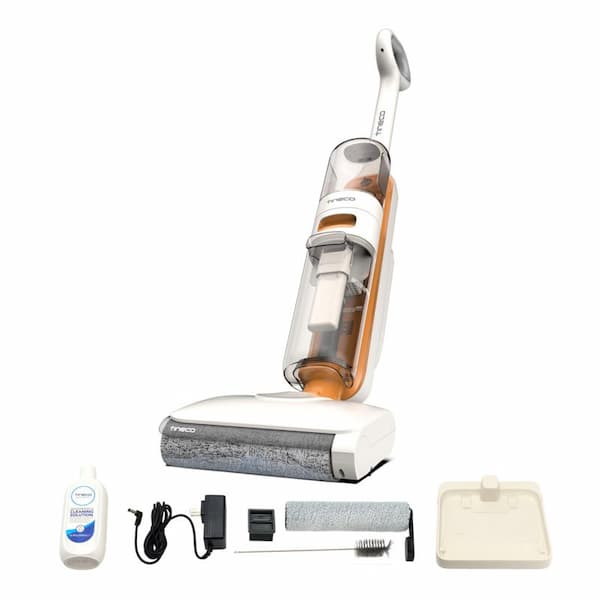
Tineco GO H2O Max Complete Cordless Floor Washer Vacuum only 4.99 shipped (Reg. 0)! {Today Only}

Tineco GO H2O Max Complete Cordless Floor Washer Vacuum only $174.99 shipped (Reg. $280)! {Today Only}

edit post
RBI draft for upper layer non-banks affects CICs disproportionately, raises compliances costs

RBI draft for upper layer non-banks affects CICs disproportionately, raises compliances costs

  • Trending
  • Comments
  • Latest
edit post
5 Pennsylvania Rebate Rules Seniors Should Check Before the Property Tax/Rent Deadline

5 Pennsylvania Rebate Rules Seniors Should Check Before the Property Tax/Rent Deadline

June 18, 2026
edit post
Florida Roads Become a Battleground for Illegal Immigration

Florida Roads Become a Battleground for Illegal Immigration

June 9, 2026
edit post
Louisiana’s Age-Tiered Homestead Exemption: 8 Details About the Proposed 2028 Amendment

Louisiana’s Age-Tiered Homestead Exemption: 8 Details About the Proposed 2028 Amendment

June 15, 2026
edit post
The 8 States That Still Tax Social Security in 2026

The 8 States That Still Tax Social Security in 2026

June 6, 2026
edit post
It’s Time To Talk About Massie

It’s Time To Talk About Massie

May 23, 2026
edit post
A Tax on Social Media – Blue-State Governments’ Newest Ploy

A Tax on Social Media – Blue-State Governments’ Newest Ploy

June 5, 2026
edit post
Rate cuts? Even the Fed’s new chair admits companies are easily raising capital on financial markets

Rate cuts? Even the Fed’s new chair admits companies are easily raising capital on financial markets

0
edit post
POS Data Management Solutions: A Strategic Guide for 2026

POS Data Management Solutions: A Strategic Guide for 2026

0
edit post
Market Talk – June 18, 2026

Market Talk – June 18, 2026

0
edit post
Why a resilient jobs market keeps turning into a Bitcoin sell signal

Why a resilient jobs market keeps turning into a Bitcoin sell signal

0
edit post
What Yale Researchers Found About Positive Aging Beliefs—and Why It Matters After 60

What Yale Researchers Found About Positive Aging Beliefs—and Why It Matters After 60

0
edit post
Copart (CPRT) Has a Salvage-Auction Network and Insurer Workflow Moat Bigger Than a Used-Car Cycle Trade

Copart (CPRT) Has a Salvage-Auction Network and Insurer Workflow Moat Bigger Than a Used-Car Cycle Trade

0
edit post
Rate cuts? Even the Fed’s new chair admits companies are easily raising capital on financial markets

Rate cuts? Even the Fed’s new chair admits companies are easily raising capital on financial markets

June 20, 2026
edit post
What Yale Researchers Found About Positive Aging Beliefs—and Why It Matters After 60

What Yale Researchers Found About Positive Aging Beliefs—and Why It Matters After 60

June 20, 2026
edit post
Why a resilient jobs market keeps turning into a Bitcoin sell signal

Why a resilient jobs market keeps turning into a Bitcoin sell signal

June 20, 2026
edit post
The Median American Paycheck: ,235 a Week Becomes 0 After Taxes and Deductions

The Median American Paycheck: $1,235 a Week Becomes $850 After Taxes and Deductions

June 20, 2026
edit post
I let my phone die for one entire weekend without telling anyone — and the strange thing wasn’t who didn’t notice, it was realizing how many of my closest relationships had been running on something closer to maintenance than to actual presence

I let my phone die for one entire weekend without telling anyone — and the strange thing wasn’t who didn’t notice, it was realizing how many of my closest relationships had been running on something closer to maintenance than to actual presence

June 20, 2026
edit post
Iran floats ‘insurance fees’ and asserts control over Hormuz

Iran floats ‘insurance fees’ and asserts control over Hormuz

June 20, 2026
The Adviser Magazine

The first and only national digital and print magazine that connects individuals, families, and businesses to Fee-Only financial advisers, accountants, attorneys and college guidance counselors.

CATEGORIES

  • 401k Plans
  • Business
  • College
  • Cryptocurrency
  • Economy
  • Estate Plans
  • Financial Planning
  • Investing
  • IRS & Taxes
  • Legal
  • Market Analysis
  • Markets
  • Medicare
  • Money
  • Personal Finance
  • Social Security
  • Startups
  • Stock Market
  • Trading

LATEST UPDATES

  • Rate cuts? Even the Fed’s new chair admits companies are easily raising capital on financial markets
  • What Yale Researchers Found About Positive Aging Beliefs—and Why It Matters After 60
  • Why a resilient jobs market keeps turning into a Bitcoin sell signal
  • Our Great Privacy Policy
  • Terms of Use, Legal Notices & Disclosures
  • Contact us
  • About Us

© Copyright 2024 All Rights Reserved
See articles for original source and related links to external sites.

Welcome Back!

Login to your account below

Forgotten Password?

Retrieve your password

Please enter your username or email address to reset your password.

Log In
No Result
View All Result
  • Home
  • Financial Planning
    • Financial Planning
    • Personal Finance
  • Market Research
    • Business
    • Investing
    • Money
    • Economy
    • Markets
    • Stocks
    • Trading
  • 401k Plans
  • College
  • IRS & Taxes
  • Estate Plans
  • Social Security
  • Medicare
  • Legal

© Copyright 2024 All Rights Reserved
See articles for original source and related links to external sites.