No Result
View All Result
SUBMIT YOUR ARTICLES
  • Login
Monday, April 6, 2026
TheAdviserMagazine.com
  • Home
  • Financial Planning
    • Financial Planning
    • Personal Finance
  • Market Research
    • Business
    • Investing
    • Money
    • Economy
    • Markets
    • Stocks
    • Trading
  • 401k Plans
  • College
  • IRS & Taxes
  • Estate Plans
  • Social Security
  • Medicare
  • Legal
  • Home
  • Financial Planning
    • Financial Planning
    • Personal Finance
  • Market Research
    • Business
    • Investing
    • Money
    • Economy
    • Markets
    • Stocks
    • Trading
  • 401k Plans
  • College
  • IRS & Taxes
  • Estate Plans
  • Social Security
  • Medicare
  • Legal
No Result
View All Result
TheAdviserMagazine.com
No Result
View All Result
Home Market Research Economy

The Money Multiplier – Myth or Reality?

by TheAdviserMagazine
2 weeks ago
in Economy
Reading Time: 5 mins read
A A
The Money Multiplier – Myth or Reality?
Share on FacebookShare on TwitterShare on LInkedIn


According to much popular economics, the current monetary system amplifies the initial monetary injections of money. Thus, if the central bank injects $1 billion into the economy, and banks hold 10 percent in reserves against deposits, this will allow the first bank to lend 90 percent of the $1 billion. The $900 million, in turn, will end up with the second bank, which will lend 90 percent of the $900 million. The $810 million will end up with a third bank, which, in turn, will lend out 90 percent of $810 million, and so on.

Consequently, the initial injection of $1 billion will become $10 billion (i.e., money supply will expand by a multiple of 10). Note that, in this example, the central bank has actively initiated the monetary pumping of $1 billion, which, in turn, banks have expanded to $10 billion.

Economists from the Post-Keynesian school of economics (PK) have expressed doubt about the validity of the popular framework of the money multiplier. They argue that the key source of money expansion is the demand for loans together with the willingness of banks to lend. Furthermore, for the PK’s, the central banks are not actively engaged in the expansion of money. The role of the central bank in the modern banking system is to perform a balancing act. For instance, if on a particular day the government’s intake of cash exceeds outlays this leads to a deficiency of cash on the day. To prevent a scramble for cash in the money market and a subsequent increase in the overnight interest rate, the central bank must inject an appropriate amount of cash in order to keep the interest rate at the target, or so it is held by the PK’s. In this way of thinking the key source of monetary expansion is commercial banks that—via an increase in lending—set an increase in the money supply.

The supply of loans, according to the PK’s, is never independent of demand—banks supply loans only because someone is willing to borrow the bank’s money by issuing an IOU to a bank. Again, according to this way of thinking, the driving force of bank credit expansion, and thus money supply expansion, is the increase in demand for loans.

According to the PK’s, banks will always be happy to oblige the demand of a good quality borrower. But, if this is so, how is the demand for credit accommodated? What is the source of the supply of credit? It seems that, by the PK’s, the source of the supply is borrowing by banks.

When a bank borrows from another entity all that we will have here is a shift of money from the entity to the bank with no change in the money supply. Also, according to the PK’s, the central bank has nothing to do with the expansion of money supply. So, if neither the central bank nor the borrowings by the banks are causing the money supply expansion, what then causes the increase in the money supply?

Is the Money Multiplier Myth or Reality?

The money multiplier arises because banks are legally permitted to use money, which was placed by individuals in demand deposits. Banks treat this type of money as if it was loaned to them.

If John places $100 in demand deposit at Bank One, he doesn’t relinquish his claim over the deposited $100. He has an unlimited claim against the $100. The demand deposit would not be regarded as different from the money held in the individual’s pocket. (Note that John can exercise his demand for money by either holding money in his pocket, or under the mattress, or in the bank demand deposit). Hence, when the Bank One uses the deposited money as if it were loaned to the bank, it is as if the bank took some of the money from the individual’s possession without the individual’s consent. Once the bank lends some of the deposited money, the bank generates new deposits.

The fact that banks make use of the money placed in the demand deposits, while the holders of these deposits did not relinquish their claims over the deposited money, this sets in motion the money multiplier in the way the popular way of thinking describes. For instance, the Bank One lends $1,000, which was taken from the John’s demand deposit without John’s consent. The $1,000 ends up with Bank Two, which lends, say, 90 percent of the new money. The $900, in turn, ends up with the third bank and so on.

Free Market Minimization

In a free market economy, the likelihood that banks will make use of depositors’ money in their lending activities without the owners’ consent will tend to be very low. For instance, if Bank One makes a loan of $50 to Mike out of the $100 deposited by John, it runs the risk of going bankrupt. Let us say that John buys goods for $100 from Tom, while Mike buys goods for $50 from Jerry. Both John and Mike pay for the goods with checks against their deposits with Bank One.

Now, Tom and Jerry are depositing the received checks from John and Mike with their bank—Bank B—which is a competitor of Bank One. Bank B presents these checks to Bank One and demands cash in return. However, Bank One has only $100 in cash—he is short of $50. Consequently, Bank One runs the risk of being declared bankrupt. The fact that banks must clear checks will be a deterrent against using depositors’ money without the depositors’ consent.

Furthermore, it must be realized that the tendency of being “caught” practicing lending without the depositors’ consent will increase when there are many competitive banks. As the number of banks increases and the number of clients per bank declines, the chances that clients will spend money on goods of individuals that are banking with other banks will increase. This, in turn, is likely to increase the risk of the bank not being able to clear its checks once this bank practices fractional-reserve banking.

Conversely, as the number of competitive banks diminishes, that is, as the number of clients per bank increases, the likelihood of being “caught” practicing lending without depositors’ consent diminishes. In the extreme case, when there is only one bank, it can practice lending without depositors’ consent without any fear of being exposed. Thus, if Tom and Jerry are also the clients of Bank One, then once they deposit their received checks from John and Mike, the ownership of deposits is transferred from John and Mike to Tom and Jerry. This transfer, however, will not produce any disruptive effect on Bank One.

We can thus conclude that, in a free market, if a particular bank tries to expand credit by the use of depositors’ money without their consent, this bank runs the risk of being caught. Hence, in a free-market economy, the threat of bankruptcy is likely to reduce to a minimum the use of deposits in banks’ lending activities without the depositor’s agreement.

While in a free-market economy the use of deposits without the depositors’ consent in banks’ lending would tend to be minimal, this is not so in the framework of the central bank. By means of inflationary monetary injections, the central bank makes sure that the banking system is “liquid enough” so that banks will not bankrupt each other.

Conclusions 

Contrary to Post-Keynesian (PK), the existence of the central bank enables banks to utilize deposits in lending without the depositor’s consent. This sets in motion the money multiplier (i.e., the generation of the money out of “thin air”).



Source link

Tags: MoneyMultiplierMythReality
ShareTweetShare
Previous Post

Tax strategy implementation challenges and how to solve them

Next Post

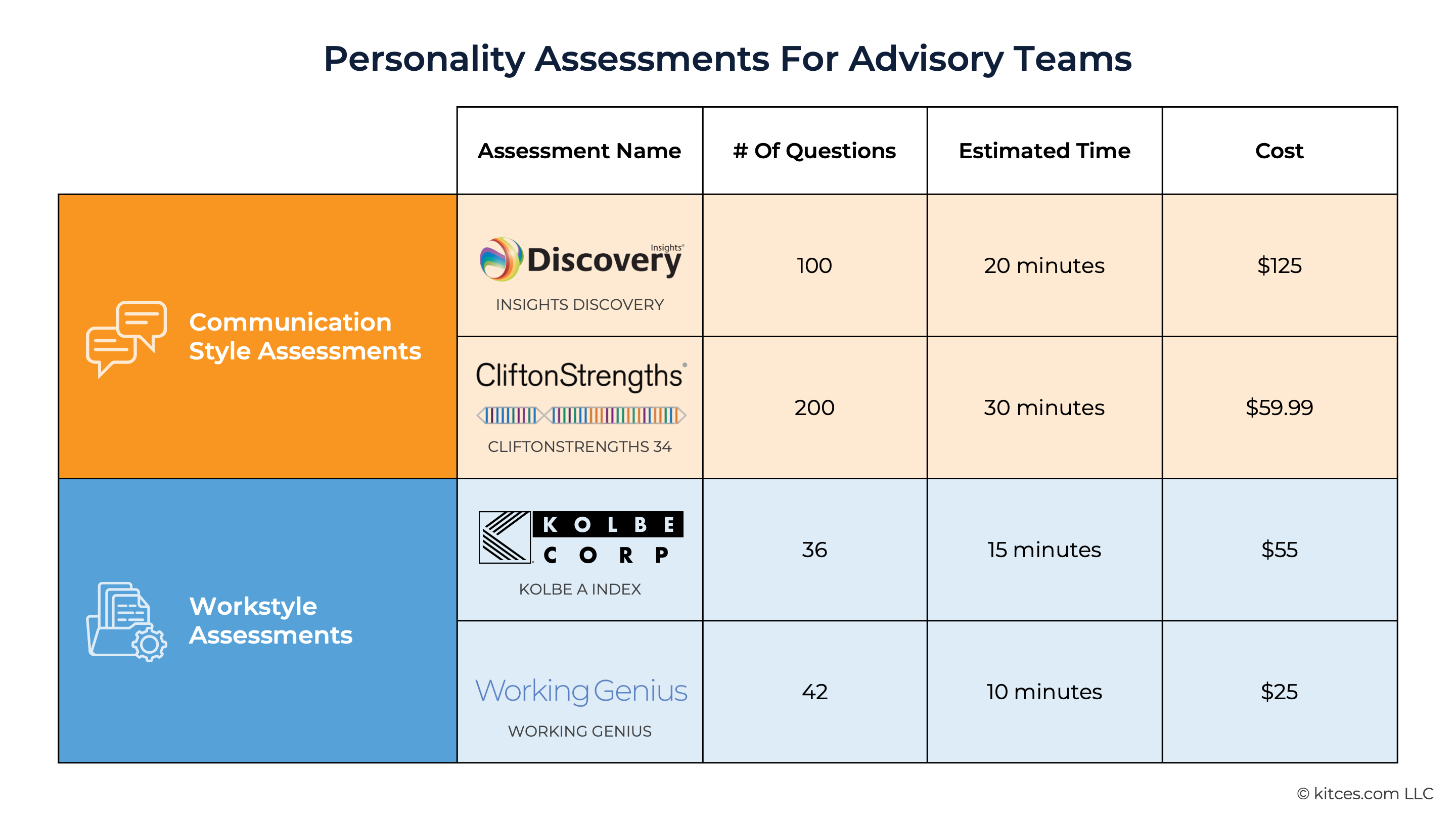
Personality Assessments For Financial Advisors: How To Choose The Right Tools And Apply Insights To Improve Fit, Productivity, And Retention

Related Posts

edit post
The Elusive Giffen Good, Once Again

The Elusive Giffen Good, Once Again

by TheAdviserMagazine
April 6, 2026
0

The mysterious Giffen has once again risen from the ashes. In this iteration, it’s silver in the red-hot precious metals...

edit post
Tax Flight Accelerates In Massachusetts

Tax Flight Accelerates In Massachusetts

by TheAdviserMagazine
April 6, 2026
0

The data coming out of Massachusetts confirms exactly what I have been warning about for years. You cannot raise taxes...

edit post
Lead Contaminating America’s Food Supply

Lead Contaminating America’s Food Supply

by TheAdviserMagazine
April 6, 2026
0

  There has been an outpouring of recalls in the USA due to lead contamination in the food supply. Lead showing...

edit post
The Myth that Won’t Die: “War is Good for the Economy”

The Myth that Won’t Die: “War is Good for the Economy”

by TheAdviserMagazine
April 4, 2026
0

What is the Mises Institute? The Mises Institute is a non-profit organization that exists to promote teaching and research in...

edit post
When Corporations Resist the State: Ethics, AI, and the Limits of Government Power

When Corporations Resist the State: Ethics, AI, and the Limits of Government Power

by TheAdviserMagazine
April 4, 2026
0

Corporations are frequently accused of moral indifference. Critics often portray large firms as institutions that pursue profit while ignoring the...

edit post
Why the Post Office and Non-Profits Share a Socialist Calculation Problem

Why the Post Office and Non-Profits Share a Socialist Calculation Problem

by TheAdviserMagazine
April 3, 2026
0

Public debate usually treats Mises’s Economic Calculation in the Socialist Commonwealth as a Cold War claim that “government is inefficient.”...

Next Post
edit post
Personality Assessments For Financial Advisors: How To Choose The Right Tools And Apply Insights To Improve Fit, Productivity, And Retention

Personality Assessments For Financial Advisors: How To Choose The Right Tools And Apply Insights To Improve Fit, Productivity, And Retention

edit post
Silgan weighs bid for Gerresheimer – report

Silgan weighs bid for Gerresheimer – report

  • Trending
  • Comments
  • Latest
edit post
Massachusetts loses billions in income after millionaire tax

Massachusetts loses billions in income after millionaire tax

March 24, 2026
edit post
Illinois’ Paid Leave for All Workers Act Takes Effect — Every Employee Now Gets Guaranteed Time Off

Illinois’ Paid Leave for All Workers Act Takes Effect — Every Employee Now Gets Guaranteed Time Off

March 27, 2026
edit post
Virginia Permits ADULT MIGRANT MEN To Attend High School

Virginia Permits ADULT MIGRANT MEN To Attend High School

March 30, 2026
edit post
A 58-year-old left NYC for Miami to save on taxes — then retired early thanks to hidden savings. Here’s the math

A 58-year-old left NYC for Miami to save on taxes — then retired early thanks to hidden savings. Here’s the math

March 30, 2026
edit post
Property Tax Relief & Income Tax Relief

Property Tax Relief & Income Tax Relief

April 1, 2026
edit post
Publix to Open 5 New Stores by End of April. See Upcoming Locations.

Publix to Open 5 New Stores by End of April. See Upcoming Locations.

March 20, 2026
edit post
How to Use Home Equity to Buy Your Next Rental Property (3 Ways) (Rookie Reply)

How to Use Home Equity to Buy Your Next Rental Property (3 Ways) (Rookie Reply)

0
edit post
I Replaced My K Salary with 2 Real Estate Deals Per Year

I Replaced My $80K Salary with 2 Real Estate Deals Per Year

0
edit post
The Farmer’s Dog: 60% off Your First Box!

The Farmer’s Dog: 60% off Your First Box!

0
edit post
The Weekly Notable Startup Funding Report: 4/5/26 – AlleyWatch

The Weekly Notable Startup Funding Report: 4/5/26 – AlleyWatch

0
edit post
CMR Solution: How Manufacturers Simplify Channel Management and Gain Complete Visibility – Blog & Tips

CMR Solution: How Manufacturers Simplify Channel Management and Gain Complete Visibility – Blog & Tips

0
edit post
Wealthbox (Finally) Introduces AI Agents To Compete With Standalone Tools (And More Of The Latest In Financial #AdvisorTech – April 2026)

Wealthbox (Finally) Introduces AI Agents To Compete With Standalone Tools (And More Of The Latest In Financial #AdvisorTech – April 2026)

0
edit post
The Farmer’s Dog: 60% off Your First Box!

The Farmer’s Dog: 60% off Your First Box!

April 6, 2026
edit post
CMR Solution: How Manufacturers Simplify Channel Management and Gain Complete Visibility – Blog & Tips

CMR Solution: How Manufacturers Simplify Channel Management and Gain Complete Visibility – Blog & Tips

April 6, 2026
edit post
The Elusive Giffen Good, Once Again

The Elusive Giffen Good, Once Again

April 6, 2026
edit post
The Weekly Notable Startup Funding Report: 4/5/26 – AlleyWatch

The Weekly Notable Startup Funding Report: 4/5/26 – AlleyWatch

April 6, 2026
edit post
US Stock Market Today | Dow Jones | Nasdaq Live: S&P 500, Nasdaq futures edge up as investors weigh Iran war developments

US Stock Market Today | Dow Jones | Nasdaq Live: S&P 500, Nasdaq futures edge up as investors weigh Iran war developments

April 6, 2026
edit post
766,970 BTC Stack—Strategy Buys More Bitcoin After Saylor’s ‘Back to Work’ Hint on Sunday – News Bytes Bitcoin News

766,970 BTC Stack—Strategy Buys More Bitcoin After Saylor’s ‘Back to Work’ Hint on Sunday – News Bytes Bitcoin News

April 6, 2026
The Adviser Magazine

The first and only national digital and print magazine that connects individuals, families, and businesses to Fee-Only financial advisers, accountants, attorneys and college guidance counselors.

CATEGORIES

  • 401k Plans
  • Business
  • College
  • Cryptocurrency
  • Economy
  • Estate Plans
  • Financial Planning
  • Investing
  • IRS & Taxes
  • Legal
  • Market Analysis
  • Markets
  • Medicare
  • Money
  • Personal Finance
  • Social Security
  • Startups
  • Stock Market
  • Trading

LATEST UPDATES

  • The Farmer’s Dog: 60% off Your First Box!
  • CMR Solution: How Manufacturers Simplify Channel Management and Gain Complete Visibility – Blog & Tips
  • The Elusive Giffen Good, Once Again
  • Our Great Privacy Policy
  • Terms of Use, Legal Notices & Disclosures
  • Contact us
  • About Us

© Copyright 2024 All Rights Reserved
See articles for original source and related links to external sites.

Welcome Back!

Login to your account below

Forgotten Password?

Retrieve your password

Please enter your username or email address to reset your password.

Log In
No Result
View All Result
  • Home
  • Financial Planning
    • Financial Planning
    • Personal Finance
  • Market Research
    • Business
    • Investing
    • Money
    • Economy
    • Markets
    • Stocks
    • Trading
  • 401k Plans
  • College
  • IRS & Taxes
  • Estate Plans
  • Social Security
  • Medicare
  • Legal

© Copyright 2024 All Rights Reserved
See articles for original source and related links to external sites.