No Result
View All Result
SUBMIT YOUR ARTICLES
  • Login
Tuesday, March 31, 2026
TheAdviserMagazine.com
  • Home
  • Financial Planning
    • Financial Planning
    • Personal Finance
  • Market Research
    • Business
    • Investing
    • Money
    • Economy
    • Markets
    • Stocks
    • Trading
  • 401k Plans
  • College
  • IRS & Taxes
  • Estate Plans
  • Social Security
  • Medicare
  • Legal
  • Home
  • Financial Planning
    • Financial Planning
    • Personal Finance
  • Market Research
    • Business
    • Investing
    • Money
    • Economy
    • Markets
    • Stocks
    • Trading
  • 401k Plans
  • College
  • IRS & Taxes
  • Estate Plans
  • Social Security
  • Medicare
  • Legal
No Result
View All Result
TheAdviserMagazine.com
No Result
View All Result
Home Market Research Economy

The Real Threat Is Artificial Credit, Not Artificial Intelligence

by TheAdviserMagazine
3 weeks ago
in Economy
Reading Time: 3 mins read
A A
The Real Threat Is Artificial Credit, Not Artificial Intelligence
Share on FacebookShare on TwitterShare on LInkedIn


Artificial intelligence is rapidly becoming one of the most capital-intensive industries in history. Consider: Semiconductor fabrication plants cost tens of billions of dollars. Massive data centers consume extraordinary amounts of electricity, sending power bills soaring. Specialized engineering talent commands premium wages. (Although the median salary for an AI professional is $160K annually, the top 1 percent of AI researchers receive compensation packages exceeding $1 million). Global supply chains must coordinate rare materials, precision manufacturing, and complex infrastructure.

Yet discussions about artificial intelligence almost never address the most important economic variable shaping its development: money.

From an Austrian perspective, the future of artificial intelligence ties directly to the monetary system that finances it. Whether AI produces sustainable prosperity or another boom-bust cycle depends less on algorithms than on interest rates.

As we’ve seen throughout history, interest rates in a fractional-reserve banking system trend ever lower when a new technology gets underway. This generates the illusion of prosperity called a boom, followed inevitably by a bust.

As a reminder of what is meant by a “bust,” keep in mind the figure $16.2 trillion—“The total net worth American households lost between 2007 and 2009 of the Great Recession.”

Artificial intelligence is best understood economically as a higher-order capital good—a tool that enhances the productivity of human performance. Like machinery during the Industrial Revolution or computers in the late twentieth century, AI operates within a time-structured production process involving multiple stages before consumer goods emerge. Here’s how ChatGPT works as a consumer good, for example, providing an indispensable research tool for millions.

Nobel laureate F.A. Hayek emphasized that production requires coordination of dispersed knowledge across time. Interest rates serve as the critical signal aligning savings with investment. When that signal is distorted, the capital structure becomes misaligned.

Artificial intelligence offers super-advanced intellectual performance, but as a capital good is still subject to interest rate signals. Economically, under our central bank fiat system, distorted interest rates intensifies capital misalignment.

The Neglected Relevance of the Monetary System

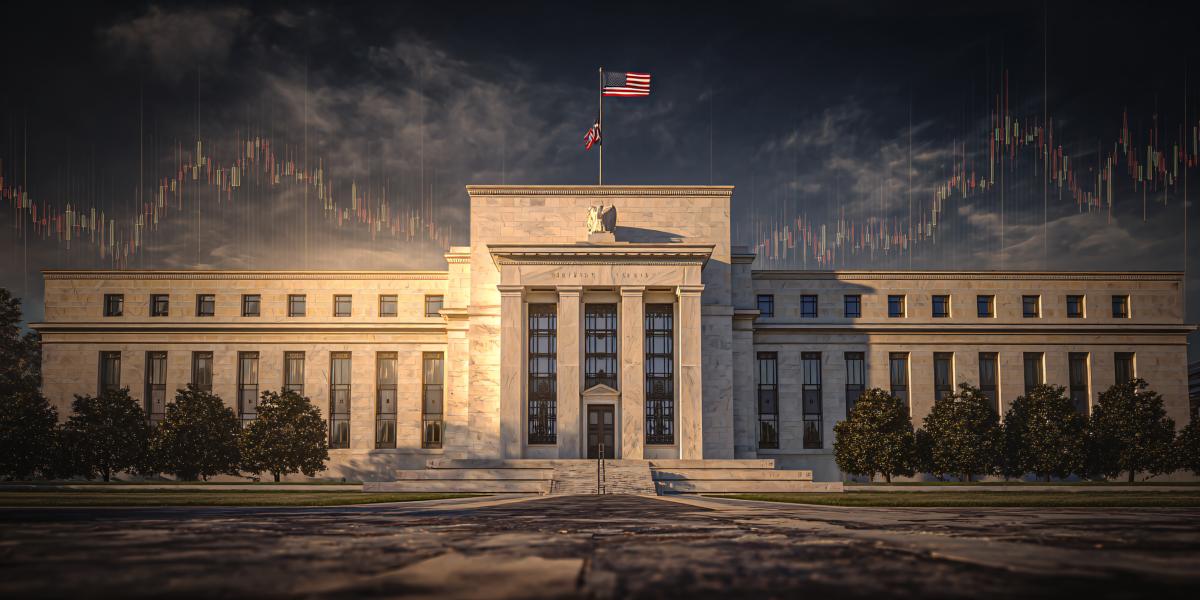
The current AI boom is unfolding after more than a decade of unprecedented monetary expansion. Following the 2008 financial crisis—and again after 2020—the Federal Reserve expanded its balance sheet dramatically while maintaining near-zero interest rates for extended periods. The Fed has been unwinding since its April 2022 peak, but is still 59 percent above pre-pandemic levels.

In the world of Federal Reserve economics, cheap credit is a necessary fuel for economic development. But as Mises warned,

What induces an entrepreneur to embark upon definite projects is neither high prices nor low prices as such, but a discrepancy between the costs of production, inclusive of interest on the capital required, and the anticipated prices of the products. A lowering of the gross market rate of interest as brought about by credit expansion always has the effect of making some projects appear profitable which did not appear so before. (emphasis added)

When the Fed artificially suppresses interest rates, entrepreneurs undertake projects that appear profitable but cannot be sustained once monetary conditions change. This is the core of Austrian business cycle theory: Credit expansion causes malinvestment.

Artificial intelligence investment is particularly vulnerable to this dynamic because it involves long time horizons, uncertain demand, and enormous upfront capital requirements.

Warning Signs of Malinvestment

Several familiar signals are already visible:

Technological revolutions often coincide with speculative manias. The railroad booms of the nineteenth century, the stock market excesses of the 1920s, the dot-com bubble of the 1990s, and the housing boom before 2008 all followed this pattern. In each case, the technology survived, while the speculative capital structure collapsed. Artificial intelligence may follow a similar trajectory if monetary conditions continue to distort investment signals. As long as money is under monopoly control of political appointees instead of the free market, distortion is guaranteed.

Gold historically constrained credit expansion because banks could not create unlimited claims without risking the wrath of defrauded depositors. Interest rates reflected real savings more accurately, and investment discipline was stronger.

Under a monetary system anchored by market forces rather than quarreling politicians, artificial intelligence would develop in a manner more closely aligned with genuine demand and less vulnerable to speculative collapse.

Conclusion

Artificial intelligence is likely to become the most transformative technology in history, but under the auspices of a money-printing counterfeiter such as the Federal Reserve it’s certain to create massive economic problems. The real threat is artificial credit, not artificial intelligence.

People rightfully fear losing their jobs. What actually threatens workers, though, is not automation but monetary distortion. When credit expansion drives speculative booms, capital is misdirected into unsustainable ventures. When the correction arrives, workers suffer the consequences of decisions made far above them. And they tend to direct their anger at the market, rather than the politically-influenced decision makers.

Ron Paul was right. We need to end the Fed and end the property rights violations of fractional reserve banking.



Source link

Tags: artificialCreditIntelligenceRealthreat
ShareTweetShare
Previous Post

Molinari on Secession, Monopoly, and “Freedom of Government”

Next Post

California is Booming With New Investors—Here’s Why the Long-Term Prospects Could Become a Cash Cow

Related Posts

edit post
Why  a gallon gas prices won’t trigger Fed interest rate hikes — and could lead to cuts

Why $4 a gallon gas prices won’t trigger Fed interest rate hikes — and could lead to cuts

by TheAdviserMagazine
March 31, 2026
0

Gas prices are displayed at a Mobil gas station on March 30, 2026 in Pasadena, California. Mario Tama | Getty...

edit post
Artificial Intelligence Hammers in the Final Nail in Karl Marx’s Coffin

Artificial Intelligence Hammers in the Final Nail in Karl Marx’s Coffin

by TheAdviserMagazine
March 31, 2026
0

Karl Marx believed machines would eventually turn workers into something disposable. In The Communist Manifesto, Marx and Engels wrote that...

edit post
Keep Your Schroeder to the Wheel

Keep Your Schroeder to the Wheel

by TheAdviserMagazine
March 31, 2026
0

America’s Fatal Leap, 1991–2016By Paul W. SchroederVerso, 2025; 298 pp.In this issue of The Misesian, we pay tribute to the...

edit post
Walter Williams Against Erasing Confederate History

Walter Williams Against Erasing Confederate History

by TheAdviserMagazine
March 31, 2026
0

The economist Walter E. Williams was a great defender of liberty, and, in that context, he also defended the right...

edit post
UK Rental Prices Reach All-Time High

UK Rental Prices Reach All-Time High

by TheAdviserMagazine
March 31, 2026
0

According to the latest figures, rents in the UK have now reached 36.1% of average earnings, the highest level ever...

edit post
Sending Children To War — History Repeats In Iran

Sending Children To War — History Repeats In Iran

by TheAdviserMagazine
March 31, 2026
0

There are moments in history that expose the true nature of a regime, and what we are seeing now coming...

Next Post
edit post
California is Booming With New Investors—Here’s Why the Long-Term Prospects Could Become a Cash Cow

California is Booming With New Investors—Here's Why the Long-Term Prospects Could Become a Cash Cow

edit post
10 High Dividend Stocks For Retirement Income

10 High Dividend Stocks For Retirement Income

  • Trending
  • Comments
  • Latest
edit post
Massachusetts loses billions in income after millionaire tax

Massachusetts loses billions in income after millionaire tax

March 24, 2026
edit post
Illinois’ Paid Leave for All Workers Act Takes Effect — Every Employee Now Gets Guaranteed Time Off

Illinois’ Paid Leave for All Workers Act Takes Effect — Every Employee Now Gets Guaranteed Time Off

March 27, 2026
edit post
Virginia Permits ADULT MIGRANT MEN To Attend High School

Virginia Permits ADULT MIGRANT MEN To Attend High School

March 30, 2026
edit post
A 58-year-old left NYC for Miami to save on taxes — then retired early thanks to hidden savings. Here’s the math

A 58-year-old left NYC for Miami to save on taxes — then retired early thanks to hidden savings. Here’s the math

March 30, 2026
edit post
Publix to Open 5 New Stores by End of April. See Upcoming Locations.

Publix to Open 5 New Stores by End of April. See Upcoming Locations.

March 20, 2026
edit post
Hospitals in This State Routinely Sue Patients Over Unpaid Bills

Hospitals in This State Routinely Sue Patients Over Unpaid Bills

March 27, 2026
edit post
Why standardization beats local expertise for global e-invoicing

Why standardization beats local expertise for global e-invoicing

0
edit post
Mine appoints senior privacy executive

Mine appoints senior privacy executive

0
edit post
J.Jill, Inc. (JILL) Q4 2025 Earnings: What Went Wrong

J.Jill, Inc. (JILL) Q4 2025 Earnings: What Went Wrong

0
edit post
Sending Children To War — History Repeats In Iran

Sending Children To War — History Repeats In Iran

0
edit post
A 0B Crypto Time Bomb? Google Says Quantum Computing Could Rewrite Bitcoin Security

A $150B Crypto Time Bomb? Google Says Quantum Computing Could Rewrite Bitcoin Security

0
edit post
Tesla Appears to Have a New Master Plan… and SpaceX Is a Huge Part of It

Tesla Appears to Have a New Master Plan… and SpaceX Is a Huge Part of It

0
edit post
Red tide in equity funds: Only a few stay afloat

Red tide in equity funds: Only a few stay afloat

March 31, 2026
edit post
Psychology says the reason walking away from disrespectful people feels like guilt instead of freedom is because you were raised in an environment where your comfort was never a valid reason to make someone else uncomfortable — and unlearning that equation is the hardest boundary work there is

Psychology says the reason walking away from disrespectful people feels like guilt instead of freedom is because you were raised in an environment where your comfort was never a valid reason to make someone else uncomfortable — and unlearning that equation is the hardest boundary work there is

March 31, 2026
edit post
Gen Restaurant Group targets 5M-5M 2026 revenue while projecting CPG run rate over 0M within 3 years (NASDAQ:GENK)

Gen Restaurant Group targets $215M-$225M 2026 revenue while projecting CPG run rate over $100M within 3 years (NASDAQ:GENK)

March 31, 2026
edit post
Ethereum Faces Selling Pressure On Charts While Supply Remains Locked

Ethereum Faces Selling Pressure On Charts While Supply Remains Locked

March 31, 2026
edit post
Trader Joe’s Brings Back Popular French Dessert for Limited Time

Trader Joe’s Brings Back Popular French Dessert for Limited Time

March 31, 2026
edit post
Don’t Get Burned Trying To Save Money: The  Beauty Tool That Can Cause Chemical Burns

Don’t Get Burned Trying To Save Money: The $8 Beauty Tool That Can Cause Chemical Burns

March 31, 2026
The Adviser Magazine

The first and only national digital and print magazine that connects individuals, families, and businesses to Fee-Only financial advisers, accountants, attorneys and college guidance counselors.

CATEGORIES

  • 401k Plans
  • Business
  • College
  • Cryptocurrency
  • Economy
  • Estate Plans
  • Financial Planning
  • Investing
  • IRS & Taxes
  • Legal
  • Market Analysis
  • Markets
  • Medicare
  • Money
  • Personal Finance
  • Social Security
  • Startups
  • Stock Market
  • Trading

LATEST UPDATES

  • Red tide in equity funds: Only a few stay afloat
  • Psychology says the reason walking away from disrespectful people feels like guilt instead of freedom is because you were raised in an environment where your comfort was never a valid reason to make someone else uncomfortable — and unlearning that equation is the hardest boundary work there is
  • Gen Restaurant Group targets $215M-$225M 2026 revenue while projecting CPG run rate over $100M within 3 years (NASDAQ:GENK)
  • Our Great Privacy Policy
  • Terms of Use, Legal Notices & Disclosures
  • Contact us
  • About Us

© Copyright 2024 All Rights Reserved
See articles for original source and related links to external sites.

Welcome Back!

Login to your account below

Forgotten Password?

Retrieve your password

Please enter your username or email address to reset your password.

Log In
No Result
View All Result
  • Home
  • Financial Planning
    • Financial Planning
    • Personal Finance
  • Market Research
    • Business
    • Investing
    • Money
    • Economy
    • Markets
    • Stocks
    • Trading
  • 401k Plans
  • College
  • IRS & Taxes
  • Estate Plans
  • Social Security
  • Medicare
  • Legal

© Copyright 2024 All Rights Reserved
See articles for original source and related links to external sites.