No Result
View All Result
SUBMIT YOUR ARTICLES
  • Login
Monday, July 27, 2026
TheAdviserMagazine.com
  • Home
  • Financial Planning
    • Financial Planning
    • Personal Finance
  • Market Research
    • Business
    • Investing
    • Money
    • Economy
    • Markets
    • Stocks
    • Trading
  • 401k Plans
  • College
  • IRS & Taxes
  • Estate Plans
  • Social Security
  • Medicare
  • Legal
  • Home
  • Financial Planning
    • Financial Planning
    • Personal Finance
  • Market Research
    • Business
    • Investing
    • Money
    • Economy
    • Markets
    • Stocks
    • Trading
  • 401k Plans
  • College
  • IRS & Taxes
  • Estate Plans
  • Social Security
  • Medicare
  • Legal
No Result
View All Result
TheAdviserMagazine.com
No Result
View All Result
Home Market Research Economy

Tariffs vs. Quotas – Econlib

by TheAdviserMagazine
8 months ago
in Economy
Reading Time: 4 mins read
A A
Tariffs vs. Quotas – Econlib
Share on FacebookShare on TwitterShare on LInkedIn


In case you missed it, the Trump Administration has been using tariffs under the 1977 International Economic Emergency Powers Act since at least April of this year. The legality of doing so has been questioned and we are now at a point where the Supreme Court has heard oral arguments on the matter.

One of the arguments made by the U.S. Solicitor General, John Sauer, is that the plaintiffs in the case “concede that IEEPA authorizes quotas and other tariff equivalents.” The implication of this argument is that if these two are identical and one is permissible, then the other must logically be permissible, too. I am no lawyer, so I will not comment on the strength of this particular argument. But as an economist, this raises two questions: are tariffs and quotas actually equivalent and if so, why would the government use one instead of the other?

Briefly, a tariff is a tax on the importation of goods. Because tariffs are a tax, they raise the price that consumers pay, increase the cost that sellers incur, or some combination of both. Point is: someone will pay the tax and those tax dollars will then flow into the federal government in the form of tariff revenue. If you look carefully at Figure 2 on Page 9 of the Treasury’s monthly statements, you can see that they have collected $195 billion in “customs duties,” which includes revenues from tariffs. This increased cost leads to less of the activity taking place—that is, tariffs reduce the amount of goods imported into a country. This is true regardless of who shoulders the burden of the tariffs, whether it be domestic consumers paying higher prices or foreign producers earning less profit (though there is considerable evidence that it is the domestic consumers paying the tariff, not foreign producers).

A quota is a legal restriction on the amount of a good that can be imported. Because it restricts the amount of a good that is allowed to enter a market, we can easily imagine a tariff and a quota having the same impact on the amount of a good that is imported. Restricting imports in this way, however, has the effect of making those imports more expensive. In fact, if the reduction in imports from the quota exactly matches the reduction in imports, then that quota’s effect on price will exactly match the tariff’s.

Because tariffs and quotas ultimately have exactly the same effect on consumers and producers, there is good reason to believe that the two are economically equivalent, as Solicitor General Sauer argues. If that’s the case, why would any government use tariffs when they can instead use quotas?

One reason might be that determining how many imports to allow into the country is more difficult than simply setting a tariff. How are we to know whether we should allow 100,000 cars into the US instead of, say, 99,000 or 101,000? Implementing a quota also requires that government officials keep much, much closer records of how many cars are coming in, from where, and when. The paperwork alone can be difficult. 

A second reason might be that if you have a message of “importing goods is hurting America” then restricting imports is simply allowing less of the “bad” thing to happen. A tariff, though, can be portrayed as not only reducing the bad thing, but charging a fee for doing the “bad thing.” In matters of justice, it’s common to demand that we not only reduce the bad thing, but that the ne’er-do-wells engaged in the bad thing face some sort of penalty. It is possible to rhetorically frame tariffs based on this argument to fit that bill better than a quota. 

But what I submit is the more likely reason that tariffs are used rather than quotas is that quotas create what are known as quota-rents, which must then somehow be disbursed. Because there will be formal restrictions on the amount of imports allowed into a country, permission to import the allowed goods must be allocated in some way. This can be done on a first-come-first-allowed basis, whereby we allow the first, say, 100,000 cars to be taken off the boats and sold in the United States, but then turn away any subsequent cars and send them back to their country of origin. In this scenario, all of the quota-rents are accrued to the importers.

But this system would lead other countries to try to send their goods to us en masse in January in the hopes of being first in line. This might do for durable goods like cars, but for nondurable goods like foodstuffs, it would clearly be a disaster as rotting food piled up at the ports and spoiled before it could be sold. 

As an alternative to first-come-first-allowed, governments can issue import licenses ex ante, which allows countries that secure a license to export goods to the United States whenever they see fit. What’s more, the government can sell those licenses and, under plausible assumptions, the total amount of money raised by selling licenses can exactly match the revenue generated by an identical tariff.

As an academic exercise, it is trivially easy to set a quota such that it raises the same amount of revenue as a tariff. I used to assign such problems on exams in my undergraduate International Trade classes. But in practice, negotiating both the distribution of licenses and their price is extraordinarily costly in terms of transaction costs. Once we acknowledge these real-world costs that are often assumed away in economics classrooms, it’s easy to understand why governments might prefer tariffs over quotas. Adding in the moral intuition that tariffs are not just restricting imports, but are rhetorically punishing other countries for their allegedly harmful practice of selling us more things for lower prices, and from the perspective of someone looking to restrict trade, tariffs probably have a more intuitive appeal than quotas, even if the two can be identical on paper.



Source link

Tags: EconlibquotasTariffs
ShareTweetShare
Previous Post

USD/JPY Breaks Out With Bulls Eyeing Long-Term Highs Above 160

Next Post

Special needs and LGBTQ clients: Know Your Niche

Related Posts

edit post
Singapore tightens monetary policy in surprise move as rising oil prices rekindle inflation risk

Singapore tightens monetary policy in surprise move as rising oil prices rekindle inflation risk

by TheAdviserMagazine
July 26, 2026
0

Commercial buildings illuminated at dusk in Singapore, on Monday, Feb. 2, 2026. Photographer: SeongJoon Cho/Bloomberg via Getty ImagesBloomberg | Bloomberg...

edit post
The Next Generation Conference | Armstrong Economics

The Next Generation Conference | Armstrong Economics

by TheAdviserMagazine
July 26, 2026
0

I want to extend a heartfelt thank you to everyone who made our Understanding the World Economy conference on January...

edit post
Links 7/26/2026 | naked capitalism

Links 7/26/2026 | naked capitalism

by TheAdviserMagazine
July 26, 2026
0

In 2016, 18-year-old Andrej Ciesielski secretly climbed the Great Pyramid of Giza with a GoPro, filming the whole thing. Halfway...

edit post
The Sunday Morning Movie Presents: Cwal AKA At Full Gallop (1996) Run Time: 1H 44M Plus Bonuses!

The Sunday Morning Movie Presents: Cwal AKA At Full Gallop (1996) Run Time: 1H 44M Plus Bonuses!

by TheAdviserMagazine
July 26, 2026
0

Greetings gentle readers and welcome to another installment of the Sunday Morning Movie. Today it’s a Polish film about childhood,...

edit post
The Real Conspiracy Behind COVID

The Real Conspiracy Behind COVID

by TheAdviserMagazine
July 26, 2026
0

The claim that the World Economic Forum (WEF) used the COVID-19 pandemic to reverse nationalism that surface in the aftermath...

edit post
Links 7/25/2026 | naked capitalism

Links 7/25/2026 | naked capitalism

by TheAdviserMagazine
July 25, 2026
0

Dear patient readers, In lieu of an Iran war post, you are getting extra Links with an Iran War section....

Next Post
edit post
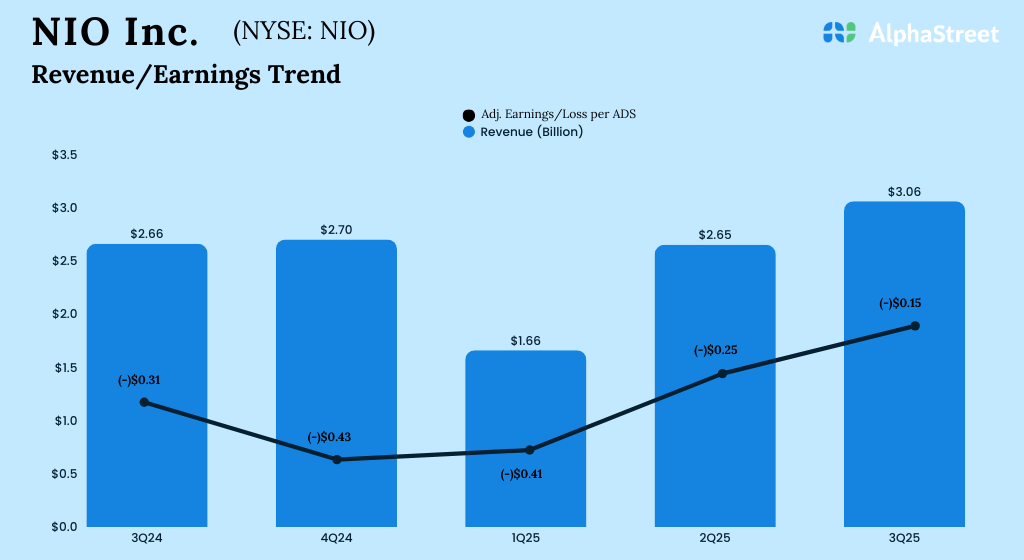
Key metrics from Nio’s (NIO) Q3 2025 earnings results

Key metrics from Nio’s (NIO) Q3 2025 earnings results

edit post
Delft-based ExRobotics raises €7M funding to expand its explosion-proof inspection robots

Delft-based ExRobotics raises €7M funding to expand its explosion-proof inspection robots

  • Trending
  • Comments
  • Latest
edit post
Georgia Senior SNAP and Meal Resources Older Adults Can Use

Georgia Senior SNAP and Meal Resources Older Adults Can Use

July 24, 2026
edit post
New Jersey Tax-Relief Events: Three July Dates Near Seniors

New Jersey Tax-Relief Events: Three July Dates Near Seniors

July 13, 2026
edit post
Bristlecone pines growing in the White Mountains of California germinated before the Great Pyramid was built, and the oldest one alive today, nicknamed Methuselah, has been quietly adding rings for 4,855 years in soil so poor almost nothing else survives beside it

Bristlecone pines growing in the White Mountains of California germinated before the Great Pyramid was built, and the oldest one alive today, nicknamed Methuselah, has been quietly adding rings for 4,855 years in soil so poor almost nothing else survives beside it

July 8, 2026
edit post
Retail giant exits U.S. fashion after multi-million-dollar scandal

Retail giant exits U.S. fashion after multi-million-dollar scandal

July 1, 2026
edit post
Top Democrats Are Trapped in a Catch 22

Top Democrats Are Trapped in a Catch 22

July 6, 2026
edit post
2 judges suspended in separate cases after being indicted on criminal charges

2 judges suspended in separate cases after being indicted on criminal charges

July 9, 2026
edit post
Singapore tightens monetary policy in surprise move as rising oil prices rekindle inflation risk

Singapore tightens monetary policy in surprise move as rising oil prices rekindle inflation risk

0
edit post
Frax Community Weighs Morpho Market For bdUSD And frxUSD Liquidity

Frax Community Weighs Morpho Market For bdUSD And frxUSD Liquidity

0
edit post
Bank of Baroda shares fall 2% after Q1 earnings. Why are brokerages slashing target prices?

Bank of Baroda shares fall 2% after Q1 earnings. Why are brokerages slashing target prices?

0
edit post
Helping Family With Bills? Set Boundaries Before It Costs You

Helping Family With Bills? Set Boundaries Before It Costs You

0
edit post
Optimizing Your Partner Onboarding Process for 2026

Optimizing Your Partner Onboarding Process for 2026

0
edit post
Kospi index and US stock futures jump as Hormuz talks send oil prices plunging ahead of Fed meeting

Kospi index and US stock futures jump as Hormuz talks send oil prices plunging ahead of Fed meeting

0
edit post
Bank of Baroda shares fall 2% after Q1 earnings. Why are brokerages slashing target prices?

Bank of Baroda shares fall 2% after Q1 earnings. Why are brokerages slashing target prices?

July 27, 2026
edit post
Singapore tightens monetary policy in surprise move as rising oil prices rekindle inflation risk

Singapore tightens monetary policy in surprise move as rising oil prices rekindle inflation risk

July 26, 2026
edit post
Shein Warns of Trump Tariff Impact After Posting Quarterly Loss

Shein Warns of Trump Tariff Impact After Posting Quarterly Loss

July 26, 2026
edit post
Kospi index and US stock futures jump as Hormuz talks send oil prices plunging ahead of Fed meeting

Kospi index and US stock futures jump as Hormuz talks send oil prices plunging ahead of Fed meeting

July 26, 2026
edit post
Optimizing Your Partner Onboarding Process for 2026

Optimizing Your Partner Onboarding Process for 2026

July 26, 2026
edit post
Top funds demand deeper valuation cut for Zepto IPO

Top funds demand deeper valuation cut for Zepto IPO

July 26, 2026
The Adviser Magazine

The first and only national digital and print magazine that connects individuals, families, and businesses to Fee-Only financial advisers, accountants, attorneys and college guidance counselors.

CATEGORIES

  • 401k Plans
  • Business
  • College
  • Cryptocurrency
  • Economy
  • Estate Plans
  • Financial Planning
  • Investing
  • IRS & Taxes
  • Legal
  • Market Analysis
  • Markets
  • Medicare
  • Money
  • Personal Finance
  • Social Security
  • Startups
  • Stock Market
  • Trading

LATEST UPDATES

  • Bank of Baroda shares fall 2% after Q1 earnings. Why are brokerages slashing target prices?
  • Singapore tightens monetary policy in surprise move as rising oil prices rekindle inflation risk
  • Shein Warns of Trump Tariff Impact After Posting Quarterly Loss
  • Our Great Privacy Policy
  • Terms of Use, Legal Notices & Disclosures
  • Contact us
  • About Us

© Copyright 2024 All Rights Reserved
See articles for original source and related links to external sites.

Welcome Back!

Login to your account below

Forgotten Password?

Retrieve your password

Please enter your username or email address to reset your password.

Log In
No Result
View All Result
  • Home
  • Financial Planning
    • Financial Planning
    • Personal Finance
  • Market Research
    • Business
    • Investing
    • Money
    • Economy
    • Markets
    • Stocks
    • Trading
  • 401k Plans
  • College
  • IRS & Taxes
  • Estate Plans
  • Social Security
  • Medicare
  • Legal

© Copyright 2024 All Rights Reserved
See articles for original source and related links to external sites.