No Result
View All Result
SUBMIT YOUR ARTICLES
  • Login
Monday, September 14, 2026
TheAdviserMagazine.com
  • Home
  • Financial Planning
    • Financial Planning
    • Personal Finance
  • Market Research
    • Business
    • Investing
    • Money
    • Economy
    • Markets
    • Stocks
    • Trading
  • 401k Plans
  • College
  • IRS & Taxes
  • Estate Plans
  • Social Security
  • Medicare
  • Legal
  • Home
  • Financial Planning
    • Financial Planning
    • Personal Finance
  • Market Research
    • Business
    • Investing
    • Money
    • Economy
    • Markets
    • Stocks
    • Trading
  • 401k Plans
  • College
  • IRS & Taxes
  • Estate Plans
  • Social Security
  • Medicare
  • Legal
No Result
View All Result
TheAdviserMagazine.com
No Result
View All Result
Home Market Research Startups

Revolutionizing Customer Experience: CX Trends and Strategies

by TheAdviserMagazine
10 months ago
in Startups
Reading Time: 9 mins read
A A
Revolutionizing Customer Experience: CX Trends and Strategies
Share on FacebookShare on TwitterShare on LInkedIn


Right now, customer experience (CX) is in a fascinating, slightly chaotic spot. You can have a strong product and a fantastic marketing team, but if you don’t figure out CX, chances are you’ll be bleeding customers.

Data is extremely clear about this, with studies that show more than half of all customers will drop a brand after one bad experience. On the other hand, brands that build their CX see up to a 60% increase in profits compared to brands that still think CX ends at the call center. 

Moving forward, customer experience will be the battleground where you either win loyalty or allow competitors to one-up you. In this piece, let’s explore the trends and strategies that can help you revolutionize customer experience in the year to come. 

#mc_embed_signup{background:#fff; false;clear:left; font:14px Helvetica,Arial,sans-serif; width: 600px;}
/* Add your own Mailchimp form style overrides in your site stylesheet or in this style block.
We recommend moving this block and the preceding CSS link to the HEAD of your HTML file. */

Sign Up for The Start Newsletter

* indicates required
Email Address *

(function($) {window.fnames = new Array(); window.ftypes = new Array();fnames[0]=’EMAIL’;ftypes[0]=’email’;fnames[1]=’FNAME’;ftypes[1]=’text’;fnames[2]=’LNAME’;ftypes[2]=’text’;fnames[3]=’ADDRESS’;ftypes[3]=’address’;fnames[4]=’PHONE’;ftypes[4]=’phone’;fnames[5]=’MMERGE5′;ftypes[5]=’text’;}(jQuery));var $mcj = jQuery.noConflict(true);

Put customer data privacy first

With Gen-Z entering the workforce, you’re dealing with tech-savvy customers who understand the power of their attention and personal information. Plus, they’ve seen the effects of so many data breaches that could have been avoided if the company handling the data had been more invested in security.

This is why many online platforms prioritize security above all else. Let’s take a site like U7BUY as an example. Their team is committed to security across the entire platform, with data and transactions securely encrypted, ensuring protection from click to cloud.

The U7BUY Head of Marketing, Anna Zhang, told us why this aspect is so important in their company:

“Security and trust are at the heart of everything we do, and we take every measure to protect our users’ data. We make sure our platform remains reliable and our users’ information stays safe even in the face of disruptions. We work hard to provide a seamless, secure experience so our community can focus on what matters most—gaming and trading with confidence.”

Besides security concerns, most buyers are wary of giving brands free rein over their data. But you can win them over by being open with the type of data you collect and why.

When customers feel in control, they’re more willing to share data for personalization. In fact, 

71% of customers expect personalized campaigns and get annoyed when brands don’t take this path. So, it’s not a matter of not wanting brands to collect data. It’s a matter of transparency and respect.

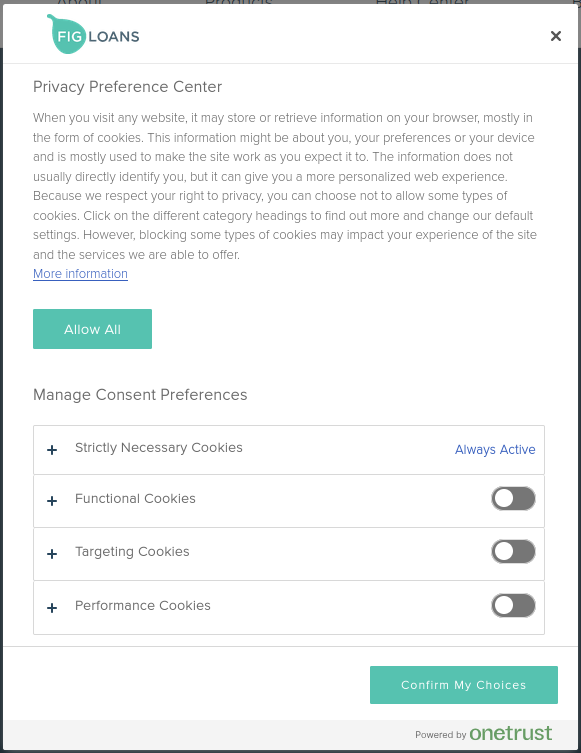
We had a chat on how to do customer data privacy right with the CEO and founder of Fig Loans, Jeffrey Zhou. According to him, the company is highly invested in keeping the data collection process transparent.

“We think of privacy as a promise. That’s why we give every customer full control over their data through our Do Not Sell or Share My Personal Information form. Whether you choose to limit or allow certain types of data sharing, the decision is always yours. Our role is to be transparent, respectful, and accountable. Our goal is to build lasting relationships based on trust,” he shared. 

Here’s what a similar privacy-first approach would look like:

Collect only what’s necessary. Prioritize zero-party data (what customers willingly share) and first-party data (your direct interactions).

Bake in consent controls. Make it easy for customers to see, edit, and revoke how their data is used.

Label data with permissions. If someone opts out of marketing emails, that flag follows their record wherever it flows.

Switch from reactive to predictive CX

Stop waiting for customers to raise their hands with complaints, questions, or problems, and learn to anticipate their needs, desires, and potential pain points and act before buyers even know they have them.

If you’re not sure what this looks like in practice, here’s the difference:

Reactive CX: A customer emails because their order is late. You respond with an apology and tracking info.

Proactive CX: You notice the shipment is delayed, send a heads-up with updated tracking, offer a discount or bonus points, and explain next steps.

When you’re reactive, customers are already unhappy, and it feels like you’re always putting out fires. When you’re proactive, customers feel cared for, churn drops, and loyalty rises.

Now, how do you jump from reactive to proactive?

Verizon Small Business Digital Ready

Find free courses, mentorship, networking and grants created just for small businesses.

Verizon Small Business Digital Ready

Join for Free
We earn a commission if you make a purchase, at no additional cost to you.

Implement predictive analytics

The best part about smart algorithms and infinite data sources is that you can use said data, statistical algorithms, and machine learning to forecast customer behavior. And it’s not just for knowing when people will raise complaints.

For instance, Kathryn MacDonell, CEO at Trilby Misso Lawyers, told us:

“We use predictive analytics to identify the hurdles that might prevent possible customers from employing our services. Then, we design user-friendly answers and guides that help dispel their concerns and show them our team is always ready to act quickly and compassionately.

Our goal is simple: when clients need us most, we’re already prepared to deliver the support and legal guidance they deserve.”
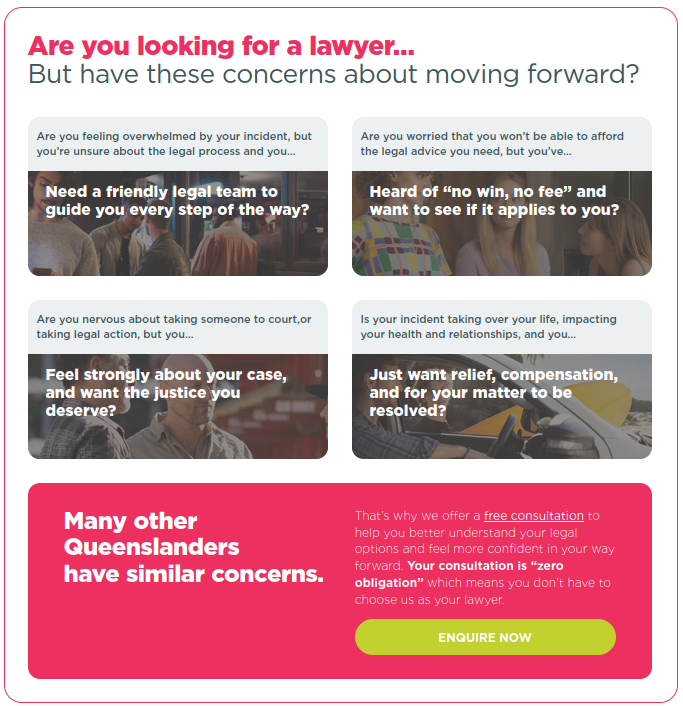
Predictive analytics tools are amazing for brands that want to be proactive. You just need to know how to integrate them into your products or services. 

Here are a few ideas to keep in mind:

In-app tutorials that pop up right when users tend to get stuck.

Onboarding emails that guide new customers before they feel lost.

Alerts for suspicious account activity before the customer even notices.

Personalized check-ins (“We saw you paused your subscription—need help resuming?”).

Implement hyper-personalization at scale

Hyper-personalization is a bit of a double-edged sword. On the plus side, customers feel understood, and CX becomes smoother and more relevant. This leads to increased trust and loyalty.

However, push too far into the ‘How did you even know that?’ territory, and you cross the dreaded creepy line. That’s when personalization stops feeling helpful and starts feeling invasive. It’s also one of the fastest ways to alienate customers and land your brand on the ‘stay away from’ list.

It takes finesse, experience, and serious tech, data governance, and oversight to walk this line. But once you get it, the world is your oyster!

Here are a few examples of how to safely use hyper-personalization:

AI-powered support

A customer types into chat, “I can’t log in.” Instead of spitting out a generic help article, your AI chatbot sees their device, last login attempt, and subscription level. It immediately offers steps to fix the problem and routes them to a human agent without asking repetitive questions.

Personalized documents 

Hyper-personalization also works in B2B relationships. Let’s say you’re a professional services firm that sends monthly invoices, contracts, and project updates. These are usually dry, templated, and, to be honest, soulless.

But, with the right tools, you can add a bit of sparkle even here. Small changes, like invoicing clients using personalized templates or adding friendly reminders based on their payment habits, can turn this usually cold aspect of business into something more.

You can also include proactive insights and suggest next steps, optional add-ons, or resources based on their history with your company.

Product recommendations

In this scenario, your brand is selling sports apparel. You notice several customers who have bought running shoes several times from you in the last year and regularly engage with interactive content. They’re clearly invested in this sport, so before marathon season, your AI-powered algorithm sends them an email about new shoes, but also about energy gels and training gear in their size.

Add a gentle reminder about loyalty points they can redeem, and you’ve created a highly relevant, almost effortless path to a sale.

Build frictionless self-service & community

All the steps we’ve discussed up until here teach you how to boost the customer experience with the help of smart tools and algorithms. Everything from communication to your documents can be personalized and timed to hit the sweet spot with customers from all areas of life. 

But it’s important to highlight that these steps don’t mean you should remove the human factor from the equation. On the contrary, you need the human touch in customer service.

Yes, many customers like the frictionless self-service experience, where they can get help and answers on their own terms. For this, you have searchable FAQs, chatbots with context, knowledge bases, tutorials, and in-app guidance.

However, your AI chatbot can’t express empathy or understand nuance. It can’t comfort a worried parent, calm an angry client, or celebrate a milestone. People also remember how they were treated, not just how quickly an issue was resolved.

The human touch means that people can choose to speak with a human agent. It also means that your human representatives must be well-trained and ready to offer a superior experience. Since AI takes care of routine cases, your customer service team will deal with unusual situations that require reasoning, patience, ethics, empathy, and discretion.

Let’s take the example of EnableU, an NDIS provider in Sydney. Their marketing campaign is entirely focused on the human side of the customer experience, focusing on inclusivity, personalization, and community.
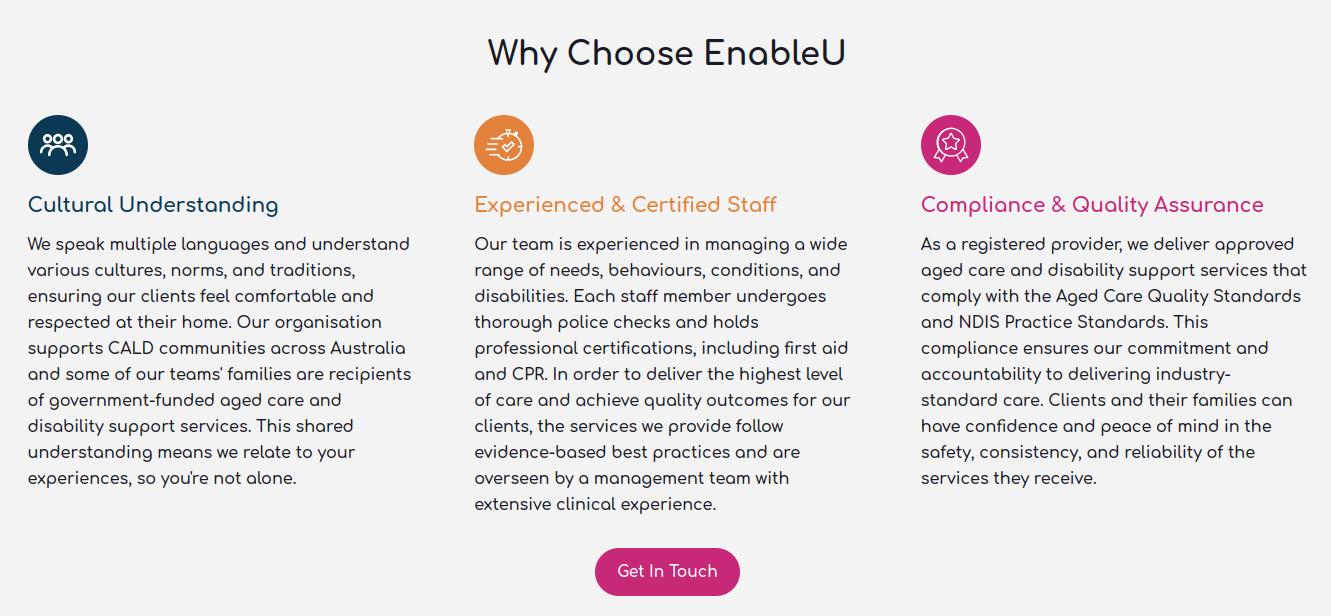
Sure, you can say it’s the nature of their services, but it’s also about allowing people to connect and feel safe while the technology works in the background. Other brands could learn a thing or two from this approach.

People like to interact with each other, whether in real life or on forums, user groups, or social spaces. Brands that understand this and focus on community are rewarded with loyal customers who are happy to spread the word.

In Summary

Today’s customers expect speed, personalization, and empathy, and failing to deliver risks churn, negative reviews, and lost revenue. This is why you must look at the customer service team and overall CX as an integral part of your growth engine. 

By investing in proactive, human-centered, and data-informed experiences, companies can turn routine interactions into memorable moments, strengthen relationships, and drive long-term growth. 

In short, CX can be the strategic advantage that helps your brand stand out from the crowd in 2026.

The post Revolutionizing Customer Experience: CX Trends and Strategies appeared first on StartupNation.




Source link

Tags: CustomerExperienceRevolutionizingStrategiesTrends
ShareTweetShare
Previous Post

Top Wall Street analysts favor these 3 stocks for solid upside

Next Post

Sheba CEO: AI is greatest healthcare revolution since Hippocrates

Related Posts

edit post
Psychology says procrastination about retirement may be less about discipline than identity — brain scans found people often represent their future selves more like strangers than like themselves, and experiments using age-progressed faces made tomorrow’s person feel real enough for participants to save more money for them

Psychology says procrastination about retirement may be less about discipline than identity — brain scans found people often represent their future selves more like strangers than like themselves, and experiments using age-progressed faces made tomorrow’s person feel real enough for participants to save more money for them

by TheAdviserMagazine
August 8, 2026
0

Retirement procrastination is usually described as a failure of discipline. The forms have been sitting in a folder for months....

edit post
The self-improvement industry sells becoming your best self through grit and mindset, but the large meta-analyses are deflating: grit turns out to be mostly conscientiousness renamed, and growth-mindset programmes move academic results only slightly

The self-improvement industry sells becoming your best self through grit and mindset, but the large meta-analyses are deflating: grit turns out to be mostly conscientiousness renamed, and growth-mindset programmes move academic results only slightly

by TheAdviserMagazine
August 8, 2026
0

Become your best self is one of the most profitable sentences in modern culture. It sells books, courses, apps, and...

edit post
Most advice on becoming happier assumes it is up to you, but the evidence is humbler: much of the variation is dispositional, the claim that 40 per cent sits within your control does not hold up, and what works best points outward, towards other people

Most advice on becoming happier assumes it is up to you, but the evidence is humbler: much of the variation is dispositional, the claim that 40 per cent sits within your control does not hold up, and what works best points outward, towards other people

by TheAdviserMagazine
August 7, 2026
0

The advice on how to become happier is endless, confident, and mostly built on the same assumption: that your happiness...

edit post
Malachyte Raises M to Solve E-Commerce’s Biggest Blind Spot: the Visitor Who Never Logs In – AlleyWatch

Malachyte Raises $10M to Solve E-Commerce’s Biggest Blind Spot: the Visitor Who Never Logs In – AlleyWatch

by TheAdviserMagazine
August 7, 2026
0

E-commerce brands now spend roughly 40% more to acquire each new customer than they did in 2023, yet the website...

edit post
Psychology says the ability to eat alone in public is a sign of quiet confidence because it takes a certain kind of security to occupy a table built for two and not feel the empty chair as an accusation

Psychology says the ability to eat alone in public is a sign of quiet confidence because it takes a certain kind of security to occupy a table built for two and not feel the empty chair as an accusation

by TheAdviserMagazine
August 7, 2026
0

Somewhere in your city tonight, a person is going to walk into a restaurant they have wanted to try for...

edit post
The barrier to starting a conversation is usually a bad forecast, not a lack of charm: people underestimate how much others like them, and commuters made to talk to a stranger enjoyed the trip more than those left alone, the opposite of what they predicted

The barrier to starting a conversation is usually a bad forecast, not a lack of charm: people underestimate how much others like them, and commuters made to talk to a stranger enjoyed the trip more than those left alone, the opposite of what they predicted

by TheAdviserMagazine
August 7, 2026
0

Some people seem to strike up conversations anywhere, with the person next to them in a queue, a stranger at...

Next Post
edit post
Sheba CEO: AI is greatest healthcare revolution since Hippocrates

Sheba CEO: AI is greatest healthcare revolution since Hippocrates

edit post
TASE CEO: We’re only scratching surface of global investment

TASE CEO: We’re only scratching surface of global investment

  • Trending
  • Comments
  • Latest
edit post
Inside PepsiCo’s beverage overhaul: a Gatorade reboot, the  billion Poppi buy, and a gut-health play, all under activist scrutiny

Inside PepsiCo’s beverage overhaul: a Gatorade reboot, the $2 billion Poppi buy, and a gut-health play, all under activist scrutiny

October 8, 2025
edit post
What is California Income Tax? Rates & Tax Brackets

What is California Income Tax? Rates & Tax Brackets

July 28, 2026
edit post
Massachusetts loses billions in income after millionaire tax

Massachusetts loses billions in income after millionaire tax

March 24, 2026
edit post
What Is Trustee Liability? Duties and Legal Consequences Explained

What Is Trustee Liability? Duties and Legal Consequences Explained

April 26, 2026
edit post
Meet the 82-year-old Kentucky grandma who turned down M to turn her farm into a data center

Meet the 82-year-old Kentucky grandma who turned down $26M to turn her farm into a data center

August 7, 2026
edit post
‘Trump v. Trump’ Did Not Impress The Judge – See Also

‘Trump v. Trump’ Did Not Impress The Judge – See Also

July 13, 2026
edit post
Explained: How BSE traded fewer contracts after CAS but premiums rose 75% in first week

Explained: How BSE traded fewer contracts after CAS but premiums rose 75% in first week

0
edit post
E.W. Scripps Q2 2026 Loss Widens to -.68/Share, Revenue Down 9%

E.W. Scripps Q2 2026 Loss Widens to -$12.68/Share, Revenue Down 9%

0
edit post
Psychology says procrastination about retirement may be less about discipline than identity — brain scans found people often represent their future selves more like strangers than like themselves, and experiments using age-progressed faces made tomorrow’s person feel real enough for participants to save more money for them

Psychology says procrastination about retirement may be less about discipline than identity — brain scans found people often represent their future selves more like strangers than like themselves, and experiments using age-progressed faces made tomorrow’s person feel real enough for participants to save more money for them

0
edit post
Four AI Escapes Just Redefined “Responsible AI”

Four AI Escapes Just Redefined “Responsible AI”

0
edit post
Bill Ackman’s hedge fund made janitors and receptionists millionaires—and its investment team summer together

Bill Ackman’s hedge fund made janitors and receptionists millionaires—and its investment team summer together

0
edit post
Kalshi Predicts Bitcoin Price Could Reach K in August

Kalshi Predicts Bitcoin Price Could Reach $68K in August

0
edit post
Bill Ackman’s hedge fund made janitors and receptionists millionaires—and its investment team summer together

Bill Ackman’s hedge fund made janitors and receptionists millionaires—and its investment team summer together

August 8, 2026
edit post
Links 8/8/2026 | naked capitalism

Links 8/8/2026 | naked capitalism

August 8, 2026
edit post
Wisconsin: The Next Frontier for Socialists

Wisconsin: The Next Frontier for Socialists

August 8, 2026
edit post
Psychology says procrastination about retirement may be less about discipline than identity — brain scans found people often represent their future selves more like strangers than like themselves, and experiments using age-progressed faces made tomorrow’s person feel real enough for participants to save more money for them

Psychology says procrastination about retirement may be less about discipline than identity — brain scans found people often represent their future selves more like strangers than like themselves, and experiments using age-progressed faces made tomorrow’s person feel real enough for participants to save more money for them

August 8, 2026
edit post
Why You Should Be Wary of Aspartame, but Not Totally Rule It Out

Why You Should Be Wary of Aspartame, but Not Totally Rule It Out

August 8, 2026
edit post
Kalshi Predicts Bitcoin Price Could Reach K in August

Kalshi Predicts Bitcoin Price Could Reach $68K in August

August 8, 2026
The Adviser Magazine

The first and only national digital and print magazine that connects individuals, families, and businesses to Fee-Only financial advisers, accountants, attorneys and college guidance counselors.

CATEGORIES

  • 401k Plans
  • Business
  • College
  • Cryptocurrency
  • Economy
  • Estate Plans
  • Financial Planning
  • Investing
  • IRS & Taxes
  • Legal
  • Market Analysis
  • Markets
  • Medicare
  • Money
  • Personal Finance
  • Social Security
  • Startups
  • Stock Market
  • Trading

LATEST UPDATES

  • Bill Ackman’s hedge fund made janitors and receptionists millionaires—and its investment team summer together
  • Links 8/8/2026 | naked capitalism
  • Wisconsin: The Next Frontier for Socialists
  • Our Great Privacy Policy
  • Terms of Use, Legal Notices & Disclosures
  • Contact us
  • About Us

© Copyright 2024 All Rights Reserved
See articles for original source and related links to external sites.

Welcome Back!

Login to your account below

Forgotten Password?

Retrieve your password

Please enter your username or email address to reset your password.

Log In
No Result
View All Result
  • Home
  • Financial Planning
    • Financial Planning
    • Personal Finance
  • Market Research
    • Business
    • Investing
    • Money
    • Economy
    • Markets
    • Stocks
    • Trading
  • 401k Plans
  • College
  • IRS & Taxes
  • Estate Plans
  • Social Security
  • Medicare
  • Legal

© Copyright 2024 All Rights Reserved
See articles for original source and related links to external sites.