No Result
View All Result
SUBMIT YOUR ARTICLES
  • Login
Wednesday, March 18, 2026
TheAdviserMagazine.com
  • Home
  • Financial Planning
    • Financial Planning
    • Personal Finance
  • Market Research
    • Business
    • Investing
    • Money
    • Economy
    • Markets
    • Stocks
    • Trading
  • 401k Plans
  • College
  • IRS & Taxes
  • Estate Plans
  • Social Security
  • Medicare
  • Legal
  • Home
  • Financial Planning
    • Financial Planning
    • Personal Finance
  • Market Research
    • Business
    • Investing
    • Money
    • Economy
    • Markets
    • Stocks
    • Trading
  • 401k Plans
  • College
  • IRS & Taxes
  • Estate Plans
  • Social Security
  • Medicare
  • Legal
No Result
View All Result
TheAdviserMagazine.com
No Result
View All Result
Home Market Research Economy

The Real Problem with Trump’s Intel Deal

by TheAdviserMagazine
7 months ago
in Economy
Reading Time: 4 mins read
A A
The Real Problem with Trump’s Intel Deal
Share on FacebookShare on TwitterShare on LInkedIn


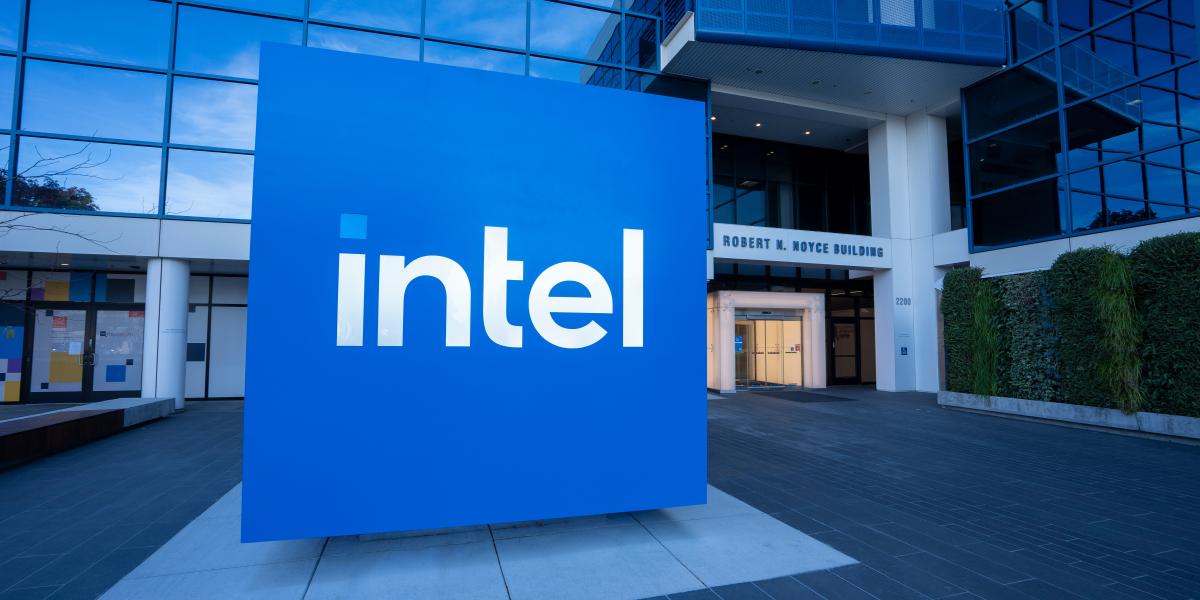
One morning, earlier this month, Trump was watching the Fox Business show Mornings with Maria when the show’s host, Maria Bartiromo, mentioned some “concerns” Republican China hawks had had about possible connections between Intel CEO Lip-Bu Tan and the Chinese military. Five minutes later, the president sent out a post demanding that Tan step down “immediately.”

The demand sent Intel’s executives into a panic. The company had already been struggling, and getting on the president’s bad side was the last thing it needed. Intel leaders immediately contacted the White House to set up a meeting. Three days later, Tan flew to Washington and sat down with Trump, Commerce Secretary Howard Lutnick, and Treasury Secretary Scott Bessent.

In the meeting, Tan made the case that he wasn’t a Chinese spy and argued that the financial health of Intel was crucial for both the strength of the American economy and for US national security.

Trump was apparently persuaded and agreed to withdraw his demand for Tan to step down. But in exchange, he asked for a ten percent equity share in Intel. Tan agreed.

Last Friday, Trump triumphantly announced the deal—celebrating the fact that the US government would come to own a share of the company. The reaction on the right was mixed.

Plenty of Trump’s acolytes dutifully hopped on board and echoed Trump’s framing that the federal government is “us,” and so any deal that moves money or financial assets into federal accounts is equivalent to transferring that money to all of us Americans.

Others were not convinced. Plenty pointed out, correctly, that the government embedding and allying itself with nominally private companies is the literal definition of economic fascism. Establishment critics, who are not put off by economic fascism as long as they get to call it something else, thought the move was a bit strategically misguided.

More economically sound critics pointed out that this deal is only another step in the wrong direction as the government intervenes more and more in the economy, leaving the American people worse off.

Trump fired back at critics, pointing out that he “paid zero” for the stake in Intel. He’s referring to the fact that the money used to buy Intel stock was already slated to go to the company under Biden’s CHIPS Act.

Doubling down, the administration announced it would be acquiring stakes in more companies. And it would do so to establish something Biden had planned to form if he had won a second term: a so-called sovereign wealth fund. And in doing so, by taking stakes in companies that the government subsidizes, Trump is carrying out Bernie Sanders and Elizabeth Warren’s plan for generating such a fund.

Trump’s adoption of policies put forward by self-proclaimed “socialists” like Bernie Sanders prompted more criticism that this Intel deal represents the president flirting with socialism.

But, semantics aside, it’s important to understand that—whether we call it socialism, fascism, corporatism, or state capitalism—heavy government management of the American economy has already been around for a long time.

It really began during the Progressive era at the end of the nineteenth century. According to the political establishment’s preferred narrative of the period, the American people grew disgusted with unsanitary food production, dangerous working conditions, and income inequality, so they collectively demanded that the government start intervening in the economy. And the government—which in these establishment narratives is always extremely reluctant to become more powerful—relented and established departments like the Food and Drug Administration and the Federal Trade Commission.

Murray Rothbard demolished this narrative in his book on the Progressive era. Drawing on the work of historian Gabriel Kolko, Rothbard argues that the true catalyst for those progressive “reforms” was a recognition among the heads of industry that attempts to set up monopolies and cartels privately were futile because the benefits of cartelization and monopolization could only really be attained with government power.

Sure enough, as Rothbard detailed extensively, company leaders were highly involved in setting up the early federal regulatory system, not because they were attempting to “capture” it, but because the entire purpose from the beginning was to warp their industries to their own benefit.

Perhaps the most egregious example came later in the Progressive era with the founding of the Federal Reserve, which is a literal banking cartel, protected and maintained with state power. But many of the most important industries—from healthcare to agriculture—were structured to benefit specific companies and interest groups.

In the 1930s, credit expansion carried out by America’s state-backed banking cartel caused widespread economic malinvestment, which pulled the economy into a major recession. Then, both presidents Hoover and Franklin Roosevelt intervened to prevent the economy from correcting itself, which froze the economy in a permanent recession, what we now call the Great Depression.

The politically-connected heads of industry and government officials used this economic catastrophe that they had helped create and sustain to expand their hold over the economy even more, with the massive expansion of government power known as the New Deal.

This crony regulatory apparatus has grown under every single presidential administration since, all fueled by the government’s capture of the monetary system through its central banking cartel.

This network has fed off the remaining productive parts of the American economy like a growing parasite. And, as it’s grown, the effects of having a political system designed—from the start—to benefit the well-connected few at the expense of everyone else have grown too.

It was those effects that fueled the appeal of outsider candidates like Donald Trump, who promised to radically change course and roll back the system that had been ripping the American people off for so long.

This brings us to the real problem with Trump’s announcement about the federal government acquiring a ten percent stake in Intel. It’s not that it represents some paradigm-shifting leap into fascism or socialism. The true problem here is that this is yet another example of Trump pivoting to embrace the same corrupt political system that he campaigned against.

By adopting the Sanders-Warren strategy for building a Biden-style sovereign wealth fund—that is bound to fail in making Americans richer and safer, by the way—the Trump administration reveals that they are more than happy to conserve the worst aspects of our interventionist political system, as long as they get to rebrand them as their own.



Source link

Tags: dealIntelproblemRealTrumps
ShareTweetShare
Previous Post

Bitcoin Taker Buy/Sell Ratio Plunges To Lowest Since 2018: Strong Sell Signal Flashes

Next Post

Build Trust In Marketing Measurement With A Data Strategy

Related Posts

edit post
Crisis In Cuba – Sanctions, Starvation, And Blackouts

Crisis In Cuba – Sanctions, Starvation, And Blackouts

by TheAdviserMagazine
March 18, 2026
0

???? CUBA'S POWER GRID COLLAPSES UNDER STRAIN Cuba is dealing with a brutal blackout crisis, with power outages lasting up...

edit post
Market Talk – March 17, 2026

Market Talk – March 17, 2026

by TheAdviserMagazine
March 17, 2026
0

ASIA: The major Asian stock markets had a mixed day today: • NIKKEI 225 decreased 50.76 points or -0.09% to...

edit post
Director Of Natl Counterterrorism Resigns Over Trump Manipulated By Netanyahu

Director Of Natl Counterterrorism Resigns Over Trump Manipulated By Netanyahu

by TheAdviserMagazine
March 17, 2026
0

This letter of resignation is absolutely correct. None of my sources agree with this war and everyone I know of...

edit post
Rothbard Never Abandoned His Principles

Rothbard Never Abandoned His Principles

by TheAdviserMagazine
March 17, 2026
0

It is often observed that Rothbard’s political opinions were controversial, especially in his later years when he forged an alliance...

edit post
Hyperinflating the Goat | Mises Institute

Hyperinflating the Goat | Mises Institute

by TheAdviserMagazine
March 17, 2026
0

Goats are everywhere in Malawi. With a population exceeding 10 million as of 2024 and growing, they will surely overtake...

edit post
Why Kill for Trump? | Mises Institute

Why Kill for Trump? | Mises Institute

by TheAdviserMagazine
March 17, 2026
0

“Ask yourself whether you are willing to kill in an unjust war, whether decrees from the US government can provide...

Next Post
edit post
Build Trust In Marketing Measurement With A Data Strategy

Build Trust In Marketing Measurement With A Data Strategy

edit post
Videogame sales rise 5% as EA Sports, Nintendo, mobile lift numbers (NTDOY)

Videogame sales rise 5% as EA Sports, Nintendo, mobile lift numbers (NTDOY)

  • Trending
  • Comments
  • Latest
edit post
Foreclosure Starts are Up 19%—These Counties are Seeing the Highest Distress

Foreclosure Starts are Up 19%—These Counties are Seeing the Highest Distress

February 24, 2026
edit post
7 States Reporting a Surge in Norovirus Cases

7 States Reporting a Surge in Norovirus Cases

February 22, 2026
edit post
2025 Delaware State Tax Refund – DE Tax Brackets

2025 Delaware State Tax Refund – DE Tax Brackets

February 16, 2026
edit post
The Growing Movement to End Property Taxes Continues in Kentucky, And What It Means For Investors

The Growing Movement to End Property Taxes Continues in Kentucky, And What It Means For Investors

March 2, 2026
edit post
Who Is Legally Next of Kin in North Carolina?

Who Is Legally Next of Kin in North Carolina?

February 28, 2026
edit post
How Age Affects Your Social Security Disability Claim

How Age Affects Your Social Security Disability Claim

March 2, 2026
edit post
The Brand–Culture Loop Is Your Startup’s Ultimate Moat

The Brand–Culture Loop Is Your Startup’s Ultimate Moat

0
edit post
Synchronizing Brand Messaging Through Your Partner Network

Synchronizing Brand Messaging Through Your Partner Network

0
edit post
Flourish launches mortgage platform to help RIAs retain assets

Flourish launches mortgage platform to help RIAs retain assets

0
edit post
How to Buy Rentals (Faster) with Real Estate-Related Skills (Rookie Reply)

How to Buy Rentals (Faster) with Real Estate-Related Skills (Rookie Reply)

0
edit post
Cultural Marxism Masquerading as True History

Cultural Marxism Masquerading as True History

0
edit post
Top Meme Coins That Could Still Surge Despite Dogecoin, Shiba Inu Dominance

Top Meme Coins That Could Still Surge Despite Dogecoin, Shiba Inu Dominance

0
edit post
European indexes rebound, keeping a close watch on global affairs (EUR:USD:)

European indexes rebound, keeping a close watch on global affairs (EUR:USD:)

March 18, 2026
edit post
Top Meme Coins That Could Still Surge Despite Dogecoin, Shiba Inu Dominance

Top Meme Coins That Could Still Surge Despite Dogecoin, Shiba Inu Dominance

March 18, 2026
edit post
Openclaw AI Skills Vulnerable to Malicious Exploits, Certik Researchers Warn

Openclaw AI Skills Vulnerable to Malicious Exploits, Certik Researchers Warn

March 18, 2026
edit post
Elbit CEO: We don’t wait for customers to define needs

Elbit CEO: We don’t wait for customers to define needs

March 18, 2026
edit post
IT stocks face fresh AI worries; is more correction ahead?

IT stocks face fresh AI worries; is more correction ahead?

March 18, 2026
edit post
Crisis In Cuba – Sanctions, Starvation, And Blackouts

Crisis In Cuba – Sanctions, Starvation, And Blackouts

March 18, 2026
The Adviser Magazine

The first and only national digital and print magazine that connects individuals, families, and businesses to Fee-Only financial advisers, accountants, attorneys and college guidance counselors.

CATEGORIES

  • 401k Plans
  • Business
  • College
  • Cryptocurrency
  • Economy
  • Estate Plans
  • Financial Planning
  • Investing
  • IRS & Taxes
  • Legal
  • Market Analysis
  • Markets
  • Medicare
  • Money
  • Personal Finance
  • Social Security
  • Startups
  • Stock Market
  • Trading

LATEST UPDATES

  • European indexes rebound, keeping a close watch on global affairs (EUR:USD:)
  • Top Meme Coins That Could Still Surge Despite Dogecoin, Shiba Inu Dominance
  • Openclaw AI Skills Vulnerable to Malicious Exploits, Certik Researchers Warn
  • Our Great Privacy Policy
  • Terms of Use, Legal Notices & Disclosures
  • Contact us
  • About Us

© Copyright 2024 All Rights Reserved
See articles for original source and related links to external sites.

Welcome Back!

Login to your account below

Forgotten Password?

Retrieve your password

Please enter your username or email address to reset your password.

Log In
No Result
View All Result
  • Home
  • Financial Planning
    • Financial Planning
    • Personal Finance
  • Market Research
    • Business
    • Investing
    • Money
    • Economy
    • Markets
    • Stocks
    • Trading
  • 401k Plans
  • College
  • IRS & Taxes
  • Estate Plans
  • Social Security
  • Medicare
  • Legal

© Copyright 2024 All Rights Reserved
See articles for original source and related links to external sites.