Add Silicon Canals to your Google News feed. 
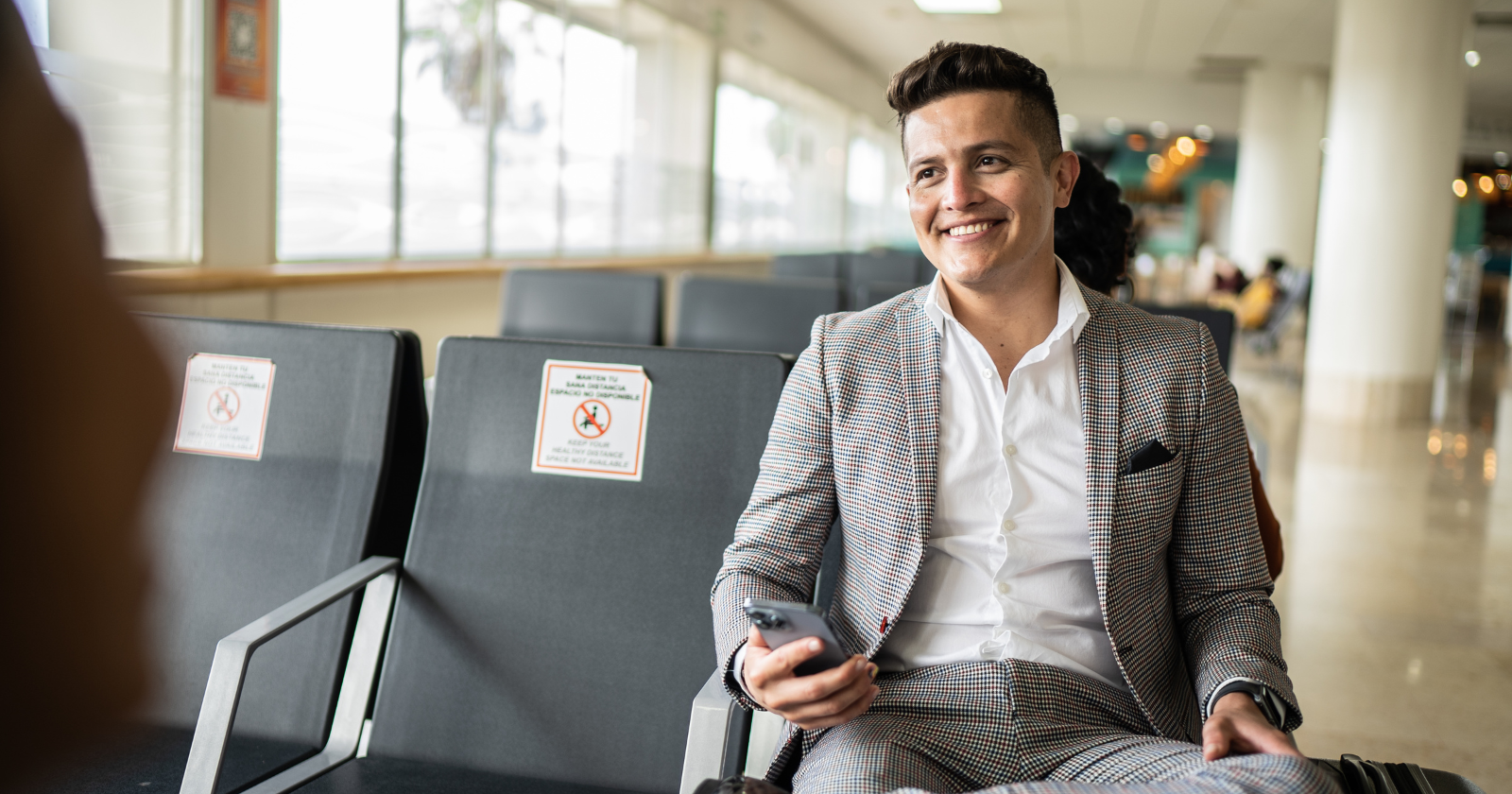
Picture this: You’re sitting at gate B27, watching the departure time slip from 2:30 to 3:15, then 4:00. The gate agent’s voice crackles through the intercom with another vague update.
Around you, two distinct camps emerge. One group storms the desk, voices rising, demanding answers and compensation. The other? They barely look up from their books, quietly reorganizing their day with a few taps on their phones.
What you’re witnessing isn’t just different personality types colliding.
According to psychologists, these contrasting reactions reveal something much deeper: how we were taught from childhood to handle situations beyond our control. That frustrated passenger berating the gate agent? That quiet person reorganizing their schedule?
They’re both playing out lessons learned decades ago about power, control, and what happens when life doesn’t go according to plan.
The loudest voices often learned control through confrontation
Have you ever noticed how some people seem to believe that getting louder will somehow make the plane arrive faster?
Growing up, I watched my own family navigate frustration in wildly different ways. After my parents divorced, I became fascinated by how differently they handled disruption.
One parent would immediately escalate any service issue, convinced that making enough noise would produce results. The other would go silent, almost disappearing into themselves when things went wrong.
Dr. Marter, a psychologist, explains that “A person with an internal locus of control believes that they can create positive action in their lives through right action.”
But here’s where it gets interesting: sometimes that belief in personal control gets twisted. People who grew up watching confrontation produce results, even temporarily, learned that aggression equals action. They mistake volume for control.
Think about it. If you grew up in a household where the squeaky wheel always got the grease, where making a scene sometimes bent the world to your will, why wouldn’t you try that strategy at an airport gate?
These passengers aren’t necessarily bad people. They’re running the only program they know for dealing with powerlessness: fight for control, even when there’s none to be had.
The problem is airports don’t care about your noise level. The weather system causing delays doesn’t respond to customer complaints. But when confrontation is your only tool, every problem looks like a battle to be won.
Silence isn’t always acceptance
What about those quiet passengers, the ones who seem almost zen about the whole situation?
Before you assume they’re just naturally patient souls, consider this: going silent in the face of frustration is just as learned as going loud.
Some of us were taught early that expressing frustration was pointless, shameful, or even dangerous. We learned to swallow our disappointment, to make ourselves smaller when things went wrong.
I spent years thinking my tendency to go quiet during conflicts made me more mature than those who complained. Then a therapist pointed out something uncomfortable: my silence wasn’t acceptance. It was another form of trying to control an uncontrollable situation by controlling myself to an extreme degree.
Those quiet passengers might be genuinely at peace, sure. But many are performing a different childhood script, one that says showing frustration is weakness, that good people don’t make waves, that if you can’t fix something, you should pretend it doesn’t bother you.
Neither extreme is particularly healthy. The screamers exhaust themselves fighting battles they can’t win. The silent ones often bottle up stress until it explodes in other areas of their lives. Both groups are trying to manage their powerlessness using outdated tools from their emotional toolbox.
The middle ground most of us never learned
So what’s the alternative to fight or freeze?
Dr. Lall, a psychologist, suggests that “Breathing exercises are probably the most accessible coping mechanism to everyone, so that is where I would recommend a person starts.” It sounds almost too simple, but there’s profound wisdom here.
The passengers who handle delays best aren’t the ones making scenes or the ones pretending everything’s fine. They’re the ones who acknowledge their frustration without being controlled by it.
They might calmly ask the gate agent for realistic updates, then use that information to make practical decisions. They recognize what they can control (rebooking options, hotel arrangements, informing people of delays) and what they can’t (weather patterns, mechanical issues, air traffic control).
This balanced response doesn’t come naturally to most of us because it requires something many of us never learned growing up: the ability to feel uncomfortable emotions without immediately trying to discharge them through aggression or suppression.
Why airports bring out our worst coping mechanisms
There’s something uniquely triggering about airport delays that strips away our adult coping mechanisms and sends us straight back to childhood patterns.
Think about it: you’re trapped in a sterile environment, dependent on authority figures for information, unable to leave or take meaningful action.
MYFLYRIGHT notes that “The possibility — however small — keeps the nervous system on alert.” We’re essentially reduced to a childlike state of dependency, which naturally triggers our earliest learned responses to powerlessness.
This is why watching people during flight delays feels like peering into their childhood homes. The businessman screaming at the gate agent might be channeling a father who taught him that men take charge and demand respect.
The woman sitting silently with tears in her eyes might be remembering lessons about being “good” and not causing trouble.
Final thoughts
Next time you’re stuck at a gate watching the delay announcements pile up, pay attention to your first instinct. Do you want to march up to the desk and demand answers? Do you feel yourself shrinking, going quiet, pretending it doesn’t matter?
That impulse isn’t really about the delayed flight. It’s about every time in your childhood when you felt powerless and had to figure out how to cope.
The good news? Once you recognize these patterns, you can start to change them. You can acknowledge your frustration without attacking others or suppressing your feelings. You can be assertive without being aggressive, calm without being passive.
Because at the end of the day, how we handle a flight delay isn’t just about getting to our destination. It’s about recognizing that the coping mechanisms we learned as children don’t have to control us as adults. We can write new scripts, even at gate B27.