No Result
View All Result
SUBMIT YOUR ARTICLES
  • Login
Sunday, April 12, 2026
TheAdviserMagazine.com
  • Home
  • Financial Planning
    • Financial Planning
    • Personal Finance
  • Market Research
    • Business
    • Investing
    • Money
    • Economy
    • Markets
    • Stocks
    • Trading
  • 401k Plans
  • College
  • IRS & Taxes
  • Estate Plans
  • Social Security
  • Medicare
  • Legal
  • Home
  • Financial Planning
    • Financial Planning
    • Personal Finance
  • Market Research
    • Business
    • Investing
    • Money
    • Economy
    • Markets
    • Stocks
    • Trading
  • 401k Plans
  • College
  • IRS & Taxes
  • Estate Plans
  • Social Security
  • Medicare
  • Legal
No Result
View All Result
TheAdviserMagazine.com
No Result
View All Result
Home Market Research Startups

Not everyone who keeps their personal life private is guarded. Some people tried sharing openly once, watched it become currency in someone else’s conversation, and simply adjusted the distribution list permanently.

by TheAdviserMagazine
3 minutes ago
in Startups
Reading Time: 5 mins read
A A
Not everyone who keeps their personal life private is guarded. Some people tried sharing openly once, watched it become currency in someone else’s conversation, and simply adjusted the distribution list permanently.
Share on FacebookShare on TwitterShare on LInkedIn


Privacy is not the absence of openness. It’s often what remains after openness was punished.

We tend to treat private people as though they arrived that way, fully formed, with some personality setting dialled toward secrecy. The cultural assumption runs deep: if someone doesn’t share freely, they must be emotionally unavailable, guarded, perhaps even hiding something. We’ve built an entire vocabulary around this. Avoidant. Closed off. Walled up.

But that framing misses something important. I grew up in rural New South Wales, where my dad was the town GP. In a community that small, everyone knew everyone’s business. I watched people come into his practice carrying shame about conditions that were nobody’s fault, because their neighbour had mentioned something to someone at the post office. The speed at which private medical information became public knowledge in a town of a few thousand people taught me early that disclosure is a one-way door. Once something is out, it belongs to whoever heard it. The people in that town who became private hadn’t always been that way. They tried openness. They handed someone a piece of themselves, and they watched that piece get passed around a table they never agreed to sit at. The privacy that followed wasn’t a wall. It was a policy update.

Photo by cottonbro studio on Pexels

The moment disclosure becomes someone else’s property

There’s a specific kind of violation that doesn’t show up in most psychology textbooks under “betrayal,” but it functions like one. You tell a friend about a difficult period in your marriage. Two weeks later, a mutual acquaintance asks you about it at a dinner party, wearing a sympathetic expression they clearly rehearsed in the car.

Nothing dramatic happened. No shouting, no confrontation. But something fundamental shifted. The information you shared in a moment of trust was treated as social material, as something interesting to relay. Your vulnerability became a talking point.

Betrayal Trauma Theory explains why violations from people we depend on cut so deep. When the person who harms us is also someone we rely on for connection and safety, the brain is forced to hold two contradictory truths simultaneously: I trusted you, and you used what I gave you. That dissonance doesn’t resolve neatly. It rewires behaviour. Research has found that social betrayal activates brain regions associated with both physical pain and fear. The nervous system doesn’t distinguish between a physical injury and the discovery that your confidence was treated as gossip. Both register as harm.

So when someone becomes private after an experience like this, they’re not being dramatic. Their brain literally encoded the act of sharing as dangerous.

The redistribution, not the withdrawal

Here’s the distinction that matters. People who become private after a breach of trust haven’t necessarily stopped being open. They’ve become selective. The distribution list got shorter.

I think about this in terms of what I wrote about my father and how he withheld affection. He didn’t stop feeling things. He stopped broadcasting them because, in his experience, showing someone how much they mattered handed them a weapon. The mechanism is the same even when the context differs. You learn that disclosure has a cost. You adjust who bears that cost.

The common misread is to assume these people are emotionally shut down. They’re often the opposite. They feel deeply enough that they can’t afford to have their inner life treated carelessly. A person who doesn’t care wouldn’t bother protecting anything.

There’s a social economy that operates beneath polite conversation, and personal information is one of its most traded commodities. People share other people’s struggles because it makes them feel included, connected, or important. It’s rarely malicious. That’s actually what makes it so hard to confront. When your breakup or your health scare or your family conflict ends up in someone else’s conversation, the person who shared it usually wasn’t trying to hurt you. They were trying to bond with someone else. Your pain was the currency. They spent it without thinking twice.

This is why the resulting privacy is practical, not paranoid. The less someone knows, the less they can distort. By limiting what you share, you reduce the raw material available for misinterpretation, gossip, and unsolicited opinions.

guarded personal boundaries
Photo by ROCKETMANN TEAM on Pexels

The difference between walls and filters

A wall blocks everything. A filter sorts. This is the distinction most people miss when they encounter someone who is selectively private.

Walls are about fear. Filters are about discernment. A person who has been burned by oversharing doesn’t necessarily stop trusting altogether. They develop a more refined system for deciding who gets access to what, and when. They might be completely open with their partner but share almost nothing with colleagues. They might tell their best friend everything but keep their family at arm’s length.

This isn’t inconsistency. It’s precision.

I wrote recently about people who inherited the architecture of endurance from watching their parents stay in unhappy relationships. There’s a parallel here. Some people inherited the architecture of privacy from a single formative experience where sharing went wrong. That architecture can be limiting if it cuts off all closeness. But it can also be protective. And the distinction between the two depends entirely on whether the person has at least one relationship where the full, unedited version of themselves is welcome.

Research consistently shows that social connection is one of the most important factors for long-term wellbeing. But the connections that matter are the ones where you feel genuinely known rather than merely recognised. The person with three close friends who know everything is not worse off than the person with thirty acquaintances who know the highlights reel. They might actually be significantly better off. If someone has that one relationship where they can show up unedited, the privacy everywhere else isn’t a problem. It’s resource management.

What to do with this

There’s no moral obligation to be open. I want to be clear about that because the cultural messaging, especially online, pushes hard in the other direction. Vulnerability is celebrated, and showing up authentically is treated as a personality achievement. But prescribing blanket vulnerability to someone who has been burned by it is like telling someone who got food poisoning to go back to the same restaurant. The advice isn’t wrong in principle. The context makes it harmful.

So here’s what I’d actually ask of you.

If you know someone who keeps their personal life private, resist the urge to interpret it. Don’t assume they’re hiding. Don’t assume they’re afraid. Don’t assume they need to be coaxed out of their shell. Consider the possibility that they tried being open. Consider that it went badly. Consider that the quiet they maintain isn’t absence of feeling but a precise allocation of it.

And if you recognise yourself in this piece, if you’re the one who adjusted the distribution list after someone treated your inner life as content for a dinner party, I’d ask you to examine one thing: do you still have at least one person who gets the unedited version? Not thirty people. One. Because the data, and honestly my own experience, suggests that the number doesn’t matter. What matters is that somewhere, with someone, the full version of you is still welcome.

The people who have been most hurt by oversharing are often the ones with the most to offer in close relationships, because they’ve learned what carelessness costs. They don’t give themselves away to just anyone. When they do open up, they mean it. That kind of trust, earned slowly and given deliberately, is worth more than any confession shared freely in a moment of enthusiasm.

The person who guards their inner life after having it mishandled isn’t broken. They’re paying attention. And paying attention, in a world that treats personal information as communal property, might be the most reasonable thing a person can do.

Feature image by Xeniya Kovaleva on Pexels



Source link

Tags: adjustedConversationCurrencyDistributionElsesguardedlifeListOpenlypeoplePermanentlyPersonalprivatesharingSimplywatched
ShareTweetShare
Previous Post

Stock futures sink, oil spikes as Navy looks to block Iran’s exports and break its grip on Hormuz

Related Posts

edit post
I stopped being the one who called – and within eight months I had confirmed, without a single confrontation, exactly which friendships were real

I stopped being the one who called – and within eight months I had confirmed, without a single confrontation, exactly which friendships were real

by TheAdviserMagazine
April 12, 2026
0

There’s a version of friendship maintenance that looks like effort but is really just anxiety wearing a social mask. For...

edit post
Somewhere between 1995 and 2010, patience stopped being a virtue and became a market failure – and we built an entire civilization on top of that assumption

Somewhere between 1995 and 2010, patience stopped being a virtue and became a market failure – and we built an entire civilization on top of that assumption

by TheAdviserMagazine
April 12, 2026
0

Here’s a thing I’ve been turning over: impatience isn’t a personality flaw anymore. It’s infrastructure. It’s baked into the checkout...

edit post
The cruelest myth about self-discipline is that you have to feel ready – you don’t, you never will, and the people who figured that out earlier simply have more years of evidence that the feeling eventually follows the action

The cruelest myth about self-discipline is that you have to feel ready – you don’t, you never will, and the people who figured that out earlier simply have more years of evidence that the feeling eventually follows the action

by TheAdviserMagazine
April 12, 2026
0

Nobody wakes up on a cold morning, alarm screaming, and thinks: yes, this is exactly the moment I’ve been waiting...

edit post
The person who always offers to drive, always picks the restaurant, always plans the trip is rarely the controlling one in the group. They’re the one who learned early that if they didn’t organize the connection, the connection simply wouldn’t happen.

The person who always offers to drive, always picks the restaurant, always plans the trip is rarely the controlling one in the group. They’re the one who learned early that if they didn’t organize the connection, the connection simply wouldn’t happen.

by TheAdviserMagazine
April 11, 2026
0

For years I assumed the person in any group who always made the dinner reservation, who always texted the group...

edit post
People who stop trying to be liked are often accused of having an attitude – by the people who most benefited from them having none

People who stop trying to be liked are often accused of having an attitude – by the people who most benefited from them having none

by TheAdviserMagazine
April 11, 2026
0

Ever notice how the moment you stop bending over backwards for someone, they suddenly have a problem with your “attitude”?...

edit post
There’s a kind of exhaustion specific to people who grew up in the 1960s and 70s — not physical tiredness but the cumulative weight of having been reliable for so long, for so many people, with so little reciprocity, that they genuinely cannot remember what it felt like to be the one who was taken care of

There’s a kind of exhaustion specific to people who grew up in the 1960s and 70s — not physical tiredness but the cumulative weight of having been reliable for so long, for so many people, with so little reciprocity, that they genuinely cannot remember what it felt like to be the one who was taken care of

by TheAdviserMagazine
April 11, 2026
0

You know that bone-deep tired that has nothing to do with needing sleep? That weight in your chest that makes...

  • Trending
  • Comments
  • Latest
edit post
Massachusetts loses billions in income after millionaire tax

Massachusetts loses billions in income after millionaire tax

March 24, 2026
edit post
Illinois’ Paid Leave for All Workers Act Takes Effect — Every Employee Now Gets Guaranteed Time Off

Illinois’ Paid Leave for All Workers Act Takes Effect — Every Employee Now Gets Guaranteed Time Off

March 27, 2026
edit post
Virginia Permits ADULT MIGRANT MEN To Attend High School

Virginia Permits ADULT MIGRANT MEN To Attend High School

March 30, 2026
edit post
A 58-year-old left NYC for Miami to save on taxes — then retired early thanks to hidden savings. Here’s the math

A 58-year-old left NYC for Miami to save on taxes — then retired early thanks to hidden savings. Here’s the math

March 30, 2026
edit post
Tax Flight Accelerates In Massachusetts

Tax Flight Accelerates In Massachusetts

April 6, 2026
edit post
Property Tax Relief & Income Tax Relief

Property Tax Relief & Income Tax Relief

April 1, 2026
edit post
Not everyone who keeps their personal life private is guarded. Some people tried sharing openly once, watched it become currency in someone else’s conversation, and simply adjusted the distribution list permanently.

Not everyone who keeps their personal life private is guarded. Some people tried sharing openly once, watched it become currency in someone else’s conversation, and simply adjusted the distribution list permanently.

0
edit post
Pakistan: Caught in the Iran-Israel-US Crossfire?

Pakistan: Caught in the Iran-Israel-US Crossfire?

0
edit post
April 15 Tax Deadline Is Days Away, but You Can Get an Extension

April 15 Tax Deadline Is Days Away, but You Can Get an Extension

0
edit post
What Strategy Took from UCLA—and What It Missed

What Strategy Took from UCLA—and What It Missed

0
edit post
Stock futures sink, oil spikes as Navy looks to block Iran’s exports and break its grip on Hormuz

Stock futures sink, oil spikes as Navy looks to block Iran’s exports and break its grip on Hormuz

0
edit post
Handmade ETH NFT ‘The Del Mundos’ Gains Massive Traction

Handmade ETH NFT ‘The Del Mundos’ Gains Massive Traction

0
edit post
Not everyone who keeps their personal life private is guarded. Some people tried sharing openly once, watched it become currency in someone else’s conversation, and simply adjusted the distribution list permanently.

Not everyone who keeps their personal life private is guarded. Some people tried sharing openly once, watched it become currency in someone else’s conversation, and simply adjusted the distribution list permanently.

April 12, 2026
edit post
Stock futures sink, oil spikes as Navy looks to block Iran’s exports and break its grip on Hormuz

Stock futures sink, oil spikes as Navy looks to block Iran’s exports and break its grip on Hormuz

April 12, 2026
edit post
Stock market today: Dow, S&P 500, Nasdaq futures fall as the US and Iran fail to agree to peace, US blockades Hormuz

Stock market today: Dow, S&P 500, Nasdaq futures fall as the US and Iran fail to agree to peace, US blockades Hormuz

April 12, 2026
edit post
6 Common Inheritance Mistakes That Spark Family Feuds

6 Common Inheritance Mistakes That Spark Family Feuds

April 12, 2026
edit post
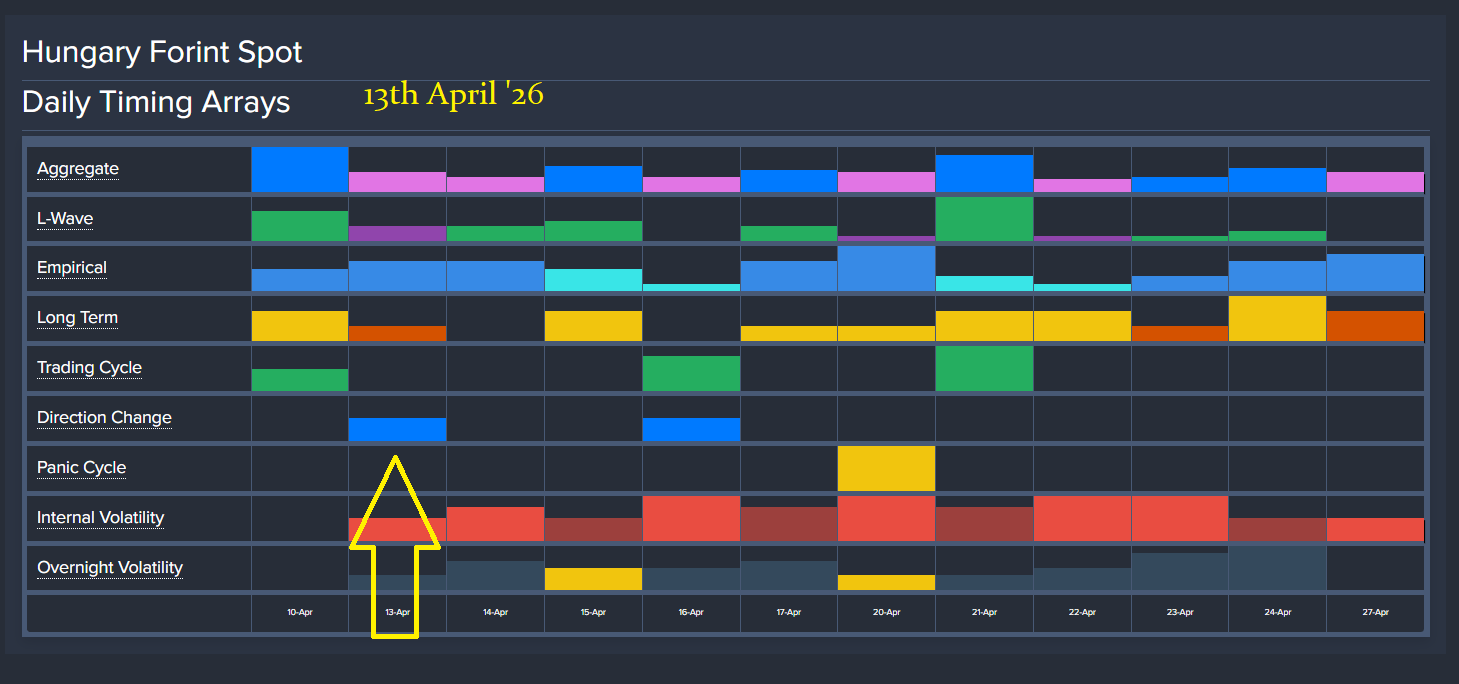
Hungary Votes For War | Armstrong Economics

Hungary Votes For War | Armstrong Economics

April 12, 2026
edit post
Ben Cowen: Bitcoin’s bottom likelihood is only 25%, a potential 70% drop aligns with historical patterns, and the k level is critical for market assessment

Ben Cowen: Bitcoin’s bottom likelihood is only 25%, a potential 70% drop aligns with historical patterns, and the $60k level is critical for market assessment

April 12, 2026
The Adviser Magazine

The first and only national digital and print magazine that connects individuals, families, and businesses to Fee-Only financial advisers, accountants, attorneys and college guidance counselors.

CATEGORIES

  • 401k Plans
  • Business
  • College
  • Cryptocurrency
  • Economy
  • Estate Plans
  • Financial Planning
  • Investing
  • IRS & Taxes
  • Legal
  • Market Analysis
  • Markets
  • Medicare
  • Money
  • Personal Finance
  • Social Security
  • Startups
  • Stock Market
  • Trading

LATEST UPDATES

  • Not everyone who keeps their personal life private is guarded. Some people tried sharing openly once, watched it become currency in someone else’s conversation, and simply adjusted the distribution list permanently.
  • Stock futures sink, oil spikes as Navy looks to block Iran’s exports and break its grip on Hormuz
  • Stock market today: Dow, S&P 500, Nasdaq futures fall as the US and Iran fail to agree to peace, US blockades Hormuz
  • Our Great Privacy Policy
  • Terms of Use, Legal Notices & Disclosures
  • Contact us
  • About Us

© Copyright 2024 All Rights Reserved
See articles for original source and related links to external sites.

Welcome Back!

Login to your account below

Forgotten Password?

Retrieve your password

Please enter your username or email address to reset your password.

Log In
No Result
View All Result
  • Home
  • Financial Planning
    • Financial Planning
    • Personal Finance
  • Market Research
    • Business
    • Investing
    • Money
    • Economy
    • Markets
    • Stocks
    • Trading
  • 401k Plans
  • College
  • IRS & Taxes
  • Estate Plans
  • Social Security
  • Medicare
  • Legal

© Copyright 2024 All Rights Reserved
See articles for original source and related links to external sites.