No Result
View All Result
SUBMIT YOUR ARTICLES
  • Login
Sunday, April 5, 2026
TheAdviserMagazine.com
  • Home
  • Financial Planning
    • Financial Planning
    • Personal Finance
  • Market Research
    • Business
    • Investing
    • Money
    • Economy
    • Markets
    • Stocks
    • Trading
  • 401k Plans
  • College
  • IRS & Taxes
  • Estate Plans
  • Social Security
  • Medicare
  • Legal
  • Home
  • Financial Planning
    • Financial Planning
    • Personal Finance
  • Market Research
    • Business
    • Investing
    • Money
    • Economy
    • Markets
    • Stocks
    • Trading
  • 401k Plans
  • College
  • IRS & Taxes
  • Estate Plans
  • Social Security
  • Medicare
  • Legal
No Result
View All Result
TheAdviserMagazine.com
No Result
View All Result
Home Market Research Startups

Japan is deploying robots not to replace workers but because there’s no one left to hire

by TheAdviserMagazine
2 hours ago
in Startups
Reading Time: 4 mins read
A A
Japan is deploying robots not to replace workers but because there’s no one left to hire
Share on FacebookShare on TwitterShare on LInkedIn


While Western discourse around AI remains fixated on job displacement, Japan is deploying physical AI to solve a fundamentally different problem: there aren’t enough workers to displace.

As TechCrunch reports, Japan’s push into AI-powered robotics across factories, warehouses, and critical infrastructure is driven less by competitive ambition than by demographic arithmetic. The country’s population declined for a 14th consecutive year in 2024, with working-age citizens comprising just 59.6% of the total population — a figure that demographic projections suggest will shrink significantly over the next two decades.

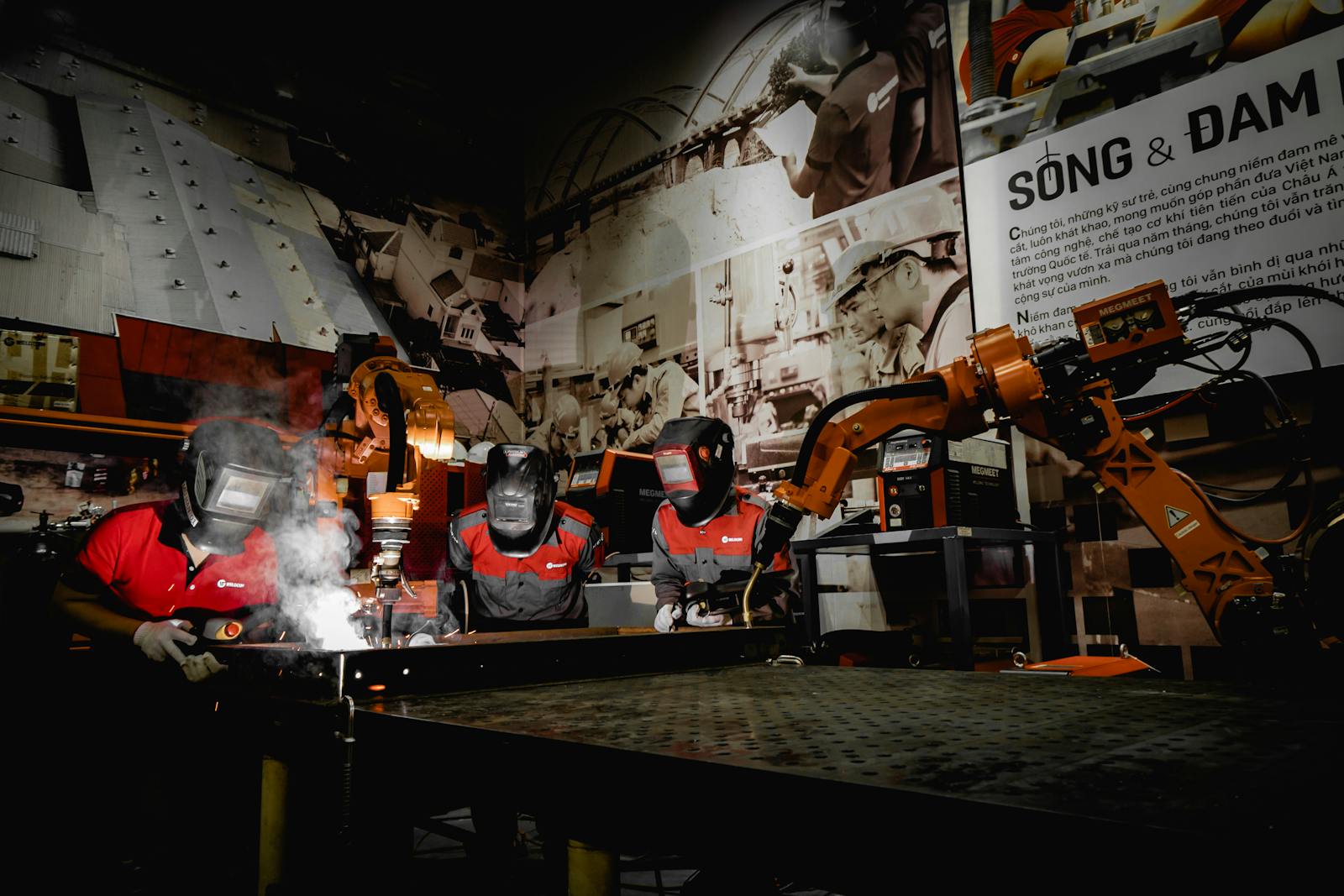
Photo by Hoang NC on Pexels

From efficiency play to survival infrastructure

The framing matters. In the U.S., physical AI is a venture capital thesis. In China, it’s a geopolitical strategy. In Japan, it’s an answer to a structural question about whether the country can keep its industrial base running at all.

A 2024 Reuters/Nikkei survey confirmed that labor shortages are the primary force pushing Japanese firms toward AI adoption. The institutional incentive structure here is clarifying: companies aren’t automating to cut costs, and they’re not chasing efficiency gains on a spreadsheet; they’re automating because the humans literally aren’t available.

Where the robots are actually showing up

This isn’t theoretical. The deployments are concrete and accelerating across specific sectors where labor gaps have become acute.

In logistics, Mujin, a Tokyo-based robotics company, has deployed its AI-powered robotic arms across more than 100 warehouse sites for clients including major retailers and third-party logistics providers, automating palletizing and depalletizing tasks that facilities increasingly cannot staff. The company reports that its systems handle throughput rates comparable to three to four human workers per station, operating across multiple shifts without the scheduling gaps that plague understaffed warehouses.

In construction, an industry where Japan’s worker shortage is especially severe and the average age of laborers now sits above 50, Shimizu Corporation and Obayashi have deployed autonomous welding robots, concrete-finishing machines, and AI-guided cranes on active building sites. Shimizu’s Robo-Welder system has demonstrated a roughly 70% reduction in required human welding hours on structural steel projects.

In agriculture, Kubota has moved beyond prototypes to commercial deployment of autonomous tractors and rice-transplanting machines across Japanese farms, targeting an industry where the average farmer is now 68 years old. FamilyMart, one of Japan’s largest convenience store chains, has begun rolling out Telexistence’s shelf-stocking robots to stores in urban areas where part-time worker recruitment has become nearly impossible, and each unit reportedly handles restocking tasks that would otherwise require two to three labor hours per shift.

The pattern across these deployments: companies are measuring success not primarily in cost savings but in operational continuity — the ability to keep running at all.

The $6.3 billion bet

Japan’s government has committed approximately $6.3 billion under Prime Minister Sanae Takaichi to strengthen AI capabilities, advance robotics integration, and support industrial deployment. The Ministry of Economy, Trade and Industry aims to capture 30% of the global physical AI market by 2040, building on an existing foundation: Japanese manufacturers reportedly account for a significant majority of the global industrial robotics market.

A different competitive position

Japan’s strategic moat sits in a specific layer of the stack. While the U.S. leads in software and service development, and China races toward full-stack system integration, Japan dominates the physical interface: actuators, sensors, control systems, and robot motion control. These are highly specialized control technologies that take significant time to develop and involve high costs of failure, meaning the barrier to entry is measured in decades of accumulated engineering knowledge, not funding rounds.

A hybrid ecosystem, not winner-take-all

Japan’s physical AI sector is developing along lines distinct from Silicon Valley’s disruption playbook. Large incumbents like Toyota, Mitsubishi Electric, and Honda provide manufacturing scale and deployment capabilities, while startups like Mujin, Telexistence, and Preferred Networks drive innovation in orchestration software, perception systems, and workflow automation. The relationship is complementary rather than adversarial: Toyota’s Woven City initiative, for instance, functions as a living testbed where startups deploy alongside corporate R&D in a shared physical environment.

Japan aging workforce
Photo by RDNE Stock project on Pexels

The preview other countries can’t afford to ignore

The structural logic extends well beyond Japan’s borders, and on a more concrete timeline than most policymakers acknowledge.

South Korea’s fertility rate, now the world’s lowest at 0.72, means it will hit Japan-level workforce contraction within the next decade. Germany’s working-age population is projected to shrink by roughly 7 million by 2035, and its manufacturing sector is already reporting record-high unfilled positions. Italy’s population trajectory is nearly as severe, with some projections showing a loss of nearly a third of its working-age population by 2050. Even China, despite its current dominance in manufacturing labor, faces a demographic cliff: its working-age population peaked in 2015 and is now declining at an accelerating rate.

What these countries should be watching from Japan isn’t the headline investment numbers but the specific institutional mechanisms that enable deployment. Japan’s regulatory willingness to permit autonomous systems in mixed environments like construction sites, farms, and retail stores is proving as important as the technology itself, and countries that wait until the labor crisis is acute before updating regulatory frameworks will find themselves a decade behind on deployment infrastructure. That regulatory foresight connects back to the demographic arithmetic that started all of this: when you can see the workforce shrinking fourteen years in a row, the urgency to clear institutional barriers becomes self-evident in a way that hypothetical disruption scenarios never do.

The deeper lesson is not a question but a correction of assumptions. Western automation discourse treats robotics as something that happens to workers, a force that displaces and disrupts, and nearly every policy debate in the U.S. and Europe is still structured around that premise. Japan reveals how fundamentally parochial that framing is. When automation becomes a continuity tool rather than an optimization tool, the entire institutional posture shifts: political resistance dissolves, regulatory frameworks accelerate, and the relationship between human labor and machine capability stops being adversarial and starts being architectural. The countries now watching Japan’s demographic crisis from a comfortable distance are, in most cases, only ten to fifteen years behind on the same curve, and the Western insistence on framing every robot as a threat to employment will look, in hindsight, like a society so focused on protecting jobs that it failed to notice the jobs were already going unfilled.

Feature image by Hoang NC on Pexels



Source link

Tags: deployingHireJapanLeftreplaceRobotsWorkers
ShareTweetShare
Previous Post

Trump risks confidence in U.S. role as guardian of global shipping

Next Post

Got $5,000? 5 Agentic AI Growth Stocks to Buy Before Wall Street Catches On.

Related Posts

edit post
I’m 66 and I spent forty years being extremely good at my job and last spring I realized I had optimized my entire existence for the approval of people I didn’t particularly like

I’m 66 and I spent forty years being extremely good at my job and last spring I realized I had optimized my entire existence for the approval of people I didn’t particularly like

by TheAdviserMagazine
April 5, 2026
0

Everyone tells you the same thing about a good career: be excellent, be reliable, be the person they can’t do...

edit post
There is a specific kind of couple that fights about dishes, laundry, and thermostat settings for fifteen years before one of them finally says the real sentence, which is: I need to know that you see what I do without me having to build a case for it every time.

There is a specific kind of couple that fights about dishes, laundry, and thermostat settings for fifteen years before one of them finally says the real sentence, which is: I need to know that you see what I do without me having to build a case for it every time.

by TheAdviserMagazine
April 5, 2026
0

It’s a Tuesday night, and Sarah is standing at the kitchen counter, staring at a sink full of dishes that...

edit post
Psychology says people who reply to messages within seconds aren’t just efficient – they’ve built their sense of safety around being reachable, because somewhere in their past, being slow to respond had consequences

Psychology says people who reply to messages within seconds aren’t just efficient – they’ve built their sense of safety around being reachable, because somewhere in their past, being slow to respond had consequences

by TheAdviserMagazine
April 4, 2026
0

You know that friend who texts back before you’ve even put your phone down? The one whose typing bubble appears...

edit post
I’m 66 and the friends I have left are the ones who saw me fall apart at least once and stayed — not because the falling apart was a test I designed, but because it turned out to be the only reliable way I ever found to discover who was actually there

I’m 66 and the friends I have left are the ones who saw me fall apart at least once and stayed — not because the falling apart was a test I designed, but because it turned out to be the only reliable way I ever found to discover who was actually there

by TheAdviserMagazine
April 4, 2026
0

You want to know something? At sixty-six, I can count my real friends on one hand. Not the guys I...

edit post
There is a particular loneliness in being a man whose body never matched the archetype he was taught to aspire to. Not because anyone was cruel about it, but because the world built its furniture, its expectations, and its respect around a size he would never reach.

There is a particular loneliness in being a man whose body never matched the archetype he was taught to aspire to. Not because anyone was cruel about it, but because the world built its furniture, its expectations, and its respect around a size he would never reach.

by TheAdviserMagazine
April 4, 2026
0

Every man who grew up feeling like his body didn’t match what the world expected knows the exact dimensions of...

edit post
There is a version of grief that only people in their forties understand. It’s not for someone who died. It’s for the life you were quietly building in your head for twenty years that you now realize was never going to happen, and the mourning has no name because the thing you lost never existed outside your own planning.

There is a version of grief that only people in their forties understand. It’s not for someone who died. It’s for the life you were quietly building in your head for twenty years that you now realize was never going to happen, and the mourning has no name because the thing you lost never existed outside your own planning.

by TheAdviserMagazine
April 4, 2026
0

You’re standing in the kitchen at 10pm, loading the dishwasher, and a thought arrives so clearly it almost sounds like...

Next Post
edit post
Got ,000? 5 Agentic AI Growth Stocks to Buy Before Wall Street Catches On.

Got $5,000? 5 Agentic AI Growth Stocks to Buy Before Wall Street Catches On.

  • Trending
  • Comments
  • Latest
edit post
Massachusetts loses billions in income after millionaire tax

Massachusetts loses billions in income after millionaire tax

March 24, 2026
edit post
Illinois’ Paid Leave for All Workers Act Takes Effect — Every Employee Now Gets Guaranteed Time Off

Illinois’ Paid Leave for All Workers Act Takes Effect — Every Employee Now Gets Guaranteed Time Off

March 27, 2026
edit post
Virginia Permits ADULT MIGRANT MEN To Attend High School

Virginia Permits ADULT MIGRANT MEN To Attend High School

March 30, 2026
edit post
A 58-year-old left NYC for Miami to save on taxes — then retired early thanks to hidden savings. Here’s the math

A 58-year-old left NYC for Miami to save on taxes — then retired early thanks to hidden savings. Here’s the math

March 30, 2026
edit post
Property Tax Relief & Income Tax Relief

Property Tax Relief & Income Tax Relief

April 1, 2026
edit post
Publix to Open 5 New Stores by End of April. See Upcoming Locations.

Publix to Open 5 New Stores by End of April. See Upcoming Locations.

March 20, 2026
edit post
Trump risks confidence in U.S. role as guardian of global shipping

Trump risks confidence in U.S. role as guardian of global shipping

0
edit post
Medicare Warning: Inpatient Hospital Copays Hit Their Highest Levels Ever — What Seniors Now Owe Per Day

Medicare Warning: Inpatient Hospital Copays Hit Their Highest Levels Ever — What Seniors Now Owe Per Day

0
edit post
Got ,000? 5 Agentic AI Growth Stocks to Buy Before Wall Street Catches On.

Got $5,000? 5 Agentic AI Growth Stocks to Buy Before Wall Street Catches On.

0
edit post
What’s the Real Retirement Age in America? Here Are 4 Guesses.

What’s the Real Retirement Age in America? Here Are 4 Guesses.

0
edit post
Chapter 7: Natural Language Processing

Chapter 7: Natural Language Processing

0
edit post
How Much Is Discovery+? – NerdWallet

How Much Is Discovery+? – NerdWallet

0
edit post
Got ,000? 5 Agentic AI Growth Stocks to Buy Before Wall Street Catches On.

Got $5,000? 5 Agentic AI Growth Stocks to Buy Before Wall Street Catches On.

April 5, 2026
edit post
Japan is deploying robots not to replace workers but because there’s no one left to hire

Japan is deploying robots not to replace workers but because there’s no one left to hire

April 5, 2026
edit post
Trump risks confidence in U.S. role as guardian of global shipping

Trump risks confidence in U.S. role as guardian of global shipping

April 5, 2026
edit post
Italy sets jet fuel limits at some airports on supply gap

Italy sets jet fuel limits at some airports on supply gap

April 5, 2026
edit post
Medicare Warning: Inpatient Hospital Copays Hit Their Highest Levels Ever — What Seniors Now Owe Per Day

Medicare Warning: Inpatient Hospital Copays Hit Their Highest Levels Ever — What Seniors Now Owe Per Day

April 5, 2026
edit post
Most Investors Build Their Portfolio Backwards. Here’s the Right Order.

Most Investors Build Their Portfolio Backwards. Here’s the Right Order.

April 5, 2026
The Adviser Magazine

The first and only national digital and print magazine that connects individuals, families, and businesses to Fee-Only financial advisers, accountants, attorneys and college guidance counselors.

CATEGORIES

  • 401k Plans
  • Business
  • College
  • Cryptocurrency
  • Economy
  • Estate Plans
  • Financial Planning
  • Investing
  • IRS & Taxes
  • Legal
  • Market Analysis
  • Markets
  • Medicare
  • Money
  • Personal Finance
  • Social Security
  • Startups
  • Stock Market
  • Trading

LATEST UPDATES

  • Got $5,000? 5 Agentic AI Growth Stocks to Buy Before Wall Street Catches On.
  • Japan is deploying robots not to replace workers but because there’s no one left to hire
  • Trump risks confidence in U.S. role as guardian of global shipping
  • Our Great Privacy Policy
  • Terms of Use, Legal Notices & Disclosures
  • Contact us
  • About Us

© Copyright 2024 All Rights Reserved
See articles for original source and related links to external sites.

Welcome Back!

Login to your account below

Forgotten Password?

Retrieve your password

Please enter your username or email address to reset your password.

Log In
No Result
View All Result
  • Home
  • Financial Planning
    • Financial Planning
    • Personal Finance
  • Market Research
    • Business
    • Investing
    • Money
    • Economy
    • Markets
    • Stocks
    • Trading
  • 401k Plans
  • College
  • IRS & Taxes
  • Estate Plans
  • Social Security
  • Medicare
  • Legal

© Copyright 2024 All Rights Reserved
See articles for original source and related links to external sites.