Add Silicon Canals to your Google News feed. 
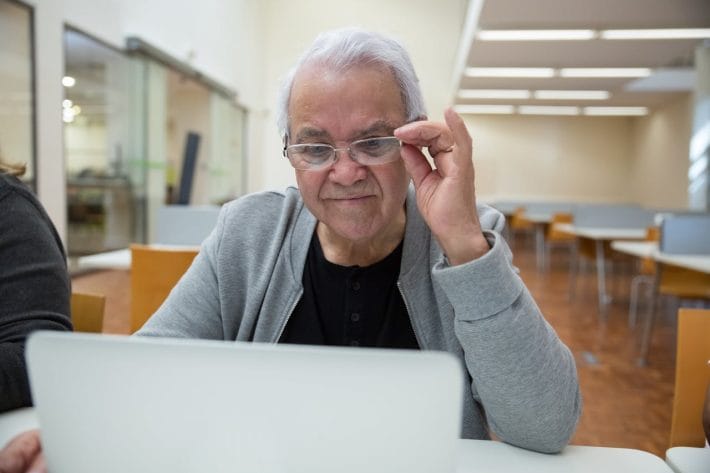
The community center smelled like coffee and vanilla candles, that particular combination that makes any room feel like someone’s living room. I’d gathered twelve grandparents for what I thought would be a straightforward conversation about parenting wisdom.
The late afternoon sun streamed through the windows, catching the dust motes that danced above their gray and silver heads. When I asked my question about what they know now that would have made them better parents, the comfortable chatter died instantly.
The silence stretched so long I could hear the clock ticking on the wall. I was about to rephrase when a woman in a purple cardigan cleared her throat. “I should have said ‘I don’t know’ more often,” she said quietly. Three people reached for tissues.
The weight of having all the answers
That woman’s nine words unlocked something in the room. Suddenly everyone wanted to talk about the exhausting performance of parental certainty they’d maintained for decades.
One grandfather, a retired engineer, told me he’d spent thirty years pretending to have answers about everything from broken hearts to career choices. “My kids needed a rock,” he said, “but rocks don’t teach kids how to navigate uncertainty.”
The research backs this up in fascinating ways.
Studies on parental authority show that children whose parents admit uncertainty actually develop stronger critical thinking skills and better emotional regulation. But here’s what struck me most: every single grandparent in that room had believed the opposite when they were raising their children.
Think about your own childhood for a moment.
How often did your parents say they didn’t know something important? If you’re like me, you probably can count those times on one hand. My own parents seemed to have an answer for everything, even when I later learned they were making it up as they went along.
The stories we tell ourselves about strength
A grandmother who’d raised four children alone after her husband died young shared something that made everyone nod. She said she’d confused strength with never showing doubt. “I thought if my kids saw me uncertain, they’d feel unsafe,” she explained. “But what I actually taught them was that struggling means you’re weak.”
This resonated deeply with me. After my parents’ divorce, I watched my mother maintain this facade of having everything under control. Only years later did she tell me how lost she’d felt. I wonder now how different things might have been if she’d felt she could share that uncertainty with twelve-year-old me.
The group discussed how cultural expectations shaped their parenting. Several mentioned growing up with phrases like “children need stability” and “parents must be the authority.”
One woman laughed bitterly as she recalled her own mother’s advice: “Never let them see you sweat.” The irony, she said, was that her kids grew up and struggled with perfectionism and anxiety because they’d never seen her model how to handle not knowing.
What vulnerability actually teaches
As the conversation deepened, patterns emerged. The grandparents who felt closest to their adult children now were the ones who’d eventually learned to drop the all-knowing act.
One man shared how his relationship with his son transformed when he finally admitted he didn’t know how to help with his grandson’s learning disability. “That admission opened a real conversation,” he said. “We figured it out together.”
A former teacher in the group brought up something I hadn’t considered. She said that constantly providing answers had robbed her children of the chance to develop resourcefulness. “I was so busy being their Google before Google existed,” she said, “that I forgot to teach them how to find their own answers.”
The room buzzed with agreement. Several grandparents mentioned how their adult children now struggled with decision-making, constantly seeking validation and approval.
One grandmother’s eyes welled up as she described her daughter’s chronic self-doubt. “She calls me about everything,” she said. “Should she take this job? Is this person right for her? I created this need in her because I never showed her that uncertainty is normal.”
The ripple effects across generations
What fascinated me most was how these grandparents saw patterns repeating with their own children’s parenting. Many watched their adult children maintain the same exhausting pretense of certainty.
“My son does exactly what I did,” one grandfather said. “He thinks admitting he doesn’t know something will damage his authority with his teenagers.”
But some had broken the cycle. A grandmother beamed as she talked about her daughter’s approach with her own kids. “She says ‘let’s figure this out together’ all the time,” she shared. “Her children are so much more confident than mine were at that age.”
The conversation turned to specific moments they wished they could redo. Almost everyone had a story about a time their child asked a difficult question and they’d given a false certainty instead of honest uncertainty.
Questions about death, divorce, money troubles, job losses. “I told my son everything would be fine when his father lost his job,” one woman said. “What I should have said was ‘I don’t know what will happen, but we’ll face it together.’”
Before I go
As our session ended, that first woman in the purple cardigan spoke again. “We thought certainty was love,” she said. “But uncertainty shared with compassion, that’s actually intimacy.”
The room fell quiet again, but this time it was the silence of recognition, not discomfort. These grandparents had given me something precious: the understanding that “I don’t know” might be three of the most important words we can say to the people we love.
They’d learned too late for their own parenting years, but not too late to share with others. As I left, several handed me notes with variations of the same message: tell young parents it’s okay not to have all the answers. In fact, it’s more than okay. It’s essential.
From the editors
Undercurrent — our weekly newsletter. The sharpest writing from Silicon Canals, curated reads from across the web, and an editorial connecting what others cover in isolation. Every Sunday.
Free. No spam. Unsubscribe anytime.