No Result
View All Result
SUBMIT YOUR ARTICLES
  • Login
Tuesday, July 14, 2026
TheAdviserMagazine.com
  • Home
  • Financial Planning
    • Financial Planning
    • Personal Finance
  • Market Research
    • Business
    • Investing
    • Money
    • Economy
    • Markets
    • Stocks
    • Trading
  • 401k Plans
  • College
  • IRS & Taxes
  • Estate Plans
  • Social Security
  • Medicare
  • Legal
  • Home
  • Financial Planning
    • Financial Planning
    • Personal Finance
  • Market Research
    • Business
    • Investing
    • Money
    • Economy
    • Markets
    • Stocks
    • Trading
  • 401k Plans
  • College
  • IRS & Taxes
  • Estate Plans
  • Social Security
  • Medicare
  • Legal
No Result
View All Result
TheAdviserMagazine.com
No Result
View All Result
Home Market Research Startups

9 things naturally calm people do during stressful moments that anxious people never think to try

by TheAdviserMagazine
6 months ago
in Startups
Reading Time: 6 mins read
A A
9 things naturally calm people do during stressful moments that anxious people never think to try
Share on FacebookShare on TwitterShare on LInkedIn


Ever notice how some people just seem to float through chaos while the rest of us are white-knuckling our way through every minor inconvenience?

I used to be firmly in the second camp. My twenties were basically one long anxiety marathon, complete with racing thoughts at 3 AM and that special brand of panic that comes from overthinking a text message for 45 minutes.

But here’s what I’ve learned after years of studying both psychology and Buddhist philosophy: naturally calm people aren’t born with some magical stress-immunity gene. They just do things differently in those crucial moments when anxiety tries to take the wheel.

And most of these things? They’re so simple that anxious minds dismiss them entirely. We’re too busy catastrophizing to notice the exits.

Today I’m sharing nine things I’ve observed calm people doing that never even occurred to me during my peak anxiety years. These aren’t complicated meditation retreats or expensive therapies. They’re small, almost invisible habits that create massive differences in how we handle stress.

1. They pause before responding

You know that knee-jerk reaction when someone says something that triggers you? That instant need to defend, explain, or fire back?

Calm people don’t do that. They take a beat. Sometimes two. Sometimes ten.

I discovered this accidentally during a particularly heated work meeting a few years back. Instead of jumping in with my usual defensive response, I literally couldn’t speak because I was trying to remember a point from a presentation. That three-second delay completely changed the conversation’s trajectory.

Now I use breathing techniques before important conversations. Just three deep breaths can be the difference between escalating a situation and actually solving it. The other person usually fills the silence anyway, often backing down or clarifying what they meant.

It’s wild how much power lives in that tiny pause.

2. They zoom out to see the bigger picture

When you’re anxious, every problem feels like the end of the world. Your brain turns a delayed email response into “I’m definitely getting fired.”

Calm people have this ability to mentally step back and see the situation from 30,000 feet. They ask themselves: Will this matter in a year? A month? Next week?

This connects directly to something I explore in my book Hidden Secrets of Buddhism: How To Live With Maximum Impact and Minimum Ego – the Buddhist concept of impermanence. Everything passes. The good stuff, the bad stuff, the weird stuff in between.

When I apply this concept to stressful moments now, it’s like watching storm clouds from an airplane window. Sure, there’s turbulence down there, but up here? It’s just weather passing through.

3. They move their bodies immediately

This one seems almost insultingly simple, but calm people don’t sit and stew in their stress. They move.

Not necessarily a full workout. Sometimes it’s just standing up and stretching. Walking to the kitchen. Doing five jumping jacks in the bathroom stall (yes, I’ve done this).

Movement interrupts the anxiety spiral. It forces your body out of that frozen fight-or-flight state and reminds your nervous system that you’re actually safe.

I keep a tennis ball under my desk now. When stress hits, I roll it under my foot. It’s weird, but it works. The physical sensation grounds me faster than any mental technique.

4. They get curious instead of critical

Anxious people (hi, former me) tend to judge everything immediately. This is bad. That’s wrong. I’m an idiot. They’re jerks.

Calm people replace judgment with curiosity. Instead of “Why is this happening to me?” they ask “What is this situation trying to teach me?”

Instead of “I can’t believe I messed up again,” they think “Interesting, what triggered that response?”

This shift from critic to detective changes everything. You stop being the victim of your circumstances and start being a student of them.

5. They lower the bar for what counts as “handling it”

Perfectionists think handling stress means eliminating it entirely. Staying completely composed. Never showing weakness.

That perfectionism was my prison for years. I thought I had to have the perfect response to every situation.

Calm people? They just aim to get through it. They’re okay with messy. They’re fine with “good enough.”

Sometimes handling stress means crying in your car for five minutes then going back inside. Sometimes it means sending a mediocre email instead of agonizing over every word. Sometimes it means ordering pizza because cooking feels impossible today.

Lowering the bar isn’t giving up. It’s being realistic about what you can actually control in this moment.

6. They create physical comfort immediately

Watch a naturally calm person in a stressful moment. They’ll adjust their collar. Take off their jacket. Grab a glass of water. Open a window.

They instinctively make their physical environment more comfortable, which sends signals to their brain that they’re safe.

Meanwhile, anxious people sit in discomfort, too paralyzed by mental chaos to notice their body’s needs.

In Hidden Secrets of Buddhism: How To Live With Maximum Impact and Minimum Ego, I talk about how the mind and body are interconnected. You can’t calm one without addressing the other.

Now when stress hits, I immediately ask: What would make my body more comfortable right now? Usually it’s something stupidly simple. Loosening my belt. Taking off my shoes. Getting rid of that scratchy tag.

7. They talk to themselves like a friend

Listen to your internal dialogue next time you’re stressed. Would you ever talk to a friend that way?

“You’re so stupid.” “You always mess this up.” “Everyone thinks you’re incompetent.”

Calm people have learned to be their own best friend instead of their own worst enemy. They talk to themselves with compassion.

“This is hard, but you’ve handled hard things before.” “You’re doing your best with what you know right now.” “It’s okay to feel overwhelmed.”

This isn’t toxic positivity. It’s basic human kindness directed inward.

8. They find one thing they can control

Anxiety loves to show you everything you can’t control. Your boss’s mood. The economy. That weird noise your car is making.

Calm people flip the script. In any stressful situation, they find one thing – however small – that they can control. Then they do it.

Can’t control the meeting outcome? Control your posture. Can’t control the traffic? Control your playlist. Can’t control your racing thoughts? Control your breathing.

This isn’t about fixing everything. It’s about proving to your nervous system that you still have agency. You’re not completely helpless.

9. They remember that feelings are temporary

This might be the most powerful thing calm people do: they treat emotions like weather, not climate.

When anxiety hits, anxious people think “This is my life now. I’m an anxious person. This will never end.”

Calm people think “I’m feeling anxious right now. This will pass.”

They don’t fight the feeling or try to think their way out of it. They just acknowledge it and wait for it to move through, because it always does.

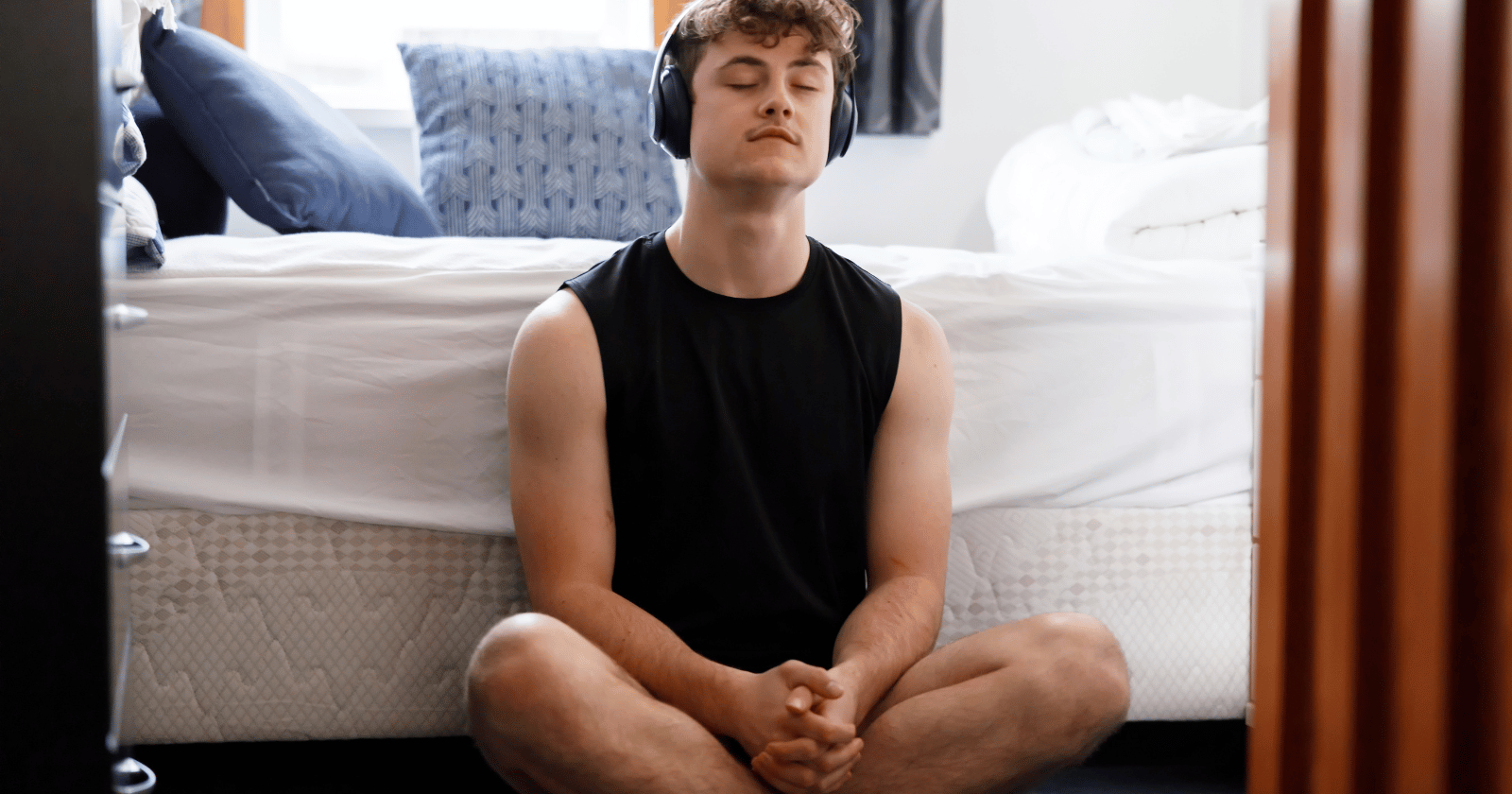
I practice this daily now, sometimes during five-minute meditations, sometimes during thirty-minute sessions. The length doesn’t matter. What matters is remembering that no emotional state is permanent.

Final words

The difference between naturally calm people and anxious people isn’t talent or genetics or some secret breathing technique they learned in Tibet.

It’s these small, almost boring habits that they turn to automatically when stress hits. They pause. They move. They get comfortable. They zoom out.

None of these things eliminate stress entirely. That’s not the goal. The goal is to move through stressful moments without letting them hijack your entire day, week, or life.

Start with just one of these. Pick the one that feels least intimidating. Do it badly. Do it imperfectly. Just do it the next time stress shows up.

Because here’s what I’ve learned: calmness isn’t the absence of chaos. It’s knowing you have tools to navigate through it, one small choice at a time.



Source link

Tags: anxiouscalmMomentsNaturallypeopleStressful
ShareTweetShare
Previous Post

Crypto YouTube Views Crash To 2021 Lows Amid Bear Sentiment

Next Post

CPI, Chips and Court Rulings: What could move US markets this week

Related Posts

edit post
India just objected to a WhatsApp feature that hasn’t launched, citing harms that haven’t happened — and the precedent it sets could quietly redraw how secure messaging works everywhere

India just objected to a WhatsApp feature that hasn’t launched, citing harms that haven’t happened — and the precedent it sets could quietly redraw how secure messaging works everywhere

by TheAdviserMagazine
July 14, 2026
0

When a government objects to a feature that has not yet launched, over harms that have not yet occurred, and...

edit post
Psychology says the most resilient people aren’t the ones who bounce back fast or stay positive through everything — they’re the ones who let themselves fall apart quietly on a Tuesday evening and still get up on Wednesday morning and do what needs to be done

Psychology says the most resilient people aren’t the ones who bounce back fast or stay positive through everything — they’re the ones who let themselves fall apart quietly on a Tuesday evening and still get up on Wednesday morning and do what needs to be done

by TheAdviserMagazine
July 13, 2026
0

Resilience is often misread as speed. The person who seems strongest is assumed to be the one who recovers fastest,...

edit post
Psychology says people who reach their 60s with few close friends aren’t bad at relationships — they’re often the ones who gave so much in every relationship that they eventually ran out of the energy it takes to ask for anything back

Psychology says people who reach their 60s with few close friends aren’t bad at relationships — they’re often the ones who gave so much in every relationship that they eventually ran out of the energy it takes to ask for anything back

by TheAdviserMagazine
July 13, 2026
0

A person can reach their 60s with only a few close friends for reasons that have little to do with...

edit post
The Weekly Notable Startup Funding Report: 7/13/26 – AlleyWatch

The Weekly Notable Startup Funding Report: 7/13/26 – AlleyWatch

by TheAdviserMagazine
July 13, 2026
0

The Weekly Notable Startup Funding Report takes us on a trip across various ecosystems in the US, highlighting some of...

edit post
Intermittent fasting has become one of the most-studied dietary interventions of the last 20 years — but the research on gut microbiome damage is only now catching up

Intermittent fasting has become one of the most-studied dietary interventions of the last 20 years — but the research on gut microbiome damage is only now catching up

by TheAdviserMagazine
July 13, 2026
0

Krista Varady has been studying intermittent fasting for two decades at the University of Illinois Chicago, and in a 2024...

edit post
We tend to think detachment means becoming cold or disengaged, but occupational psychology uses the word differently: research finds that mentally switching off from work during your free time is associated with less exhaustion, fewer sleep problems and greater life satisfaction

We tend to think detachment means becoming cold or disengaged, but occupational psychology uses the word differently: research finds that mentally switching off from work during your free time is associated with less exhaustion, fewer sleep problems and greater life satisfaction

by TheAdviserMagazine
July 12, 2026
0

Detachment has a chilly reputation. In ordinary conversation, it can sound like emotional distance, cynicism or a slow retreat from...

Next Post
edit post
CPI, Chips and Court Rulings: What could move US markets this week

CPI, Chips and Court Rulings: What could move US markets this week

edit post
Swiss Rebuke Further Taxation | Armstrong Economics

Swiss Rebuke Further Taxation | Armstrong Economics

  • Trending
  • Comments
  • Latest
edit post
Mass Fraud in Massachusetts Committed by Illegal Immigrants Discovered

Mass Fraud in Massachusetts Committed by Illegal Immigrants Discovered

June 22, 2026
edit post
New York Seniors: 6 STAR Tax Relief Rules That Could Put a Bigger Check in Your Mailbox

New York Seniors: 6 STAR Tax Relief Rules That Could Put a Bigger Check in Your Mailbox

June 20, 2026
edit post
5 Pennsylvania Rebate Rules Seniors Should Check Before the Property Tax/Rent Deadline

5 Pennsylvania Rebate Rules Seniors Should Check Before the Property Tax/Rent Deadline

June 18, 2026
edit post
Bristlecone pines growing in the White Mountains of California germinated before the Great Pyramid was built, and the oldest one alive today, nicknamed Methuselah, has been quietly adding rings for 4,855 years in soil so poor almost nothing else survives beside it

Bristlecone pines growing in the White Mountains of California germinated before the Great Pyramid was built, and the oldest one alive today, nicknamed Methuselah, has been quietly adding rings for 4,855 years in soil so poor almost nothing else survives beside it

July 8, 2026
edit post
Retail giant exits U.S. fashion after multi-million-dollar scandal

Retail giant exits U.S. fashion after multi-million-dollar scandal

July 1, 2026
edit post
Same Portfolio. Same Retirement. A 10-Mile Move Costs One Couple ,000 A Year

Same Portfolio. Same Retirement. A 10-Mile Move Costs One Couple $10,000 A Year

June 27, 2026
edit post
WATCH: 21st Century ROAD to Housing Bill Becomes Law. Will It Lower Home Prices?

WATCH: 21st Century ROAD to Housing Bill Becomes Law. Will It Lower Home Prices?

0
edit post
India just objected to a WhatsApp feature that hasn’t launched, citing harms that haven’t happened — and the precedent it sets could quietly redraw how secure messaging works everywhere

India just objected to a WhatsApp feature that hasn’t launched, citing harms that haven’t happened — and the precedent it sets could quietly redraw how secure messaging works everywhere

0
edit post
No Saving the SAVE Act

No Saving the SAVE Act

0
edit post
On the US-EU Productivity Debate: James Galbraith Responds to Paul Krugman

On the US-EU Productivity Debate: James Galbraith Responds to Paul Krugman

0
edit post
Coinbase Smart Wallet Verification Upgrade Targets The Multi-Chain UX Problem

Coinbase Smart Wallet Verification Upgrade Targets The Multi-Chain UX Problem

0
edit post
9 Stocks With Strong Rebound Potential in the Second Half of 2026

9 Stocks With Strong Rebound Potential in the Second Half of 2026

0
edit post
India just objected to a WhatsApp feature that hasn’t launched, citing harms that haven’t happened — and the precedent it sets could quietly redraw how secure messaging works everywhere

India just objected to a WhatsApp feature that hasn’t launched, citing harms that haven’t happened — and the precedent it sets could quietly redraw how secure messaging works everywhere

July 14, 2026
edit post
On the US-EU Productivity Debate: James Galbraith Responds to Paul Krugman

On the US-EU Productivity Debate: James Galbraith Responds to Paul Krugman

July 14, 2026
edit post
No Saving the SAVE Act

No Saving the SAVE Act

July 14, 2026
edit post
9 Stocks With Strong Rebound Potential in the Second Half of 2026

9 Stocks With Strong Rebound Potential in the Second Half of 2026

July 14, 2026
edit post
The Crypto Law That Could Change Everything Has Three Weeks to Pass, or Die

The Crypto Law That Could Change Everything Has Three Weeks to Pass, or Die

July 14, 2026
edit post
Turkish FM Believes Israel A Global Security Threat

Turkish FM Believes Israel A Global Security Threat

July 14, 2026
The Adviser Magazine

The first and only national digital and print magazine that connects individuals, families, and businesses to Fee-Only financial advisers, accountants, attorneys and college guidance counselors.

CATEGORIES

  • 401k Plans
  • Business
  • College
  • Cryptocurrency
  • Economy
  • Estate Plans
  • Financial Planning
  • Investing
  • IRS & Taxes
  • Legal
  • Market Analysis
  • Markets
  • Medicare
  • Money
  • Personal Finance
  • Social Security
  • Startups
  • Stock Market
  • Trading

LATEST UPDATES

  • India just objected to a WhatsApp feature that hasn’t launched, citing harms that haven’t happened — and the precedent it sets could quietly redraw how secure messaging works everywhere
  • On the US-EU Productivity Debate: James Galbraith Responds to Paul Krugman
  • No Saving the SAVE Act
  • Our Great Privacy Policy
  • Terms of Use, Legal Notices & Disclosures
  • Contact us
  • About Us

© Copyright 2024 All Rights Reserved
See articles for original source and related links to external sites.

Welcome Back!

Login to your account below

Forgotten Password?

Retrieve your password

Please enter your username or email address to reset your password.

Log In
No Result
View All Result
  • Home
  • Financial Planning
    • Financial Planning
    • Personal Finance
  • Market Research
    • Business
    • Investing
    • Money
    • Economy
    • Markets
    • Stocks
    • Trading
  • 401k Plans
  • College
  • IRS & Taxes
  • Estate Plans
  • Social Security
  • Medicare
  • Legal

© Copyright 2024 All Rights Reserved
See articles for original source and related links to external sites.