Sarah Kapnick started her career in 2004 as an investment banking analyst for Goldman Sachs. She was struck almost immediately by the overlap of financial growth and climate change, and the lack of client advisory around that theme.
Integrating the two, she thought, would help investors understand both the risks and opportunities, and would help them use climate information in finance and business operations. With a degree in theoretical mathematics and geophysical fluid dynamics, Kapnick saw herself as uniquely positioned to take on that challenge.
But first, she had to get deeper into the science.
That led her to more study and then to the National Oceanic and Atmospheric Administration (NOAA), the nation’s scientific and regulatory agency within the U.S. Department of Commerce. Its defined mission is to understand and predict changes in climate, weather, oceans and coasts and to share that knowledge and information with others.
In 2022, Kapnick was appointed NOAA’s chief scientist. Two years later, JPMorgan Chase hired her away, but not as chief sustainability officer, a role common at most large investment banks around the world and a position already filled at JPMorgan.
Rather, Kapnick is JPMorgan’s global head of climate advisory, a unique job she envisioned back in 2004.
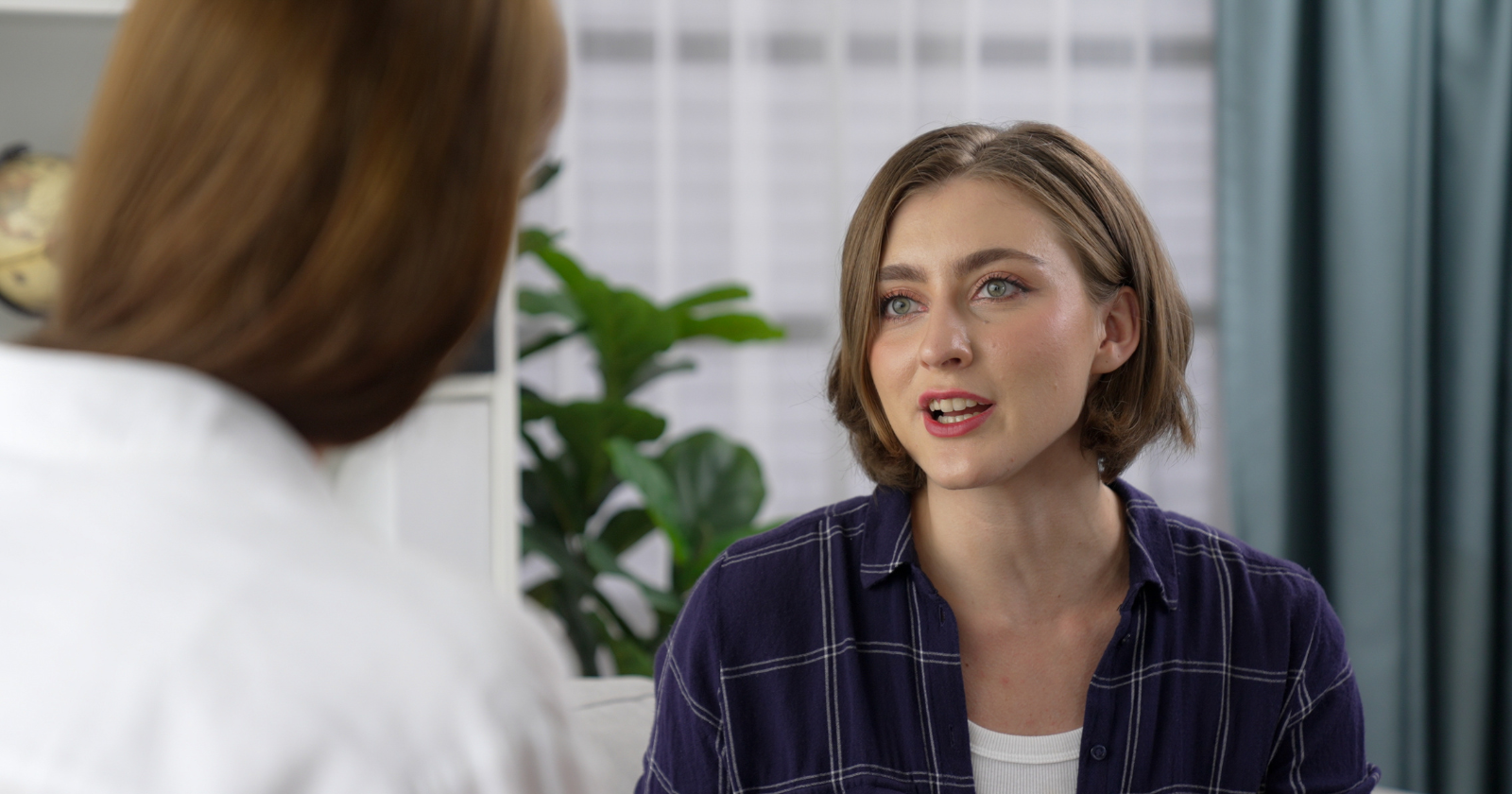
Just days before the official start of the North American hurricane season, CNBC spoke with Kapnick from her office at JPMorgan in New York about her current role at the bank and how she’s advising and warning clients.
Here’s the Q&A:
(This interview has been lightly edited for length and clarity.)
Diana Olick, CNBC: Why does JPMorgan need you?
Sarah Kapnick, JPMorgan global head of climate advisory: JPMorgan and banks need climate expertise because there is client demand for understanding climate change, understanding how it affects businesses, and understanding how to plan. Clients want to understand how to create frameworks for thinking about climate change, how to think about it strategically, how to think about it in terms of their operations, how to think about it in terms of their diversification and their long-term business plans.
Everybody’s got a chief sustainability officer. You are not that. What is the difference?
The difference is, I come with a deep background in climate science, but also how that climate science translates into business, into the economy. Working at NOAA for most of my career, NOAA is a science agency, but it’s science agency under the Department of Commerce. And so my job was to understand the future due to physics, but then be able to translate into what does that mean for the economy? What does that mean for economic development? What does that mean for economic output, and how do you use that science to be able to support the future of commerce? So I have this deep thinking that combines all that science, all of that commerce thinking, that economy, how it translates into national security. And so it wraps up all these different issues that people are facing right now and the systematic issues, so that they can understand, how do you navigate through that complexity, and then how do you move forward with all that information at hand?
Give us an example, on a ground level, of what some of that expertise does for investors.
There’s a client that’s concerned about the future of wildfire risk, and so they’re asking, How is wildfire risk unfolding? Why is it not in building codes? How might building codes change in the future? What happens for that? What type of modeling is used for that, what type of observations are used for that? So I can explain to them the whole flow of where is the data? How is the data used in decisions, where do regulations come from. How are they evolving? How might they evolve in the future? So we can look through the various uncertainties of different scenarios of what the world looks like, to make decisions about what to do right now, to be able to prepare for that, or to be able to shift in that preparation over time as uncertainty comes down and more information is known
So are they making investment decisions based on your information?
Yes, they’re making investment decisions. And they’re making decisions of when to invest because sometimes they have a knowledge of something as it’s starting to evolve. They want to act either early or they want to act as more information is known, but they want to know kind of the whole sphere of what the possibilities are and when information will be known or could be known, and what are the conditions that they will know more information, so they can figure out when they want to act, when that threshold of information is that they need to act.
How does that then inform their judgment on their investment, specifically on wildfire?
Because wildfire risk is growing, there’ve been a few events like the Los Angeles wildfires that were recently seen. The questions that I’m getting are could this happen in my location? When will it happen? Will I have advanced notice? How should I change and invest in my infrastructure? How should I think about differences in my infrastructure, my infrastructure construction? Should I be thinking about insurance, different types of insurance? How should I be accessing the capital markets to do this type of work? It’s questions across a range of trying to figure out how to reduce vulnerability, how to reduce financial exposure, but then also, if there are going to be risks in this one location, maybe there are more opportunities in these other locations that are safer, and I should be thinking of them as well. It’s holistically across risk management and thinking through risk and what to do about it, but then also thinking about what opportunities might be emerging as a result of this change in physical conditions in the world.
But you’re not an economist. Do you work with others at JPMorgan to augment that?
Yes, my work is very collaborative. I work across various teams with subject matter experts from different sectors, different industries, different parts of capital, and so I come with my expertise of science and technology and policy and security, and then work with them in whatever sphere that they’re in to be able to deliver the most to the bank that we can for our clients.
With the cuts by the Trump administration to NOAA, to FEMA, to all of the information gathering sources — we’re not seeing some of the things that we normally see in data. How is that affecting your work?
I am looking to what is available for what we need, for whatever issue. I will say that if data is no longer available, we will translate and move into other data sets, use other data sets, and I’m starting to see the development out in certain parts of the private sector to pull in those types of data that used to be available elsewhere. I think that we’re going to see this adjustment period where people search out whatever data it is they need to answer the questions that they have. And there will be opportunities. There’s a ton of startups that are starting to develop in that area, as well as more substantial companies that have some of those data sets. They’re starting to make them available, but there’s going to be this adjustment period as people figure out where they’re going to get the information that they need, because many market decisions or financial decisions are based on certain data sets that people thought would always be there.
But the government data was considered the top, irrefutable, best data there was. Now, how do we know, when going to the private sector, that this data is going to be as credible as government data?
There’s going to be an adjustment period as people figure out what data sets to trust and what not to trust, and what they want to be using. This is a point in time where there is going to be adjustment because something that everyone got used to working with, they now won’t have that. And that is a question that I’m getting from a lot of clients, of what data set should I be looking for? How should I be assessing this problem? Do I build in-house teams now to be able to assess this information that I didn’t have before? And I’m starting to see that occurring across different sectors, where people are increasingly having their own meteorologist, their own climatologist, to be able to help guide them through some of these decisions.
Final thoughts?
Climate change isn’t something that is going to happen in the future and impact finance in the future. It’s something that is a future risk that is now actually finding us in the bottom line today.