No Result
View All Result
SUBMIT YOUR ARTICLES
  • Login
Sunday, July 12, 2026
TheAdviserMagazine.com
  • Home
  • Financial Planning
    • Financial Planning
    • Personal Finance
  • Market Research
    • Business
    • Investing
    • Money
    • Economy
    • Markets
    • Stocks
    • Trading
  • 401k Plans
  • College
  • IRS & Taxes
  • Estate Plans
  • Social Security
  • Medicare
  • Legal
  • Home
  • Financial Planning
    • Financial Planning
    • Personal Finance
  • Market Research
    • Business
    • Investing
    • Money
    • Economy
    • Markets
    • Stocks
    • Trading
  • 401k Plans
  • College
  • IRS & Taxes
  • Estate Plans
  • Social Security
  • Medicare
  • Legal
No Result
View All Result
TheAdviserMagazine.com
No Result
View All Result
Home Market Research Markets

America’s Garbage Time Bomb – Banyan Hill Publishing

by TheAdviserMagazine
10 months ago
in Markets
Reading Time: 5 mins read
A A
America’s Garbage Time Bomb – Banyan Hill Publishing
Share on FacebookShare on TwitterShare on LInkedIn


As the father of two young daughters, I’m constantly amazed by the amount of garbage my family generates.

And we’re not alone.

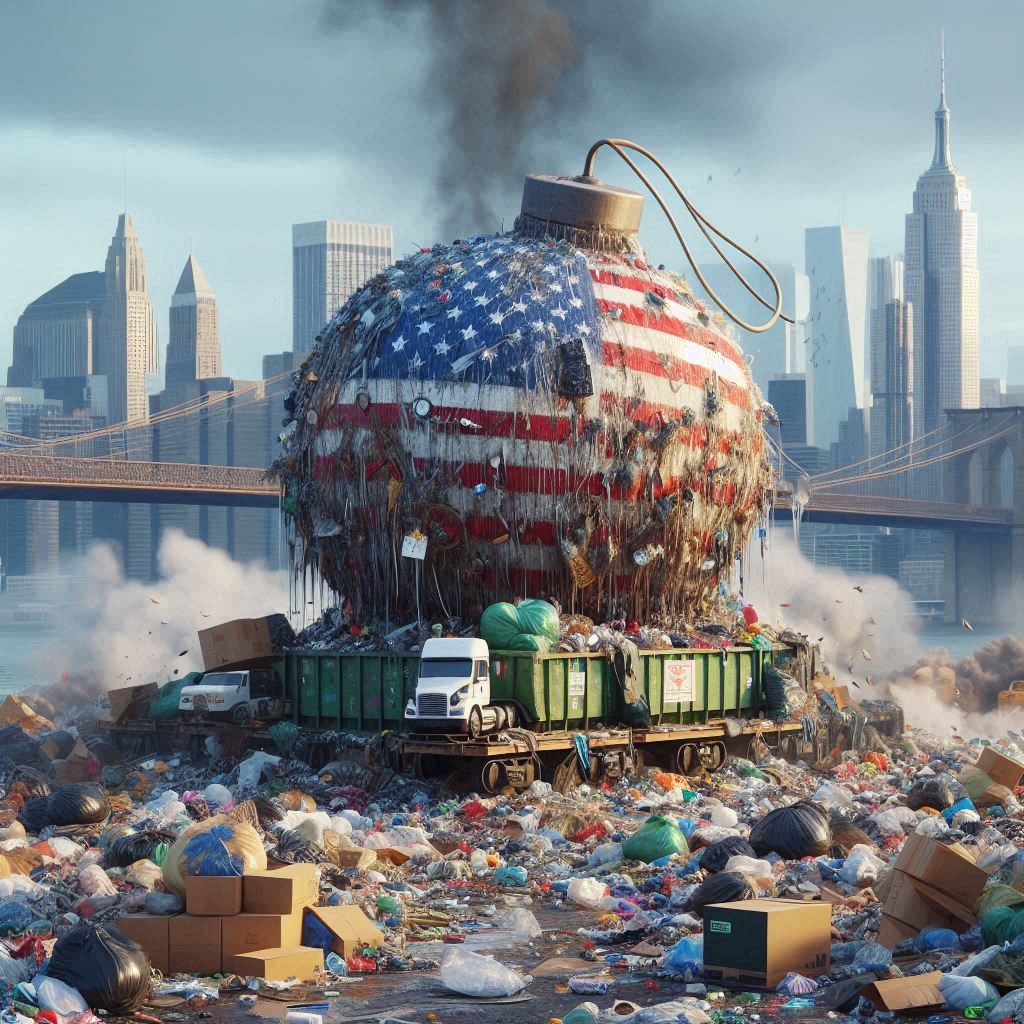
Every day, Americans throw out nearly five pounds of trash per person. That adds up to about 300 million tons of garbage a year.

And despite our blue bins and special recycling trashcans, this garbage problem is getting bigger.

That’s because only a tiny amount of our trash gets recycled. In fact, only around 5% of plastics are recycled into new plastics.

This is leading to mountains of waste being piled up in landfills, making them the third-largest source of human-caused methane emissions in the U.S.

Meanwhile, our waterways are clogged with bottles, wrappers and bags. And microplastics are now turning up in the fish we eat, the air we breathe and even in human blood samples.

And this isn’t just a problem here in the U.S.

Globally, plastic production has doubled in the last 20 years. Which means humans now produce more than 450 million tons of plastic every year, with very little of it designed to be reused.

If this sounds unsustainable, that’s because it is.

So what can we do about it?

The answer might have just come from an unexpected place.

The Recycling Conundrum

The answer to our growing garbage problem is supposed to be “recycling.”

Americans today dutifully rinse bottles and sort bins. Our kids are taught to “reduce, reuse, recycle.” And U.S. cities spend billions on collection programs.

But the truth is, recycling in America has never really worked.

Most plastics can’t be melted down and reused more than once. Your typical clear plastic water bottle can become carpet fiber, but that’s about the end of its life.

Thin films, multilayer pouches, Styrofoam and waxy residues don’t recycle at all.

Plus, sorting is extremely expensive, and even small amounts of contamination can ruin batches.

But perhaps the biggest issue is that the quality of recycled plastic is almost always worse than new.

And virgin plastic is cheap. Oil and gas companies churn out new plastic at a lower cost than any recycler can compete with.

That’s why America buries more than 40 million tons of plastic waste in landfills every year, while recycling barely makes a dent.

For years, the workaround for this problem was to ship bales of plastic overseas. Countries like China, Malaysia and Indonesia became dumping grounds for U.S. waste, where much of it ended up burned or tossed into rivers.

But in 2018, China finally banned most U.S. imports of waste plastic. And since then, our trash has increasingly become our problem.

Image: Wikimedia Commons

But it could also be a huge opportunity.

Researchers at the National Renewable Energy Laboratory (NREL) in Colorado calculate that the plastic America dumps in landfills each year contains about $7.2 billion worth of reusable material.

In other words, we’re burying billions of dollars in value with our trash.

What’s also clear is that this “out of sight, out of mind” strategy can only work for so long. That’s why the Department of Energy (DOE) has set a goal to find technologies that can upend our current system.

Its Strategy for Plastics Innovation 2030 roadmap calls for plastics designed to be recycled from the start, as well as new processes to break down waste and innovative ways to turn garbage into valuable raw materials.

And American companies are making some progress toward these goals.

In Indiana, Brightmark operates one of the country’s largest chemical recycling plants, designed to process 100,000 tons of plastic per year. The facility uses pyrolysis, a process that heats plastic in an oxygen-starved environment to break it down into valuable hydrocarbons.

And in Colorado, AMP Robotics is using AI-powered vision systems to help sort recyclables with higher accuracy than human workers. It has partnered with Waste Connections (NYSE: WCN) to build an AI-driven recycling facility that could process up to 62,000 tons of recycling annually.

But these efforts still can’t overcome the economic barriers to recycling.

Collecting, sorting, cleaning and reprocessing waste is complex and costly. There has to be a better way…

And last month, scientists in South Korea announced they might have found it.

The Korea Institute of Machinery & Materials (KIMM) says it has built a hydrogen plasma torch that destroys unsorted garbage at 3,600 degrees Fahrenheit.

And the process only takes 0.01 seconds.

Turn Your Images On

Image: KIMM

But that’s not the most exciting part.

You see, instead of ash and smoke, this process produces raw chemical ingredients that are more than 99% pure and can be turned back into new plastics.

The team says their torch can even process the waxy leftovers that chemical recycling plants usually struggle with, converting them into useful chemicals with over 80% selectivity.

This means that the products of this process aren’t low-value fuels or ash. They’re the same high-value molecules — like ethylene and benzene — that the chemical industry currently makes from oil and gas.

And the cost looks competitive.

The researchers say their process could rival fossil-based production. And they’re aiming to scale into a demonstration plant by 2026.

This is the kind of breakthrough the waste industry has been dreaming of.

KIMM’s plasma torch promises to slash costs by eliminating the need for perfect sorting and by producing chemicals pure enough to plug right back into the supply chain.

Imagine what this could mean for the future of garbage.

If we can convert mountains of unsorted trash into high-value raw materials, then landfills would become gold mines, and garbage trucks could deliver the building blocks of tomorrow’s plastics instead of just dumping more waste.

Here’s My Take

If this Korean plasma torch works as advertised, the U.S. can’t afford to sit on the sidelines.

After all, this could be the technology that finally ends our garbage crisis.

Of course, energy costs, safety issues and regulatory hurdles are all potential roadblocks. But we should at least start testing this technology on American soil to see if it can actually run at an industrial scale.

Because the stakes here go beyond the environment.

Whoever masters this process first won’t just solve a waste problem…

They could unlock a trillion-dollar opportunity hiding in our landfills.

Regards,

Ian King's SignatureIan KingChief Strategist, Banyan Hill Publishing

Editor’s Note: We’d love to hear from you!

If you want to share your thoughts or suggestions about the Daily Disruptor, or if there are any specific topics you’d like us to cover, just send an email to [email protected].

Don’t worry, we won’t reveal your full name in the event we publish a response. So feel free to comment away!



Source link

Tags: AmericasBanyanBombgarbageHillPublishingTIME
ShareTweetShare
Previous Post

No Credit Check, No Tax Returns, No Employment Verification? Yes, It’s Real!

Next Post

Polycab India block deal: Promoters likely to sell 0.8% stake worth Rs 887 crore on Thursday: Report

Related Posts

edit post
Is It Safe to Dine Out? Restaurants Respond to Explosive Diarrhea Bug

Is It Safe to Dine Out? Restaurants Respond to Explosive Diarrhea Bug

by TheAdviserMagazine
July 11, 2026
0

A cyclospora outbreak has sickened hundreds, possibly thousands, of Americans with a long-lasting parasitic infection, and dining out presents a...

edit post
Mag 7 and software could boost portfolio in second half: ETF Action

Mag 7 and software could boost portfolio in second half: ETF Action

by TheAdviserMagazine
July 11, 2026
0

Overlooked market areas may have a banner second half of the year.ETF Action co-founder Mike Akins is encouraging investors to...

edit post
Your Next Forever Stamp Purchase Will Soon Cost More. See the New Price

Your Next Forever Stamp Purchase Will Soon Cost More. See the New Price

by TheAdviserMagazine
July 11, 2026
0

If your supply of Forever stamps is running low, you might want to restock now because the stamps will cost...

edit post
It’s Not Just Produce. Where Else Can ‘Explosive Diarrhea’ Bug Hide?

It’s Not Just Produce. Where Else Can ‘Explosive Diarrhea’ Bug Hide?

by TheAdviserMagazine
July 11, 2026
0

As cases of an illness stemming from a parasite that causes symptoms like explosive diarrhea continue to rise across the...

edit post
A Record Number of Young Adults Live with Parents. Why?

A Record Number of Young Adults Live with Parents. Why?

by TheAdviserMagazine
July 11, 2026
0

A record number of adults under age 35 choose to live with their parents, Census data shows, rather than contemplate...

edit post
Grand Teton National Park Tourists Might Have Been Exposed to Measles

Grand Teton National Park Tourists Might Have Been Exposed to Measles

by TheAdviserMagazine
July 10, 2026
0

Visitors to Grand Teton National Park on July 7 might have been exposed to measles. The Wyoming park issued a...

Next Post
edit post
Polycab India block deal: Promoters likely to sell 0.8% stake worth Rs 887 crore on Thursday: Report

Polycab India block deal: Promoters likely to sell 0.8% stake worth Rs 887 crore on Thursday: Report

edit post
Israeli fintech co Tipalti raises 0m

Israeli fintech co Tipalti raises $200m

  • Trending
  • Comments
  • Latest
edit post
Mass Fraud in Massachusetts Committed by Illegal Immigrants Discovered

Mass Fraud in Massachusetts Committed by Illegal Immigrants Discovered

June 22, 2026
edit post
New York Seniors: 6 STAR Tax Relief Rules That Could Put a Bigger Check in Your Mailbox

New York Seniors: 6 STAR Tax Relief Rules That Could Put a Bigger Check in Your Mailbox

June 20, 2026
edit post
5 Pennsylvania Rebate Rules Seniors Should Check Before the Property Tax/Rent Deadline

5 Pennsylvania Rebate Rules Seniors Should Check Before the Property Tax/Rent Deadline

June 18, 2026
edit post
Bristlecone pines growing in the White Mountains of California germinated before the Great Pyramid was built, and the oldest one alive today, nicknamed Methuselah, has been quietly adding rings for 4,855 years in soil so poor almost nothing else survives beside it

Bristlecone pines growing in the White Mountains of California germinated before the Great Pyramid was built, and the oldest one alive today, nicknamed Methuselah, has been quietly adding rings for 4,855 years in soil so poor almost nothing else survives beside it

July 8, 2026
edit post
Retail giant exits U.S. fashion after multi-million-dollar scandal

Retail giant exits U.S. fashion after multi-million-dollar scandal

July 1, 2026
edit post
Same Portfolio. Same Retirement. A 10-Mile Move Costs One Couple ,000 A Year

Same Portfolio. Same Retirement. A 10-Mile Move Costs One Couple $10,000 A Year

June 27, 2026
edit post
NSE listing to “complete the trioka” and unlock value, drive governance upgrade: Report

NSE listing to “complete the trioka” and unlock value, drive governance upgrade: Report

0
edit post
How Self-Service Travel Became Another Unpaid Job for Travelers

How Self-Service Travel Became Another Unpaid Job for Travelers

0
edit post
10 Credit Card Benefits That Are Often Oversold

10 Credit Card Benefits That Are Often Oversold

0
edit post
In homes common across the 1960s and 1970s, children learned to read a parent’s mood from the sound of the front door before anyone had spoken a word — researchers call the adult result hypervigilance, and it shows up in 5 recognisable patterns

In homes common across the 1960s and 1970s, children learned to read a parent’s mood from the sound of the front door before anyone had spoken a word — researchers call the adult result hypervigilance, and it shows up in 5 recognisable patterns

0
edit post
This former U.S. soccer player built a  billion-a-year company, but he says resilience matters more than talent

This former U.S. soccer player built a $20 billion-a-year company, but he says resilience matters more than talent

0
edit post
A New Option for Long-Term Care Costs

A New Option for Long-Term Care Costs

0
edit post
In homes common across the 1960s and 1970s, children learned to read a parent’s mood from the sound of the front door before anyone had spoken a word — researchers call the adult result hypervigilance, and it shows up in 5 recognisable patterns

In homes common across the 1960s and 1970s, children learned to read a parent’s mood from the sound of the front door before anyone had spoken a word — researchers call the adult result hypervigilance, and it shows up in 5 recognisable patterns

July 12, 2026
edit post
NSE listing to “complete the trioka” and unlock value, drive governance upgrade: Report

NSE listing to “complete the trioka” and unlock value, drive governance upgrade: Report

July 12, 2026
edit post
The Trust in Media Boondoggle – LN Radio

The Trust in Media Boondoggle – LN Radio

July 12, 2026
edit post
This former U.S. soccer player built a  billion-a-year company, but he says resilience matters more than talent

This former U.S. soccer player built a $20 billion-a-year company, but he says resilience matters more than talent

July 12, 2026
edit post
Bitcoiners Michael Saylor, Adam Back Oppose BIP-110

Bitcoiners Michael Saylor, Adam Back Oppose BIP-110

July 12, 2026
edit post
George Washington Waged A War Of Attrition

George Washington Waged A War Of Attrition

July 12, 2026
The Adviser Magazine

The first and only national digital and print magazine that connects individuals, families, and businesses to Fee-Only financial advisers, accountants, attorneys and college guidance counselors.

CATEGORIES

  • 401k Plans
  • Business
  • College
  • Cryptocurrency
  • Economy
  • Estate Plans
  • Financial Planning
  • Investing
  • IRS & Taxes
  • Legal
  • Market Analysis
  • Markets
  • Medicare
  • Money
  • Personal Finance
  • Social Security
  • Startups
  • Stock Market
  • Trading

LATEST UPDATES

  • In homes common across the 1960s and 1970s, children learned to read a parent’s mood from the sound of the front door before anyone had spoken a word — researchers call the adult result hypervigilance, and it shows up in 5 recognisable patterns
  • NSE listing to “complete the trioka” and unlock value, drive governance upgrade: Report
  • The Trust in Media Boondoggle – LN Radio
  • Our Great Privacy Policy
  • Terms of Use, Legal Notices & Disclosures
  • Contact us
  • About Us

© Copyright 2024 All Rights Reserved
See articles for original source and related links to external sites.

Welcome Back!

Login to your account below

Forgotten Password?

Retrieve your password

Please enter your username or email address to reset your password.

Log In
No Result
View All Result
  • Home
  • Financial Planning
    • Financial Planning
    • Personal Finance
  • Market Research
    • Business
    • Investing
    • Money
    • Economy
    • Markets
    • Stocks
    • Trading
  • 401k Plans
  • College
  • IRS & Taxes
  • Estate Plans
  • Social Security
  • Medicare
  • Legal

© Copyright 2024 All Rights Reserved
See articles for original source and related links to external sites.