(This is the Warren Buffett Watch newsletter, news and analysis on all things Warren Buffett and Berkshire Hathaway. You can sign up here to receive it every Friday evening in your inbox.)
Greg Abel’s annual cash salary for 2026 as the new CEO of Berkshire Hathaway is $25 million, a 19% increase from the $21 million he got in 2024 as the company’s vice chairman for non-insurance operations. (Abel’s 2025 salary has not yet been publicly disclosed.)
Berkshire’s filing this week doesn’t say anything about additional compensation for Abel, but the company has said it will never use its stock to pay employees.
After crunching a lot of proxy numbers from MyLogIQ, The Wall Street Journal reports Abel’s salary “would be the highest a chief executive running a current S&P 500 company has earned in any single year between 2010 and 2024.”
Berkshire Vice Chairman Greg Abel poses with a shareholder during the Berkshire Hathaway Inc. annual shareholders’ meeting, in Omaha, Nebraska, U.S., May 2, 2025.
Brendan Mcdermid | Reuters
The real money for CEOs, however, comes in the form of stocks, stock options, and other noncash awards.
When those are included, Abel still tops 2024’s median of just over $16 million for S&P 500 chief executives.
But the Journal says, “Most of the top 100 best-paid executives received more than $25 million, when stock and other noncash awards are added.”
Glenview Trust’s CIO Bill Stone tells the newspaper that since Abel is leading one of the S&P’s 10 largest companies, “One would expect his compensation to be commensurate with that level of CEOs.”
While not unusual for the CEO of a very large American corporation, Abel’s paycheck is a striking departure from Buffett’s annual salary of $100,000 (plus another $300K or so for personal and home security services provided by Berkshire. He also typically repaid half of his salary to cover personal expenses paid for the company.)
Unlike Abel, however, Buffett was, in effect, the founder of what is now a giant conglomerate, with virtually all of his current net worth of almost $150 billion generated by enormous gains for his Berkshire shares over the decades. (He’s also given away shares now worth $200 billion.)
He could afford a symbolically small salary over the years as the “billionaire next door.”
According to the 2025 annual meeting proxy, Abel owns Berkshire shares currently valued at around $171 million.
That’s a “fair amount” according to investor Jonathan Boyar, but he recently told Yahoo Finance Abel should “buy an extremely large amount of Berkshire stock personally and really put his money where his mouth is.”
People watch as Berkshire Hathaway chairman Warren Buffett is seen on a screen speaking at the Berkshire Hathaway annual shareholders’ meeting in Omaha, Nebraska, on May 3, 2025.
Brendan McDermid | Reuters
At the 2017 annual meeting, Buffett suggested his then-unknown CEO successor might be so rich “they might even wish to perhaps set an example by engaging for something far lower than … their true market value.”
Or, he thought, you could “pay them a very modest amount” in cash and, unlike standard CEO option packages with a fixed strike price, give them an option with annual strike price increases to account for retained earnings, “because why should somebody retain a bunch of earnings and then claim they’ve actually improved the value simply because they withheld the money from shareholders.”
(You can watch and/or read his entire response in “Highlights from CNBC’s Buffett Archive” below.)
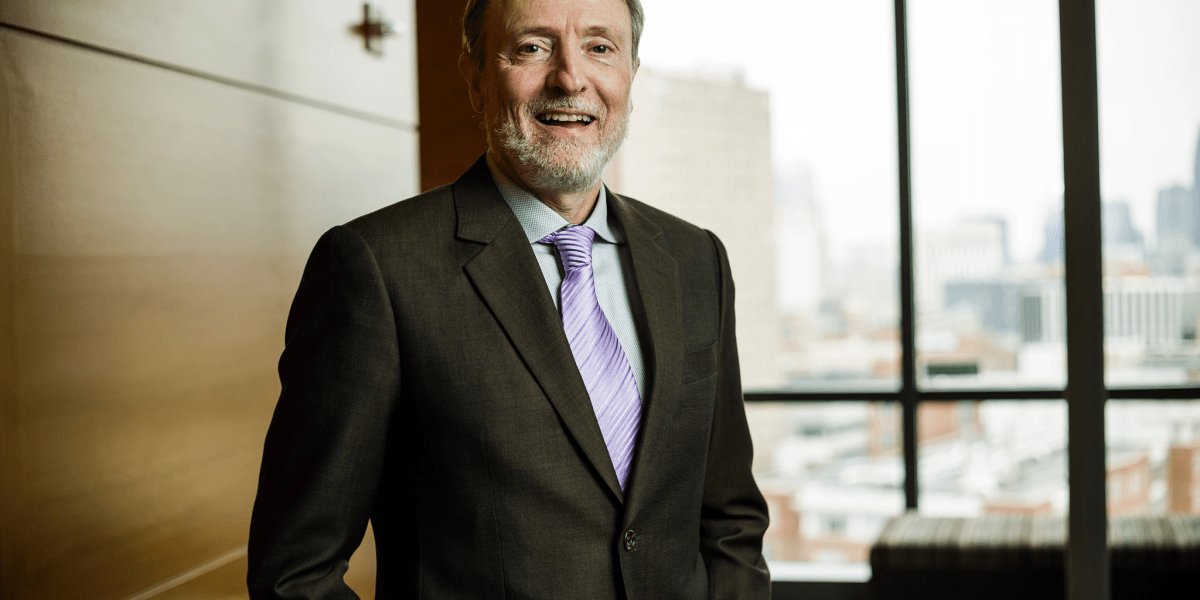
Professor Randall Peterson at the London Business School focuses on organizational behavior.
He told me that when founders leave, or become less involved, with the distinctive companies they’ve created, those companies “start to do more things the way other people do them.”
Abel’s big salary looks like a step toward “normalization.” If Berkshire does eventually become indistinguishable from its corporate peers, however, he thinks it will be a very long process that probably won’t accelerate until Buffett dies.
Even though Abel has already been getting big paychecks, Buffett told CNBC last May the Iowa resident is not a “distorted individual” and “lives what would look like a normal life.”
Professor Peterson notes that while he can’t predict Abel’s specific future, there are many examples of people who start out “normal” but don’t stay that way after experiencing years of great wealth.
Buffett’s previously unseen May interviews with CNBC will be featured in a special two-hour program, “Warren Buffett: A Life and Legacy,” next Tuesday, January 13 at 7 pm ET.
Berkshire slips behind the S&P as 2026 begins
Berkshire Hathaway shares gained slightly during Greg Abel’s first full week as CEO but lagged behind the S&P 500 by roughly one percentage point.
For the year-to-date, which includes last Friday’s BRK declines, the S&P is around 2 1/2 percentage points ahead, with or without the index’s dividends included.
Last year, the S&P with dividends, Buffett’s standard metric, outperformed Berkshire’s A shares by 7.0 percentage points.
BUFFETT & BERKSHIRE AROUND THE INTERNET
Some links may require a subscription:
HIGHLIGHTS FROM THE CNBC’S BUFFETT ARCHIVE
More than eight years ago, when it was not yet known who Berkshire Hathaway’s next CEO would be, Warren Buffett shared his thoughts on how much that person should be paid, given his own famously small annual salary of $100,000 (plus personal protection services.)
ANDREW ROSS SORKIN: Three years ago, you were asked at the meeting about how you thought we should compensate your successor.
You said it was a good question, and you would address it in the next annual letter.
We’ve been patiently waiting. (Laughter)
Can you tell us now, at least philosophically, how you’ve been thinking about the way the company should compensate your successor, so we don’t have to worry when the paid consultants arrive on the scene?
WARREN BUFFETT: There’s a couple of possibilities, actually, and I don’t want to get into details on them.
But you may have, and I actually would hope that we would have somebody, A) who’s already very rich, which they should be, if they’ve been working a long time and have got that kind of ability, that’s very rich, and really is not motivated by whether they have ten times as much money than they and the families can need or a hundred times as much.
And they might even wish to perhaps set an example by engaging for something far lower than, actually, what you could say their true market value is.
And that could or could not happen, but I think it’d be terrific if it did. But I can’t blame anybody for wanting their market value.
And then, if they didn’t elect to go in that direction, I would say that you would probably pay them a very modest amount and then have an option which increased in value by — or increased in striking price annually — nobody does this hardly. Graham Holdings has done it. The Washington Post company did a little bit — but would increase because it’s assuming that there were substantial retained earnings every year.
Because why should somebody retain a bunch of earnings and then claim they’ve actually improved the value simply because they withheld the money from shareholders.
So it’s very easy to design that, and in private companies people do design it in that way. They just don’t want to do it in public companies, because they get more money the other way.
But they might have a very substantial one that could be exercised but where the … shares had to be held for a couple years after retirement so that they really got the result over time that the majority of the stockholders would be able to get and not be able to pick their spots as to when they exercised and sold a lot of stock.
It’s not hard to design. And it really depends who you’re dealing with in terms of actually how much they care about money and having money beyond what they can possibly use.
BERKSHIRE STOCK WATCH
BERKSHIRE’S TOP EQUITY HOLDINGS – Jan. 9, 2026
Berkshire’s top holdings of disclosed publicly traded stocks in the U.S. and Japan, by market value, based on the latest closing prices.
Holdings are as of September 30, 2025, as reported in Berkshire Hathaway’s 13F filing on November 14, 2025, except for:
The full list of holdings and current market values is available from CNBC.com’s Berkshire Hathaway Portfolio Tracker.
QUESTIONS OR COMMENTS
Please send any questions or comments about the newsletter to me at [email protected]. (Sorry, but we don’t forward questions or comments to Buffett himself.)
If you aren’t already subscribed to this newsletter, you can sign up here.
Also, Buffett’s annual letters to shareholders are highly recommended reading. There are collected here on Berkshire’s website.
— Alex Crippen, Editor, Warren Buffett Watch