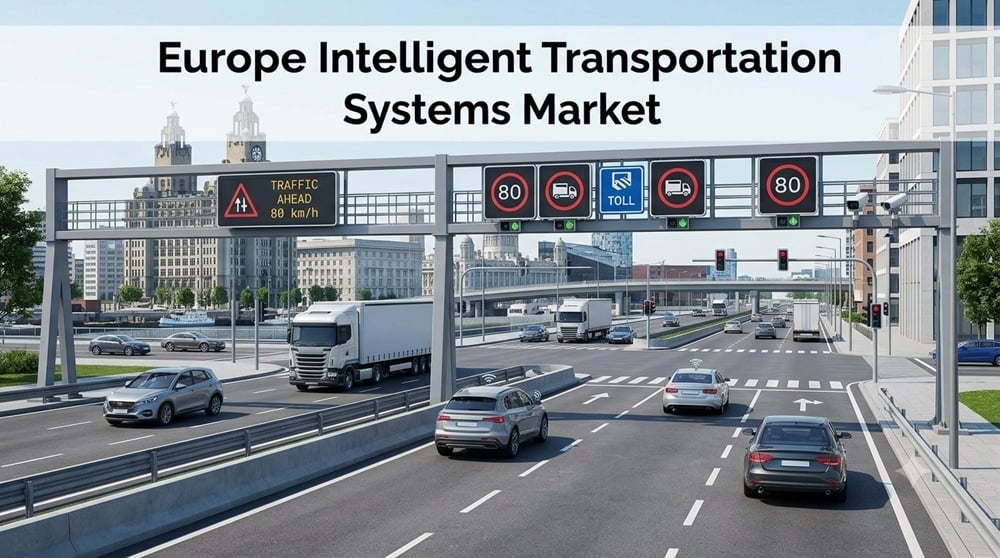
The Europe Intelligent Transportation Systems Market is evolving rapidly as governments and transportation authorities invest in smarter, safer, and more sustainable mobility solutions. Increasing urbanization, rising traffic congestion, and the growing adoption of connected technologies are driving the deployment of intelligent transportation systems across road networks. These solutions help improve traffic efficiency, enhance road safety, and support Europe’s long-term smart mobility objectives.
The Europe intelligent transportation systems (ITS) market is projected to reach $14.62 billion by 2033 from $7.90 billion in 2024, growing at a CAGR of 7.08% during the forecast period 2024-2033.
What are the Key Drivers of Market Growth?
Increasing government investments in smart city initiatives and digital transportation infrastructure are accelerating intelligent transportation system deployment.
Rising concerns over traffic congestion, road safety, and environmental sustainability are encouraging the adoption of advanced traffic management solutions.
Growth in connected and autonomous vehicle technologies is creating demand for intelligent transportation infrastructure that enables real-time communication.
Supportive European regulations promoting intelligent mobility and integrated transport networks are driving long-term market expansion.
Get A Sample for Europe ITS Market – Focus on Application, Product, and Country Analysis and Forecast, 2024-2033
What are the Emerging Market Trends?
Artificial intelligence, machine learning, and predictive analytics are improving traffic monitoring and incident management capabilities.
Expansion of vehicle-to-everything (V2X) communication is enhancing connectivity between vehicles, infrastructure, and road users.
Cloud-based transportation management platforms are enabling centralized data analysis and more efficient traffic operations.
Growing integration of intelligent transportation systems with electric vehicle infrastructure and multimodal mobility services is supporting sustainable urban transport.
How is the Market Performing Across European Countries?
Germany leads the Europe Intelligent Transportation Systems Market due to significant investments in digital infrastructure, connected mobility, and advanced traffic management technologies. The U.K., France, Italy, and the Netherlands are also expanding intelligent transportation deployments through smart city initiatives and public infrastructure modernization. Meanwhile, Nordic countries continue to adopt innovative mobility solutions focused on sustainability, road safety, and efficient transportation management.
What Challenges and Opportunities are Shaping the Market?
The market faces challenges related to high infrastructure investment requirements, integration with legacy transportation systems, cybersecurity concerns, and data privacy regulations. Achieving interoperability across multiple transportation networks also remains a critical consideration for stakeholders.
However, significant opportunities are emerging through the expansion of connected mobility ecosystems, increasing deployment of autonomous vehicle technologies, and investments in digital infrastructure. Advancements in artificial intelligence, edge computing, and real-time traffic analytics are expected to further enhance transportation efficiency while supporting Europe’s transition toward safer and more sustainable mobility.
Who are the Key Players in the Market?
Leading companies operating in the Europe Intelligent Transportation Systems Market include:
Siemens AG
Kapsch TrafficCom AG
TomTom International BV
Q-Free
EFKON GmbH
PTV Planung Transport Verkehr GmbH
SWARCO
These companies are strengthening their market positions by developing intelligent traffic management platforms, connected mobility solutions, tolling technologies, and advanced transportation analytics while collaborating with governments and infrastructure operators across Europe.
Click Here to Download the ToC
Conclusion
The Europe Intelligent Transportation Systems Market is poised for sustained growth as digital transformation reshapes the region’s transportation infrastructure. Rising investments in smart mobility, connected vehicle technologies, and intelligent traffic management solutions will continue to improve road safety, reduce congestion, and enhance operational efficiency. As innovation and public-private collaboration accelerate, intelligent transportation systems will remain a key enabler of Europe’s future mobility ecosystem.