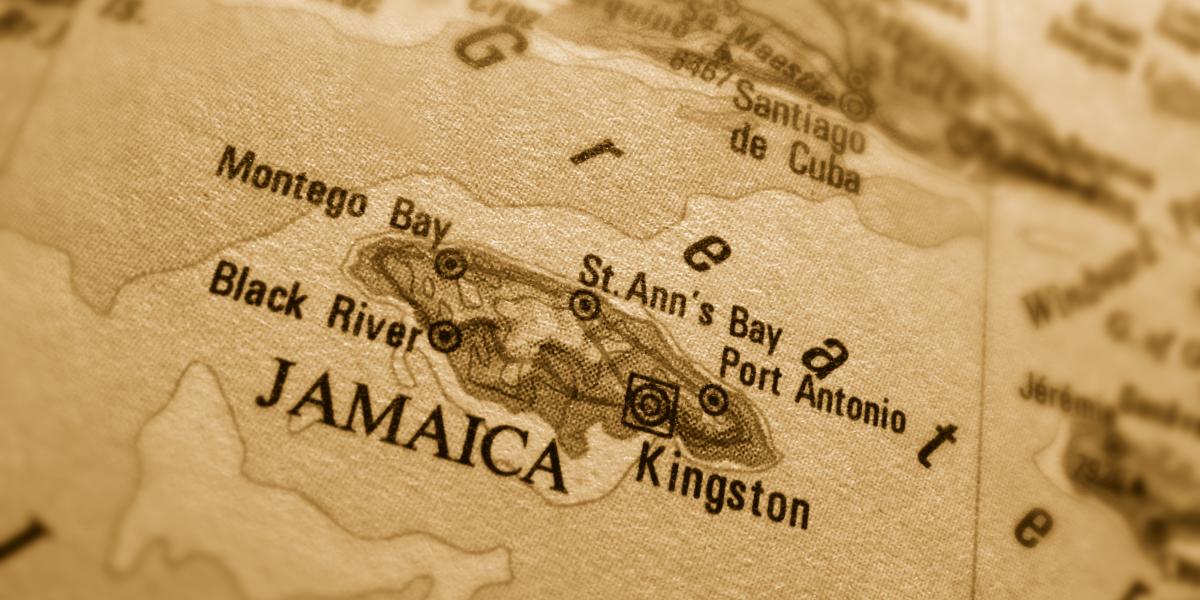
Jamaica’s recent interest in removing the British monarch as its head of state has gained substantial international attention. The government has announced plans to hold a referendum by 2025 to begin the transition toward republicanism. This announcement follows global and regional trends, including Barbados’s decision to become a republic in 2021, and has prompted headlines and commentary around the world. Jamaica, with its colonial past and vibrant national identity, seems poised to follow suit. Yet beyond the sentiment that motivates this ambition, the domestic political discourse around such a transition remains remarkably thin. There is widespread enthusiasm for cutting symbolic ties to Britain, but little rigorous public debate about what would replace the monarchy, how such a system would function, or what the country might lose in moving away from its current constitutional structure.
Calls to become a republic tend to frame the monarchy as a colonial remnant whose time has passed. This narrative is emotionally compelling but often overlooks the specific institutional benefits that constitutional monarchies offer. Jamaica—like other Commonwealth countries that retain the monarch as head of state—operates under a system that has provided political stability, symbolic unity, and continuity of governance. These advantages are rarely discussed in the Jamaican context, despite their potential relevance to a small, pluralistic democracy navigating modern economic and political challenges.
One of the central strengths of constitutional monarchy is its ability to provide non-partisan leadership. While monarchs in such systems possess few legal powers, their symbolic role as heads of state is significant. They serve not only as ceremonial figureheads but also as exemplars of national unity. The monarch functions as a point of identification for citizens across ideological and cultural divides, offering a shared symbol of statehood. Because the monarch can represent multiple interpretations of what it means to be a national citizen, the institution fosters a sense of inclusion that elected heads of state often struggle to match. This ability to provide meaning without being the subject of electoral contention is particularly valuable in societies where partisan politics are deeply polarizing.
A constitutional monarchy also offers institutional stability through continuity of office. The monarch does not change with elections and remains removed from daily political maneuvering. This permanence enables the institution to function as a safeguard in moments of constitutional uncertainty. Even though the monarch rarely exercises discretionary powers, the knowledge that such authority exists provides a final check on the political system in times of crisis. This form of leadership, often referred to as a constitutional “long-stop,” helps ensure that there is always a legitimate figure capable of guiding the state through emergency or transitional periods when elected bodies may be paralyzed by conflict or indecision.
Symbolism—though often dismissed—plays a central role in national identity and institutional resilience. The monarch, as head of state, is embedded in the cultural and legal frameworks of countries like Jamaica. Oaths of allegiance, military authority, and public ceremonies all revolve around this figure. These symbolic structures promote cohesion by linking the population to the state through rituals and traditions that reinforce national belonging. When properly maintained, such symbols do not merely represent the past, but actively shape the way citizens view the legitimacy and continuity of their government.
In economic terms, constitutional monarchies are associated with certain structural advantages that are not always appreciated. One area where they have been shown to outperform not only autocracies but also some democratic systems is in the protection of property rights. The political stability provided by monarchic regimes encourages long-term planning and reduces the risk of expropriation. Where rulers have confidence in the succession of power and the endurance of their regime, they are less likely to seize property or undermine legal contracts for immediate gain. Monarchies, especially those that are dynastic in nature, foster a long time horizon for decision-making. In such systems, the ruling elite is less vulnerable to abrupt political transitions and thus less incentivized to prioritize short-term resource extraction at the expense of private ownership or economic trust. The evidence suggests that in monarchic autocracies, property rights are upheld more consistently than in many other authoritarian systems and, in some cases, even more reliably than in democracies where political instability can encourage populist interference in private markets.
This insight carries implications for Jamaica, where foreign investment, economic reform, and property law are critical to development. A sudden constitutional shift that is not accompanied by a clear and trusted institutional replacement could introduce uncertainty that discourages investment and weakens the rule of law. While republicanism might carry emotional value, it is unlikely to deliver immediate economic or institutional benefits without careful planning and broad public consensus.
Yet despite these considerations, Jamaica’s domestic conversation around republicanism remains shallow. Political leaders have expressed their desire to transition to a republic, but have failed to offer detailed proposals or engage the public in a serious national discussion about what such a change would entail in practice. Key questions remain unanswered. Would Jamaica adopt a purely ceremonial president or establish an executive presidency? Would the president be appointed by Parliament or directly elected by the people? What safeguards would be implemented to prevent the office from becoming politicized or destabilizing?
These are not abstract concerns, but practical matters with far-reaching implications for governance, legitimacy, and the balance of power in the state. Alarmingly, many Jamaicans appear to favor a directly elected president—an option that some research shows carries serious risks. Other empirical studies indicate that presidential republics, especially those with directly-elected presidents, tend to experience lower economic growth and suffer from inflation rates that are at least four percentage points higher than their parliamentary counterparts. This suggests that public enthusiasm for an elected head of state may be rooted more in symbolism or populist appeal than in sound institutional design.
There is also a broader question of what Jamaica would be replacing the monarchy with in terms of national identity. The monarch—distant as he may be—is not simply a British figure but a constitutional presence that has functioned as a focal point for Jamaican statehood since independence. The Governor-General—acting in the monarch’s name—has represented the Jamaican people with political neutrality, functioning within a system that has delivered decades of peaceful transitions of power. Simply removing the monarch without articulating a clear vision for what comes next risks leaving a vacuum at the center of the political system.
Constitutional monarchy is not without flaws. Its hereditary nature can seem incompatible with democratic ideals, and its symbolic value can erode if the monarchy becomes detached from the values of the population it represents. However, the institution is more than symbolic nostalgia. It performs structural, cultural, and economic functions that can be difficult to replicate in other systems, particularly in societies with fragile or evolving political institutions.
Jamaica’s push to become a republic is driven more by emotional reflex than rationality. The desire to cut ties with the British Crown plays well to nationalist sentiment, but sentiment does not build constitutions. What is missing is any serious engagement with the real costs, trade-offs, or institutional voids that would follow. Politicians seem eager to score points by invoking anti-colonial slogans, but few appear willing or able to explain what, exactly, would replace the monarchy or how it would improve governance. Waving a flag and proclaiming independence is easy; designing a functional, non-partisan, and stable political system is not. Until Jamaicans demand more than empty rhetoric from their leaders, this so-called republican movement will remain little more than a vanity project—loud, shallow, and entirely disconnected from the real needs of the country.