No Result
View All Result
SUBMIT YOUR ARTICLES
  • Login
Sunday, March 1, 2026
TheAdviserMagazine.com
  • Home
  • Financial Planning
    • Financial Planning
    • Personal Finance
  • Market Research
    • Business
    • Investing
    • Money
    • Economy
    • Markets
    • Stocks
    • Trading
  • 401k Plans
  • College
  • IRS & Taxes
  • Estate Plans
  • Social Security
  • Medicare
  • Legal
  • Home
  • Financial Planning
    • Financial Planning
    • Personal Finance
  • Market Research
    • Business
    • Investing
    • Money
    • Economy
    • Markets
    • Stocks
    • Trading
  • 401k Plans
  • College
  • IRS & Taxes
  • Estate Plans
  • Social Security
  • Medicare
  • Legal
No Result
View All Result
TheAdviserMagazine.com
No Result
View All Result
Home Market Research Economy

What Is the Role of Probability in Economics?

by TheAdviserMagazine
1 month ago
in Economy
Reading Time: 5 mins read
A A
What Is the Role of Probability in Economics?
Share on FacebookShare on TwitterShare on LInkedIn


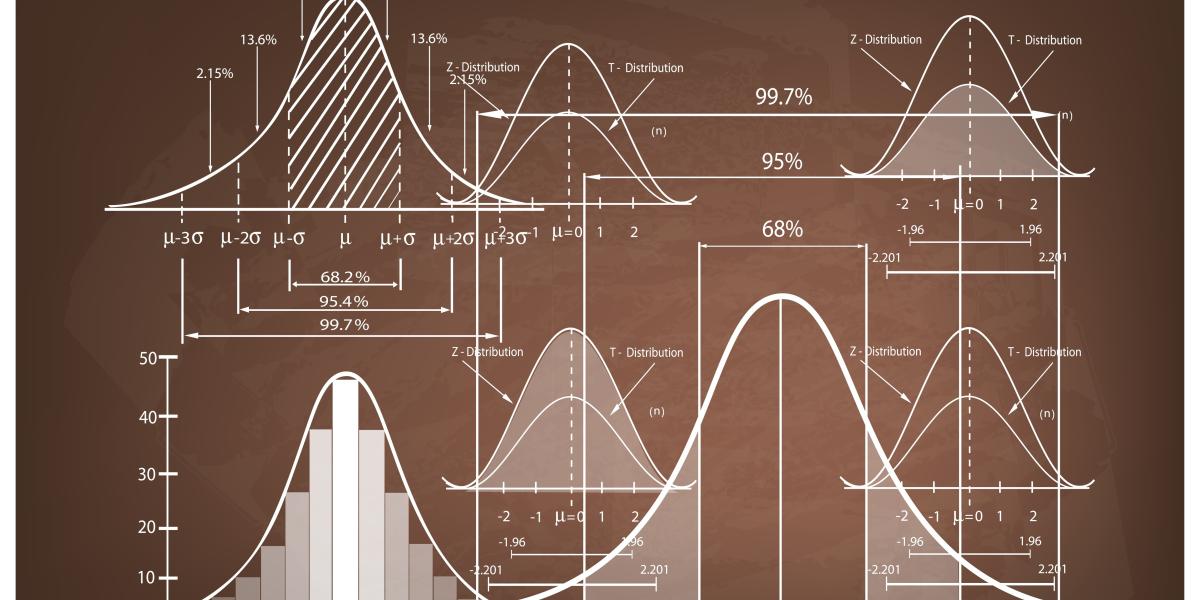
What is probability? The probability of an event is the proportion of times the event occurs out of a large number of trials. For instance, the probability of obtaining heads when a coin is tossed is 0.5. This does not mean that when a coin is tossed 10 times, five heads are always obtained. However, if the experiment is repeated a large number of times, then it is likely that 50 percent will be obtained. The greater the number of throws, the nearer the approximation is likely to be.

Alternatively, say it has been established that, in a particular area, the probability of wooden houses catching fire is 0.01. This means that, on the basis of experience, on average, one percent of wooden houses will catch fire. This does not mean that this year or the following year the percentage of houses catching fire will be exactly one percent. The percentage might be one percent or not each year. However, over time, the average of these percentages is likely to be 1 percent.

This information, in turn, can be converted into the cost of fire damage, thereby establishing the case for insuring against the risk of fire. Owners of wooden houses might decide to spread the risk by setting up a fund. Every owner of a wooden house will contribute a certain proportion to the total amount of money that is required in order to cover the damages of those owners whose houses are damaged by the fire. Note that insurance against fire risk can only take place because we know its probability distribution and because there are enough owners of wooden houses to spread the cost of fire damage among them so that the premium will not be prohibitive.

In his writings, Ludwig von Mises labeled this type of probability as a class probability. According to Mises,

Class probability means: we know or assume to know, with regard to the problem concerned, everything about the behavior of a whole class of events or phenomena; but about the actual singular events or phenomena we know nothing but that they are elements of this class.

Thus, the owners of wooden houses are all members of a particular group or class that can be affected in a similar way by a fire. We know that, on average, one percent of the members of this group is likely to be affected by fire. However, we do not know exactly who or when it will be. The important thing for insurance is that the members of a group must be homogeneous as far as a particular event is concerned.

Is Probability Distribution Relevant in Economics?

In economics, we do not deal with homogeneous cases. Each observation is a unique, non-repeatable event, which is not a member of any class—it is a class on its own. Consequently, no probability distribution can be established. Again, probability distribution rests on the assumption that we are dealing with a particular repeatable event.

Let us take, for instance, entrepreneurial activities. If these activities were repeatable, with known probability distributions, then we would not need entrepreneurs. After all, an entrepreneur is an individual who arranges his activities towards finding out consumers’ future wants. Now, individuals are consciously pursuing various ends. These ends never stay the same. Hence, a given good that is on the high priority list of consumers at present could be out of favor in the future. Thus, individuals’ requirements are never constant with respect to a particular good.

Since entrepreneurial activities are not homogeneous this means that probability distribution for entrepreneurial returns cannot be formed. For instance, in year one, an entrepreneurial activity yielded 10 percent return on investment. In year, two; another entrepreneurial activity produced a return of 15 percent. In year three, a third entrepreneurial activity secured a return of 1 percent. And, in year four, a fourth entrepreneurial activity generated a return of 2 percent—the average of these returns is 7 percent. By no means, however, does it imply that we can establish a probability distribution of returns on the basis as one can establish for the risk of fire or for obtaining heads in tossing a coin.

The returns in various years are the result of specific entrepreneurial activities. These activities are not homogeneous and repeatable and cannot be regarded as members of the same class. Profit emerges once an entrepreneur discovers that the prices of certain factors are undervalued relative to the potential value of the products that these factors, once employed, could produce. By recognizing the discrepancy and doing something about it, an entrepreneur removes the discrepancy (i.e., eliminates the potential for a further profit).

The recognition of the existence of potential profits means that an entrepreneur has a particular, subjective knowledge that other individuals do not have. Having this unique knowledge means that profits are not the outcome of random events. Mises labeled this as a case probability, which he defined as,

Case probability means: We know, with regard to a particular event, some of the factors which determine its outcome; but there are other determining factors about which we know nothing.

Mises held that the case probability is not open to any kind of numerical valuation. Human action cannot be analyzed in the same way that one would analyze objects where the class probability is relevant.

To make sense of the data in economics one must scrutinize it not by means of statistical methods but by means of trying to grasp and understand how it emerged. The assumption that mainstream economics makes that probability is valid in economics leads to absurd results. For it describes not a world of human beings who exercise their minds in making choices, but mechanistic, non-choosing, non-acting machines.

The employment of probabilities in economic analyses implies that the various pieces of economic data were generated by a random process similar to tossing a coin. Random means arbitrary (i.e., without method or conscious decision). However, if this had been the case, human beings would not be able to survive for too long. Human beings must act consciously and purposefully; they must plan their actions and employ suitable means.

Subjective versus Objective Probability

Now, if numerical probability cannot be established in economics objectively, what about subjective probability? The moment one moves into the subjective assignments of numbers, one could say anything. One could say that, based on personal feelings, there is a high likelihood of a recession in a few months’ time. Alternatively, one could say that he feels that the stock market must correct very soon. This way of stating things is derived from personal experience or some knowledge that an individual has.

This is part of the case probability (i.e. we know, with regard to a particular event certain things, but there are other determining factors about which we know nothing). For instance, we know that an increase in the money supply will unevenly exert in the future an upward pressure on the prices of goods. We, however, cannot be certain that prices will increase since there could be other off-setting factors about which we know nothing. It will not be of great benefit to arbitrarily assign numerical probabilities here.

Conclusion

Contrary to popular thinking, numerical probability is not applicable in economics. The numerical probability is relevant in the world of objects where homogenous cases are observed. In economics, we do not deal with homogeneous cases. Each observation is a unique, non-repeatable event caused by a particular action by individuals. Consequently, no probability distribution can be established. Human action cannot be analyzed in the same way that one would analyze objects. To make sense of an historical data one must scrutinize it not by means of statistical methods but by means of trying to grasp and understand the true nature of it.

The assumption that mainstream economics makes that probability distribution exists and can be quantified describes, not a world of human beings who exercise their minds in making choices, but machines.




Source link

Tags: EconomicsProbabilityrole
ShareTweetShare
Previous Post

Best money market account rates today, January 19, 2026 (Earn up to 4.1% APY)

Next Post

Nature, Nurture, and Identical Twins (with David Bessis)

Related Posts

edit post
Will This Unfold As Widespread Middle East War?

Will This Unfold As Widespread Middle East War?

by TheAdviserMagazine
March 1, 2026
0

QUESTION: Does Socrates suggest that this will become a widespread Middle East War? Socrates’ Crude Oil forecast showed a Directional...

edit post
Cyclical Nature Of The Universe & The Neocon Cancer Within

Cyclical Nature Of The Universe & The Neocon Cancer Within

by TheAdviserMagazine
March 1, 2026
0

QUESTION: Marty, According to NASA, on Feb. 28, the rare phenomenon occurred, with six planets appearing to align and form...

edit post
US & Israel Vs Iran

US & Israel Vs Iran

by TheAdviserMagazine
February 28, 2026
0

QUESTION: Mr. Armstrong, you pointed out previously that Zelensky was a war criminal for targeting leaders in Russia. You wrote:...

edit post
US Iran War – Here We Go Again

US Iran War – Here We Go Again

by TheAdviserMagazine
February 28, 2026
0

This is an important report discussing the real implications of this War which has always been about Regime Change and...

edit post
Iran Attacks UAE | Armstrong Economics

Iran Attacks UAE | Armstrong Economics

by TheAdviserMagazine
February 28, 2026
0

  We are in contact with UAE since we do have officies there. All flights have been cancelled. The explosions...

edit post
The Multipolar Collapse And The Illusion Of AI With Martin Armstrong

The Multipolar Collapse And The Illusion Of AI With Martin Armstrong

by TheAdviserMagazine
February 28, 2026
0

Legendary forecaster Martin Armstrong appears on Outer Limits of Inner Truth and warns that the world is entering a new...

Next Post
edit post
Nature, Nurture, and Identical Twins (with David Bessis)

Nature, Nurture, and Identical Twins (with David Bessis)

edit post
Deutsche Bank says US national debt is ‘achilles heel’ in Trump’s Greenland threats

Deutsche Bank says US national debt is 'achilles heel' in Trump's Greenland threats

  • Trending
  • Comments
  • Latest
edit post
Foreclosure Starts are Up 19%—These Counties are Seeing the Highest Distress

Foreclosure Starts are Up 19%—These Counties are Seeing the Highest Distress

February 24, 2026
edit post
Medicare Fraud In California – 2.5% Of The Population Accounts For 18% Of NATIONWIDE Healthcare Spending

Medicare Fraud In California – 2.5% Of The Population Accounts For 18% Of NATIONWIDE Healthcare Spending

February 3, 2026
edit post
North Carolina Updates How Wills Can Be Stored

North Carolina Updates How Wills Can Be Stored

February 10, 2026
edit post
Gasoline-starved California is turning to fuel from the Bahamas

Gasoline-starved California is turning to fuel from the Bahamas

February 15, 2026
edit post
Where Is My 2025 Oregon State Tax Refund

Where Is My 2025 Oregon State Tax Refund

February 13, 2026
edit post
7 States Reporting a Surge in Norovirus Cases

7 States Reporting a Surge in Norovirus Cases

February 22, 2026
edit post
Trump’s Iran Buildup Is Based on a Lie

Trump’s Iran Buildup Is Based on a Lie

0
edit post
Bitcoin Nears K as Steak ’n Shake Adds M

Bitcoin Nears $90K as Steak ’n Shake Adds $5M

0
edit post
SM Energy Company (SM): A Bull Case Theory

SM Energy Company (SM): A Bull Case Theory

0
edit post
All the highlights from Berkshire CEO Abel’s first shareholder letter

All the highlights from Berkshire CEO Abel’s first shareholder letter

0
edit post
Oil shock, AI worries to weigh on Indian markets amid rising global uncertainty

Oil shock, AI worries to weigh on Indian markets amid rising global uncertainty

0
edit post
The ‘File and Suspend’ Era is Over, but These 3 SSA Loopholes Still Exist for Florida Couples

The ‘File and Suspend’ Era is Over, but These 3 SSA Loopholes Still Exist for Florida Couples

0
edit post
Oil shock, AI worries to weigh on Indian markets amid rising global uncertainty

Oil shock, AI worries to weigh on Indian markets amid rising global uncertainty

March 1, 2026
edit post
Stock market today: Dow futures sink nearly 500 points as US attack on Iran sends oil prices soaring

Stock market today: Dow futures sink nearly 500 points as US attack on Iran sends oil prices soaring

March 1, 2026
edit post
I became a grandparent at 64 and the first time my granddaughter fell asleep on my chest I felt something I hadn’t felt since my own children were small — except this time I was present enough to notice it, and that difference is the thing that broke me open

I became a grandparent at 64 and the first time my granddaughter fell asleep on my chest I felt something I hadn’t felt since my own children were small — except this time I was present enough to notice it, and that difference is the thing that broke me open

March 1, 2026
edit post
The ‘File and Suspend’ Era is Over, but These 3 SSA Loopholes Still Exist for Florida Couples

The ‘File and Suspend’ Era is Over, but These 3 SSA Loopholes Still Exist for Florida Couples

March 1, 2026
edit post
‘This Is Not Business as Usual. This Is Risk.’

‘This Is Not Business as Usual. This Is Risk.’

March 1, 2026
edit post
The Social Security ‘Tax Torpedo’ is Hitting Georgia Seniors Hard—How to Shield Your Benefits

The Social Security ‘Tax Torpedo’ is Hitting Georgia Seniors Hard—How to Shield Your Benefits

March 1, 2026
The Adviser Magazine

The first and only national digital and print magazine that connects individuals, families, and businesses to Fee-Only financial advisers, accountants, attorneys and college guidance counselors.

CATEGORIES

  • 401k Plans
  • Business
  • College
  • Cryptocurrency
  • Economy
  • Estate Plans
  • Financial Planning
  • Investing
  • IRS & Taxes
  • Legal
  • Market Analysis
  • Markets
  • Medicare
  • Money
  • Personal Finance
  • Social Security
  • Startups
  • Stock Market
  • Trading

LATEST UPDATES

  • Oil shock, AI worries to weigh on Indian markets amid rising global uncertainty
  • Stock market today: Dow futures sink nearly 500 points as US attack on Iran sends oil prices soaring
  • I became a grandparent at 64 and the first time my granddaughter fell asleep on my chest I felt something I hadn’t felt since my own children were small — except this time I was present enough to notice it, and that difference is the thing that broke me open
  • Our Great Privacy Policy
  • Terms of Use, Legal Notices & Disclosures
  • Contact us
  • About Us

© Copyright 2024 All Rights Reserved
See articles for original source and related links to external sites.

Welcome Back!

Login to your account below

Forgotten Password?

Retrieve your password

Please enter your username or email address to reset your password.

Log In
No Result
View All Result
  • Home
  • Financial Planning
    • Financial Planning
    • Personal Finance
  • Market Research
    • Business
    • Investing
    • Money
    • Economy
    • Markets
    • Stocks
    • Trading
  • 401k Plans
  • College
  • IRS & Taxes
  • Estate Plans
  • Social Security
  • Medicare
  • Legal

© Copyright 2024 All Rights Reserved
See articles for original source and related links to external sites.