The Trump administration is moving to create what is being described as a strategic stockpile for rare earths and other critical minerals, branded “Project Vault,” with reported financing of around $12 billion, involving a major loan structure and private participation from large industrial users. This is a defensive move akin to a petroleum stockpile and designed explicitly to mitigate dependency on Beijing’s control.
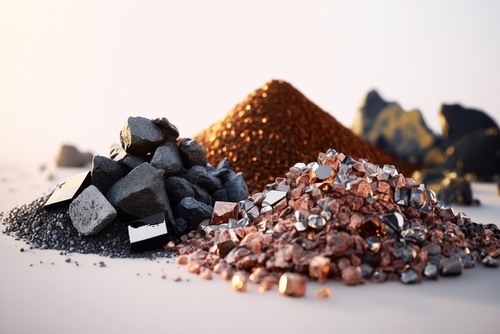
Raw materials have become strategic geopolitical weapons and a determinant of sovereign power. Rare earth elements are not rare in the sense of scarcity, but they are rare in terms of reliable supply chains and processing capability. These 17 metals underpin everything from high-performance magnets in EV motors and wind turbines to sophisticated defense systems and satellite electronics. Their demand is projected to rise dramatically as the world electrifies and digitizes.
China controls roughly 70 % of mining and over 90 % of refining and magnet production as a result of decades of industrial strategy and investment, subsidized to suppress competition and capture global markets. China is now asserting strategic control by leveraging a near-monopoly over the midstream and downstream processing that most countries simply do not possess.
Efforts by Japan to extract rare earth-rich seabed sediments, and by Western companies to develop rare-earth-free magnet technologies, are steps in the right direction but cannot meet current demand.
Greenland sits on one of the largest untapped deposits of rare earth minerals, critical minerals, and uranium outside of China’s control. That alone makes it strategically priceless. But more important is who does not control it yet. China tried. Russia is watching. The United States understands that if Greenland falls into the wrong hands, it is not just a territorial loss — it is a strategic chokehold on future technology and defense supply chains.
Ukraine sits on enormous reserves of rare earths, lithium, titanium, graphite, and strategic metals. These are not theoretical deposits. They were mapped decades ago under the Soviet geological surveys. What changed is that these materials suddenly became strategic rather than merely commercial.
Europe, meanwhile, is in an even worse position than they publicly admit, because they built an entire “green” policy regime on top of supply chains they do not control. The European Court of Auditors is now warning about the EU’s dangerous dependence on imports for critical minerals, including major reliance on China for key rare earth inputs. You cannot run an industrial policy on wishful thinking.
Control of critical materials has replaced control of oil as the pivot of strategic industrial strength. Whoever controls the inputs for next-generation technologies and war machines has a serious advantage.