Intro. [Recording date: January 4, 2026.]
Russ Roberts: Today is January 4th, 2026, and my guest today is Michael Munger. This is Mike’s 51st appearance on EconTalk. He was last here in July of 2025 talking about capitalism.
If all goes as planned, this is airing on March 16th, 2026, which is 20 years to the day since the first episode of EconTalk.
Mike is, of course, averaging almost exactly two and a half appearances a year. That’s 51 divided by 20, for those of you keeping score at home. Which is to say that Mike has made a significant contribution to this program and played a significant role in helping make EconTalk what it is. Thank you, Mike. And, welcome back to EconTalk.
Michael Munger: It is a pleasure on both counts.
1:29
Russ Roberts: We’re going to talk about a number of topics today: emergent order, the power of prices, how rationing works, the role of community in our lives, and one of the great rivalries in college sports, Duke versus UNC [University of North Carolina].
So, for people without any background, we’re going to have to talk a little bit about the Duke-UNC basketball rivalry, and we’re interested–the formal topic today is how tickets for that game are distributed at Duke versus UNC versus other alternative ways they could be distributed. We’re going to focus on Duke, where Mike is a faculty member. Mike, tell us a little bit about this rivalry, its intensity, and the challenge that provides to the people who sell the tickets.
Michael Munger: I’m happy to get a chance to talk about this. Basketball is very important in North Carolina. It’s important in other states also–Kentucky, Indiana. So, I don’t want to claim that North Carolina is best, but it is certainly up there in the importance of college basketball, as opposed to professional basketball or other professional sports.
So, I was an undergraduate at Davidson College. We always played Duke and got killed. Then I moved to University of North Carolina, where I was much more initiated into the cultic dislike of the other. So, UNC and Duke–almost everyone at UNC or Duke agrees on one thing: The UNC-versus-Duke game is the archangel Gabriel against Satan himself.
Now, they disagree about who Gabriel and Satan are, but they completely agree that this is not just a basketball game, but good versus evil. People will be depressed. They’re–shots will be taken. People will have to wear clothing if they lose a bet on the outcome of this game.
So, the–ACC [Atlantic Coast Conference] basketball generally, but Duke-UNC in particular, has a sort of cultic status among those of us who are in this area. And, perhaps not surprisingly, the tickets to that game are very expensive. People want actually to participate in the experience. Now, UNC is a very large stadium, the Dean Dome. It holds 14-, 15,000 people. It has a student area of 6,000. So, it is possible to go to the UNC-Duke game, although it’s pretty expensive.
But–I have a visual aid here–I went to StubHub and I’ll say about it, but for those people who are watching this on YouTube, this is Cameron Indoor Stadium. It holds 9,000 people. The student section there is 1200. And, I wanted to get an idea of the shadow price of a student ticket.
And so, as you see here, up in the nosebleed seats, it’s $2,200. Now that’s for two tickets. So, for a college basketball game, it’s $1,100 apiece. For the good seats, it’s $9,000. So, those are prices that we often see actually not just asked, but accepted.
And so, the price of going to this game at Cameron Indoor Stadium, this tiny little relic of a high school gym, is something–some people have called it the greatest college basketball experience in America. I’ve never liked Duke, so I’m willing to concede that other people think that.
Russ Roberts: And, just to make it clear, when you say you went to UNC–University of North Carolina, which is in Chapel Hill, which is–how far away from Durham, where Duke is located?
Michael Munger: It’s nine miles, as the crow flies. It’s about 11 miles by a road. So it’s not far.
Russ Roberts: So, part of the intensity of this rivalry is that they’re physically quite close. Duke is a private school; UNC is a public school. You were a faculty member at UNC when you left.
Michael Munger: You’re right to correct me. When I said I went there: I moved there from the University of Texas as a faculty member. Quite so.
Russ Roberts: And, I was an undergrad at North Carolina. So, we both have a healthy respect–would be the word–but it could be dislike for that other school that’s very nearby.
6:02
Russ Roberts: So, this game is very intense. The demand for the tickets is very high. And, the administrators–the university–has a choice about what to do with the fact that there are more people who want to watch this game in person than there are seats. And, the prices you just quoted are from StubHub. That’s a secondhand market. Can a student sell their ticket on StubHub, their student ticket?
Michael Munger: Not only can a student not sell, they have a variety of mechanisms for ensuring that the student can’t sell it. And, one of them is in order to get in, you have to have a student ID [student identification] and you have to have a wristband showing that you have registered and that you are the person you are claiming to be. So, they don’t give out student tickets. So, students cannot sell their tickets.
I showed just that just as a shadow price: that’s something about what the student tickets would be worth. But, in 2006, a young man named Tristan Patterson tried to sell his student ticket by giving someone–he advertised, not very clever, on Craigslist and asked $3,000 for his ticket, and said that ‘You’re going to have to look enough like a student. I will give you my ID. We’ll go in.’ He had actually waited in line and gotten the ticket. He got kicked out. And so, we wouldn’t know about people who were successful. So, this is a selection. We would only know about people who failed.
It is very difficult for students to sell their tickets. However, on StubHub, it’s pretty easy for the grownups to sell their tickets.
Russ Roberts: But, the point is, is that the student tickets are treated very differently than the other tickets, and we’ll talk later perhaps about why that is. But, what’s interesting is that Duke and UNC have chosen different ways to allocate the scarce tickets.
The obvious way, they have both rejected, which is to charge a high price for them. They could have fewer student tickets. Some students would pay some of those high prices, but they could certainly sell them to the public. In which case, they are forfeiting–what’s interesting about this, they’re probably forfeiting millions of dollars by not charging for these tickets.
So, neither place charges for them explicitly. And, they then have a challenge: At the money price, out-of-pocket price, of zero, there’s enormous excess demand by the students. There’s 1,200 seats that can go to the–is that in the best section, Mike, or all overall at Cameron, at Duke’s Stadium?
Michael Munger: The student section is Section 17, which is immediately courtside across from the two teams. So, you can see the two teams, and it’s immediately a long, narrow–that’s courtside. They’re clearly the best seats in the house. So, the student tickets are the best seats in the house.
Russ Roberts: But, there are two other student sections at Duke: There’s 18 and 19.
Michael Munger: Yes. And, those are for people who can’t get in to 17. [Section] 18 is for people who–those tend to be more organized groups because they get behind the basket and try to distract the players from the other team from shooting free throws. And for the band. Section 18 is for the band. 19 is more graduate students; and those are farther away. Those are not nearly as good. So, the undergraduate student seating is section 17.
Russ Roberts: But, is that the 1200 number? Is that in 17, do you know?
Michael Munger: No, you’re right. The 1200 includes all of that student–
Russ Roberts: And, how many undergraduates are there, roughly, at Duke?
Michael Munger: Six thousand.
Russ Roberts: Okay. So, right away, there’s going to be excess demand for a premium game like the North Carolina game. Carolina has a much bigger stadium, but there’s still excess demand at Carolina. But, Carolina we’re not going to focus on, except maybe at the end. They just have a lottery and give out the tickets based on a random draw, and assign them that way. I want to say for the record that when I went to UNC in the 1970s, you had to get there–
Michael Munger: There it’s the nineteen-seventies–
Russ Roberts: Thank you–
Michael Munger: Some of you young people might–the 1970s.
Russ Roberts: This is in the Phil Ford era and a little before that, Walter Davis. I don’t want to mention the fact that Carolina came back from an eight-point deficit in 17 seconds in 1974. There’s no reason to mention that or harp on it.
Michael Munger: It would be wrong not to mention that. Yes.
Russ Roberts: Yeah. But, putting that to the side, in my day, we, quote, “camped out.” And, this is pretty much in quotes, “camped out.” We would camp out in the stadium, in the seat that we were going to sit in if we were to be successful. And, people would get there a few hours early before the tickets were distributed, sit in the seats in the stadium, and get access. I don’t think–there may have been a few people who stayed overnight, but they don’t remember that. I think I’ve mentioned before on the program that there was usually a pickup basketball game going on. Many people brought books and studied. Some people played basketball. I missed a shot in that game that would have earned me immortality for at least a minute, which is a very poor form of immortality. I went over one from the floor, pre-Dean Dome. Okay.
11:36
Russ Roberts: But, what we’re going to focus on is Duke. So, Duke has a very different system that is, I would call it, a phenomenon. So, try to give us the gist of it. We’ll put up a link to a very embarrassing video that describes it, and some of the rules of this phenomenon. But, take your best shot, Mike.
Michael Munger: I’m afraid that in anticipation for doing this–because I wrote a piece for AIER [American Institute for Economic Research], which by the time this airs will have come out, and so I hope you’ll put up a link to that also so people can look at it. But, the past week, I have just gone down a rabbit hole trying to figure out the details of this. So, I’m actually pretty mad at you, Russ, for agreeing to do this. You could have protected me by saying, ‘No, no, that’s too arcane.’ So, I will try not to be too arcane in my description.
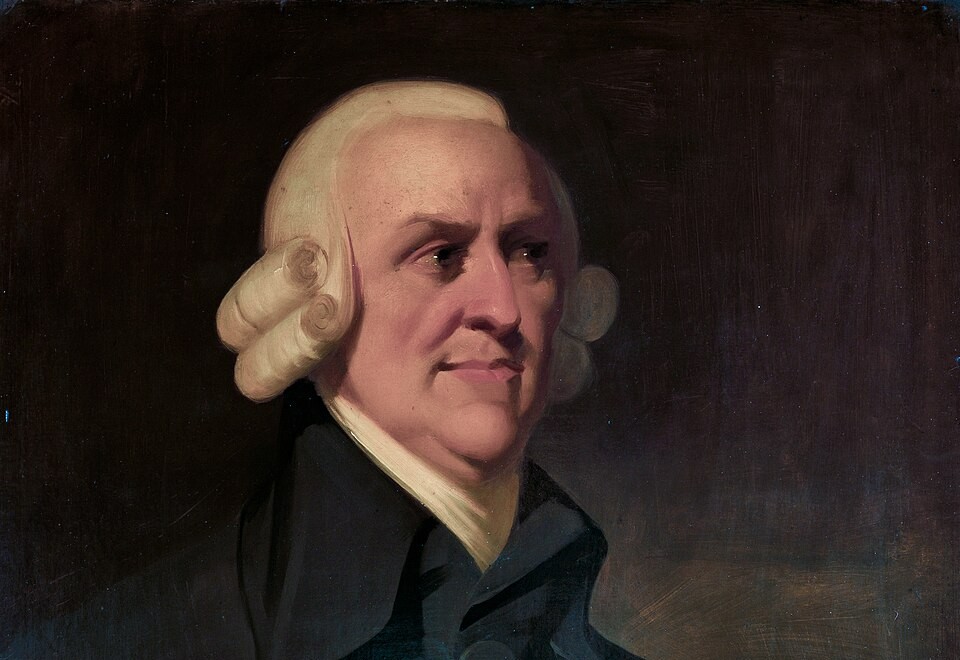
So, Adam Smith in Book One, Chapter Five of The Wealth of Nations famously said, “The real price of every thing… is the toil and trouble of acquiring it.” And so, I ask my students–because I want to torment them: they would rather give definitions than think–I ask them, ‘Does Starbucks have surge pricing?’ And they all say, ‘Well, no. Uber has surge pricing.’
Starbucks totally has surge pricing, because the length of the line is part of the cost of paying.
So, if I’m at the airport and I think I want to get some coffee, so, I walk over towards Starbucks and I see there’s a 20-minute line. The cost of the $7 latte is not $7. It’s $7 plus 20 minutes. And so, I would actually be willing to pay more for not having a line. And, if Starbucks were giving away lattes for free, there would be an hour wait. So, nothing is free if people want it.
So, economists have a concept called scarcity. Scarcity is the idea that more people want the thing than can get the thing at the current price. And, the question is what to do when there is scarcity. Because that means that not everyone who wants it can get it at the current price. And, there’s four main things that economists have listed that we can do.
One is to raise the price.
The second is queuing, which is first-come, first-serve. That’s what Starbucks uses. That certainly is, we’ll see, a version of what Duke does.
The third is chance. Lottery. That, we will decide–and that seems fair in the sense that we all have an equal opportunity to get it, and just chance determines who gets it.
And then, the last is authority or discretion. So, we might decide based on who we think–we could have some sorts of characteristics. And, you’ve talked a number of times on this show about the dangers of discretion. Because, the minimum wage, for example, allows discretion on the part–because more people want the job than can get it at this wage. And then, they can exercise tastes that they might have for discrimination, for acting badly. And, that means that if you use authority, you are giving–probably the discretion will be misused.
All of these four things have a disadvantage.
However, price, it seems to me, and since I have tenure, I’m going to go ahead and say this. Because Duke is not the only ‘elite’–I’m making air quotes for those listening–‘elite’ university that does this; but Duke seems to miss no opportunity to take students by the ankles and shake the change out of their pocket. On every margin. So, the costs of food, the costs of housing, fees. Lord knows: tuition–$75,000 US. Now, not everybody pays full freight, but we are trying to maximize revenue. And, in fact, there was a very great EconTalk guest, Eugene Fama, who in January of 2012 did a terrific EconTalk. And, I should point out, he then won the Nobel Prize in October of 2013. Coincidence, I think not.
Russ Roberts: Post hoc ergo propter hoc, baby; but that’s okay. I think there’s something there.
Michael Munger: Well, I don’t know which caused which. Maybe it was selection. Obviously you only invite people of that quality, so it may not have been causal. But, he and Michael Jensen were just en fuego [trans.: on fire] in the mid-1980s. So, 1983 and then two papers in 1985, they said, ‘People don’t understand nonprofits.’ And, nonprofits don’t mean you’re not trying to get revenue. It just means that what you do with the revenue is different. There’s no residual claimant. People are more willing to contribute.
And so, big universities and other big nonprofits, it’s not that they’re not trying to maximize revenue. They are. It’s just that then there’s no residual claimant. And so, people are also willing to make contributions. You can have a big endowment, and so that you probably still get mail from UNC saying, ‘Will you contribute to the endowment? Boy, it would really help.’
So, there’s a puzzle. Duke–well, I shouldn’t say Duke. Universities–elite universities–miss no opportunity to try to maximize revenue on almost every margin. And yet, Duke does this weird thing. It may be the most sought after, most expensive athletic ticket in all of college sports, which is the Duke game against UNC in Cameron Indoor Stadium, which is a tiny little high school gym. They do not charge money for it. They give it away for free.
Now, of course, if you’re going to give it away for free, that means it’s going to be scarce, because, as you said, a lot more people want it. So, which of the other mechanisms do they use?
It seems as if they should–and I’m using this in an efficiency sense–they should use a lottery. The advantage of a lottery is that it’s arbitrary and it has far less dead weight loss. So, dead weight loss is the name that economists give to the resources that are wasted in competing for a rent. And, this is a kind of rent-seeking. So, I want this valuable thing. It’s free. What do you have to do in order to get it? Well, you have to wait in line. How long? Well, longer than the next person who wants it.
And so, there’s this arms race where you have to wait longer and longer. And, it turned out that the solution at Duke was to wait–not go sit in the seat that day, not the previous night. Six weeks!
18:25
Russ Roberts: I’m going to interrupt this. I know the excitement of this. What is the reason for that and how do they manage that? And, what are the consequences of that decision on the part of Duke? But, I want to give an exam question, a homework question I used to challenge my students with. So, it’s a puzzle. And, the answer to this puzzle, I probably won’t share, so you can chew on it, but in the course of chewing on it will tell you something about what’s happening at Duke.
So, here’s the puzzle. I announce to my class of, say, 50 students that on midnight before the final exam, I will be giving out all the answers to the final exam to five people. And the five people will be the first five people I see outside my door. So, it’s first come, first serve. So, those people are going to get guaranteed As. We assume they’re not going to share the answers with anyone. That’s unrealistic, but it’s for the sake of this understanding the economics of this problem.
So, if you desperately need an A–for your resume, your transcript, whatever reason, grad school–you’re going to want to make sure–especially if you’re not very good in that you’re struggling with the class. So, we could think about the different–it’s kind of a mix of people who might get in line. People who desperately want an A, people who desperately want an A who can’t earn one, and so on.
So, here’s the question. There’s two questions. The first question is–there’s three questions. First question: When would you get to the line? Well, you wouldn’t get there a few minutes before midnight because you won’t be one of the first five.
And then, the second question would be: So, how should we think about when people would arrive?
The second [third?–Econlib Ed.] would be, how long is the line? And, it’s the same as the first question if you define how long correctly. In people, the line is only going to be five people long, because there’s no point in being the sixth person. So, if you show up–in the first year, I don’t know, it’s going to be very chaotic–but I presume after a while, if I did this every year, people would kind of come to know when was the time you had to start camping out next to my office. So, how many people, if you say, ‘How long is the line?’ If you say in terms of people, it’s five. Because the sixth person is not going to bother waiting.
But, this real question is, how long is it in terms of time? That is: How early do you have to get there?
And then the next question–which is to me one of the more interesting questions, and we’ll see it very much plays into the Duke question–the next question is–after doing this for 10 years or so, I decide, this is really cruel. I got these people laying in the hallway, uncomfortable. It’s fairly miserable. Maybe they have little folding chairs. I am going to bring five of the most comfortable reclining chairs to wait outside my office. Out of kindness. And, those chairs, they’re going to have massage aspects. They’re going to have, built in, one of the greatest sound systems in the world. You will have access to all of Spotify. This is before these things were available. So, in this homework question, you’d have access to a tremendous music library.
And, I would ask the following question, which is: What does that do to the length of the line?
And to make it easy–it obviously doesn’t change the number of people in the line–but it obviously does change how long they have to wait. And then, you could ask the question–one more question–‘Am I a good person or a bad person for providing those comfortable chairs?’
And, so, now: that was my example. I didn’t realize that Duke was going to implement it in an insane way, which I really didn’t know about until you called me with this idea, Mike. So, go ahead.
Michael Munger: But, your example raises a bunch of interesting questions coinciding with Duke actually becoming pretty good in the early 1980s. So, Duke had been up and down. It’s not that Duke was no good before Coach K, and though I can pronounce Krzyzewski correctly, I’m going to say Coach K and K-Ville. I’m not going to pronounce his name again. Duke had been good on and off before the arrival of Coach K. And, on the arrival of Coach K, Duke was terrible for quite a while. It was easy to get tickets. You could show up in the middle of the game and get student seats. So, it wasn’t a problem.
Then, though, Duke started to get good–they had several good years. And, in 1986, a lot of people wanted to see the Carolina game because UNC was also good. And this story now has become legend. It’s actually, as you said, it’s in the terrible video, but this is described as an origin story. A young woman named Kimberly Reed, who was a senior and had gone to a number of games–and some friends of hers were playing quarters. And so, one of the things that I looked up was, what is the difference between quarters and beer pong? I thought they were basically the same game. They’re not.
Russ Roberts: I just want to say for those people outside the United States or not of a certain age, quarters is a game for drinking. It’s a drinking game that’s designed to help you get drunk. So, go ahead.
Michael Munger: Well, see, I didn’t know that. This must be a UNC thing because we at Davidson did not drink. So, that was certainly not a thing that I’ve ever heard of.
So, quarters, you’re trying to bounce a quarter into a cup; and there’s conditions. They had played quite a few rounds of this and they had said, ‘We probably should go. We need to plan how we’re going to get the Duke UNC tickets.’ And, someone said, ‘Well, why don’t we just pitch a tent?’ And, after a few rounds, that started to sound like a good idea.
But they were warm and inside. This is in January. And so, North Carolina is not New Hampshire, but it often gets down to 40, maybe 30. It snows, it rains. It’s pretty uncomfortable. And so, they considered asking–Kimberly Reed and her friends–considered asking Dean Sue, who is still–has just retired from Duke–and she was the Dean of Students for, I think, over a century. And, they said, ‘We’re not going to ask. It’s much easier to ask for forgiveness than for permission.’ So, they went to U-Haul and they rented an enormous party tent and they set it up and only the 15 people who had participated were allowed in the tent and other people saw that and said, ‘Hey, that’s like a comfortable lounge chair, I now realize.’
So, Duke, by allowing tents–because the question was, are we going to allow this or not? And, they said, ‘Well, I guess we will, because the alternative is they will be out in the elements. It’ll be much more uncomfortable.’
Once tents were allowed, it was no longer true that you would just stay overnight. They started to stay for multiple nights. And, it is a little village. It is a brigadoon. So, Brigadoon is the famous Broadway musical about a little village–I think that it only comes once every 99 or 100 years–in Scotland. And so, it appears those people are there for a night. The young gentleman goes; he dances with a young lady. The next day, the village disappears and it doesn’t come back for a hundred, so you’ll never see it again.
But, K-Ville is annual. This is the 60th year, 6-0, 60th year from 1986–forgive me, the 40th year, from 1986 to 2026, consecutive, that K-Ville has been done. Although in 2021, there were some conditions, but still they allowed them to do it because it was outside. They were a little worried because of COVID [Coronavirus Disease]. But, 40 straight years there has now been this ephemeral, evanescent little tent village that shows up and it exists for a little while–and it has streets, it has lights, it has customs–and then it disappears and it’s gone for an entire year.
The conditions and rules that they have come up with–this is entirely student-done. All of this has been delegated to the students. It’s a bit like Burning Man. So, it has a constitution, it has a set of rules, it has a police force that are perceived by people not on the police force as being fascist, and there’s an appeals process. So, if you disagree with the decision of the so-called line monitors, you can file a grievance and go through the appeals process with an independent authority. So, all of this has been created by the students as a way of managing the fact that once you made it more comfortable, the line got much longer.
28:25
Russ Roberts: And, we’re not going to go into all the details of the tents. We’re going to put up a link to the rules that the students created for themselves. They are a little bit forbidding and a little bit–how should I say? Well, I’ll let listeners check them out and make your own decision about what they signify, but there are different levels of tents. There are three kinds of tents, meaning–
Michael Munger: I think we should go through that at least.
Russ Roberts: Okay.
Michael Munger: I can do that in just–I’ve tried to get an outline where I can do that in just a couple of minutes.
Russ Roberts: Go for it.
Michael Munger: So, the Duke Student Government–the DSG–every November, votes on a set of rules that is the constitution for the coming year, which they then put up online. And, I sent you the 2025/2026 version, so you can put that up in the show notes. So, the deadline to switch out or into a tenting group is January 16th. If more people have registered–if more than 80 different tents have registered–that means that that is more than the limit of black tents, which is the first one. There’s black, blue, and white. So, black is the first one to come online. If there’s more than 80 that have registered–and the registration process is you can have up to 12 people in the tent, and then everybody has to present their ID [identification].
If there’s more than 80, they have an exam. And, the exam–I have a copy of a previous one. I obviously don’t have this year’s. This year’s will be very valuable. But, there’s 52 questions–58 questions. It’s 14 pages long. And all of them are extremely detailed questions about what has happened in basketball this year.
So, for example, Question 16: Who did Duke play in a secret scrimmage against before the season began? In what city did they play? What was the final score? Now, almost no one knows that this even happened. So, it’s a secret scrimmage, after all. So, you have to be a fanatical Duke fan.
So, the point is, in order even to get a chance to tent, you have to pass an exam.
Russ Roberts: For the really good tents. There are some lesser tents for ignoramuses and ne’er-do-wells, but to get into the black tent area, you need to do exceedingly well in the exam.
Michael Munger: So, let me give the dates for that. Black tenting is from January 18th to January 28th. Blue tenting is from January 28th to February 9th, and white tenting is from February 14th to 28th. And, the rules are much less strict as you go down that hierarchy. However, it’s important to note, black tents convert from black to blue on the 28th. So, all of them–blue tenting is just a rule for all the tents. So, at first, the black tenting rules are for all the tents.
You can be checked at any time. If the people are not in the tent, the tent will be removed. And, that’s why they call the line monitors ‘fascists,’ because you’ll be kicked out. Blue tenting is a little bit easier. White tenting, which is from February 14th to February 28th, is much less severe. All of the tents convert to white on February 14th.
So, it’s just the earliest period that is the most draconian, because those are the people who are going to get in the front row of section 17.
The question is, why do they–they give a quiz. There’s 58 questions. And they have to write up a new one every year. So, let me give the description. I think this is remarkable. Again, students wrote this. So, let me give their reason. “Unlike other universities that use a random lottery or ticket sales to determine which students are admitted to a sporting event, K-Ville is proud of its first come, first served, meritocratic approach.” So, that word was just added. ‘Meritocratic’ has never been there until this year. So, until now, it just said ‘first come, first serve’ approach. This year, they added ‘meritocratic.’
32:49
Russ Roberts: I just want to say this, Mike–and I have to torment my listeners, but you can probably find this online. One of my favorite jokes–and I’ll tell you this joke after the recording is over, Mike–involves a young man who wants to woo the princess. The princess has many suitors. The king has the similar problem that we’re talking about now: He doesn’t know how to allocate this precious resource that is scarce, his daughter’s hand in marriage.
So, he offers an exam. I will just give two–it’s a three-part exam. The first part is a large keg of whiskey–or ale in, we’ll date it to the Middle Ages–a large keg of ale that has to be consumed within six minutes. The second test–and at this point, of course, the contestant is struggling–kind of similar to the quarters game. The second test, the contestant is required to remove an abscessed tooth from a large tiger. For some reason, the version I was told it’s a saber tooth tiger, seemingly implausible, but that’s the second test. The third test isn’t suitable for EconTalk audiences, so I’m leaving that out.
But, that test, that set of tests, would reward a certain kind of person, a person with a certain set of skills–ability to hold his liquor, fend off a large, vicious animal in pain. And, the third test we’ll, again, not mention, but it’s clear what you’re getting, if you’re the king, on behalf of his daughter.
Now, somewhere in this program–and we’ll be able to find it with Google, I’m sure, or AI–we have talked about the fact that when you allocate things via things other than money–when you use money, you get a mix of people who have the financial wherewithal to find the ticket attractive, as well as the eagerness to see the game. It’s not the most eager fans, and it’s not the richest fans. It’s some mixture of both, and you cannot specify in advance what that is. And, the argument is, is that: why do many sporting events–not just college basketball–why are they priced below the market-clearing price? And, one answer is that you want the most devoted fans, because devotion can help your team win. This would be one answer. There are many answers. We may talk about them.
But, the idea would be that, particularly close to the field, section 17, or in a baseball game, some of the better seats near the field or a football game near the–it’s not as important in football. But, you want the home crowd advantage to help your team play well. And, certainly it’s unpleasant for the visiting team at Cameron Indoor Stadium because of the viciousness–and the, some would even say immaturity, but certainly the volume and enthusiasm, if you wanted to be more kind–of the students in section 17 helps the team play well.
When you use a quiz, you’re getting the wrong kind of people. You’re getting cerebral people–unless they’re cheating.
So, I have two questions. The quiz is really interesting. It’s a twist that I would not have anticipated. And, the second question is: just like the Academy Awards, there’s an accounting firm that is tasked with the difficult challenge of counting the votes and keeping it secret–which is not a small thing. Who writes that quiz? Who grades it? I don’t know if you know this. And, how do they keep it from getting leaked? Maybe it does get leaked. I don’t know.
Michael Munger: Well, there’s hundreds of people, all of whom have to take it on the same day; and it’s the average score of your entire tent. So, you probably want to make sure not just that you’re tenting with your friends, but you may very well need to tent with other fanatics.
Now, I only read one of the questions. This is not a cerebral test. This is memorizing trivia–
Russ Roberts: Okay–
Michael Munger: And so, the more trivial, the better. And so, I have suggested that an alternative is: All they need to do is have a Bunsen burner set up on a table, and I can just hold my hand in it, and whoever will hold their hand in at the longest, ‘Okay, you’re in. Nope, you’re out.’ This is: How much will I hurt myself? They study for weeks to try to memorize these trivia, so the people who know the most about something stupid. This is a loyalty filter.
Russ Roberts: Watch your tongue.
Michael Munger: Sorry. Well, about something irrelevant. This is not knowledge that is especially useful except in the context of this test.
Russ Roberts: Fair enough. Fair enough.
Michael Munger: So, George Akerlof had a famous series of papers about loyalty filters. And, one of the examples that is used in that literature is that when China first was trying to establish a civil service, they had a problem because if you are far–the provinces that are far away, very difficult to monitor or enforce–
Russ Roberts: From the capital–
Michael Munger: Yeah. From the capital. And, the mountains are high and the emperor is far.
And so, the Civil Service exam was: Could you memorize and write from memory, in beautiful calligraphy, classical Chinese poetry? Which had nothing to do with your job. But it meant that you were willing to do something. And [?]: I’m going to double down. Something stupid. This has no point except that you will do something that is orthogonal. This is not in your interest, except to do this thing that shows I have the intensity. Because everyone, if you ask them, ‘Are you a fanatic?’ ‘Absolutely. I’m a crazy fan.’
Russ Roberts: Well, let’s see. It is a measure of devotion. I accept that point. It’s an interesting measure of devotion. I’ll just assume for the sake of honoring the meritocratic claim that devotion is correlated with the ability to jump up and down with face paint on you and say crazy things and maintain that for two and a half hours, I guess. Two hours.
Michael Munger: This is a Motte and Bailey thing. I am now going to retreat to my prepared line of defense. It may not be perfectly correlated, but it is more correlated than other things that are easily measured.
Russ Roberts: Yeah. That are only measured with difficulty.
Michael Munger: The other things would be measured with even more–this is actually relatively cheap. So, everyone takes it at exactly the same time, so there’s no way for it to leak. Although money might be a way around this. If I am one of the line monitors who has made up the exam and I have a copy and you offer me, I don’t know, $10,000, I’d probably think about it. That’s a lot. And, that’s a sign of devotion, and I get $10,000. So, maybe it does happen. However, the position of line monitor is extremely honorable. Even though people call them fascists, they all want to be one.
Russ Roberts: Why?
Michael Munger: Oh, it is a position of honor. You can say that it’s something like Tom Sawyer whitewashing the fence and it’s not really an honor. Thinking makes it so. It is perceived as an honor. You bitter UNC fans make me sick.
Russ Roberts: Do they get paid, the line monitors?
Michael Munger: Absolutely not. Absolutely not.
Russ Roberts: And, it takes forever. It takes so much time.
So, there’s a chapter in The Road to Serfdom–
Michael Munger: They get seats though. They get seats–
Russ Roberts: There’s a chapter in The Road to Serfdom, if I remember correctly, it’s called “Who Rises to the Top.” Reminds me a little bit of that. Listeners can go look that up.
41:20
Russ Roberts: But I just want to make it clear. We’ve glossed over–we’ve been a little quick about the line monitor position. When you have people supposedly waiting, if the test is actually devotion and waiting, the problem is, is you go set up your tent, you camp out, and then when you go on to go visit your friends or go hang out or do other things, you leave the tent. But, the line monitor’s job–which is appalling to me, Mike, I’m sorry–is to verify that people are sitting in the tent.
And, I just have to say one more thing, which unintentionally echoes my absurd exam question, homework question about the chairs. In the document that’s handed out to the tent people that you shared with me, there’s advice on what kind of chair to get so that you can study comfortably while you’re sitting in your tent. So, it’s–
Michael Munger: Russ, you’re understating this. Let me say–maybe you knew this and just didn’t want to mention it. There are border guards.
Russ Roberts: No. I didn’t know that.
Michael Munger: The line monitors in the middle of the night, they go around with a fantastically loud air horn. And, three times they sound the air horn. You have five minutes to check in and a third of your tent has to check in or the tent is moved. There are border guards, which means that you have to be physically in–maybe not in your tent, but you can’t be in the gym, you can’t be in the bathroom, and you can’t be outside of this well-defined area. There’s a very specifically defined area about what constitutes K-Ville. And, before they do a check, they call all of the line monitors and they form a line along the border. If anyone tries to come in, they check your ID, and you do not count towards the tent count.
Russ Roberts: Because you don’t want to allow, obviously, ringers.
One of my favorite examples, which I’ve, again, probably told on the program before, is that under Allende in Chile, there were price controls and there was also high inflation. So, there wasn’t a lot of stuff in the stores because store keepers didn’t have a financial incentive to provide it. So, there’s this wonderful example that I think could be true–could be apocryphal, doesn’t matter. There’s a sign in the window of a store that says, ‘Color televisions at controlled prices.’ They have them available. So, people get very excited. They don’t know how many there are. So, a long line forms, because maybe there’ll be enough to satisfy the demand. And so, the long line forms. And the store owner comes to open the store and everyone’s excited and the store owners are horrified to see the people in line because they say, ‘I’m sorry, but we don’t have any color televisions. We couldn’t afford to buy them and then sell them at the control price. We’d lose money.’ And, people are very upset. There’s a near riot.
And then, it turns out that the sign is on the outside of the store. It’s not on the inside of the window, it’s on the outer part of the window. And, it had been posted by two enterprising young men who attached the sign to the window, waited for the line to form, and then sold their place to a very high bidder. That’s entrepreneurial enthusiasm when prices are not used. Sad. Funny. Sad. Both.
So, here, you’ve got to go through this–I’m not going to call it a charade. But, you’ve got to go through this ritual of proving that you’re still waiting as to make sure you maintain your place.
Michael Munger: And, you are the same person who registered to wait–
Russ Roberts: Correct–
Michael Munger: to prevent people from selling their place in line.
Russ Roberts: So, you can’t use a ringer. You can’t hire someone to wait for you and all that. Well, you can, but you’ve got to have a fake ID and it’s got to work and it’s really probably hard.
Michael Munger: They really check. There’s barcodes. It’s very hard to do that.
Russ Roberts: So, my question is, do you know how many times they actually throw a tent out of the K-Ville?
Michael Munger: Several every year.
Russ Roberts: Every year. Okay.
Michael Munger: Every year. And, it’s not one.
Russ Roberts: Is there anybody done the empirical analysis of what happened to Duke graduates’ starting salaries after K-Ville was started, as a dummy variable in a regression? The amount of time–can you go to class? I guess a third can go. You have to have two thirds when the checks are done?
Michael Munger: You have to have one third. And so, most of the time–this is the middle of the night, too–so that you can take turns. And then, the check could be during the day. And, if it is, then you have to–and that’s another thing you have to do. At the beginning of the semester, you all have to compare class schedules and you can’t all have a class at the same time. Many are called, few are chosen.
Russ Roberts: Yeah. Talk about the tail wagging the dog. It’s fascinating. It’s really interesting.
46:48
Russ Roberts: And, let’s talk a little bit about emergent order and the constitution. Ages ago, David Skarbek did a beautiful study of prison life–that’s an oxymoron, obviously, to some extent; but the beauty was in the study, not in the life–where he showed that many prisons have actual constitutions, rules developed by the prisoners to run the part of their lives that they’re free to run. Because, there’s no way that a guard and a warden–a set of guards–can actually control everything in the prison. In fact, we discovered in that episode, if you listen–it’s an extraordinary episode–that prisons probably deliberately have places where cameras cannot watch the prisoners to allow prisoners to enforce rules using their own violence outside the legal things that the prison can do. So, here’s another example. So, talk about that.
Michael Munger: Well, let me say what’s interesting about Skarbek’s example is that often the justice is enforced against a member of your own tribe. So, some member of our gang behaves badly against a member of another gang. And so, the heads of the two gangs will meet and the aggrieved one says, ‘Look, we don’t want a war. Nobody wants a war here. What are you going to do?’ And so, the members of the gang beat the heck out of their own member in a way that–
Russ Roberts: Or kill them–
Michael Munger: It’s not in front of a camera, but it is within the sight of the other gang. And, they say, ‘Okay, justice has been done. We’re good. No problem.’ And, that’s a very strong deterrent that–I think: I’m in a gang, I’m invulnerable. No. I am going to be–the enforcers are the members of my own tribe.
That’s true of Duke students. So, the enforcers here are the members of their own tribe. These are people who tented as first-years. Second-years, maybe they tried to be line monitors. By the time they’re a senior, they know all the rules, they’ve participated in this; and, being a line monitor, they really believe fiercely in this. The definition of K-Ville is very strongly enforced. They are the law. They are delegated. The prison example is a good one. The prison guards are likely to at least implicitly accept the emergent order that is produced by these prison constitutions because they can’t control these prisoners if there’s a war, if there’s a giant fight. And so, the fact that there’s less violence: if they have this constitution, the guards will look the other way. ‘Okay, that was deserved. They were punishing their own member. I didn’t hear a thing.’
Here, they are–normally, people would not tolerate someone else acting like this: being officious, blowing an air horn in the middle of the night, saying, ‘No: You, no soup for you. No ticket for you.’ So, there are ticket-Nazis, like on Seinfeld: ‘No. No ticket for you. You have to go to the back.’ So, they have to re-register; and then by the time they get to the white-ticket era, that means you’re probably not going to get in. So, some of those are–they’re called ‘flex.’ The white ticket–white-tent people are depending on some of the black- and blue-tent people getting kicked out. And it happens. So, in expected value, it actually happens.
Russ Roberts: But, is your claim–sorry to call it a claim–is it the case that all this enormous panoply of officious rulemaking and minutiae–the quiz, the three levels of tents, when the tents start and have different colors, meaning how long you have to wait, the rule that a third have to be present at all times, whenever there’s a check, the border guards–is that all student-generated voluntarily in an emergent way? The administration did not impose that in any way?
Michael Munger: It is all completely delegated to students.
Now, in equilibrium, I could imagine that if the students said, ‘We’re going to have public floggings,’ that would be out. But the–in equilibrium, yes, it’s all delegated. So, the students recognize there’s some things that they can’t do. They can’t have beatings or struggle sessions. But, yes, this is all entirely delegated; and the practice of pestering people at night, you might be concerned that people have maybe a lower GPA [grade-point average], maybe they get sick. There’s a variety of concerns. The constitution is 50 pages long.
There’s a bunch of dispensations and ways where you do not have to show up. So, the main ones are if it is below 35 degrees, if there’s two inches of snow on the ground, or 30 mile-an-hour winds. So, you could have 34 degrees, an inch of snow, and 20 mile-an-hour winds, and you still have to be there.
So, they’re trying to make it uncomfortable in a way, because those conditions are–it’s called grace. You get grace: you get to go away. You also get grace two hours before and two hours after any home basketball game, because it’s assumed you’ll want to go to the basketball game. And, you get grace an hour before and an hour after any away game, because it’s assumed you’ll want to go watch that on TV. So there’s all sorts of periods in here that are built in where no one has to be in K-Ville.
Russ Roberts: And, your claim–again, I just want to verify this–all those decisions are approved by the student government? And the administration has no say in them?
Michael Munger: I’m not saying that. In equilibrium, the administration has no say in that.
Russ Roberts: I’m saying those decisions emerged from the choices of students in interacting with each other.
Michael Munger: The administration says nothing about them.
Russ Roberts: I understand.
Michael Munger: It’s not that it has no say, but it says nothing. It looks at it and it says, ‘All right.’
53:15
Russ Roberts: You know, I have to say, I got into Duke and North Carolina. I’ll just say I’m glad I–no. I won’t say that; but I did choose North Carolina.
Michael Munger: Have you got a cup of haterade there, because you clearly need a little more haterade?
Russ Roberts: But, I’m going to give you some love here for your students, Mike, even though you root for North Carolina also. I’m going to say the following. This gives me empathy for the behavior of the Duke students at the game.
Now, the Duke students–they’re called the Cameron Crazies, these students in Section 17–which is due to a combination of dress, lack of dress, face paint, and chanting, wild gyrations of various kinds. I think I understand it now. You got to get your money’s worth. After you’ve gone through this for six weeks, I think I’m going to excuse it all now. I used to judge it. No longer. I feel sorry for these people. They’ve gone through a terrible, terrible hazing to get access to a two-hour entertainment and they should get their money–it’s not their money’s worth–they’re–
Michael Munger: I’m going to fuss at you about that. This is how we train fighter pilots, elite military units, and Duke basketball fans.
Russ Roberts: There you go.
Michael Munger: In all three cases, it is the severity of the initiation rite that creates a sense of solidarity and belonging. The average GPA [grade point average] is higher for people who tent. They are far more likely to give money and large amounts of money for a very long time.
So, we started out with a puzzle: Why would Duke do this? They’re leaving literally millions of dollars on the table. Now, maybe it’s causal; maybe it’s not; maybe it’s selection. And, I agree it’s partly selection.
I think it’s partly causal. Somebody comes to Duke–my younger son, Brian, went to Duke, tented in 2011. The experience was horrible, and he still keeps in touch with the people that he tented with. It is a bonding experience. And, I’m not saying other places should necessarily emulate it, but something that emerges from the existing culture that students come to own and they come to value. And, that then is one of the connections that years later at a reunion is a way of organizing–getting more money for Duke’s endowment. In the long run, it might very well even be monetarily useful. They probably don’t get as much as if they were to sell it. But it would change the nature of the game.
If they auctioned off the tickets to the highest bidder, it would be much quieter. All of the grownups that now have to pay–let me say for just a second: If you want a ticket in Cameron Indoor Stadium as a grownup, you have to pay $10,000 a year for five years to the Iron Dukes to get onto a list that takes up to 20 years–and still contributing $10,000 a year–in order to get a chance to be able to buy season tickets. So, your ability to get tickets any other way are not very much. But some people who go to Duke will end up doing that if they still live in the area.
So, I think it creates the kind of fanaticism that we intentionally use for fighter pilots and elite troops.
56:52
Russ Roberts: Now, we’ve talked about this a long time ago, I’m sure, Mike, but one of the more fascinating things about sports is that the leagues are closed. And in that sense, the league is the team, not any of the individual teams. So, take any professional sports–the way they’ve solved this in England, they have different tiers of quality and the Premier League is the highest tier. And, there’s only a certain number of teams in the Premier League. And, every year, the bottom teams in the standings–or the table, as it’s called–drop out to the lower league; and the top two teams–I think it’s two–in the tier below that go up. But, that hasn’t changed the fact that there’s only a fixed number of places.
And in America, as America gets richer and richer, and as there’s a limited number of teams in a league, the value of the stadia–the stadiums–gets higher and higher. Because, it’s hard to make a 250,000- or a 500,000-person stadium. Quality starts to fall off and you may as well watch it at home. So, 100,000 is close to the limit in football. And, there’s a number of stadiums, professional and college, that are close to 100,000. But that’s it. And, as you get richer and richer, and as there’s more and more alums, the demand for those scarce seats is going to always grow, and there’s a certain rent that’s going to accrue to those seats that cannot be dissipated by adding teams.
The normal way in an industry when there’s a lot of demand for a product, there’s entry. But, when you have a league, there’s no entry; or at least it’s hard. And the existing members of the league have created something spectacular for themselves, and they don’t want to water it down. I understand that. So, it’s a very interesting social phenomenon.
The other thing I would say is that I want to talk about your son and his friends and giving to the alumni fund. When we go through things that are difficult, we bond with each other. And, the feeling of community and belonging that often feels to be missing in modern life is–this is another way to get a taste of it. And there’s something beautiful about it. So, take all my cheap shots aside, put them away, and let me just say that there’s something–bootcamp builds friendships and community for a long time.
Michael Munger: Well, but bootcamp is mandatory. All of them have to go through this. In fighter pilots and in elite military units, every day they say, ‘You can quit. You’re crazy. Why would you be here? Go somewhere else. Somebody else better will take your place. It’s okay. You should just quit.’ This is entirely voluntary. Nobody is making these kids do this.
The other thing that what you just said reminded me of–two things. One is that if Cameron Indoor or if Duke’s K-Ville were to change, I think a lot of the other teams in the league and the television contract would all object behind the scenes. Because, one of the things that makes the television contract so valuable for all the other teams is there’s always an opponent. And, everybody wants to watch the crazies in K-Ville play someone. Those games are really valuable for the TV contract.
Russ Roberts: Yeah. Do you want to add anything else?
Michael Munger: I forgot the other thing.
Russ Roberts: Both teams this year–we’re recording this well before the next game. The next game between Duke and UNC is February 8th.
Michael Munger: They play at UNC.
Russ Roberts: In about a month. So, the Duke game is March 8th, where this will come into play. It’ll be fun to see what happens there. Both teams are doing well on paper. They’re both 11 and one, so I suspect the demand–I think Duke is ranked six. It’s a shame they lost to Texas Tech. Terrible. But, Carolina is ranked 12th. I’m impressed that I did not mention Coach K’s last two games, but we’ll just leave that where it is. Do you want to add anything else?
Michael Munger: I want to add one thing about–since I have tried to defend Duke, let me take a little bit of that back. I am a UNC fan. It is true. And, Coach K’s last two games I thought were an embarrassment to Duke because it was this sort of coordination. And, if you want to do that, that’s fine. But, there was an opponent, and the opponent was UNC. So, they had all of the speeches beforehand, which UNC was required to sit there and listen to about how great Coach K was. And then, Duke got their butt kicked at home by UNC. And, afterwards– the score was 94 to 81, which is not that close for a home game for Duke. And, well, the result was that after the game, Coach K with very tight pursed lips said, ‘That’s just unacceptable. That’s unacceptable.’ And so, I got this t-shirt made. And so, those people who are watching on YouTube can see it. Let me just read it. It says, ’94-81 Acceptable.’ And then, it has UNC’s logo. So, I immediately bought one of these shirts. I think it is acceptable that Duke lost because I think Duke made a marketing mistake by pretending we could both have an actual game, which you might lose and pretend this is the coronation for Duke.
I remember the other thing that I wanted to say. I was interested if there was anything measurable about the difference in what we might call home court advantage. You mentioned that Duke is perceived to have a substantial home court advantage. And the students are obnoxious. The foul line is only three or four feet from the student section. They can lean far forward and you can see them out of–
Russ Roberts: The base line. The base line, not the foul line.
Michael Munger: That would be bad if it were the–so the side lines. So, all along section 17, if they lean forward and somebody holds their legs, you can see them in your peripheral vision as you’re trying to inbound. And they’re screaming things. And, what are they screaming? Well, for each of the opposing players, they have investigated embarrassing things about their mom, their girlfriend; so-and-so broke up with you–horrible things. In some cases, like a death in the family. So, I hate this. I hate the fact that they do this. But, it is one of the things that they feel like they get to do that seems like it should create a home field advantage. And so, I wanted to see if your head would explode, Russ.
Studies show–so, I asked AI, ‘What team in college basketball has the biggest home court advantage?’ And, it immediately said, ‘Duke.’ And, I said, ‘All right, what is the evidence for that? Is there differences in betting lines, home and away for the same opponent for Duke?’ ‘No, Duke is not in the top 10.’ ‘Are there differences in scores for how Duke does against other teams, home and away?’ ‘No, it’s not in the top 10.’ And so, then being astonished but not surprised, I asked the AI, ‘What is the basis for you thinking that there’s a big home court advantage? Because two of the things that are measurable, Duke’s not even in the top 10.’ And, it said, ‘Well, everyone says that it has the biggest home court advantage.’
And, that’s worth something. That’s actually worth something when it comes to TV contracts. But there’s no evidence of it.
Russ Roberts: And, I would just say that even though I’ve been making fun of Duke and Coach K, he is an incredible standard of excellence. He took a moribund program and brought it to national prominence and had great success. So, I salute that.
Michael Munger: May I take something back? I’ve been pretty hard on Coach K. I think he is the best coach in the history of college sport. Not basketball: in the history of college sport. Consistent success, everybody graduated, no scandals. And, if you look at the number of his players that make it into professional ranks, it’s almost unprecedented. So, I think he is the best coach in the history of college sport; and I will always dislike him.
Russ Roberts: My guest today has been the inimitable Mike Munger. Mike, thanks for being part of EconTalk.
Michael Munger: A pleasure as always, Russ.