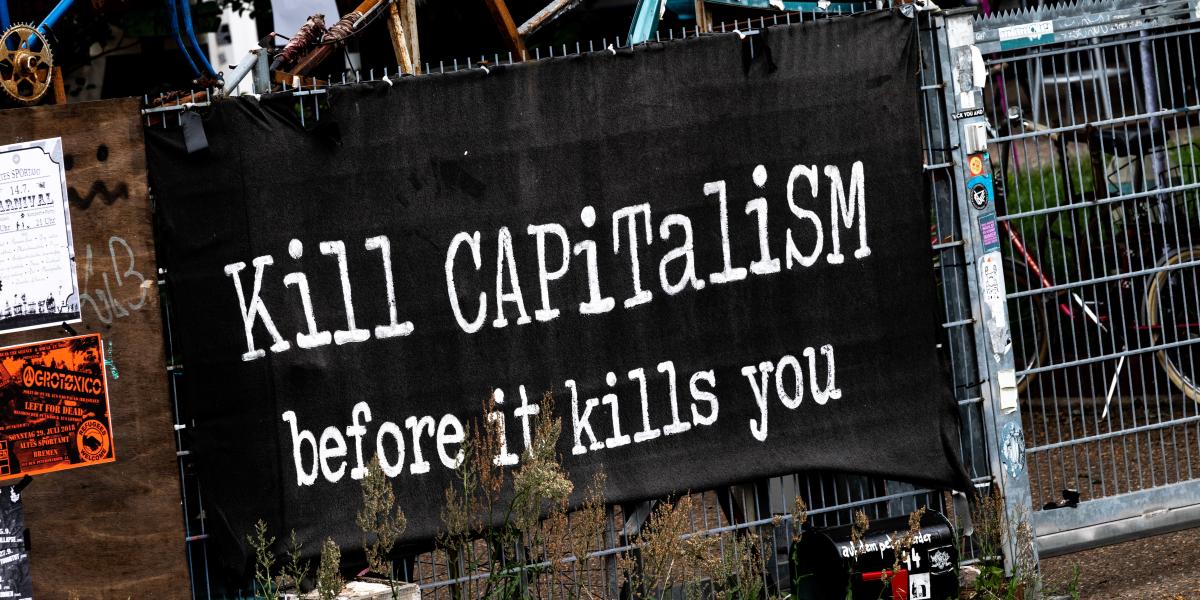
There is a lazy argument, often repeated in India’s political and intellectual circles: “Capitalism is only for those who already have capital. That is why it does not work for the poor.” It sounds empathetic and moral, but it is deeply flawed. This argument looks at capitalism at a surface level instead of a systemic level. It confuses entry conditions with survival conditions. Capitalism does not succeed or collapse based on who starts rich or poor. It operates on how individuals behave once they enter the system. It is often misunderstood as a purely financial structure, when in reality it is first a behavioral system. Money enters later.
Capitalism constantly observes how people behave when resources are limited, when opportunities look attractive, and when risks remain invisible at first sight. Those who behave responsibly survive, while those who behave recklessly are eventually eliminated. To understand this difference, one does not need theory. One only needs a story.
The Rise and Fall of a Capitalist Icon
The story is that of an Indian businessman who was once a star of global boardrooms and a favorite of media, bankers, and investors. According to Forbes and other global wealth trackers, his net worth was close to $42 billion (USD) in 2008, making him the sixth-richest person in the world at that time. His empire spanned telecom, infrastructure, power, defence, energy, media, entertainment, insurance, mutual funds, and financial services, collectively known as the ADAG Group.
This was Anil Dhirubhai Ambani, son of Dhirubhai Ambani. Today, the same individual struggles with a net worth that is a fraction of his peak, reportedly close to half a billion dollars. The fall was dramatic, public, and painful. This collapse did not happen because he lacked capital, access, pedigree, or education. It happened because capitalism punishes aggressive expansion without discipline, leverage without timing, and optimism without risk control. The market does not punish lack of money. It punishes lack of judgment, it rewards those who delay gratification, measure risk carefully, and understand that every decision carries an opportunity cost.
Debt, Timing, and the Illusion of Endless Growth
The downfall of ADAG was driven primarily by high-debt expansion, compounded by policy risks, and worsened by the 2008 global financial crisis. In capitalism, placing the wrong bets at the wrong time does not merely create losses, it traps businesses inside a debt trap. Once cash flows weaken while leverage remains fixed, exit options disappear. In 2008, ADAG launched one of India’s most historic IPOs (i.e, Reliance Power). The issue generated massive hype and euphoric valuations. On paper, Anil Ambani’s net worth surged overnight. Bankers lined up, credit was cheap, and confidence was abundant. He had a powerful surname, global access to capital, elite education from Wharton, enormous scale, and strong media and political visibility, yet he failed. Capitalism does not reward pedigree, it rewards cash flow, timing, and survival. Thousands of undisciplined players are quietly removed by capitalism long before they become visible, but their stories do not fit popular narratives and are rarely discussed.
When Optimism Turns Costly
It is important to state clearly that Anil Ambani was not a fraudster or a criminal capitalist. His collapse was not driven by deception. He was an over-optimistic capitalist operating in a country where policy stability and financial patience are limited. India is not a market that forgives leverage-heavy models for long. When policy cycles turn and funding dries up, balance sheets are exposed brutally. This reality makes Anil Ambani’s story uncomfortable for those who argue that capitalism works only for people with capital, access, and inheritance. He had all three and still failed. Capitalism demands more than capital, it requires discipline to say no, patience to wait for cycles instead of chasing hype, and risk control that prioritizes survival before growth. Capital without discipline becomes dangerous leverage, and inheritance often creates pressure and entitlement traps. Anil Ambani had a strong growth mindset, but he lacked a capital preservation mindset.
The Mukesh Ambani Contrast
The contrast with Mukesh Ambani makes this lesson clearer. For decades, Mukesh Ambani focused on businesses with boring but predictable cash flows, particularly refining and petrochemicals. Growth was slow and expansion calculated, with strict balance-sheet discipline. When he finally placed a massive bet on Jio, it was backed by deep pockets and extraordinary patience. Losses were absorbed, timelines were extended, and cash flows from legacy businesses supported experimentation. In capitalism, the winner is not the person who places the largest bet, but the one who stays at the table the longest. Success is not created by sudden breakthroughs but by repetitive, boring decisions made correctly over long periods of time. This is where individuals trained by scarcity perform better. They calculate consequences, respect limits, and live within constraints. Capitalism rewards endurance, not excitement.
Why This Story Matters for the Poor
The story of Anil Ambani destroys the belief that capitalism automatically favors the rich and excludes the poor. Capital helps, but it is not decisive. If capital alone determined outcomes, Anil Ambani would never have failed, every rich child would become a billionaire, and inherited wealth would be permanent. Reality proves otherwise. In fact, more capital with less discipline often guarantees faster failure. Capitalism does not ask whether you are rich or poor. It asks whether you understand limits. Those who respect limits grow steadily, while those who ignore them grow fast and fall faster. From this perspective, capitalism is not cruel but impartial. It does not discriminate emotionally, but it is unforgiving toward irresponsible behavior. The poor enter capitalism, not with capital, but with behavior combining with skills, patience, a compounding mindset, risk avoidance, and sharp focus on cash flows. Capitalism begins with trust, not loans. A business relationship starts when someone trusts that you will respect money.
Scarcity as Training, Not Trauma
The most important lesson in economics is scarcity, and here the poor have an advantage. For them, scarcity is not a textbook chapter but a daily operating system using the last drop of toothpaste, switching off lights, choosing repair over replacement. These are microeconomic decisions that form the foundation of capitalism. Poor individuals learn survival of the fittest from life itself. Many rich individuals—shielded by backups and the ability to absorb mistakes—struggle when real risk appears and burn rates must be controlled.
The poor learn to respect limited resources to fulfill unlimited wants efficiently, leading to better cash-flow decisions, lower downside risk, and higher survival probability. The poor often learn how to save first, while the rich often learn how to showcase first. This is why one can confidently say: “Scarcity did not make me poor, scarcity made me capitalist.” Scarcity is not trauma; it is training. Capitalism does not reward where you come from. It rewards how well you respect resources when you finally arrive.
Conclusion
Capitalism is not a promise of comfort, it is a test of character. It does not guarantee success to anyone—rich or poor—but it guarantees consequences to everyone. Those who respect limits, understand risk, and value survival over speed are quietly rewarded over time. Those who chase scale without discipline are removed, regardless of pedigree. This is why capitalism should not be judged by who starts ahead, but by who lasts. Scarcity, restraint, and patience are not disadvantages. They are preparation. In the end, capitalism does not ask where you came from, it asks a simpler, harsher question: did you respect resources when it mattered most?