No Result
View All Result
SUBMIT YOUR ARTICLES
  • Login
Tuesday, March 10, 2026
TheAdviserMagazine.com
  • Home
  • Financial Planning
    • Financial Planning
    • Personal Finance
  • Market Research
    • Business
    • Investing
    • Money
    • Economy
    • Markets
    • Stocks
    • Trading
  • 401k Plans
  • College
  • IRS & Taxes
  • Estate Plans
  • Social Security
  • Medicare
  • Legal
  • Home
  • Financial Planning
    • Financial Planning
    • Personal Finance
  • Market Research
    • Business
    • Investing
    • Money
    • Economy
    • Markets
    • Stocks
    • Trading
  • 401k Plans
  • College
  • IRS & Taxes
  • Estate Plans
  • Social Security
  • Medicare
  • Legal
No Result
View All Result
TheAdviserMagazine.com
No Result
View All Result
Home Market Research Economy

Profits are Social Authentication – Econlib

by TheAdviserMagazine
5 months ago
in Economy
Reading Time: 3 mins read
A A
Profits are Social Authentication – Econlib
Share on FacebookShare on TwitterShare on LInkedIn


In his 1980 book, Knowledge and Decisions, Thomas Sowell highlights the importance of social authentication and verification processes. Does this work? Is that a good idea? If it works, it survives. If not, it doesn’t. Over time, we accumulate rules, norms, and practices that make it easier for us to get things done. Some of it might be analogous to non-functional or “junk” DNA, which is “a DNA sequence that has no known biological function.” As I’ve heard it put, however, any social institution has endured because, at some point, it solved a problem.

Markets are notable institutions because they make the signals and the solutions especially clear. Profits and losses take people’s ideas out of the world of speculation and into the world of verification. A hunch becomes more than a hunch: either it is authenticated as a good idea or rejected as a bad idea. Suppose a particular type of new toaster is profitable. In that case, it means that after we tally up all the “votes” people cast by spending or saving dollars, there are more votes for making the toaster than for using the necessary resources for something else.

In a free market, the question, “Who decides?” has a simple answer. We each do, and in so doing, we all do. 

In the 1930s, the economist W.H. Hutt popularized the term “consumers’ sovereignty” to describe the market process. Consumers are sovereign, Hutt argued, when they do not delegate to a centralized, coercive authority the power they exercise by buying or abstaining. He put it this way in his classic book Economists and the Public: A Study of Competition and Opinion:

“The consumer is sovereign when, in his role of citizen, he has not delegated to political institutions for authoritarian use the power which he can exercise solely through his power to demand (or to refrain from demanding).”

Hutt sometimes uses the singular, but the plural possessive “consumers’ sovereignty” is important. As he explains, the market is a genuinely social process. What emerges—a structure of prices—is something no one designed or intended, but that takes account of everyone’s voice.

That’s cold comfort to people worried about inequality because some individual voices speak louder than others. Someone with ten times my income can “speak” ten times as loudly in a free market. However, there are far, far more people of relatively modest means than there are people of very high incomes. In aggregate, they command more purchasing power and speak as a louder chorus. 

One of the great ironies of elite humanitarianism is the way people dismiss the “voice of the people” when it cries out loudly for things the elites don’t like, like Walmart Supercenters, action movies, and professional wrestling. What the people demand loudly, as measured by letting their money talk, however, is what the market will supply dutifully. When elites claim that the market doesn’t give the people what they want, their complaint is really that the market is all too happy to oblige unwashed masses who want the wrong things.

Hutt argued that this illustrates the importance of tolerating bad taste. He equated it with religious tolerance. We might disagree with people and think them vulgar and base. But they have voices to which we should listen carefully, precisely because they are human and because those voices have important things to say about how the world operates—or should operate. In a society of free and equal people, consumers’ sovereignty means that people with refined tastes have to accept a lot of what they might consider chaff along with their cultural and commercial wheat.

Money talks in all walks of life, or more accurately, people “talk” with their money. Money and prices translate people’s inchoate ideas and preferences into a meaningful “social will,” or at least something akin to it. 

In the stage production of Les Misérables, we’re asked, “Do You Hear the People Sing?” Profit-seeking entrepreneurs can answer “yes.” When we rely on prices, profits, and losses to help us figure out what to produce and how, “the people’s”—i.e., the sovereign consumers’— messages come through loud and clear.


As an Amazon Associate, Econlib earns from qualifying purchases.



Source link

Tags: authenticationEconlibProfitsSocial
ShareTweetShare
Previous Post

Dogecoin Bullish Fractal Suggests 800% Surge Is Coming Amid Momentum Acceleration

Next Post

How to Reach Financial Freedom Faster with “Slow and Steady” Investing

Related Posts

edit post
Market Talk – March 10, 2026

Market Talk – March 10, 2026

by TheAdviserMagazine
March 10, 2026
0

ASIA: The major Asian stock markets had a green day today: • NIKKEI 225 increased 1,519.67 points or 2.88% to...

edit post
Kevin Warsh faces economic ‘perfect storm’ as he waits to take over as Fed chair

Kevin Warsh faces economic ‘perfect storm’ as he waits to take over as Fed chair

by TheAdviserMagazine
March 10, 2026
0

Kevin Warsh, former governor of the US Federal Reserve, speaks with CNBC on July 17, 2025.CNBCKevin Warsh could face a...

edit post
Rothbard’s Defense of Border Control

Rothbard’s Defense of Border Control

by TheAdviserMagazine
March 10, 2026
0

In his article “Nations by Consent,” Murray Rothbard reiterated his argument that individual liberty does not envisage atomistic human beings...

edit post
Subcutaneous Microchip Mandates | Armstrong Economics

Subcutaneous Microchip Mandates | Armstrong Economics

by TheAdviserMagazine
March 10, 2026
0

  There was a time when warnings about governments embedding identification technology directly into the human body would have sounded...

edit post
Price Controls Never Solve A Crisis

Price Controls Never Solve A Crisis

by TheAdviserMagazine
March 10, 2026
0

Governments never seem to learn from history. Every time energy prices surge, politicians rush to impose price controls as if...

edit post
The Real Threat Is Artificial Credit, Not Artificial Intelligence

The Real Threat Is Artificial Credit, Not Artificial Intelligence

by TheAdviserMagazine
March 9, 2026
0

Artificial intelligence is rapidly becoming one of the most capital-intensive industries in history. Consider: Semiconductor fabrication plants cost tens of...

Next Post
edit post
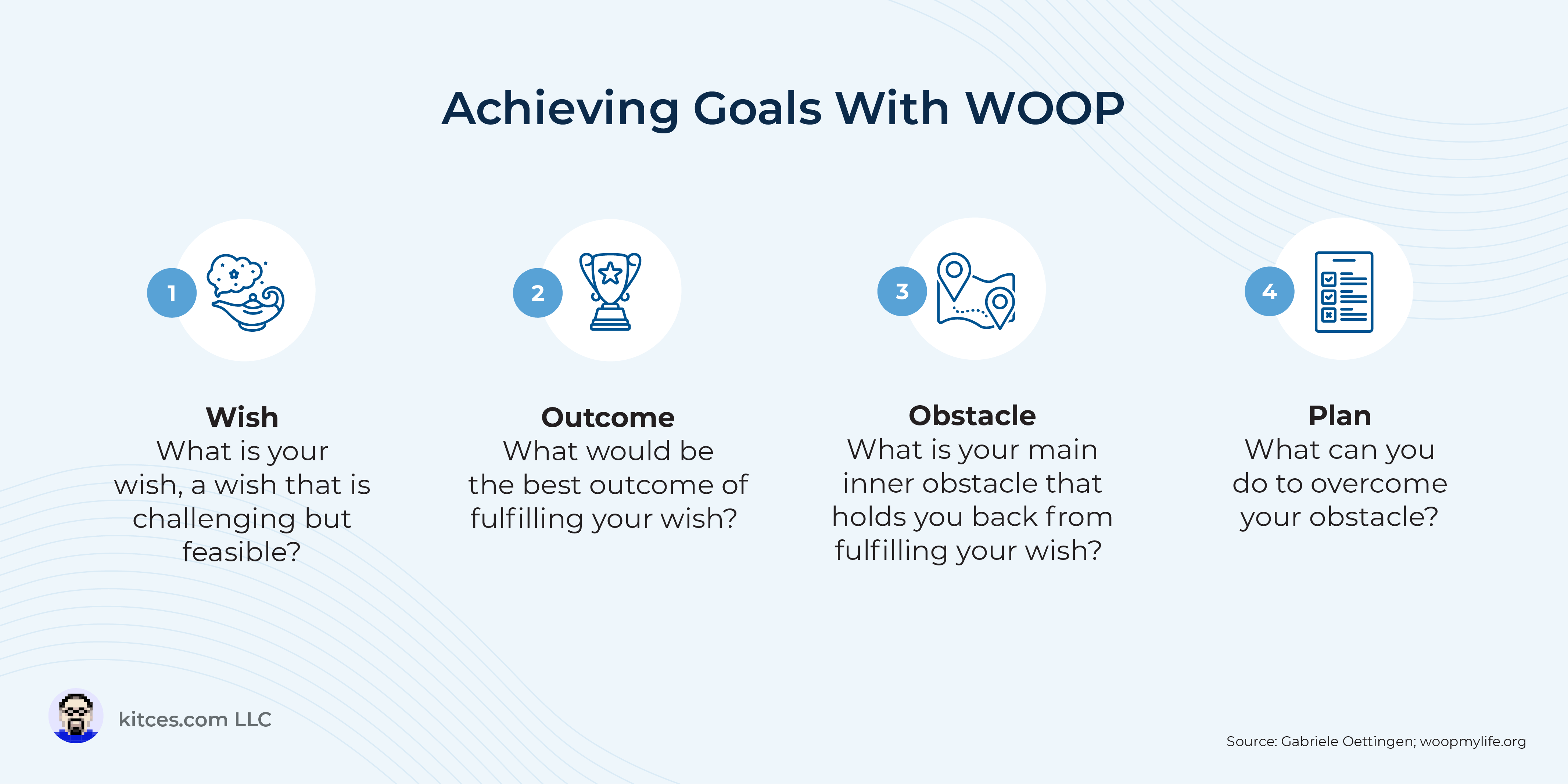
Minimize The Data-Gathering Slog: Using “WOOP” Framework To Get Clients To Act

Minimize The Data-Gathering Slog: Using “WOOP” Framework To Get Clients To Act

edit post
The U.S. government shutdown means investors are flying blind when it comes to high-quality data—and they like it that way

The U.S. government shutdown means investors are flying blind when it comes to high-quality data—and they like it that way

  • Trending
  • Comments
  • Latest
edit post
Foreclosure Starts are Up 19%—These Counties are Seeing the Highest Distress

Foreclosure Starts are Up 19%—These Counties are Seeing the Highest Distress

February 24, 2026
edit post
North Carolina Updates How Wills Can Be Stored

North Carolina Updates How Wills Can Be Stored

February 10, 2026
edit post
Gasoline-starved California is turning to fuel from the Bahamas

Gasoline-starved California is turning to fuel from the Bahamas

February 15, 2026
edit post
Where Is My 2025 Oregon State Tax Refund

Where Is My 2025 Oregon State Tax Refund

February 13, 2026
edit post
7 States Reporting a Surge in Norovirus Cases

7 States Reporting a Surge in Norovirus Cases

February 22, 2026
edit post
2025 Delaware State Tax Refund – DE Tax Brackets

2025 Delaware State Tax Refund – DE Tax Brackets

February 16, 2026
edit post
Market Talk – March 10, 2026

Market Talk – March 10, 2026

0
edit post
Dividend Aristocrats In Focus: Cintas Corporation

Dividend Aristocrats In Focus: Cintas Corporation

0
edit post
Average tax refund nears ,800, IRS says

Average tax refund nears $3,800, IRS says

0
edit post
Cryptocurrency Hack Losses Fall 87% in February as Scammers Shift to Phishing

Cryptocurrency Hack Losses Fall 87% in February as Scammers Shift to Phishing

0
edit post
The Due Diligence Item That Makes or Breaks Cash Flow After Closing

The Due Diligence Item That Makes or Breaks Cash Flow After Closing

0
edit post
Episode 251. “We own a M house but can’t pay for groceries”

Episode 251. “We own a $1M house but can’t pay for groceries”

0
edit post
Cryptocurrency Hack Losses Fall 87% in February as Scammers Shift to Phishing

Cryptocurrency Hack Losses Fall 87% in February as Scammers Shift to Phishing

March 10, 2026
edit post
Market Talk – March 10, 2026

Market Talk – March 10, 2026

March 10, 2026
edit post
The Amazon Checklist for Aging in Place Safely After 65

The Amazon Checklist for Aging in Place Safely After 65

March 10, 2026
edit post
Will AI take my job? A new Anthropic study suggests the answer is more complicated than you think

Will AI take my job? A new Anthropic study suggests the answer is more complicated than you think

March 10, 2026
edit post
Supporting Seniors Through Aging Life Care

Supporting Seniors Through Aging Life Care

March 10, 2026
edit post
Dianthus Therapeutics, Inc. (DNTH) Q4 2025 Earnings Results

Dianthus Therapeutics, Inc. (DNTH) Q4 2025 Earnings Results

March 10, 2026
The Adviser Magazine

The first and only national digital and print magazine that connects individuals, families, and businesses to Fee-Only financial advisers, accountants, attorneys and college guidance counselors.

CATEGORIES

  • 401k Plans
  • Business
  • College
  • Cryptocurrency
  • Economy
  • Estate Plans
  • Financial Planning
  • Investing
  • IRS & Taxes
  • Legal
  • Market Analysis
  • Markets
  • Medicare
  • Money
  • Personal Finance
  • Social Security
  • Startups
  • Stock Market
  • Trading

LATEST UPDATES

  • Cryptocurrency Hack Losses Fall 87% in February as Scammers Shift to Phishing
  • Market Talk – March 10, 2026
  • The Amazon Checklist for Aging in Place Safely After 65
  • Our Great Privacy Policy
  • Terms of Use, Legal Notices & Disclosures
  • Contact us
  • About Us

© Copyright 2024 All Rights Reserved
See articles for original source and related links to external sites.

Welcome Back!

Login to your account below

Forgotten Password?

Retrieve your password

Please enter your username or email address to reset your password.

Log In
No Result
View All Result
  • Home
  • Financial Planning
    • Financial Planning
    • Personal Finance
  • Market Research
    • Business
    • Investing
    • Money
    • Economy
    • Markets
    • Stocks
    • Trading
  • 401k Plans
  • College
  • IRS & Taxes
  • Estate Plans
  • Social Security
  • Medicare
  • Legal

© Copyright 2024 All Rights Reserved
See articles for original source and related links to external sites.