No Result
View All Result
SUBMIT YOUR ARTICLES
  • Login
Sunday, December 7, 2025
TheAdviserMagazine.com
  • Home
  • Financial Planning
    • Financial Planning
    • Personal Finance
  • Market Research
    • Business
    • Investing
    • Money
    • Economy
    • Markets
    • Stocks
    • Trading
  • 401k Plans
  • College
  • IRS & Taxes
  • Estate Plans
  • Social Security
  • Medicare
  • Legal
  • Home
  • Financial Planning
    • Financial Planning
    • Personal Finance
  • Market Research
    • Business
    • Investing
    • Money
    • Economy
    • Markets
    • Stocks
    • Trading
  • 401k Plans
  • College
  • IRS & Taxes
  • Estate Plans
  • Social Security
  • Medicare
  • Legal
No Result
View All Result
TheAdviserMagazine.com
No Result
View All Result
Home Market Research Economy

Of Tomatoes and Tariffs | Mises Institute

by TheAdviserMagazine
3 months ago
in Economy
Reading Time: 4 mins read
A A
Of Tomatoes and Tariffs | Mises Institute
Share on FacebookShare on TwitterShare on LInkedIn


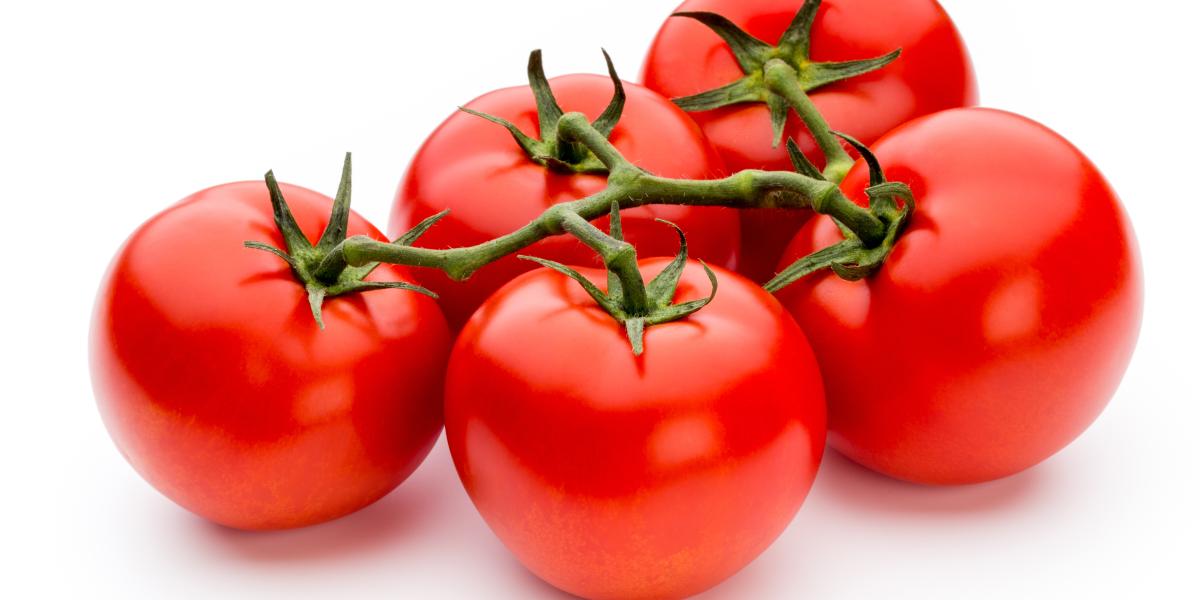
Are tomatoes a fruit or a vegetable? While some may have different answers to this mostly lighthearted question, at one point in time it was taken up by the United States Supreme Court. Despite its seemingly amusing aspects, the story of Nix v. Hedden is one which has implications for those concerned with big government and the challenges of reform, while also providing a unique window into late-nineteenth century American politics. This is especially relevant as tariffs have remained a meaningful topic during the Trump era.

The origin of the Supreme Court’s involvement with tomatoes was tied with tariff laws. While arguments about tariff rates were rooted in American political disputes since the very beginning of the US, the situation was noticeably impacted by the Civil War. The conflict was transformative in a litany of ways, and this included increases in the nation’s tariff rates. After the war, however, efforts to reduce the tariffs beneath their wartime levels were easier said than done. Advocates for lower tariffs and freer trade were often disappointed with the lack of success in adjusting the protectionist system which had continued since the wartime emergency of the 1860s. There was not much cohesive momentum for reform until the 1880s.

As the country was approaching the two-decade mark since the war’s conclusion, the American political and economic situation had changed. The wartime tariff rates remained, which—when coupled with increased prosperity and imports—produced a federal budget surplus, a situation seemingly unfathomable in today’s era of massive deficits and mounting national debt. Some politicians proposed to dispose of the surplus revenue through immense federal spending projects such as the Rivers and Harbors Act. Others, including President Chester A. Arthur, favored a reduction in tariff rates and a more careful approach to government spending. In 1882, Congress created a Tariff Commission whose members were appointed by President Arthur. Their objective was to study the American tariff laws and recommend changes. Owing to the protectionist sympathies of the Republicans at that time, it came as something of a surprise when the Commission advocated a “substantial reduction” of tariff rates in response to the budget surplus. Unfortunately, however, the law which followed was not the broad reform many had hoped for. Nicknamed the “Mongrel Tariff” for its slapdash effects of reducing some rates while raising others, the 1883 law was the key factor leading to the ascension of the tomato debate before the Supreme Court.

The provisions of the “Mongrel Tariff,” which sparked the legal issue, were those concerning fruits and vegetables. It held that “fruits, green, ripe or dried” were “not specially enumerated or provided for in this act,” and were thus admitted duty-free. By contrast, the law stipulated that, “Vegetables, in their natural state, or in salt or brine, not specially enumerated or provided for in this act” were subject to a tariff rate of “ten per centum ad valorem.” This became a problem for produce importer, John Nix, who believed that his tomatoes should not have been subject to the tariff payments, as they were fruits, not vegetables. Nix subsequently launched a legal suit against the New York port collector, seeking back duties which he had paid under protest.

The Nix case ultimately made its way before the United States Supreme Court, where the argument was concerned with semantic definitions of words and intentions of the 1883 law. In a somewhat comedic manner, the primary contention was over what defined a fruit and a vegetable, and in which category tomatoes belonged. Nix’s counsel read from the Webster, Worcester, and Imperial dictionaries in effort to establish that tomatoes fit the botanical criteria of a fruit. Additionally, they called two witnesses who had been in the produce business for thirty years, to answer whether the terms “fruit” and “vegetable” had “any special meaning in trade or commerce, different from those read.” Both witnesses testified to the effect that neither “fruit” nor “vegetables” had any special meaning in trade and commerce different from those in the dictionaries.

The Court—whose unanimous decision was delivered by Justice Horace Gray—held that as the words “fruit” and “vegetables” had not acquired any special meaning for trade or commerce, they must receive their “ordinary meaning.” This meant that, even though Nix’s counsel used dictionaries to argue that tomatoes fit the botanical definition of a fruit, they were not so considered “in the common language of the people.” The Court’s opinion further noted that a previous case had handled a similar issue where the definition of beans was also contested but ultimately decided that, “When the commercial designation of an article fails to give it its proper place in the classification of a tariff law, then resort must be had to its common designation.” Tomatoes were therefore considered vegetables under the auspices of the 1883 tariff law and were subject to the tax where fruits were not.

While the overall importance of the Nix v. Hedden case may not appear so great at first glance, the tariff law confusion which sparked it speaks to the larger issues stemming from government largesse and the difficulties of reform. The 1883 “Mongrel Tariff”—complete with its complex increases of some tariff rates and reductions in others—was seemingly a prime example of the “ratchet effect,” as explained by Robert Higgs. This concept has described how government powers often expand drastically in times of crisis and remain beyond their pre-emergency levels even after the crisis has passed. Despite the efforts of some genuine reformers, this was the case for most of the tariff legislation after the Civil War, as the protectionist arrangement reached new heights during that period of emergency and persisted thereafter, even when the need for federal revenue shrank.

While the trend of protectionism continued throughout the remainder of the nineteenth century and into the early twentieth—with the 1890 McKinley Tariff being the most notable reaffirmation of these policies—it is worth remembering how muddled efforts at tariff revision led to the oddity of tomatoes being the subject of a Supreme Court case. And so, while one side of the tomato debate has the Supreme Court in their corner for answering whether it is a fruit or vegetable, it was thanks to the protectionist policies of the Gilded Age that the question was decided over 120 years ago. The story of Nix v. Hedden is an interesting, if not very appetizing, lesson on how government powers fail to recede after they expand, made relevant today through contemporary talk of tariffs and concerns about “the swamp” in DC.




Source link

Tags: InstituteMisesTariffsTomatoes
ShareTweetShare
Previous Post

8 Refinance Triggers That Save Big—If You Act Before Rates Move Again

Next Post

Are You Paying “Phantom Interest” Because You Chose the Wrong Payoff Strategy?

Related Posts

edit post
U.S. will finish the year with 3% GDP growth

U.S. will finish the year with 3% GDP growth

by TheAdviserMagazine
December 7, 2025
0

U.S. Treasury Secretary Scott Bessent speaks onstage during The New York Times DealBook Summit 2025 at Jazz at Lincoln Center...

edit post
The Sunday Morning Movie Presents: Stalker (1979) Run Time: 2H 41M

The Sunday Morning Movie Presents: Stalker (1979) Run Time: 2H 41M

by TheAdviserMagazine
December 7, 2025
0

Greetings gentle readers and welcome to another installment of the Sunday Morning Movie. Today it’s a work of the master...

edit post
Investigation Reveals How Amazon Is Fleecing Public Schools With ‘Algorithm-Driven Pricing’

Investigation Reveals How Amazon Is Fleecing Public Schools With ‘Algorithm-Driven Pricing’

by TheAdviserMagazine
December 7, 2025
0

Conor here: A few recent pieces from Jeff Bezos’ Washington Post (“Why you may not want lower prices as much...

edit post
The K-Shaped Economy | Mises Institute

The K-Shaped Economy | Mises Institute

by TheAdviserMagazine
December 6, 2025
0

What is the Mises Institute? The Mises Institute is a non-profit organization that exists to promote teaching and research in...

edit post
Links 12/6/2025 | naked capitalism

Links 12/6/2025 | naked capitalism

by TheAdviserMagazine
December 6, 2025
0

A massive Bronze Age city hidden for 3,500 years just surfaced ScienceDaily (Kevin W) House of Luddington on fire Facebook....

edit post
With UK Politics in Flux, Corbyn’s Your Party May Surprise You Yet

With UK Politics in Flux, Corbyn’s Your Party May Surprise You Yet

by TheAdviserMagazine
December 6, 2025
0

Yves here. Given that the mainstream media seems to have deep-sixed reports of any action, much the less progress, by...

Next Post
edit post
Are You Paying “Phantom Interest” Because You Chose the Wrong Payoff Strategy?

Are You Paying “Phantom Interest” Because You Chose the Wrong Payoff Strategy?

edit post
15 Tips for Rebalancing Your Investments to Stay on Track

15 Tips for Rebalancing Your Investments to Stay on Track

  • Trending
  • Comments
  • Latest
edit post
7 States That Are Quietly Taxing the Middle Class Into Extinction

7 States That Are Quietly Taxing the Middle Class Into Extinction

November 8, 2025
edit post
How to Make a Valid Will in North Carolina

How to Make a Valid Will in North Carolina

November 20, 2025
edit post
8 Places To Get A Free Turkey for Thanksgiving

8 Places To Get A Free Turkey for Thanksgiving

November 21, 2025
edit post
Could He Face Even More Charges Under California Law?

Could He Face Even More Charges Under California Law?

November 27, 2025
edit post
Data centers in Nvidia’s hometown stand empty awaiting power

Data centers in Nvidia’s hometown stand empty awaiting power

November 10, 2025
edit post
8 States Offering Special Cash Rebates for Residents Over 65

8 States Offering Special Cash Rebates for Residents Over 65

November 9, 2025
edit post
No Tax On Tips Explained & FAQs

No Tax On Tips Explained & FAQs

0
edit post
Is Corona Remedies’ IPO a compelling bet for long-term wealth creation?

Is Corona Remedies’ IPO a compelling bet for long-term wealth creation?

0
edit post
This Is the Best-Rated Independent Living Facility for 7 Years Straight

This Is the Best-Rated Independent Living Facility for 7 Years Straight

0
edit post
Investigation Reveals How Amazon Is Fleecing Public Schools With ‘Algorithm-Driven Pricing’

Investigation Reveals How Amazon Is Fleecing Public Schools With ‘Algorithm-Driven Pricing’

0
edit post
Medicare Changes 2025 & the Importance of HIICAP Counselors

Medicare Changes 2025 & the Importance of HIICAP Counselors

0
edit post
Trump Calls Peter Schiff A “Loser” And A “Jerk”

Trump Calls Peter Schiff A “Loser” And A “Jerk”

0
edit post
Is Corona Remedies’ IPO a compelling bet for long-term wealth creation?

Is Corona Remedies’ IPO a compelling bet for long-term wealth creation?

December 7, 2025
edit post
Macron warns EU may hit China with tariffs over trade surplus

Macron warns EU may hit China with tariffs over trade surplus

December 7, 2025
edit post
Snowflake Shares Melt. Is It Time to Buy the Stock on the Dip?

Snowflake Shares Melt. Is It Time to Buy the Stock on the Dip?

December 7, 2025
edit post
U.S. will finish the year with 3% GDP growth

U.S. will finish the year with 3% GDP growth

December 7, 2025
edit post
Jamie Dimon on AI: ‘maybe one day we’ll be working less hard but having wonderful lives’

Jamie Dimon on AI: ‘maybe one day we’ll be working less hard but having wonderful lives’

December 7, 2025
edit post
Forget Medtronic, Buy This Healthcare Stock Instead

Forget Medtronic, Buy This Healthcare Stock Instead

December 7, 2025
The Adviser Magazine

The first and only national digital and print magazine that connects individuals, families, and businesses to Fee-Only financial advisers, accountants, attorneys and college guidance counselors.

CATEGORIES

  • 401k Plans
  • Business
  • College
  • Cryptocurrency
  • Economy
  • Estate Plans
  • Financial Planning
  • Investing
  • IRS & Taxes
  • Legal
  • Market Analysis
  • Markets
  • Medicare
  • Money
  • Personal Finance
  • Social Security
  • Startups
  • Stock Market
  • Trading

LATEST UPDATES

  • Is Corona Remedies’ IPO a compelling bet for long-term wealth creation?
  • Macron warns EU may hit China with tariffs over trade surplus
  • Snowflake Shares Melt. Is It Time to Buy the Stock on the Dip?
  • Our Great Privacy Policy
  • Terms of Use, Legal Notices & Disclosures
  • Contact us
  • About Us

© Copyright 2024 All Rights Reserved
See articles for original source and related links to external sites.

Welcome Back!

Login to your account below

Forgotten Password?

Retrieve your password

Please enter your username or email address to reset your password.

Log In
No Result
View All Result
  • Home
  • Financial Planning
    • Financial Planning
    • Personal Finance
  • Market Research
    • Business
    • Investing
    • Money
    • Economy
    • Markets
    • Stocks
    • Trading
  • 401k Plans
  • College
  • IRS & Taxes
  • Estate Plans
  • Social Security
  • Medicare
  • Legal

© Copyright 2024 All Rights Reserved
See articles for original source and related links to external sites.