After President Trump decided to join with the Israeli government to launch this new war on Iran, establishment Democrats have struggled to find an angle to attack the president’s decision.
They have struggled because, despite the false characterization pushed on Fox News, most centrist Democrats are enthusiastic supporters of both the Israeli government and the joint US/Israeli strategy of containing Iran to protect Israeli hegemony in the Middle East.
For the most part, Trump’s center-left political opponents have settled on the position that—while they support the overall goal of stopping Iran from developing a nuclear weapon—they say the way Trump has gone about it has been a bit reckless. They have clearly recognized that this quickly deteriorating war will be extremely useful for discrediting Trump. But they don’t want to push too hard and risk also discrediting the bipartisan consensus for an interventionist foreign policy or the precedent that wars can be launched without a formal congressional declaration.
A far more comfortable line of attack for these left-liberals has been on the economic front. It is an almost constant frustration for Democratic members of Congress, their ideological supporters, and the American left more broadly that—whenever they propose a new social program or demand-side subsidy—Republicans immediately push back that the program is unworkable because the federal government is drowning in debt and teetering on the edge of bankruptcy.
And yet, after Republicans launched this extremely expensive war, nearly all the same politicians who had been preaching fiscal restraint have now rallied behind an operation that has already cost billions of dollars in the first few days alone.
Democrats have been quick to point out this hypocrisy. House Minority Leader Hakeem Jeffries lambasted his Republican counterparts for quickly spending billions of dollars to bomb Iran after claiming they couldn’t “find a dime” to help Americans afford healthcare, buy a house, or afford groceries. And, since the war began, the internet has been full of progressives sarcastically asking where the money for this war will come from.
In the narrow sense, the Left is absolutely correct to point out the Republicans’ hypocrisy about government spending. All the concern these politicians feign about the country’s fiscal trajectory immediately goes right out the window the second the position becomes mildly uncomfortable to hold, or the spending goes towards a program they support. Anyone who is constantly adopting and then dropping a fake principle whenever it’s convenient deserves to be called out on it.
However, the left-wingers leading this charge right now are wrong to imply that the GOP’s hypocrisy is actually evidence that there is plenty to spend on all these government programs. There isn’t.
The truth is that we cannot afford this new war with Iran in the same way we cannot afford the many social programs the left wants to roll out—not because the government cannot technically pay for it, but because the financial burden of it will pile on top of Washington’s already-unsustainable level of spending and accelerate the hollowing out of the American economy.
Looking beyond the technical ability to pay is important. It is, after all, possible for someone with no savings who is drowning in credit-card debt to swipe their card and walk out of a store with a big new purchase. The transaction does technically occur, but no serious person would look at the situation and conclude that the purchase was affordable.
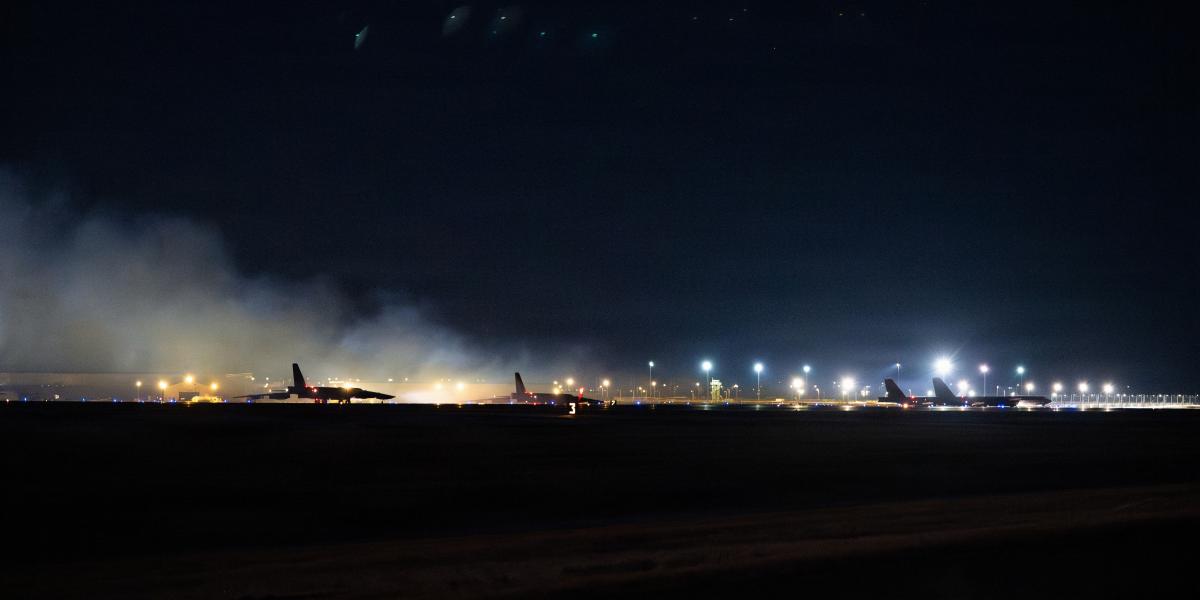
The same logic applies to governments. The US national debt is about to hit $40 trillion. And the federal deficit for fiscal year 2026 has already surpassed $1 trillion. Now, on top of all that, the Trump administration has launched a new war that cost more than $11.3 billion in the first six days alone, with an estimated cost going forward of $1 to $2 billion a day.
Left-leaning supporters of more government spending often respond that the above analogy is flawed. Governments, they say, are not like households because they have the power to create currency. Unlike a family drowning in credit-card debt, the federal government can simply print the dollars it needs.
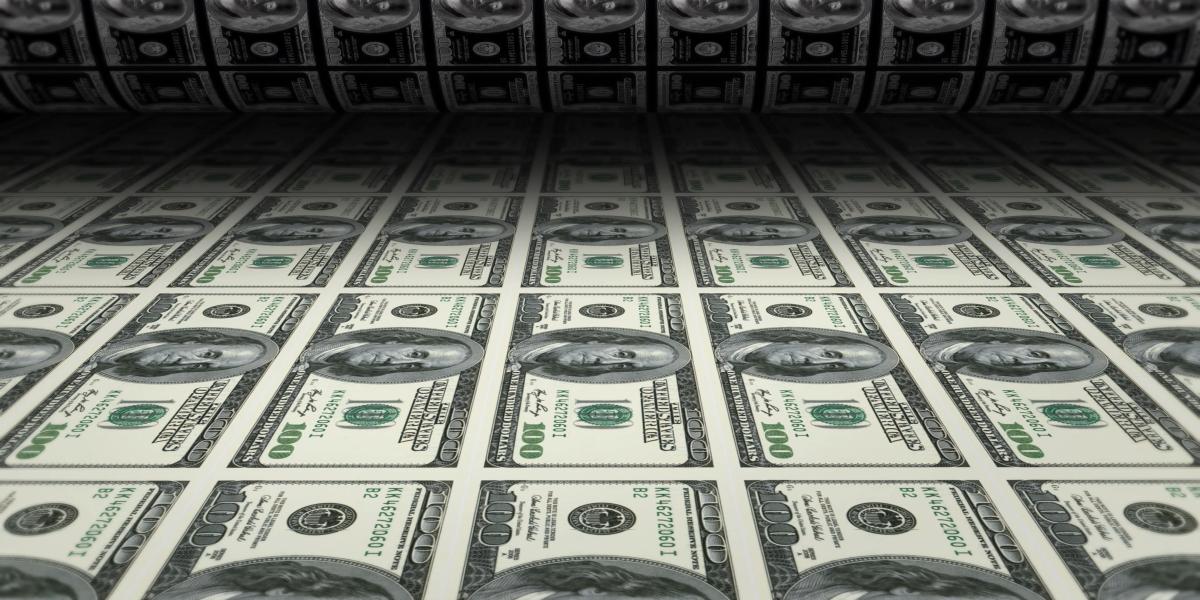
But that objection is only another version of the same misunderstanding that an ability to pay is the same as an ability to afford. Printing currency does not eliminate the cost of government spending. It only changes how the cost is imposed.
The American people are already struggling with what many politicians have misleadingly called an “affordability crisis.” A more accurate name would be the “inflation crisis,” because it is primarily the result of the continuous, permanent, and unequally-distributed price increases caused by the federal government’s growing tendency to pay for its various programs with newly-created dollars.
This isn’t a new problem, but—especially after the government ramped up its monetary inflation during the pandemic—it’s become more acute and harder for the political establishment benefiting from this inflation to sweep the true costs under the rug. Trump’s new war only stands to exacerbate it.
Which is all to say that forcing a brand-new, extremely expensive war on an already-struggling population is a terrible economic decision in itself. But, on top of that, this specific war brings a lot of additional economic risks.
While some groups within the Israeli and US establishment clearly want to continue this war until the Iranian regime is toppled, the bulk of officials, at least on the American side, appear to have settled on a so-called “mowing the grass strategy,” where Iran’s military capacity is kept below a certain threshold with recurring bombing campaigns.
The Iranians want to prevent that from happening. And after the US unilaterally dropped out of the previously-negotiated JCPOA agreement and later bombed the Iranians twice during follow-up negotiations initiated by Trump, it’s reasonable to expect that the Iranians have concluded that a negotiated ceasefire and peace deal will only set the stage for the next “mowing the grass” bombing campaign. And their behavior so far backs that up.
Instead of rushing back to the negotiation table, the Iranian strategy appears to focus on making Trump and Netanyahu’s decision to launch this war as costly for the US, Israel, and the entire globe as possible to dissuade future attacks. The primary way the Iranian government is doing so is by disrupting shipping in the Strait of Hormuz—one of the world’s most important energy chokepoints. They’ve made it clear that they control these shipping lanes by blocking any tankers tied to the US, Israel, or their allies.
Oil markets have already been rattled, and governments have tapped strategic petroleum reserves to temporarily minimize the economic damage. But other affected commodities, like natural gas, fertilizer, and helium, do not have the alternative pathways and “strategic” reserves that oil does. Which means the world is heading towards painful shortages in these goods and, more urgently, all the goods they are used to produce if the war continues.
And the US is not immune to these effects. Although the country is, as a whole, an energy exporter, American consumers still pay world prices. A Gulf supply shock still raises US gasoline, diesel, aviation fuel, petrochemical, and freight costs—with all the economic turmoil that brings.
So, the economic burden everyday Americans face with this new war could go far beyond the Pentagon’s budget. Yet even this does not fully capture the danger.
The deeper problem is that the American economy is already far more fragile than politicians or economic “experts” in the establishment press admit. Because, for decades, the Federal Reserve has been carrying out aggressive credit expansion that has brought about artificially-low interest rates and, as a result, an increasingly-warped production structure that has locked in a considerable correction, or “recession,” at some point.
Specifically, credit expansion creates malinvestment—projects, industries, and financial structures that are out of line with what end consumers demand and that, therefore, require continuous credit expansion to remain viable. But while that further credit expansion can kick the can down the road a bit—while making the problem far worse—the delay cannot last forever. And, as the economy becomes increasingly defined by malinvestment, it does not take much to trigger that correction.
There were already signs in national employment and economic growth data that the American economy was tipping towards a recession. And because of the unprecedented scale of credit expansion that occurred after the 2008 financial crisis and during the pandemic in 2020 and 2021, it’s sure to be a major one. If this war drags on or escalates, it could absolutely serve as the trigger that kicks off the next recession, like the collapse of the housing bubble did nineteen years ago and the covid lockdowns did almost six years ago to the day.
So, like any government program, the debt-ridden federal government does technically have the ability to force the savings-starved, inflation-strained, financially-vulnerable American population to pay for this expensive, likely inflationary, possibly recession-triggering war with Iran. But that, in no meaningful way, means we can afford it.