No Result
View All Result
SUBMIT YOUR ARTICLES
  • Login
Wednesday, January 21, 2026
TheAdviserMagazine.com
  • Home
  • Financial Planning
    • Financial Planning
    • Personal Finance
  • Market Research
    • Business
    • Investing
    • Money
    • Economy
    • Markets
    • Stocks
    • Trading
  • 401k Plans
  • College
  • IRS & Taxes
  • Estate Plans
  • Social Security
  • Medicare
  • Legal
  • Home
  • Financial Planning
    • Financial Planning
    • Personal Finance
  • Market Research
    • Business
    • Investing
    • Money
    • Economy
    • Markets
    • Stocks
    • Trading
  • 401k Plans
  • College
  • IRS & Taxes
  • Estate Plans
  • Social Security
  • Medicare
  • Legal
No Result
View All Result
TheAdviserMagazine.com
No Result
View All Result
Home Market Research Economy

How Civil Rights Activists use the Fourteenth Amendment to Bypass the First Amendment

by TheAdviserMagazine
3 months ago
in Economy
Reading Time: 4 mins read
A A
How Civil Rights Activists use the Fourteenth Amendment to Bypass the First Amendment
Share on FacebookShare on TwitterShare on LInkedIn


A federal court in Virginia recently ruled that the name of Confederate General Stonewall Jackson, who is regarded as a great hero by many Americans, violates the free speech rights of black students. As summarized by the judge,

The complaint alleged that the name [Stonewall Jackson] created “an unlawful and discriminatory educational environment for Black students,” and accused the school board of violating the First and 14th Amendments of the U.S. Constitution, Title VI of the Civil Rights Act of 1964, and the Equal Education Opportunities Act.

The judge’s reasoning was that where a school is named after a Confederate hero, families who consider Confederate history offensive have a cause of action against the school board for the violation of their First Amendment right to free speech because school names and symbols are “compelled speech.” Although the first amendment protects the right of anyone—including, in this case, a school in the Shenandoah Valley—to express freely their respect for their Confederate heritage, black people also have a free speech right not to be subjected to “compelled speech” and can get such symbols struck down. By what form of convoluted reasoning did the courts manage to turn the right to free speech into a power vested in civil rights activists to silence the expression of Confederate heritage?

This is where the Fourteenth Amendment comes in. Most people would not immediately associate the Fourteenth Amendment with free speech, which is better known as a First Amendment right. In this case, the judge relied on the case of Stromberg v. California, 283 U.S. 359, 368 (1931), which, according to the judge, held that “Plaintiffs have a cause of action for the violation of their federal rights, including those under the First Amendment as incorporated through the Fourteenth Amendment, under 42 U.S.C. § 1983” (emphasis added). The judge explained that the Fourteenth Amendment equal protection clause protects the right to free speech, and Confederate names, in his view, amount to compelled speech because students who attend the school cannot avoid “expressing” the school name and showcasing the school’s mascots. Hence, the judge ruled that,

By reinstating the name “Stonewall Jackson High School” and thereby compelling students to advance the School Board’s chosen message favoring “Stonewall Jackson” through the conduct of extracurricular activities rendered expressive by that name, the School Board has violated plaintiffs’ First Amendment rights, as incorporated by the Fourteenth Amendment, against compelled speech.

In this way, the Fourteenth Amendment bypasses the First Amendment, in cases involving complaints that the free speech rights of some (expressing Confederate heritage) violate the protection from compelled speech “as incorporated through the Fourteenth Amendment” for civil rights groups demanding the equal protection of the law. This is by no means an accidental outcome—thwarting the First Amendment is the hallmark strategy of those who believe that free speech does not include “hate speech,” meaning any speech they hate. The roots of this strategy lie in legislation from the Reconstruction era, when the aim of the Radical Republican government was to give the newly-enfranchised freedmen, who were the guarantors of Republican power and control in the post-war South, legislative tools to challenge hostile state authorities for violating federal law.

The belief, at the time, was that state authorities in the South were “white supremacist” and the only way freedmen could enjoy the equal protection of the law would be through federal law enforcement. Based on this belief, the power of the federal government was enhanced to give it greater oversight over what were seen as “racist” state governments. Civil rights activists still view this as a major tool in their endless war against “white supremacy”:

The tool is known as Section 1983 of Title 42 of the U.S. Code. It originally was Section 1 of the Civil Rights Act of 1871, better known as the Ku Klux Klan Act, one of the most important civil rights laws in U.S. history. That act was intended to protect Black Americans from white supremacist violence in the post-Civil War South.

Section 1983 allows an individual to sue a state or local government official [in this case a public school board] who has violated his or her constitutional rights. A violation could involve freedom of speech, freedom of religion, due process, and more.

Readers will be familiar with Murray Rothbard’s argument that civil rights—which he pointedly referred to as “phony civil rights”—violate the rights of self-ownership and private property. There could be no clearer example of this than people claiming a “civil right” to destroy anything which, in their opinion, is an emblem of “white supremacy.” In the Virginia case, the complainants relied on a long list of previous cases in which schools had been held to have the right to ban Confederate-themed apparel on grounds that it would provoke racial conflict among the students. While that may, arguably, fall within the discretion of the school authorities, it is a long way from saying the school authorities have discretion over what is necessary to keep order in the school to saying that students have a veto power over the school name if they consider the name offensive. The self-defined “victims” of civil rights violations argue that under the “equal protection” clause of the Fourteenth Amendment, they are entitled to be protected from psychological “harm.” In this case they complained that Confederate names are “discriminatory and harmful.”

When Black students are compelled to attend schools that glorify the leaders and ideals of the Confederacy, they are subject to a racially discriminatory educational environment, which has significant psychological, academic, and social effects.

When students are required to identify as members of student bodies or teams named to honor Confederate leaders in order to participate in school activities, they are required against their will to endorse the violent defense of slavery pursued by the Confederacy and the symbolism that these images have in the modern White supremacist movement.

Leaving aside the partisan view of history exhibited by the complaint, and the fact that psychological “harm” could easily be avoided by going to a different school whose name is more pleasing to the complainants, the result of courts upholding these complaints is that the civil rights regime effectively gives its protected groups a veto over the liberties of others. This is yet another reason why there are good grounds to argue that the Fourteenth Amendment should be abolished:

The Fourteenth Amendment has had precisely the effect that its nineteenth-century Republican party supporters intended it to have: it has greatly centralized power in Washington, DC, and has subjected Americans to the kind of judicial tyranny that Thomas Jefferson warned about when he described federal judges as those who would be “constantly working underground to undermine the foundations of our confederated fabric.”




Source link

Tags: activistsAmendmentbypassCivilFourteenthrights
ShareTweetShare
Previous Post

Citigroup earnings Q3 2025

Next Post

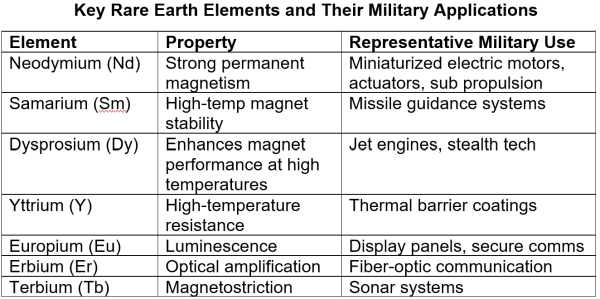
Coffee Break: Armed Madhouse – Rare Earth Elements

Related Posts

edit post
Coffee Break: Armed Madhouse – Dangerous New Mideast Alliances

Coffee Break: Armed Madhouse – Dangerous New Mideast Alliances

by TheAdviserMagazine
January 20, 2026
0

Recent reports of preliminary negotiations for a military alliance of Turkey, Saudi Arabia, and Pakistan raise underappreciated risks. Similar concerns...

edit post
New Entries in the History of Hyperinflation

New Entries in the History of Hyperinflation

by TheAdviserMagazine
January 20, 2026
0

I know that hyperinflation of the US dollar seems like a remote possibility, but alerting yourself to the possibility of...

edit post
Everyone Take Copies – Econlib

Everyone Take Copies – Econlib

by TheAdviserMagazine
January 20, 2026
0

I have a new working paper with Bart Wilson titled: “You Wouldn’t Steal a Car: Moral Intuition for Intellectual Property.” ...

edit post
Trump Invites Russia To Join Board Of Peace

Trump Invites Russia To Join Board Of Peace

by TheAdviserMagazine
January 20, 2026
0

The Board of Peace was established in November 2025 to champion the Gaza-Israel ceasefire. Donald Trump will act as the...

edit post
China keeps benchmark lending rates unchanged despite slowing economic growth

China keeps benchmark lending rates unchanged despite slowing economic growth

by TheAdviserMagazine
January 19, 2026
0

BEIJING, CHINA - JANUARY 06: The People's Bank of China (PBOC) building is seen on January 6, 2025 in Beijing,...

edit post
Bari Weiss’ CBS Not an Auspicious Beginning to Total Info Control

Bari Weiss’ CBS Not an Auspicious Beginning to Total Info Control

by TheAdviserMagazine
January 19, 2026
0

Bari Weiss’ CBS tenure so far shows that for Larry and David Ellison, buying a media empire is one thing,...

Next Post
edit post
Coffee Break: Armed Madhouse – Rare Earth Elements

Coffee Break: Armed Madhouse - Rare Earth Elements

edit post
IRS to Increase Tax Breaks for Investment Gains, Gifts and Estates in 2026

IRS to Increase Tax Breaks for Investment Gains, Gifts and Estates in 2026

  • Trending
  • Comments
  • Latest
edit post
Most People Buy Mansions But This Virginia Lottery Winner Took the Lump Sum From a 8 Million Jackpot and Bought a Zero-Turn Lawn Mower Instead

Most People Buy Mansions But This Virginia Lottery Winner Took the Lump Sum From a $348 Million Jackpot and Bought a Zero-Turn Lawn Mower Instead

January 10, 2026
edit post
Utility Shutoff Policies Are Changing in Several Midwestern States

Utility Shutoff Policies Are Changing in Several Midwestern States

January 9, 2026
edit post
80-year-old Home Depot rival shuts down location, no bankruptcy

80-year-old Home Depot rival shuts down location, no bankruptcy

January 4, 2026
edit post
Tennessee theater professor reinstated, with 0,000 settlement, after losing his job over a Charlie Kirk-related social media post

Tennessee theater professor reinstated, with $500,000 settlement, after losing his job over a Charlie Kirk-related social media post

January 8, 2026
edit post
Warren Buffett retires on December 31 and leaves behind a manual for a life in investing

Warren Buffett retires on December 31 and leaves behind a manual for a life in investing

December 27, 2025
edit post
Elon Musk Left DOGE… But He Hasn’t Left Washington

Elon Musk Left DOGE… But He Hasn’t Left Washington

January 2, 2026
edit post
Tata Teleservices shares slide 6% in 2 days after Q3 results. Here’s why

Tata Teleservices shares slide 6% in 2 days after Q3 results. Here’s why

0
edit post
INFY Earnings: Infosys Q3 FY26 revenues rise 3%; guides FY26

INFY Earnings: Infosys Q3 FY26 revenues rise 3%; guides FY26

0
edit post
Defined Contribution Top Trends for 2026: What Plan Sponsors Need to Get Right

Defined Contribution Top Trends for 2026: What Plan Sponsors Need to Get Right

0
edit post
What the U.S.-Taiwan deal means for the island’s ‘silicon shield’

What the U.S.-Taiwan deal means for the island’s ‘silicon shield’

0
edit post
What Binance’s Co-CEO Said At Davos: Exploring US Comeback Plans And Ripple’s Vision

What Binance’s Co-CEO Said At Davos: Exploring US Comeback Plans And Ripple’s Vision

0
edit post
Insurance Plan Software Errors Are Misclassifying Claims

Insurance Plan Software Errors Are Misclassifying Claims

0
edit post
What Binance’s Co-CEO Said At Davos: Exploring US Comeback Plans And Ripple’s Vision

What Binance’s Co-CEO Said At Davos: Exploring US Comeback Plans And Ripple’s Vision

January 21, 2026
edit post
Gates Foundation, OpenAI unveil  million ‘Horizon1000’ initiative to boost healthcare in Africa through AI

Gates Foundation, OpenAI unveil $50 million ‘Horizon1000’ initiative to boost healthcare in Africa through AI

January 21, 2026
edit post
Tata Teleservices shares slide 6% in 2 days after Q3 results. Here’s why

Tata Teleservices shares slide 6% in 2 days after Q3 results. Here’s why

January 20, 2026
edit post
Insurance Plan Software Errors Are Misclassifying Claims

Insurance Plan Software Errors Are Misclassifying Claims

January 20, 2026
edit post
D-Street has an upside & downside on Hindustan Zinc

D-Street has an upside & downside on Hindustan Zinc

January 20, 2026
edit post
Wall Street’s secret blockchain platform is coming for your dividends and it’s using stablecoins to do it

Wall Street’s secret blockchain platform is coming for your dividends and it’s using stablecoins to do it

January 20, 2026
The Adviser Magazine

The first and only national digital and print magazine that connects individuals, families, and businesses to Fee-Only financial advisers, accountants, attorneys and college guidance counselors.

CATEGORIES

  • 401k Plans
  • Business
  • College
  • Cryptocurrency
  • Economy
  • Estate Plans
  • Financial Planning
  • Investing
  • IRS & Taxes
  • Legal
  • Market Analysis
  • Markets
  • Medicare
  • Money
  • Personal Finance
  • Social Security
  • Startups
  • Stock Market
  • Trading

LATEST UPDATES

  • What Binance’s Co-CEO Said At Davos: Exploring US Comeback Plans And Ripple’s Vision
  • Gates Foundation, OpenAI unveil $50 million ‘Horizon1000’ initiative to boost healthcare in Africa through AI
  • Tata Teleservices shares slide 6% in 2 days after Q3 results. Here’s why
  • Our Great Privacy Policy
  • Terms of Use, Legal Notices & Disclosures
  • Contact us
  • About Us

© Copyright 2024 All Rights Reserved
See articles for original source and related links to external sites.

Welcome Back!

Login to your account below

Forgotten Password?

Retrieve your password

Please enter your username or email address to reset your password.

Log In
No Result
View All Result
  • Home
  • Financial Planning
    • Financial Planning
    • Personal Finance
  • Market Research
    • Business
    • Investing
    • Money
    • Economy
    • Markets
    • Stocks
    • Trading
  • 401k Plans
  • College
  • IRS & Taxes
  • Estate Plans
  • Social Security
  • Medicare
  • Legal

© Copyright 2024 All Rights Reserved
See articles for original source and related links to external sites.