No Result
View All Result
SUBMIT YOUR ARTICLES
  • Login
Sunday, February 15, 2026
TheAdviserMagazine.com
  • Home
  • Financial Planning
    • Financial Planning
    • Personal Finance
  • Market Research
    • Business
    • Investing
    • Money
    • Economy
    • Markets
    • Stocks
    • Trading
  • 401k Plans
  • College
  • IRS & Taxes
  • Estate Plans
  • Social Security
  • Medicare
  • Legal
  • Home
  • Financial Planning
    • Financial Planning
    • Personal Finance
  • Market Research
    • Business
    • Investing
    • Money
    • Economy
    • Markets
    • Stocks
    • Trading
  • 401k Plans
  • College
  • IRS & Taxes
  • Estate Plans
  • Social Security
  • Medicare
  • Legal
No Result
View All Result
TheAdviserMagazine.com
No Result
View All Result
Home Market Research Economy

Economic Crisis, Freedom, and Austrian Economics

by TheAdviserMagazine
3 days ago
in Economy
Reading Time: 5 mins read
A A
Economic Crisis, Freedom, and Austrian Economics
Share on FacebookShare on TwitterShare on LInkedIn


The history of human progress is not written by government decrees, but by freedom of choice and the protection of property. The success of the most prosperous societies, from the founding of the United States to Argentina’s economic recovery in 2026, for example, results from principles discovered centuries ago. These ideas are part of the Austrian School of economics, in which it is explained how order arises from the individual and why any attempt at central planning results in failure.

Austrian thought has its roots in the University of Salamanca in the 16th century. Theologians such as Francisco de Vitoria and Luis de Molina argued that the value of a good is not intrinsic, but arises from perceived utility and scarcity. In other words, the value of a product depends on people’s needs and the scarcity of the resource. This view treated private property as a natural right, essential to human dignity. These thinkers defended that private property is a natural right and that government-caused inflation violates this right.

Juan de Mariana—heir to this tradition—argued that when a ruler alters the currency without the consent of citizens, it means that he is illegitimately confiscating wealth. This moral view of economics directly influenced figures such as John Locke and Thomas Jefferson, who sought to limit the power of the state over individual property. They defended limited government and strong money, concepts that shaped the American political economy. However, Murray Rothbard—in his work Power and Market—deepens this analysis by identifying a logical flaw in the defense of limited government: it is contradictory to state that an institution must protect private property if, to exist, it needs to violate this exact property under its supposed tutelage through compulsory taxation.

In the United States, the tension between centralization and decentralization was evident in the dispute between Alexander Hamilton and Thomas Jefferson. Hamilton advocated for a national bank and industrial subsidies, seeking a strong European-style state. On the other hand, Jefferson saw this factor as a risk to the independence of the common citizen. He believed that only a currency backed by precious metals could prevent state economic manipulations. He analyzed individual human action to derive universal economic laws, anticipating concepts that Ludwig von Mises formalized centuries later. Jefferson also argued that the market should be coordinated by the actions of free individuals and not by bureaucrats of a central bank. For him, hard money with backing was the only guarantee that the government would not use money as a tool of social control. This clash between state control and decentralized freedom remains relevant in 2026, mainly because governments face public debt crises at record levels.

It is important to also highlight that historical examples demonstrate that private management is more efficient and just than state management. To illustrate this fact, in the 19th century, James J. Hill built the Great Northern Railway without subsidies, focusing on short routes and satisfied customers. Conversely, government-subsidized railroads prioritized miles built instead of real profitability. In this way, Hill demonstrates that private risk and the discipline of profit generate better results. Despite this, it is frequently argued that certain services, such as security and justice, are “prerequisites” that only the state can provide. In contrast, the Austrian School of economics teaches that services must be evaluated in marginal units and not as indivisible blocks. If the market is capable of providing food and complex infrastructure (as demonstrated by James J. Hill, who built profitable railroads without depending on state subsidies), it is also fit to offer protection competitively.

In a genuinely free society, the principle of defense would be a marketable service, provided by firms that seek efficiency and a good reputation to attract consumers. It is worth noting that the absence of a central court does not imply chaos; since historically, private courts and merchant laws emerged from the practical need to solve conflicts fairly and quickly, validating that social coordination does not depend on a single ruler.

It is essential to highlight that, for market freedom to be full, economic analysis must consider that free exchanges are transfers of property titles. If we accept that no one should aggress against the person or property of others, the logical conclusion is that each individual holds absolute sovereignty over themselves and what they produce. In this context, the state ceases to be seen as a “necessary protector” to be understood as a system of unilateral coercion, which differs from free and voluntary institutions by not obtaining its revenue through voluntary exchanges. In this sense, if an individual were forced by another to alienate their resources under threat, the act would be promptly recognized as a crime against property.

The Austrian School also provides an accurate diagnosis for financial crises. The 2008 collapse and inflationary crises do not result from “market excess,” but from the artificial manipulation of interest rates by central banks. Forced low, interest rates create a sense of abundance, disproportionately increasing demand in relation to productivity, leading to malinvestments that inevitably need to be liquidated.

Currently, Argentina illustrates the improvement of the economy with Austrian principles. After inflation above 200 percent, Javier Milei’s administration reduced the annual rate to about 31 percent at the end of 2025 and projected GDP growth of 4 percent in 2026. This was done by cutting public spending and halting currency issuance, confirming that inflation is a monetary phenomenon that responds to fiscal discipline. In contrast, Venezuela has a projected inflation of 682.1 percent in 2026. Therefore, we can conclude that a stable economy does not come from price controls nor from public spending, but from fiscal responsibility and ceasing monetary issuance to finance its own spending.

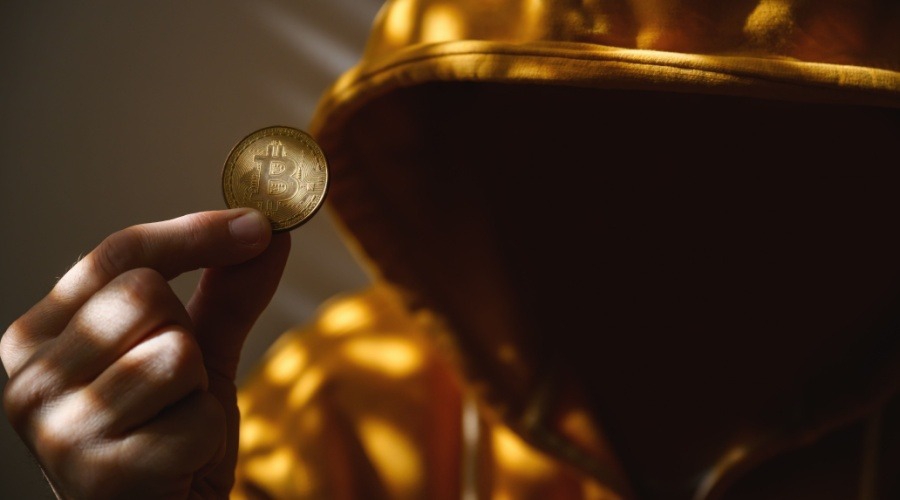
The concept of spontaneous order, defended by Friedrich Hayek, is visible in the success of open-source software and Bitcoin. Complex systems can coordinate without a central command, guided only by voluntary rules and incentives. As Bitcoin has a limited supply, it is deflationary by nature and protects individual wealth in a context of high public debt. Therefore, this digital currency shows how denationalizing resources brings about stability and innovation.

Data from the Heritage Foundation’s 2025 Index of Economic Freedom show that the United States—occupying 26th place among 184 countries in economic freedom—presents a high per capita income, being above the global average with a score of 70.2, reflecting the benefits of a free market and private property.

Given the contrast between the efficiency of decentralized systems and the failures of interventionism, it becomes evident that freedom, innovation, and well-being progress only when we respect individual sovereignty, in which the protection of property does not depend on its own violation. In view of the above, it is also considered to assume real risks instead of depending on subsidies, protect wealth through inflation-resistant currencies, and adopt decentralized systems to create value. In sum, Austrian thought demonstrates that economic freedom is not only a theory but also a practical tool for growth, security, balance, and prosperity at both the national and individual levels.




Source link

Tags: AustrianCrisiseconomicEconomicsFreedom
ShareTweetShare
Previous Post

Economic Freedom in Contexts of Crisis: An Austrian Analysis for 2026

Next Post

Links 2/12/2026 | naked capitalism

Related Posts

edit post
Markets, Manipulation, and Silver-Stacking | Mises Institute

Markets, Manipulation, and Silver-Stacking | Mises Institute

by TheAdviserMagazine
February 14, 2026
0

What is the Mises Institute? The Mises Institute is a non-profit organization that exists to promote teaching and research in...

edit post
Interview: Crashing Gold And Silver Prices — How Long Will It Last?

Interview: Crashing Gold And Silver Prices — How Long Will It Last?

by TheAdviserMagazine
February 14, 2026
0

What if the economy wasn’t chaotic at all-but followed a hidden code? The Armstrong Economic Code reveals the powerful cyclical patterns...

edit post
Bitcoin Mining and the Electricity Grid: A Quiet Savior

Bitcoin Mining and the Electricity Grid: A Quiet Savior

by TheAdviserMagazine
February 13, 2026
0

With all eyes on the winter storm raging through America last month, a silent hero was working in the background...

edit post
National Self-Determination and Individual Liberty

National Self-Determination and Individual Liberty

by TheAdviserMagazine
February 13, 2026
0

In his book The Essential Rothbard, David Gordon observes that, “Rothbard was no ivory-tower scholar, interested only in academic controversies....

edit post
CPI inflation report January 2026:

CPI inflation report January 2026:

by TheAdviserMagazine
February 13, 2026
0

The cost of goods and services rose at a slower annual rate than expected in January, providing hope that the...

edit post
Understanding Argentina’s Decades of Economic Crises

Understanding Argentina’s Decades of Economic Crises

by TheAdviserMagazine
February 13, 2026
0

Argentina’s recent drop in monthly inflation below two percent has drawn cautious praise from many mainstream economists, who focus on...

Next Post
edit post
Links 2/12/2026 | naked capitalism

Links 2/12/2026 | naked capitalism

edit post
Buying (and Building) Houses Could Get a LOT Easier (New Bill)

Buying (and Building) Houses Could Get a LOT Easier (New Bill)

  • Trending
  • Comments
  • Latest
edit post
Medicare Fraud In California – 2.5% Of The Population Accounts For 18% Of NATIONWIDE Healthcare Spending

Medicare Fraud In California – 2.5% Of The Population Accounts For 18% Of NATIONWIDE Healthcare Spending

February 3, 2026
edit post
North Carolina Updates How Wills Can Be Stored

North Carolina Updates How Wills Can Be Stored

February 10, 2026
edit post
Where Is My 2025 Oregon State Tax Refund

Where Is My 2025 Oregon State Tax Refund

February 13, 2026
edit post
Key Nevada legislator says lawmakers will push for independent audit of altered public record in Nevada OSHA’s Boring Company inspection 

Key Nevada legislator says lawmakers will push for independent audit of altered public record in Nevada OSHA’s Boring Company inspection 

February 4, 2026
edit post
Grand Rapids Could Become a Boomtown as Investment Money Pours In

Grand Rapids Could Become a Boomtown as Investment Money Pours In

February 12, 2026
edit post
Where Is My South Carolina Tax Refund

Where Is My South Carolina Tax Refund

January 30, 2026
edit post
Best CD rates today, February 15, 2026 (lock in up to 4% APY)

Best CD rates today, February 15, 2026 (lock in up to 4% APY)

0
edit post
Mainstays Fleece Throw Blankets only .22, plus more!

Mainstays Fleece Throw Blankets only $4.22, plus more!

0
edit post
How you answer the phone in the first 2 seconds reveals more about where you grew up than your zip code your car or your degree, and the people who grew up wealthy hear it instantly

How you answer the phone in the first 2 seconds reveals more about where you grew up than your zip code your car or your degree, and the people who grew up wealthy hear it instantly

0
edit post
Zero-Click Is Only Half The AI Story

Zero-Click Is Only Half The AI Story

0
edit post
What are Qualified Charitable Distributions? 

What are Qualified Charitable Distributions? 

0
edit post
Commodities enter a corrective phase: Will it last or is it just a pause?

Commodities enter a corrective phase: Will it last or is it just a pause?

0
edit post
How Fraudsters Are Mimicking Family Voices in 2026

How Fraudsters Are Mimicking Family Voices in 2026

February 15, 2026
edit post
How you answer the phone in the first 2 seconds reveals more about where you grew up than your zip code your car or your degree, and the people who grew up wealthy hear it instantly

How you answer the phone in the first 2 seconds reveals more about where you grew up than your zip code your car or your degree, and the people who grew up wealthy hear it instantly

February 15, 2026
edit post
Latam Insights: Brazil’s 1 Million Bitcoin Strategic Reserve Bill Introduced, Stablecoin Taxation Also in the Works

Latam Insights: Brazil’s 1 Million Bitcoin Strategic Reserve Bill Introduced, Stablecoin Taxation Also in the Works

February 15, 2026
edit post
Meet the grandmother living out of a 400-ft ‘granny pod’ to save money and help with child care

Meet the grandmother living out of a 400-ft ‘granny pod’ to save money and help with child care

February 15, 2026
edit post
Best CD rates today, February 15, 2026 (lock in up to 4% APY)

Best CD rates today, February 15, 2026 (lock in up to 4% APY)

February 15, 2026
edit post
India agrees arms deals with Israel worth .6b – report

India agrees arms deals with Israel worth $8.6b – report

February 15, 2026
The Adviser Magazine

The first and only national digital and print magazine that connects individuals, families, and businesses to Fee-Only financial advisers, accountants, attorneys and college guidance counselors.

CATEGORIES

  • 401k Plans
  • Business
  • College
  • Cryptocurrency
  • Economy
  • Estate Plans
  • Financial Planning
  • Investing
  • IRS & Taxes
  • Legal
  • Market Analysis
  • Markets
  • Medicare
  • Money
  • Personal Finance
  • Social Security
  • Startups
  • Stock Market
  • Trading

LATEST UPDATES

  • How Fraudsters Are Mimicking Family Voices in 2026
  • How you answer the phone in the first 2 seconds reveals more about where you grew up than your zip code your car or your degree, and the people who grew up wealthy hear it instantly
  • Latam Insights: Brazil’s 1 Million Bitcoin Strategic Reserve Bill Introduced, Stablecoin Taxation Also in the Works
  • Our Great Privacy Policy
  • Terms of Use, Legal Notices & Disclosures
  • Contact us
  • About Us

© Copyright 2024 All Rights Reserved
See articles for original source and related links to external sites.

Welcome Back!

Login to your account below

Forgotten Password?

Retrieve your password

Please enter your username or email address to reset your password.

Log In
No Result
View All Result
  • Home
  • Financial Planning
    • Financial Planning
    • Personal Finance
  • Market Research
    • Business
    • Investing
    • Money
    • Economy
    • Markets
    • Stocks
    • Trading
  • 401k Plans
  • College
  • IRS & Taxes
  • Estate Plans
  • Social Security
  • Medicare
  • Legal

© Copyright 2024 All Rights Reserved
See articles for original source and related links to external sites.