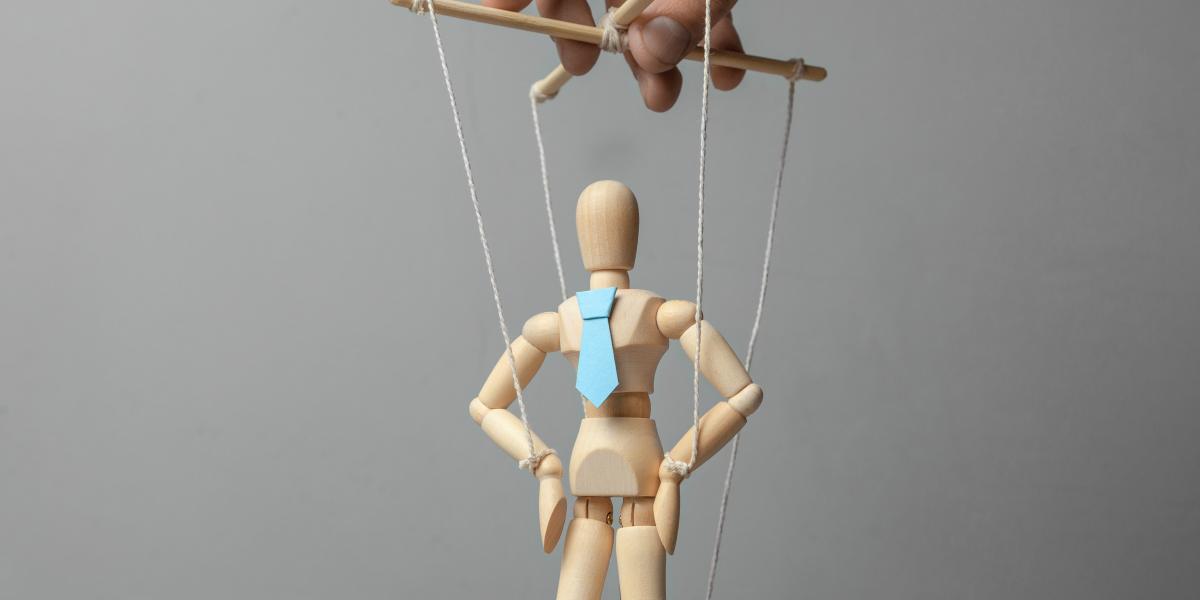
Americans should know the “color revolution” drill by heart now. We are told that Ruritania is run by a terrible fanatic who is cruelly oppressing his people, is on the verge of acquiring weapons of mass destruction, is collaborating with our diabolical arch-enemy, and is sponsoring global terrorism. Unless the Pentagon spends billions and expends thousands of tons of deadly ordnance to get rid of the terrible Ruritanian madman, the entire region will go up in flames and millions of Americans will be slaughtered.
We are also told that a wonderful democrat-in-exile heading some “Ruritanian National Congress” or “Ruritania National Council” (with its headquarters conveniently located in Washington, DC) is waiting in the wings to replace the dictator and magically transform Ruritania into an inclusive, American-loving democracy. Unfortunately, the new puppet we put in charge of Ruritania—the Ahmed Chalabi or Hamid Karzai or whoever—never lives up to the hype. However, our fear of Ruritania dissipates enough that we can move on to the next regime change operation and forget about the puppet.
While history doesn’t repeat itself, in the case of Iran it certainly does rhyme. Once upon a time, Shah Ahmad Qajar allowed his country to be used as a British base for an intervention in the Russian Civil War, so the Soviet victory in that war was followed up by a brief Soviet occupation of Tehran. With Shah Ahmad falling under Communist influence and putting the British oil concession at risk, by 1921 it was time for the first Western-sponsored regime change operation in Iran to thwart Britain’s diabolical arch-enemy, the Soviet Union.
The British engineered a coup d’état against Ahmad, forging an unlikely coalition of groups to support the coup leader selected by the British as the new Prime Minister, a man who had previously been the commander of a Persian unit serving in the Czarist Army. By 1925 this former Czarist officer was promoted to become the new Shah, taking the throne name Reza Pahlavi.
Shah Reza eventually blundered by showing too much sympathy for Britain’s new diabolical arch-enemy, Nazi Germany. Obviously it was time for a second Iranian regime change operation, so in 1941 Britain and its brand new ally—the Soviet Union—invaded Iran without a declaration of war and forced Reza to abdicate in favor of his son, Mohammad Reza Pahlavi. The latter became a figurehead while control over the Iranian state shifted to its corrupt parliament.
By 1949, Iranian parliamentarians began to grow a backbone. Most secretly felt that the oil concession had to be nationalized and the British kicked out. Britain itself was nearly bankrupt, forcing it to pass the burdens of running a global empire onto America. At first President Truman didn’t see any vital American interest in saving a British oil concession, so the Anglo-Iranian Oil Company was on its own to negotiate with the Iranian government in hopes of bluffing its way to a new concession deal. The outbreak of the Korean War in 1950, however, moved the Truman administration to start worrying about Anglo-Iranian as an important supplier of aviation fuel, so the Americans began lobbying the British to get serious about extracting a new concession deal from the Iranians.
A year later, the flamboyant chairman of the parliamentary committee that dealt with oil, Mohammad Mossadegh, electrified Iran by denouncing Anglo-Iranian’s latest concession proposal. Mossadegh declared that it would be better if the Iranian oil industry were destroyed by an atomic bomb than for it to remain in the hands of a British company. The Prime Minister at first waffled, and then announced that he was against nationalization, only to be assassinated a week and a half later by a Shiite extremist. By the end of April, Mossadegh had become the new Prime Minister and immediately attempted to nationalize Anglo-Iranian, but Iranian oil exports were successfully embargoed by the British for two years as the British squabbled with the Americans about what to do.
The Americans feared Mossadegh might ally himself with the Soviet Union (which was once again the diabolical arch-enemy), so they sent Averell Harriman to Tehran to negotiate with Mossadegh. After many exasperating sessions, Harriman realized that Mossadegh’s fear of Shiite clerics was the major obstacle to getting any concession deal done, so Harriman then called on their leader, Ayatollah Seyyed Kashani. Kashani explained to Harriman that the British are the most evil people in the world, that indeed all foreigners are evil, and that Mossadegh was guilty of being pro-British. Harriman came home without a deal.
Subsequent changes of administrations in both London and Washington in 1953 finally led to an agreement on how to resolve their Iranian problem. American oil companies were given a share of the concession, and President Eisenhower authorized the CIA to overthrow Mossadegh, Iran’s third Western-sponsored regime change operation. Shah Mohammad Reza was to take charge of Iran. At first the regime change operation didn’t go well, with the Shah fleeing in exile to Rome. However, the CIA staged a comical pro-Shah street demonstration that unexpectedly turned into a full-blown coup d’état, and suddenly Mohammad Reza Pahlavi returned to Tehran, reclaimed the Peacock Throne, and disposed of Mossadegh.
There were of course intractable pro-Mossadegh democrats and pro-Kashani Islamists still opposing the Shah, so their political parties had to be banned and in the late 1950s the CIA helped Mohammad Reza organize a sinister secret police force—the SAVAK—to torture and kill such inconvenient dissidents. Mohammed Reza instituted a “White Revolution” in 1962 to do various things to please the Americans and to reward his loyalists like expanding cheap bank credit to invest in heavy industry (with profit-sharing for rewarding loyal workers) and redistributing agricultural land (rewarding loyalists in the countryside). One of the key beneficiaries of the White Revolution was the kleptocratic Shah himself, who nationalized non-oil natural resources and diverted oil and non-oil royalties alike into his personal overseas bank accounts. Mohammed Reza was famous for spending a great deal on his military and on his own extraordinarily extravagant lifestyle, most famously including a 1971 state affair considered by many to be the greatest party in history (along with a suitably ostentatious military parade).
With massive increases in oil revenues in the 1970s, Iran looked like it would remain a stalwart pro-American regional power forever. What few people understood, however, was that these oil revenues weren’t being productively reinvested. Subsidies for malinvestments and political patronage and misallocations of land meant that while politically-favored classes could afford to buy nice imported goods, everyone else had their productivity and incomes crippled by the Shah’s interventionism. When prices of domestically-produced staples started soaring, the regime compounded the problem by imposing price controls. Iranians who were not on Mohammed Reza’s gravy train suffered greatly, and anybody who complained about their suffering was liable to being tortured by the SAVAK.
In 1979, the Iranian people joyously engineered a regime change of their own, replacing Mohammad Reza with an exiled Ayatollah, Ruhollah Khomeini, whose anti-Shah sermons had been secretly distributed across Iran in the form of cassette tapes. Khomeini’s message was that the evil westerners were ultimately responsible for causing all the sufferings inflicted by the Shah and SAVAK on Iranians; only a thorough rejection of the foreigners and their un-Islamic values could end that suffering. Now it was America, not Britain, that became “the Great Satan,” a characterization that was lent credibility by President Carter’s arrogant refusal to acknowledge American government culpability in Mohammed Reza’s crimes during the hostage crisis (Carter infamously dismissing the CIA’s installation of Mohammed Reza in 1953 as “ancient history”), by the reconstruction of shredded documents recovered from the American embassy detailing the CIA’s nefarious activities in support of the Shah, and by widespread calls to nuke Iran.
President Reagan tried to patch things up with the Ayatollahs and turn them against the Soviet arch-enemy, but this didn’t work out. Ultimately, the Islamic Republic’s insistence on its legal right to share in the benefits of peaceful nuclear technologies under the Non-Proliferation Treaty while aligning itself with America’s latest arch-enemies, Russia and China, has made it the target of a fourth Western-sponsored regime change operation.
Deep State-friendly media outlets recently trotted out Crown Prince Reza Pahlavi, son of Shah Mohammad Reza Pahlavi and grandson of Shah Reza Pahlavi, as their candidate to lead a new Iranian regime. The Crown Prince gave a press conference last June calling for regime change and offering his services as interim leader in a transition to democracy. He has led the Iran National Council—an exile group supposedly dedicated to establishing a secular democracy—since 2013. Reza had previously explained that he doesn’t need his father’s title, but if Iranians happened to vote him a title in a referendum, he wouldn’t turn it down. With American aid, Reza might just sit in the bigger chair his bloodthirsty daddy once sat next to him in, though most Americans will remain blissfully ignorant of such history.