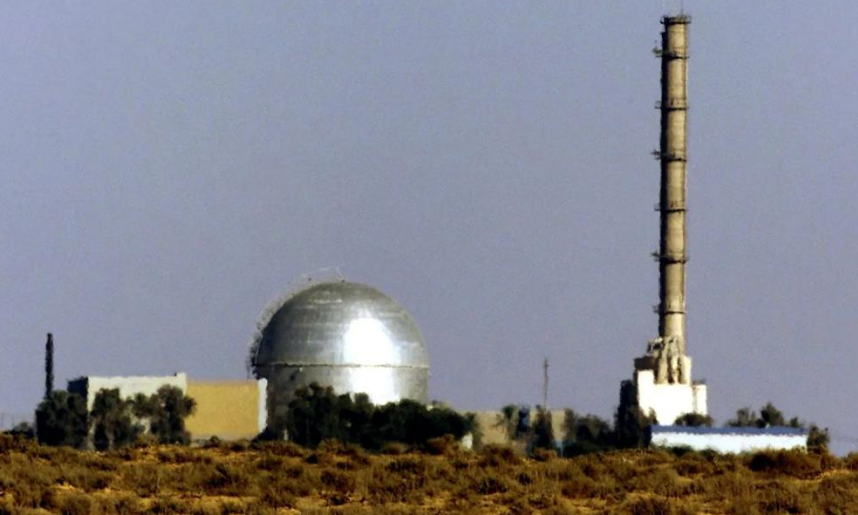
Escalation talk surrounding a potential U.S. bombing campaign against Iran rests on a familiar premise: that sufficient military bombardment can achieve decisive political outcomes. This article argues that bombing Iran is strategically unsound not merely because it is unlikely to collapse the Iranian regime, but because even the most extreme hypothetical “success” would fail to secure Israel’s future. The Middle East is not a two-player system. Without a clear political end goal, including permanent peace treaties with neighboring states, Israeli force substitutes for strategy, and every apparent success merely resets the system for the next round of fighting. The folly of bombing Iran is therefore nested within a larger folly: the pursuit of security through endless regional conflict without political closure.
Policy Concessions vs. Regime Collapse
Strategic debate frequently confuses two fundamentally different conflict outcomes. Policy concessions are limited, often reversible adjustments made under pressure. In contrast, regime collapse involves the destruction of leadership cohesion and the loss of a monopoly on organized force. These outcomes are governed by different mechanisms and should not be conflated. Although air power has sometimes succeeded in extracting concessions, it has a poor and inconsistent record of producing regime collapse. Treating concessions as evidence of collapse is an error that inflates expectations, obscures failure, and encourages repeated escalation.
What the historical record of air power efficacy shows
Across diverse cases of extreme aerial military punishment, a consistent pattern emerges: destruction accumulates without corresponding erosion of political authority. Regimes fall when control of force shifts on the ground or when elites defect en masse, not when cities and infrastructure are destroyed from the air. Here are major examples of this pattern.
Germany (World War II)
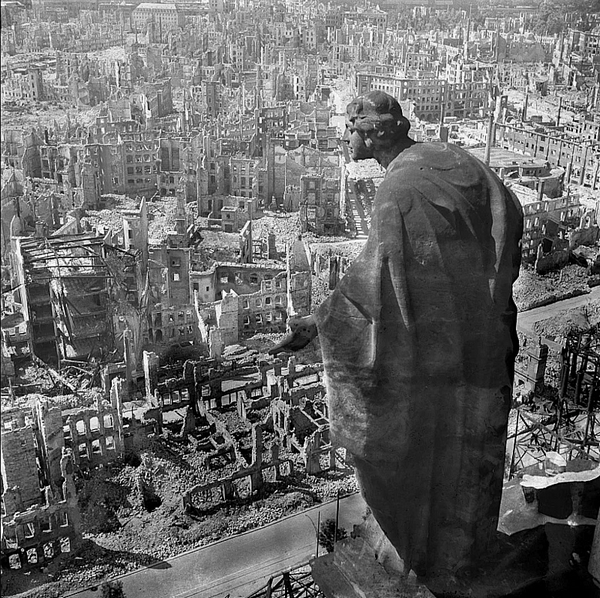
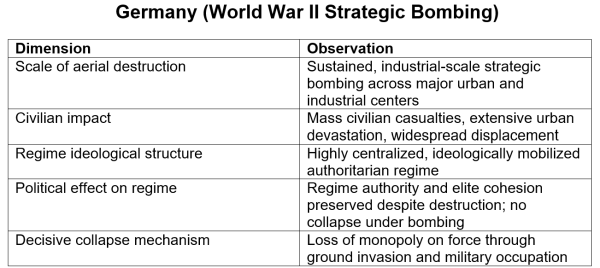
Germany experienced the most prolonged and comprehensive industrial–urban bombing campaign in history. Allied air forces systematically targeted industrial centers, transportation networks, and urban populations. Civilian suffering was immense; entire cities were devastated and industrial capacity severely degraded. Yet the Nazi regime retained authority, administrative coherence, and coercive control until Allied ground forces crossed Germany’s borders and occupied its territory.
The decisive factor in Germany’s collapse was not aerial destruction but the physical elimination of the regime’s monopoly on force. Bombing weakened Germany’s capacity to fight, but it did not fracture elite cohesion or trigger internal overthrow. Authority collapsed only when ground invasion made continued control impossible. The lesson is stark: air power degraded capability, not rule.
Dresden, 1945 – A city once called Florence on the Elbe
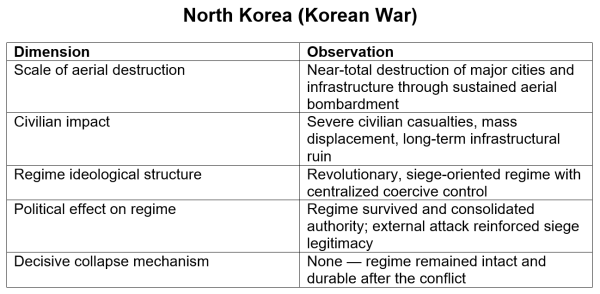
North Korea (Korean War)
North Korea suffered near-total destruction during the Korean War. Major cities were flattened, infrastructure was annihilated, and civilian casualties were catastrophic. If sheer destruction were sufficient to collapse regimes, North Korea would have been a prime candidate. Instead, the regime survived and consolidated. External attack became the central legitimating narrative of a permanent siege state. The experience of devastation hardened political control and justified extreme internal repression. Rather than collapse, the regime emerged more durable and ideologically entrenched. Extreme punishment did not undermine authority; it became the foundation of it.
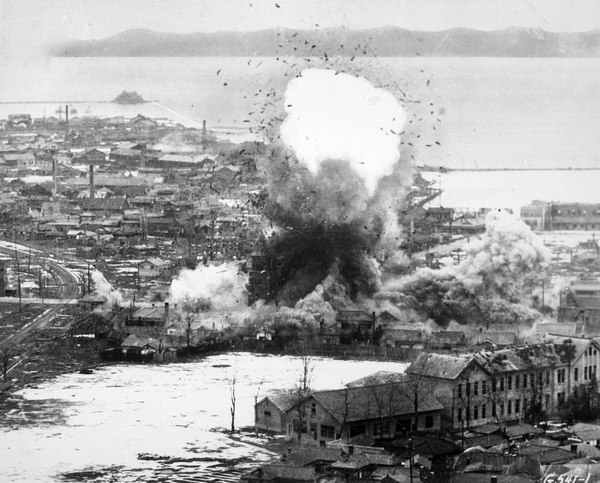
North Korean city of Wonsan under attack by B-26 bombers, 1951
Vietnam
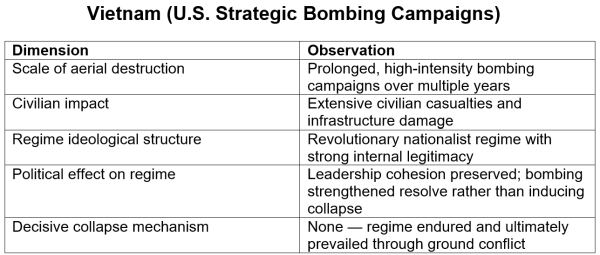
The U.S. bombing campaigns against North Vietnam were prolonged, intense, and technologically sophisticated. They were explicitly designed to coerce political compliance, fracture leadership resolve, and raise the costs of resistance beyond endurance. These objectives were not achieved. Leadership cohesion remained intact, popular resistance was sustained, and revolutionary legitimacy was reinforced. Bombing validated the regime’s narrative of national resistance and foreign aggression. The Vietnamese case illustrates a recurring pattern: aerial punishment often strengthens elite unity and ideological resolve in revolutionary or nationalist systems.
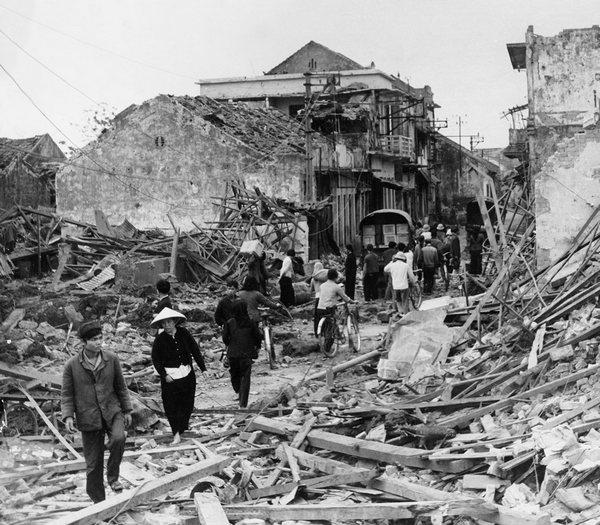
Kham Thien street in central Hanoi after American bombing in December, 1972
Gaza (contemporary)
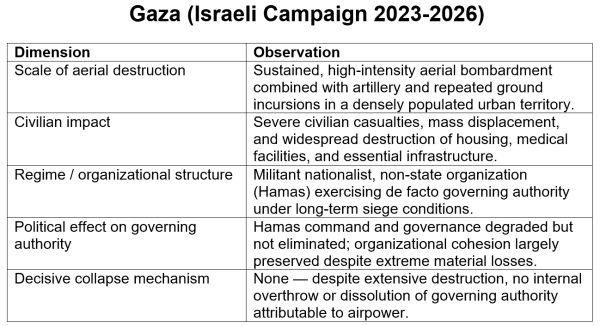
The devastation of Gaza demonstrates the same logic in recent events. Despite extraordinary levels of urban destruction, civilian suffering, and loss of life, Hamas has not disintegrated as a governing or military actor. Its coercive capacity has been degraded but not eliminated; its internal legitimacy among core constituencies persists. The Gaza case underscores a central point: even extreme destruction does not automatically translate into political collapse. Organizations structured for siege and resistance can survive levels of punishment that external observers assume to be decisive.
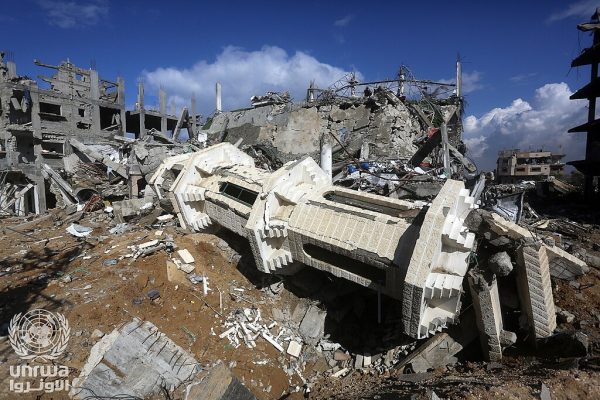
Aftermath of Israeli airstrike on area around Hassan el-Banna Mosque, Gaza Strip, 2025
Refuting the standard counter-examples
Advocates of coercive air power frequently invoke two cases to argue that bombing can collapse regimes. The most common are Serbia (1999) and Libya (2011). Neither supports the claim.
Serbia (1999): concession, not collapse
The NATO bombing campaign against Serbia is often cited as proof that air power can force decisive political outcomes. In reality, the campaign extracted a policy concession, the withdrawal of Serbian forces from Kosovo, not regime collapse. Slobodan Milošević remained in power for more than a year after the bombing ended. The regime fell only after an electoral defeat, mass protests, and elite defection within the security services. The decisive mechanisms were internal political dynamics, not aerial punishment. Treating Serbia as a regime-collapse case commits a category error by conflating territorial concession with political disintegration. Moreover, Serbia was politically brittle in ways Iran is not: fragmented elites, weak ideological legitimacy, and limited internal coercive depth. Serbia illustrates the limits of air power, not its decisiveness.
Libya (2011): air power as civil-war enabler
Libya is frequently misrepresented as a case of regime collapse through bombing. In fact, the Libyan regime fell because air power enabled a ground war. NATO strikes destroyed loyalist armor, provided intelligence and targeting, and functioned as de facto close air support for rebel forces who seized territory and eliminated the regime’s monopoly on force. This was not coercive collapse from the air; it was external intervention tipping a civil war. Libya’s institutions were thin, elites fragmented, and internal armed opposition already present. None of these conditions hold in Iran. Libya therefore demonstrates that regimes fall when organized ground forces take control, not when bombs fall.
Token concessions and narrative closure
Limited military strikes can produce claims of success. Token concessions, whether real, ambiguous, or rhetorically manufactured, offer face-saving closure without altering underlying adversary power structures. Leaders can declare victory, restore deterrence in narrative terms, and exit escalation without achieving strategic resolution. Such outcomes are politically convenient and strategically hollow; they reward the illusion that force has solved a problem it has merely deferred, encouraging repetition rather than reassessment. A similar dynamic has emerged in recent U.S. operations in Latin America, where narrative framing emphasized short-term tactical gains while leaving the underlying political and strategic dilemmas intact.
The Iran combined insurgency fantasy
Some bombing advocates imagine that air strikes in Iran would be amplified by simultaneous internal uprisings among Kurdish, Baluchi, or Azeri populations. This scenario is not credible. These groups lack heavy weaponry, formal military organization, unified command, logistics, and the capacity to seize and hold territory. Grievance does not substitute for force. Without organized ground power capable of surviving counterattack, localized unrest cannot become a decisive factor. Expecting otherwise is wishful thinking, not strategy.
Even maximal “success” would not secure Israel
Suppose, for the sake of argument, that massive attacks on Iran could collapse the regime and permanently neutralize Iran as a threat. Even this extreme hypothetical would not secure Israel’s future. The Middle East is not a two-player system. Iran is not the only consequential state in Israel’s strategic environment. Turkey, Egypt, Jordan, Saudi Arabia, the United Arab Emirates and other Gulf states, and Pakistan would remain, each with its own interests, capabilities, internal dynamics, and potential points of friction. Israel cannot bomb its way to a region without other powers, rivalries, or future adversaries. Without a politically defined end state, including permanent definition of borders, and durable peace treaties, military action cannot durably establish security for Israel. It can only manage it temporarily.
Conclusion
Bombing Iran is foolish not merely because it is unlikely to achieve its stated aims. It is a misguided action embedded in a deeper policy failure: the absence of a defined political end state capable of delivering regional security. Even maximal coercive success against Iran would leave Israel’s long-term strategic problem unresolved. Military superiority reduces Israel’s immediate danger but does not eliminate long-term exposure. A strategy premised on endless armed conflict with an unattainable end state is not a strategy at all; it is a perpetual warfare cycle in which cumulative risk guarantees failure.