No Result
View All Result
SUBMIT YOUR ARTICLES
  • Login
Wednesday, January 28, 2026
TheAdviserMagazine.com
  • Home
  • Financial Planning
    • Financial Planning
    • Personal Finance
  • Market Research
    • Business
    • Investing
    • Money
    • Economy
    • Markets
    • Stocks
    • Trading
  • 401k Plans
  • College
  • IRS & Taxes
  • Estate Plans
  • Social Security
  • Medicare
  • Legal
  • Home
  • Financial Planning
    • Financial Planning
    • Personal Finance
  • Market Research
    • Business
    • Investing
    • Money
    • Economy
    • Markets
    • Stocks
    • Trading
  • 401k Plans
  • College
  • IRS & Taxes
  • Estate Plans
  • Social Security
  • Medicare
  • Legal
No Result
View All Result
TheAdviserMagazine.com
No Result
View All Result
Home Market Research Economy

Assessing Libertarian Foreign Policy: Rothbard vs. Friedman

by TheAdviserMagazine
4 weeks ago
in Economy
Reading Time: 5 mins read
A A
Assessing Libertarian Foreign Policy: Rothbard vs. Friedman
Share on FacebookShare on TwitterShare on LInkedIn


Murray Rothbard and David Friedman exemplify contrasting styles of libertarian thought, Rothbard argues from principles, while Friedman tends to avoid fixed rules, ever-alert to the benefits and costs of various policies. You will not be surprised that I prefer Rothbard’s approach, but Friedman’s inventive mind merits praise. Despite their different styles of thought, both converged in holding that a non-interventionist foreign policy is best for America, and for a similar reason: the state does things badly.

Here is Rothbard:

We live, unfortunately, in a world of nation-states, in which each State has arrogated to itself a monopoly of the use of violence over its assumed territorial area. Therefore, to limit the aggressive use of the State, to limit State violence over innocent people as much as possible, the libertarian, be he an anarchist or a laissez-faire liberal, necessarily arrives at the view that at least each State should confine its operations to that area where it has a monopoly of violence, so that no inter-State clashes, or, more importantly, injuries wreaked by State A on the population of State B, will be able to occur. The latter point is particularly important in the days of modern technology when it is virtually impossible for State A to fight State B without gravely injuring and murdering large numbers of civilian innocents on both sides.

Therefore, “isolationism”—the confinement of State violence to its own territory—is an important libertarian precept, whether for an anarchist or a minarchist. The existing State is not a benign if a bit overly cumbersome surrogate for a free-market protection agency. The State is organized crime, murder, theft, and enslavement incarnate. And even for laissez-faire liberals the existing State should be tarred with the same dire labels. Limiting government to its own territory is the foreign policy analogue of the domestic injunction of the laissez-faire liberal that the State should not interfere with the lives of its own subjects.

Friedman, as you would anticipate, stresses what is likely to work in practice:

The case for an interventionist policy can be summed up in one phrase: the lesson of Munich. It has been widely argued that if only the British and French had been willing to stop Hitler at the time of the Munich agreements, he would have backed down, and World War II would never have happened. Many people conclude that the appropriate way to deal with potential enemies, especially enemies aiming at world conquest, is to fight them before they get strong enough to fight you, to prevent their expansion by allying with the nations they want to annex, by allying with any government willing to join you in opposing them.

The weak point in the argument is its assumption that the interventionist foreign policy will be done well—that your foreign minister is Machiavelli or Metternich. In order for the policy to work, you must correctly figure out which countries are going to be your enemies and which your allies ten years down the road. If you get it wrong, you find yourself unnecessarily blundering into other people’s wars, spending your blood and treasure in their fights instead of theirs in yours.

Friedman’s reversal of the standard interventionist view of the “lesson of Munich” is a clever bit of intellectual ju-jitsu, but he has conceded too much to the interventionists. The real intervention was the British and French pressure on the Czechs to negotiate with the Germans, and in any case, Friedman is not committed to a non-interventionist policy for any other nation than the United States, although he thinks that intervention by the European powers suffers from the same ineptness he attributes to the United States.

Friedman gives an excellent example of this ineptness:

The first time Hitler attempted to annex Austria he was stopped by Mussolini, who announced that Italy would not tolerate the annexation and emphasized the point by moving Italian divisions into the Brenner pass. What changed that was opposition by France and Great Britain to the Italian annexation of Abyssinia. Mussolini concluded that Italy’s WWI allies were no longer friends and, given the feebleness of their efforts, not very dangerous enemies. The second time Hitler moved to annex Austria it was with Mussolini’s permission.

The incompetent interventionist policy of Hitler’s enemies had given him his first ally.

Friedman effectively sums up his case against an interventionist foreign policy:

One problem with an interventionist foreign policy is that you may intervene unnecessarily or on the wrong side; that, arguably, is the history of much of our China policy. A second problem is that, even if you are on the right side, you are frequently involved in conflicts which are much more important to the other players, with the result that you end up paying the cost of intervention but not achieving very much….

The problem with an interventionist foreign policy is that doing it badly is much worse than not doing it at all. Something which must be done well to be worth doing is being done by the same people who run the post office—and about as well….

This argument suggests that libertarians ought to be skeptical of an interventionist foreign policy. It is difficult to run a successful interventionist policy and, as libertarians, we do not expect the government to do difficult things well.

But if the government always messes things up, what are we to do?

In another sense, I believe that there is a libertarian foreign policy—a foreign policy which libertarians can expect to work better than alternative policies. That policy is to defend ourselves by fighting those who actually attack us rather than by maintaining a global network of alliances. The argument is a simple one. An interventionist policy done badly is very much worse than one not done at all, and we can be sure that an interventionist foreign policy run by the U.S. government will be done badly.

Friedman’s way of looking at things is reminiscent of Frank Knight’s defense of capitalism: it was not so much the best option as the least bad one.

The existence of nuclear weapons complicates foreign policy. Friedman considers all sorts of cases involving nuclear deterrence and weighs the advantages and disadvantages of their use. He is well aware of the inevitable murder of innocents in any use of nuclear weapons, but though he deems this a strong consideration against their use, he does not in all circumstances rule it out.

Rothbard does. Writing during the Cold War against the USSR, he says:

In fact, however, the single most important enemy of liberty is mass murder. Communist governments murder their citizens, but nuclear warfare would murder far, far more, indeed, the entire human race itself. And so the greatest enemy of liberty in our time, our realistic enemy, if you please, is nuclear war, by whichever State launches it….

There are two essential policies, therefore, for libertarians to push upon the American State: a policy of “isolationism,” of non-intervention into the territory of other States; and to pressure it into genuine negotiations, at long last, for mutual nuclear disarmament with inspection. The fact that Soviet Russia butchers many of its own citizens is monstrous and important, but is irrelevant to the question of foreign policy and to the threats to human liberty that lie in such policies.

For it is not the function of any State, including the United States, to right the sins of the Decalogue, to spread fire and devastation in order to bring freedom around the globe—as we murdered countless Vietnamese in the name of their “freedom.” And, above all, we must realize that nuclear war is a far bigger threat to liberty than Communism. How’s that for libertarian “realism”?

Friedman has strong moral beliefs, but he often argues without reference to them. For Rothbard, morality is always decisive. “And that has made all the difference.”



Source link

Tags: assessingForeignFriedmanLibertarianPolicyRothbard
ShareTweetShare
Previous Post

Lenders reprice to a lower prime rate

Next Post

Judge rules in Trump’s favour over $100K H-1B visa fee hike

Related Posts

edit post
Population Growth Slows to Crawl, Net Migration May Turn “Negative”: Census Bureau’s New Population Estimates

Population Growth Slows to Crawl, Net Migration May Turn “Negative”: Census Bureau’s New Population Estimates

by TheAdviserMagazine
January 28, 2026
0

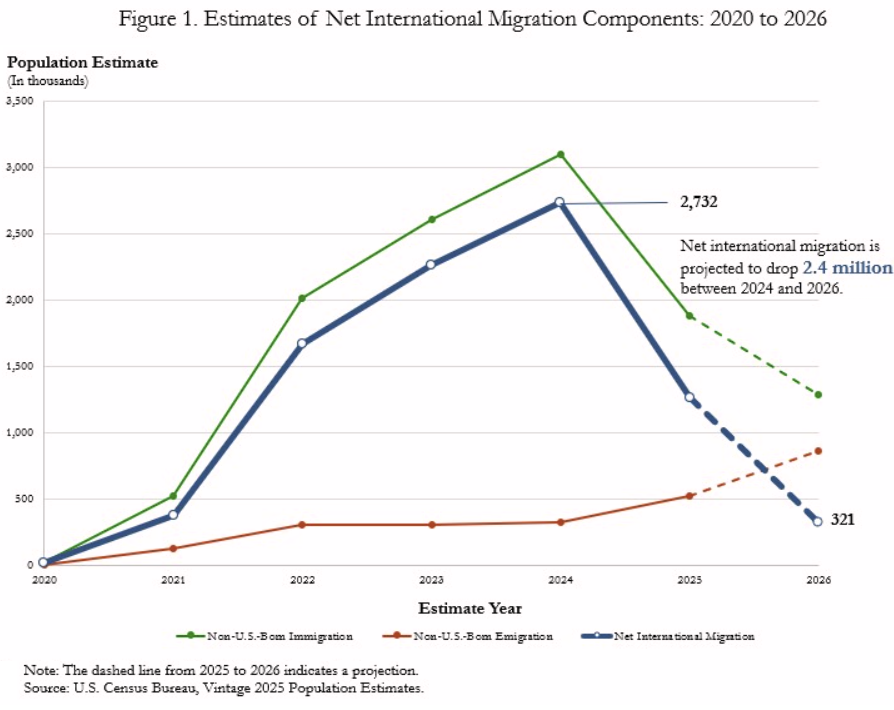
Yves here. Wolf Richter is correct of highlight falling population growth, even potentially contracting levels, as a big deal. The...

edit post
The 1929 Financial Thriller and the “We Can’t Help Ourselves” Theory of Financial Mania

The 1929 Financial Thriller and the “We Can’t Help Ourselves” Theory of Financial Mania

by TheAdviserMagazine
January 28, 2026
0

In time for the autumn blues last year, Andrew Ross Sorkin delivered a riveting doorstopper-sized account of the fateful year...

edit post
The India-EU Trade Deal | Armstrong Economics

The India-EU Trade Deal | Armstrong Economics

by TheAdviserMagazine
January 28, 2026
0

Deemed the “mother of all deals” by Commission President Ursula von der Leyen, India and the European Union signed a...

edit post
Gold, Silver Glut & Geopolitics

Gold, Silver Glut & Geopolitics

by TheAdviserMagazine
January 27, 2026
0

QUESTION: Marty, you always criticized the gold bugs for claiming gold rises with inflation. You are the only one who...

edit post
Market thinks BlackRock’s Rieder will next chair the Fed. What’s at stake

Market thinks BlackRock’s Rieder will next chair the Fed. What’s at stake

by TheAdviserMagazine
January 27, 2026
0

A five-month process of finding the next Federal Reserve chair appears to be down to its final days, with one...

edit post
Coffee Break: Armed Madhouse – Silicon Valley and The Military–Industrial–Venture Complex

Coffee Break: Armed Madhouse – Silicon Valley and The Military–Industrial–Venture Complex

by TheAdviserMagazine
January 27, 2026
0

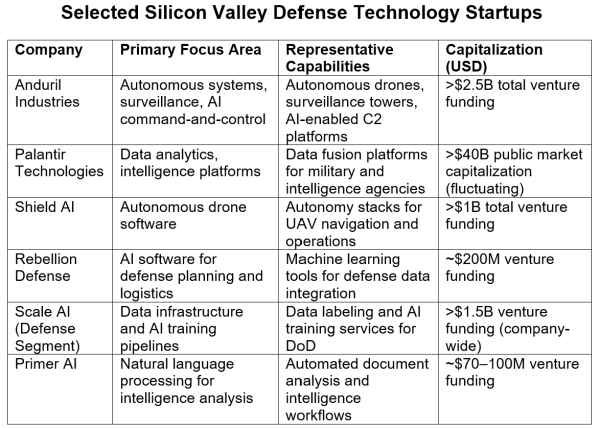
Silicon Valley has recently discovered defense as a growth market. Venture-backed firms now promise to “disrupt” military procurement, accelerate weapons...

Next Post
edit post
Judge rules in Trump’s favour over 0K H-1B visa fee hike

Judge rules in Trump’s favour over $100K H-1B visa fee hike

edit post
Berkshire has the best odds of lasting a century

Berkshire has the best odds of lasting a century

  • Trending
  • Comments
  • Latest
edit post
Most People Buy Mansions But This Virginia Lottery Winner Took the Lump Sum From a 8 Million Jackpot and Bought a Zero-Turn Lawn Mower Instead

Most People Buy Mansions But This Virginia Lottery Winner Took the Lump Sum From a $348 Million Jackpot and Bought a Zero-Turn Lawn Mower Instead

January 10, 2026
edit post
Utility Shutoff Policies Are Changing in Several Midwestern States

Utility Shutoff Policies Are Changing in Several Midwestern States

January 9, 2026
edit post
80-year-old Home Depot rival shuts down location, no bankruptcy

80-year-old Home Depot rival shuts down location, no bankruptcy

January 4, 2026
edit post
Tennessee theater professor reinstated, with 0,000 settlement, after losing his job over a Charlie Kirk-related social media post

Tennessee theater professor reinstated, with $500,000 settlement, after losing his job over a Charlie Kirk-related social media post

January 8, 2026
edit post
Elon Musk Left DOGE… But He Hasn’t Left Washington

Elon Musk Left DOGE… But He Hasn’t Left Washington

January 2, 2026
edit post
Former Carson Group marketing executive drops lawsuit

Former Carson Group marketing executive drops lawsuit

December 29, 2025
edit post
JPMorgan Chase to match ,000 contribution to ‘Trump accounts’

JPMorgan Chase to match $1,000 contribution to ‘Trump accounts’

0
edit post
Fed Pauses, But Mortgage Rates Are Already Lower

Fed Pauses, But Mortgage Rates Are Already Lower

0
edit post
Buying an Existing Business vs. Starting from Scratch: Which Wins?

Buying an Existing Business vs. Starting from Scratch: Which Wins?

0
edit post
Trade Allowance Meaning: What Manufacturers Need to Know to Protect Margins and Increase Channel Performance

Trade Allowance Meaning: What Manufacturers Need to Know to Protect Margins and Increase Channel Performance

0
edit post
Self-directed IRAs carry tax complexities

Self-directed IRAs carry tax complexities

0
edit post
How to determine ROI quantification for tax technology

How to determine ROI quantification for tax technology

0
edit post
JPMorgan Chase to match ,000 contribution to ‘Trump accounts’

JPMorgan Chase to match $1,000 contribution to ‘Trump accounts’

January 28, 2026
edit post
Bitcoin’s coal mine canaries are starting to chirp with specific alarms already signaling a market shift

Bitcoin’s coal mine canaries are starting to chirp with specific alarms already signaling a market shift

January 28, 2026
edit post
Every U.S. Olympian is going home with 0,000, whether they medal or not, thanks to a billionaire’s 0 million gift

Every U.S. Olympian is going home with $200,000, whether they medal or not, thanks to a billionaire’s $100 million gift

January 28, 2026
edit post
Self-directed IRAs carry tax complexities

Self-directed IRAs carry tax complexities

January 28, 2026
edit post
Buying an Existing Business vs. Starting from Scratch: Which Wins?

Buying an Existing Business vs. Starting from Scratch: Which Wins?

January 28, 2026
edit post
Fed Pauses, But Mortgage Rates Are Already Lower

Fed Pauses, But Mortgage Rates Are Already Lower

January 28, 2026
The Adviser Magazine

The first and only national digital and print magazine that connects individuals, families, and businesses to Fee-Only financial advisers, accountants, attorneys and college guidance counselors.

CATEGORIES

  • 401k Plans
  • Business
  • College
  • Cryptocurrency
  • Economy
  • Estate Plans
  • Financial Planning
  • Investing
  • IRS & Taxes
  • Legal
  • Market Analysis
  • Markets
  • Medicare
  • Money
  • Personal Finance
  • Social Security
  • Startups
  • Stock Market
  • Trading

LATEST UPDATES

  • JPMorgan Chase to match $1,000 contribution to ‘Trump accounts’
  • Bitcoin’s coal mine canaries are starting to chirp with specific alarms already signaling a market shift
  • Every U.S. Olympian is going home with $200,000, whether they medal or not, thanks to a billionaire’s $100 million gift
  • Our Great Privacy Policy
  • Terms of Use, Legal Notices & Disclosures
  • Contact us
  • About Us

© Copyright 2024 All Rights Reserved
See articles for original source and related links to external sites.

Welcome Back!

Login to your account below

Forgotten Password?

Retrieve your password

Please enter your username or email address to reset your password.

Log In
No Result
View All Result
  • Home
  • Financial Planning
    • Financial Planning
    • Personal Finance
  • Market Research
    • Business
    • Investing
    • Money
    • Economy
    • Markets
    • Stocks
    • Trading
  • 401k Plans
  • College
  • IRS & Taxes
  • Estate Plans
  • Social Security
  • Medicare
  • Legal

© Copyright 2024 All Rights Reserved
See articles for original source and related links to external sites.