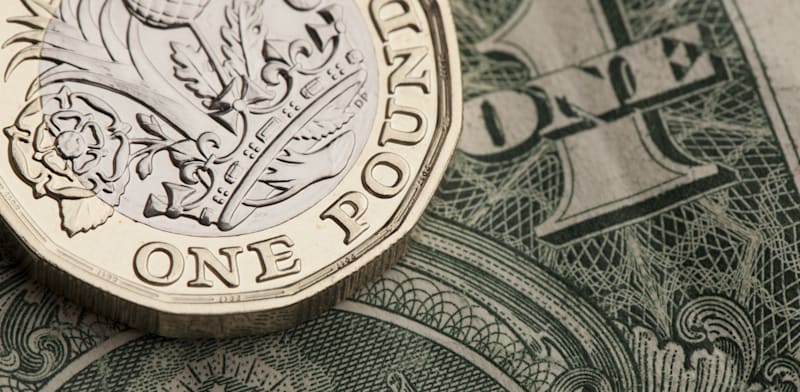
After the US dollar fell below NIS 3/$ for the first time since 1995, the Israeli currency is consolidating its strength against another major foreign currency – the UK pound. The shekel has strengthened 18% against sterling over the past year and continued to do gain ground today with the Bank of Israel setting the exchange rate down 0.151% at NIS 4.0383/£.
Harel Insurance Investments and Financial Services says, “It is possible that sterling will soon trade for less than NIS 4/£. – In the early 2000s, anyone who wanted to fly to London remembers a completely different reality. The pound soared to crazy values of over NIS 8/£. The shekel then looked weak and vulnerable against the proud British currency.”
This is now the weakest level of the British currency against the shekel since 2022. If the representative rate weakens below NIS 3.7567/£, it will be its lowest level since the early 1990s.
Harel adds, “This has not happened by chance, it happened because we have become a high-tech powerhouse, because we learned to manage a responsible economy, and because the shekel has become one of the strongest currencies in the world. From a starting point of complete dependence on the British (at the time of the establishment of the state in 1948), through a low of over NIS 8/£, we have reached a strength that cannot be ignored.”
First International Bank forex consulting director Dror Zakash sees the shekel’s performance against sterling as relatively inconsequential. He says,. “Most Israeli trade is in dollars and euros, so the shekel-sterling trade and exchange rates are less significant. But this of course makes it difficult for exporters who export to the UK.”
Bank of Israel also buys pounds
But it is not certain that the Bank of Israel agrees with Zakash. Few are aware that within the huge foreign exchange reserves held by the Bank of Israel (about $230 billion), there is a significant slice of British pounds. According to the Bank of Israel, about 5% of its foreign exchange reserves at the end of 2025 were in pounds, which is worth about NIS 40 billion. The Bank of Israel also holds these reserves to use them sometimes if there is a need to moderate fluctuations in the exchange rate.
Migdal head of the foreign exchange and derivatives desk Motti Azoulay notes that the last time the pound weakened this much against the shekel happened during the short term of Liz Truss’ government in 2022, and was mainly, “Due to the political problems in the UK, and mainly due to fears of financial instability. Since then, the pound has recovered globally but is still historically low.”
According to him, the reason for this is that “growth in the UK is relatively low, and on the other hand, inflation is rising again, to 3.3% in the past year, while the unemployment rate is climbing to 5% or more. The market is afraid of a continued increase in inflation due to the crisis in the Middle East and has even started to price in interest rate hikes in the UK this year and at the beginning of 2027, with more than two interest rate increases. At the beginning of the year the market was still expecting more rate cuts.
Published by Globes, Israel business news – en.globes.co.il – on April 27, 2026.
© Copyright of Globes Publisher Itonut (1983) Ltd., 2026.