No Result
View All Result
SUBMIT YOUR ARTICLES
  • Login
Thursday, August 6, 2026
TheAdviserMagazine.com
  • Home
  • Financial Planning
    • Financial Planning
    • Personal Finance
  • Market Research
    • Business
    • Investing
    • Money
    • Economy
    • Markets
    • Stocks
    • Trading
  • 401k Plans
  • College
  • IRS & Taxes
  • Estate Plans
  • Social Security
  • Medicare
  • Legal
  • Home
  • Financial Planning
    • Financial Planning
    • Personal Finance
  • Market Research
    • Business
    • Investing
    • Money
    • Economy
    • Markets
    • Stocks
    • Trading
  • 401k Plans
  • College
  • IRS & Taxes
  • Estate Plans
  • Social Security
  • Medicare
  • Legal
No Result
View All Result
TheAdviserMagazine.com
No Result
View All Result
Home Market Research Business

New School economist: Trump Accounts will widen America’s wealth gaps

by TheAdviserMagazine
3 weeks ago
in Business
Reading Time: 5 mins read
A A
New School economist: Trump Accounts will widen America’s wealth gaps
Share on FacebookShare on TwitterShare on LInkedIn


On July 4, the federal government launched what it described as one of the nation’s most ambitious asset-building initiatives for children in decades. Under this new tax-based savings program, every child born in the United States between January 1, 2026, and December 31, 2028, receives a $1,000 investment account branded as Trump Accounts.

The premise is straightforward: give every child an investment account, let compound returns do their work, and build wealth over time.

But whether these accounts ultimately narrow America’s wealth gap depends less on the initial $1,000 deposit than on the financial architecture that follows.

New research from the Institute on Race, Power and Political Economy at The New School suggests that Trump Accounts are unlikely to reduce America’s wealth gap. Based on what we already know about how tax-preferred savings vehicles operate, they may actually widen it.

That may sound counterintuitive. How can a program that gives every child the same $1,000 seed increase inequality? The answer is that the government deposit is only the starting point. What matters most is everything that comes after.

Families, employers, and philanthropies can contribute up to $5,000 annually until a child turns 18, with investments growing tax-free. Over nearly two decades, those additional contributions—not the initial government deposit—will largely determine whether a young adult reaches adulthood with a few thousand dollars or tens of thousands.

This is not a new question. For nearly three decades, the United States has tested a remarkably similar model through 529 college savings plans.

To better understand how Trump Accounts are likely to perform, we analyzed 15 years of data on 529 college savings plans using the Survey of Consumer Finances. Like Trump Accounts, 529 plans use tax incentives to encourage long-term investment in children’s futures.

The results are striking. Among lower-income families with young children, fewer than one percent own a 529 account. Nearly three in ten of the highest-income families do. Almost all of the money held in 529 accounts belongs to higher-income families, and more than three-quarters belongs to the wealthiest 10 percent alone.

As Americans struggle with the rising costs of housing, food, child care, and health care, this policy does little to address today’s affordability crisis. The challenge is not a lack of financial discipline; it is a lack of financial capacity. A $1,000 seed pales in comparison to the ability to contribute up to $5,000 annually through a tax-preferred account. Instead, our tax code remains upside down: it provides the largest incentives to families that already have wealth to invest.

The lesson is straightforward. These investment accounts are financial multipliers. They do not create capital on their own—they compound the capital families already have.

That is not a criticism of families who contribute. It is simply how compound investing—and a tax code that subsidizes it—works.

A household able to invest several thousand dollars each year for 18 years will accumulate dramatically more than one struggling to pay rent, buy groceries, or cover child care. Equal access to an investment vehicle does not produce equal capacity to build assets.

Our research team also modeled the likely trajectory of Trump Accounts using observed contribution patterns from 529 plans. Without substantial outside contributions, the typical 530A account seeded with $1,000 is projected to be worth about $4,000 by the time a child reaches adulthood.

Transformative? Unlikely. Helpful? Perhaps, but also unlikely. Benefit are limited if the program contributes to higher asset prices or if relatively modest account balances push recipients over means-tested asset thresholds that reduce eligibility for housing assistance, food assistance, child care subsidies, or Medicaid. Those policy design questions deserve careful consideration.

More important is what happens across the income distribution. If families contribute at rates similar to those observed in 529 plans, children in the highest-income households are projected to accumulate dramatically larger account balances than children in the lowest-income households.

In other words, the design is likely to reproduce—and amplify—the same dynamic observed over decades of experience with 529 plans and the broader tax code: households with the greatest financial capacity benefit the most.

That reflects a broader truth about wealth in America. Families born with assets can invest. Families without assets often cannot. That is not a question of financial discipline. It is a question of financial capacity. No amount of tax-preferred saving can overcome the simple reality that you cannot invest money you do not have.

There is a better approach. Baby Bonds are publicly funded investment accounts that work differently. Every child receives an account at birth, but unlike Trump Accounts, the public investment is progressive: children born into families with fewer assets receive larger endowments, while those born into wealthier households receive less. The funds are professionally invested over time so that every child—not simply those born into families with the greatest financial capacity—can begin adulthood with meaningful capital to build wealth.

Research by public health scholar Naomi Zewde projects that a well-funded Baby Bonds program could virtually eliminate the racial wealth gap among participating cohorts within roughly a generation and a half while expanding wealth more broadly.

Trump Accounts deserve credit for recognizing an important truth: assets matter. But if decades of evidence tell us that contribution-based investment accounts primarily reward families already positioned to contribute, simply extending that tax-preferred structure is unlikely to produce broadly shared wealth.

Let’s use the launch of Trump Accounts to prompt a broader conversation—not simply about who has an investment account, but about how capital is created and distributed in the first place.

Wealth building begins with wealth itself. A more democratic vision of economic opportunity begins by ensuring that every child enters adulthood with a meaningful capital foundation from which to build wealth, security, and opportunity.

Baby Bonds belong to a long American tradition of using public investment to expand asset ownership—from the Homestead Act to the G.I. Bill. Those policies succeeded not because they created tax advantages, but because they provided meaningful capital. Yet both were implemented in ways that excluded many Americans. The Homestead Act coincided with the dispossession of Native peoples, while the G.I. Bill was administered within a Jim Crow system that denied many Black veterans equal access to its benefits. Baby Bonds are designed differently: to extend the opportunity to build wealth to every child, regardless of race or background.

The opinions expressed in Fortune.com commentary pieces are solely the views of their authors and do not necessarily reflect the opinions and beliefs of Fortune.

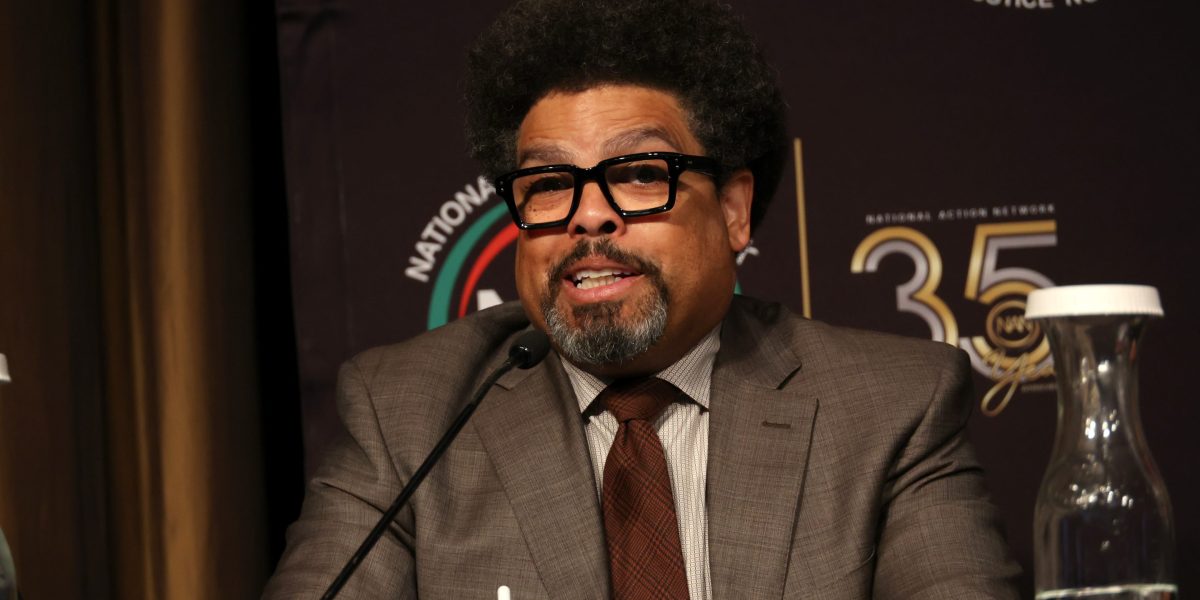
Darrick Hamilton is a university professor, Henry Cohen Professor of Economics and Urban Policy, and founding director of the Institute on Race, Power and Political Economy at The New School.




Source link

Tags: AccountsAmericaseconomistgapsSchoolTrumpwealthWiden
ShareTweetShare
Previous Post

Market Wrap: Sensex ends flat, Nifty holds 24,050 as Iran-US conflict keeps optimism in check

Next Post

Once Upon a Time, You Knew When You Paid for Something. This Was a Good Thing.

Related Posts

edit post
Current price of oil as of Aug. 6, 2026

Current price of oil as of Aug. 6, 2026

by TheAdviserMagazine
August 6, 2026
0

By 7 a.m. Eastern Time today, oil had reached $83.64 per barrel, measured using the Brent benchmark. That’s 8 cents...

edit post
The Key Battles for Senate Control Are Set

The Key Battles for Senate Control Are Set

by TheAdviserMagazine
August 6, 2026
0

With yesterday’s victory in Michigan for Abdul El-Sayed, one of the last pieces has fallen into place in key midterm...

edit post
Manipal Health shares slide 6% on account of profit booking. What should investors do?

Manipal Health shares slide 6% on account of profit booking. What should investors do?

by TheAdviserMagazine
August 6, 2026
0

Shares of Manipal Health Enterprises, which made a strong stock market debut on Wednesday, fell nearly 6% to an intraday...

edit post
Tax Authority warns higher income Israelis are leaving

Tax Authority warns higher income Israelis are leaving

by TheAdviserMagazine
August 6, 2026
0

Not only has the number of Israelis emigrating from Israel increased in recent years, but their economic profile has...

edit post
Cathie Wood’s ARK buys M SpaceX, M Nvidia; offloads Roblox, Palantir (RBLX:NYSE)

Cathie Wood’s ARK buys $23M SpaceX, $17M Nvidia; offloads Roblox, Palantir (RBLX:NYSE)

by TheAdviserMagazine
August 6, 2026
0

Aug 06, 2026, 2:03 AM ETRoblox Corporation (RBLX) Stock, SPCX Stock, NVDA Stock, ARK Stock, ARKG, ARKW, ARKF, ARKQ, ARKXSHOP,...

edit post
Sterlite Tech shares gain 4% on Rs 1,760 crore international order win

Sterlite Tech shares gain 4% on Rs 1,760 crore international order win

by TheAdviserMagazine
August 6, 2026
0

Shares of optical and digital solutions provider Sterlite Technologies climbed over 4% to trade at Rs 662 on Thursday after...

Next Post
edit post
Research Report: Betting in Africa 2026

Research Report: Betting in Africa 2026

edit post
Links 7/16/2026 | naked capitalism

Links 7/16/2026 | naked capitalism

  • Trending
  • Comments
  • Latest
edit post
Georgia Senior SNAP and Meal Resources Older Adults Can Use

Georgia Senior SNAP and Meal Resources Older Adults Can Use

July 24, 2026
edit post
New Jersey Tax-Relief Events: Three July Dates Near Seniors

New Jersey Tax-Relief Events: Three July Dates Near Seniors

July 13, 2026
edit post
Bristlecone pines growing in the White Mountains of California germinated before the Great Pyramid was built, and the oldest one alive today, nicknamed Methuselah, has been quietly adding rings for 4,855 years in soil so poor almost nothing else survives beside it

Bristlecone pines growing in the White Mountains of California germinated before the Great Pyramid was built, and the oldest one alive today, nicknamed Methuselah, has been quietly adding rings for 4,855 years in soil so poor almost nothing else survives beside it

July 8, 2026
edit post
Judge Who Helped Violent Illegal Alien Evade ICE Faces New Test

Judge Who Helped Violent Illegal Alien Evade ICE Faces New Test

July 31, 2026
edit post
2 judges suspended in separate cases after being indicted on criminal charges

2 judges suspended in separate cases after being indicted on criminal charges

July 9, 2026
edit post
Driving the Noncitizen Voting Scandal: Registration With License

Driving the Noncitizen Voting Scandal: Registration With License

July 26, 2026
edit post
Manipal Health shares slide 6% on account of profit booking. What should investors do?

Manipal Health shares slide 6% on account of profit booking. What should investors do?

0
edit post
Human Flourishing and Marginal Utility

Human Flourishing and Marginal Utility

0
edit post
Bitcoin miner sells 1,619 Bitcoin at a  million loss before its AI data center paid rent

Bitcoin miner sells 1,619 Bitcoin at a $47 million loss before its AI data center paid rent

0
edit post
6-Figure Trade Jobs. Surely Not? Nvidia CEO Says ‘The Skilled Craft Segment of Every Economy Is Going to See a Boom’

6-Figure Trade Jobs. Surely Not? Nvidia CEO Says ‘The Skilled Craft Segment of Every Economy Is Going to See a Boom’

0
edit post
The internet doesn’t need more content. It needs more people who lived something first and wrote about it second.

The internet doesn’t need more content. It needs more people who lived something first and wrote about it second.

0
edit post
Channel Rebate Automation: The 2026 Guide to Scaling Incentives

Channel Rebate Automation: The 2026 Guide to Scaling Incentives

0
edit post
Bitcoin miner sells 1,619 Bitcoin at a  million loss before its AI data center paid rent

Bitcoin miner sells 1,619 Bitcoin at a $47 million loss before its AI data center paid rent

August 6, 2026
edit post
The internet doesn’t need more content. It needs more people who lived something first and wrote about it second.

The internet doesn’t need more content. It needs more people who lived something first and wrote about it second.

August 6, 2026
edit post
Dell Technologies (DELL): Steht der Mega-Ausbruch kurz bevor?

Dell Technologies (DELL): Steht der Mega-Ausbruch kurz bevor?

August 6, 2026
edit post
Star Bulk Carriers Releases Q2 2026 Financial Results

Star Bulk Carriers Releases Q2 2026 Financial Results

August 6, 2026
edit post
Current price of oil as of Aug. 6, 2026

Current price of oil as of Aug. 6, 2026

August 6, 2026
edit post
6-Figure Trade Jobs. Surely Not? Nvidia CEO Says ‘The Skilled Craft Segment of Every Economy Is Going to See a Boom’

6-Figure Trade Jobs. Surely Not? Nvidia CEO Says ‘The Skilled Craft Segment of Every Economy Is Going to See a Boom’

August 6, 2026
The Adviser Magazine

The first and only national digital and print magazine that connects individuals, families, and businesses to Fee-Only financial advisers, accountants, attorneys and college guidance counselors.

CATEGORIES

  • 401k Plans
  • Business
  • College
  • Cryptocurrency
  • Economy
  • Estate Plans
  • Financial Planning
  • Investing
  • IRS & Taxes
  • Legal
  • Market Analysis
  • Markets
  • Medicare
  • Money
  • Personal Finance
  • Social Security
  • Startups
  • Stock Market
  • Trading

LATEST UPDATES

  • Bitcoin miner sells 1,619 Bitcoin at a $47 million loss before its AI data center paid rent
  • The internet doesn’t need more content. It needs more people who lived something first and wrote about it second.
  • Dell Technologies (DELL): Steht der Mega-Ausbruch kurz bevor?
  • Our Great Privacy Policy
  • Terms of Use, Legal Notices & Disclosures
  • Contact us
  • About Us

© Copyright 2024 All Rights Reserved
See articles for original source and related links to external sites.

Welcome Back!

Login to your account below

Forgotten Password?

Retrieve your password

Please enter your username or email address to reset your password.

Log In
No Result
View All Result
  • Home
  • Financial Planning
    • Financial Planning
    • Personal Finance
  • Market Research
    • Business
    • Investing
    • Money
    • Economy
    • Markets
    • Stocks
    • Trading
  • 401k Plans
  • College
  • IRS & Taxes
  • Estate Plans
  • Social Security
  • Medicare
  • Legal

© Copyright 2024 All Rights Reserved
See articles for original source and related links to external sites.