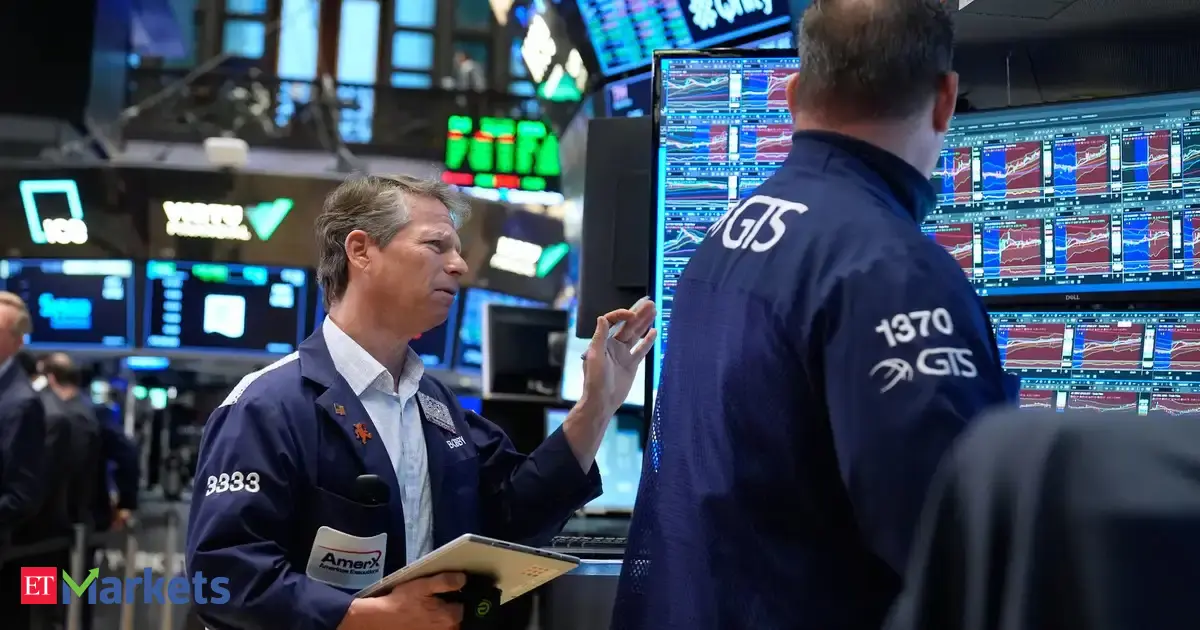
The domestic brokerage cited data from the timeframes of seven major geopolitical conflicts in the past 25 years – Iraq war (2003), the Lebanon war (2006), the Libyan Civil War (2011), Russia–Ukraine (2022), Israel–Hamas war (2023), Iran–Israel conflict (2025), and the ongoing US–Iran escalation. It said that Nifty’s drawdown during the onset of conflicts has usually been capped at approximately 10%. Hence, historical patterns suggest limited downside for the benchmark index now, after the 11% crash in March.
“Importantly, once early signs of normalisation emerge, markets tend to recover swiftly,” Elara said. However, it noted that the key exception to this historical pattern was in calendar years 2011-2014 when Brent sustained above $100 per barrel, leading to a prolonged sideways market without meaningful highs. The eventual decline in oil prices acted as the trigger for a strong Nifty upcycle, it added.
Also read: Sammaan Capital becomes IHC Group co, receives Rs 5,652 cr in first tranche of stake sale
Nifty’s valuation below the long-term trend signals a potential rebound
Elara assessed the one-year forward P/E relative to its rolling 10-year average and concluded the Nifty is trading 7% below its 10-year average, placing it in a historical “bounce zone”. “Outside of extreme disruptions like COVID-19, this level usually acted as a floor for valuation. Even during the Russia–Ukraine conflict, despite Brent sustaining above USD 100/bbl, Nifty multiples bounced back from 10-year rolling averages,” it said.
“The recent TACO and Iran allowing ‘nonhostile ships’ to transit the Strait of Hormuz, along with crude oil prices dropping below USD 100/bbl, have reduced immediate energy supply risks. With our base case assuming gradual de-escalation, the current valuation provides a favourable entry point, with limited downside. We pick 20 value plays which offer a good risk-reward opportunity with healthy fundamentals in the current scenario of extreme correction,” the brokerage added.
Elara’s top pics
Auto and power remain Elara’s preferred bets, which added that large-cap auto stocks like Maruti Suzuki and Royal Enfield-maker Eicher Motors have corrected sharply since the onset of the US-Iran conflict. While near-term concerns persist around input cost pressures from elevated commodity prices and potential demand moderation in the event of a prolonged conflict triggering an inflation shock for consumers, underlying retail data remains robust and encouraging, it further said.The domestic brokerage added that Vahan retail registrations so far show strong double-digit growth, and this momentum is expected to receive further tailwinds from the Eighth Pay Commission awards, slated for announcement early next year.Within the power sector, 18 out of the 19 utility stocks under the brokerage’s coverage have outperformed the Nifty 50 in current drawdown, which the firm said underscores the sector’s relative resilience. “The escalating conflict is expected to accelerate India’s electrification cycle, while surging data centre capex is driving incremental power demand. This positive backdrop is further supported by the likely passage of the New Electricity Amendment Bill, which will unlock structural reforms in the sector. Consequently, power generation, transmission, distribution, and data centre-linked plays are emerging not merely as defensive anchors but as clear structural beneficiaries in the medium to long term. NTPC, NLC India, and ACME Solar remain our highest conviction picks within the space,” it added.
Also read: FY26 IPO market a disaster as investors lose money in 2 out of 3 issues. Will next year be better?
Where is the value currently?
In its report, Elara listed out several stocks emerging with better risk-reward dynamics where fundamentals remain intact, and valuation is either trading below the five-year median, and in some cases even below the Russia–Ukraine crisis lows.
These include HDFC Bank, Maruti Suzuki, Eicher Motors, Infosys, LTI Mindtree, L&T, Godrej Properties, NTPC, NLC India, ACME Solar and Eternal.
(Disclaimer: Recommendations, suggestions, views and opinions given by the experts are their own. These do not represent the views of The Economic Times)