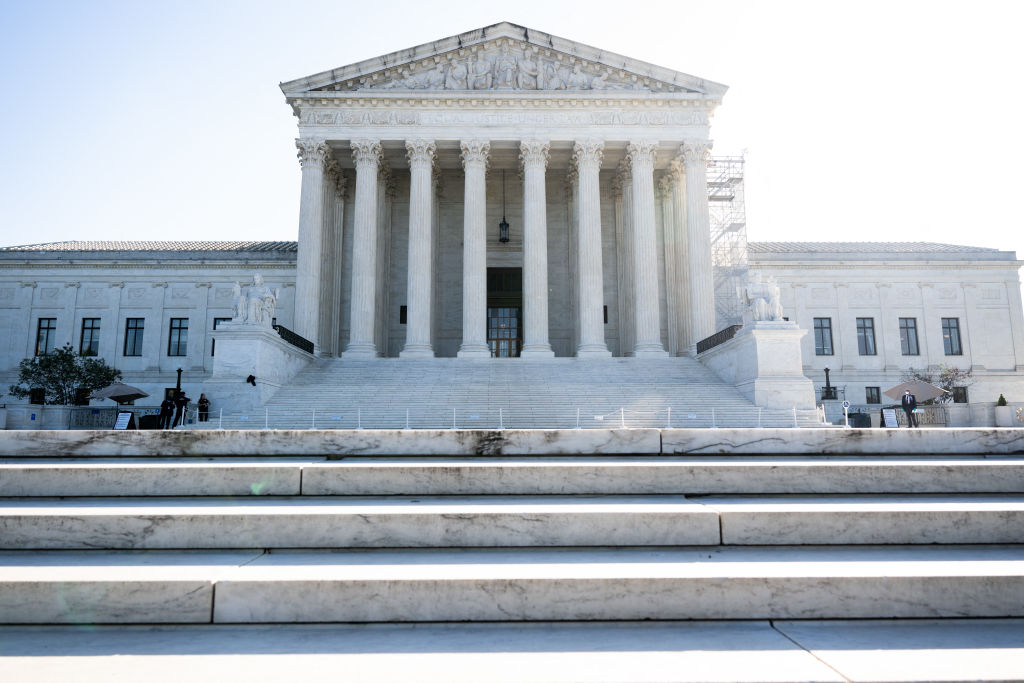
The Supreme Court on Monday morning signaled that it was likely to strike down a federal law that restricts the president’s ability to fire members of the Federal Trade Commission. During nearly two and a half hours of arguments in the case of Trump v. Slaughter, a solid majority of the justices appeared to agree with the Trump administration that a law prohibiting the president from firing FTC commissioners except in cases of “inefficiency, neglect of duty, or malfeasance in office” violates the constitutional separation of powers between the three branches of government. And although several justices expressed skepticism about a 90-year-old case, Humphrey’s Executor v. United States, upholding that law, it was less clear that there was a majority ready to overrule it.
A decision in favor of the Trump administration would significantly increase the president’s power over not only the FTC but roughly two dozen other multi-member agencies that Congress intended to be independent. President Donald Trump has also fired members of the National Labor Relations Board, the Merit Systems Protection Board, and the Consumer Product Safety Commission. The Supreme Court has already allowed those firings to take effect in proceedings on its interim docket, but the court’s ruling in the case of FTC commissioner Rebecca Slaughter will provide a more definitive ruling on the legality of those firings.
The FTC has five commissioners, who are appointed by the president and confirmed by the Senate to serve seven-year terms. Under the laws governing the FTC, no more than three of the commissioners can come from a single political party, and, as noted above, commissioners can only be removed from office for “inefficiency, neglect of duty, or malfeasance in office.”
During his first term in office, Trump nominated Slaughter to fill one of the Democratic seats on the FTC. Then-President Joe Biden in 2023 tapped Slaughter to serve a second term, which was slated to end in 2029.
In March, Trump sent Slaughter an email firing her. He did not cite any reason for her removal other than that allowing her to remain on the FTC would be “inconsistent with [the] Administration’s priorities.”
Slaughter went to federal court in Washington, D.C., to challenge the legality of her firing. A federal judge ordered the Trump administration to reinstate her, and a divided panel of the U.S. Court of Appeals for the District of Columbia Circuit turned down the government’s bid to pause that ruling while it appealed.
Judges Patricia Millett and Nina Pillard relied on the Supreme Court’s 1935 ruling in Humphrey’s Executor v. United States, in which the justices upheld the FTC’s removal statute against a challenge by the Roosevelt administration. Only the Supreme Court, they wrote, could overturn that case.
The Trump administration came to the Supreme Court in September, asking the justices to put the lower court’s order on hold while it appeals. A few weeks later, the court granted that request, effectively giving Trump the green light to fire Slaughter, and agreed to hear arguments in the dispute.
Representing the Trump administration, U.S. Solicitor General D. John Sauer told the court on Monday that Humphrey’s Executor was an “indefensible outlier” and a “decaying husk” that must be overruled. The Supreme Court’s cases in recent years, he said, have “repudiated its foundations.”
By contrast, Amit Agarwal, representing Rebecca Slaughter, stated that the “duty to execute the law does not give” the president “the power to violate the law with impunity.” If the Trump administration is correct that the removal statute at the center of the case violates the separation of powers, then “all three branches of government have been wrong from the start” of our country’s history, he contended.
Much of the argument focused on the possible broader effects of a ruling for either the Trump administration or Slaughter. The justices questioned whether a decision in Slaughter’s favor could give Congress sweeping power, including the authority to convert existing Cabinet departments into multi-member agencies that would be insulated from presidential control.
Agarwal agreed with Chief Justice John Roberts when Roberts asked whether Congress “could just take over” some Cabinet departments. He told Roberts that such a result is “probably within the realm of possibility,” although he emphasized that it would be “a pretty small universe” because so many Cabinet departments wield at least some executive power.
Justice Brett Kavanaugh, among others, was worried about such a scenario, telling Agarwal that it would allow Congress to create independent agencies without any requirement of partisan balance and with lengthy terms for the agency heads. This would give Congress the ability to create agencies to “thwart future presidents,” Kavanaugh remarked.
On the other side, some justices expressed concern that a ruling in favor of the Trump administration could affect not only other multi-member agencies like the MSPB and the NLRB but also other entities with similar removal statutes, such as the United States Tax Court and the United States Court of Claims. Agarwal told the justices that if Trump prevails, “everything would be on the chopping block.”
Justice Sonia Sotomayor echoed this sentiment, telling Sauer that he was “putting” those institutions “at risk.”
Justice Elena Kagan agreed, remarking to Sauer that if the justices were to adopt his theory, “it seems to include a great many things.”
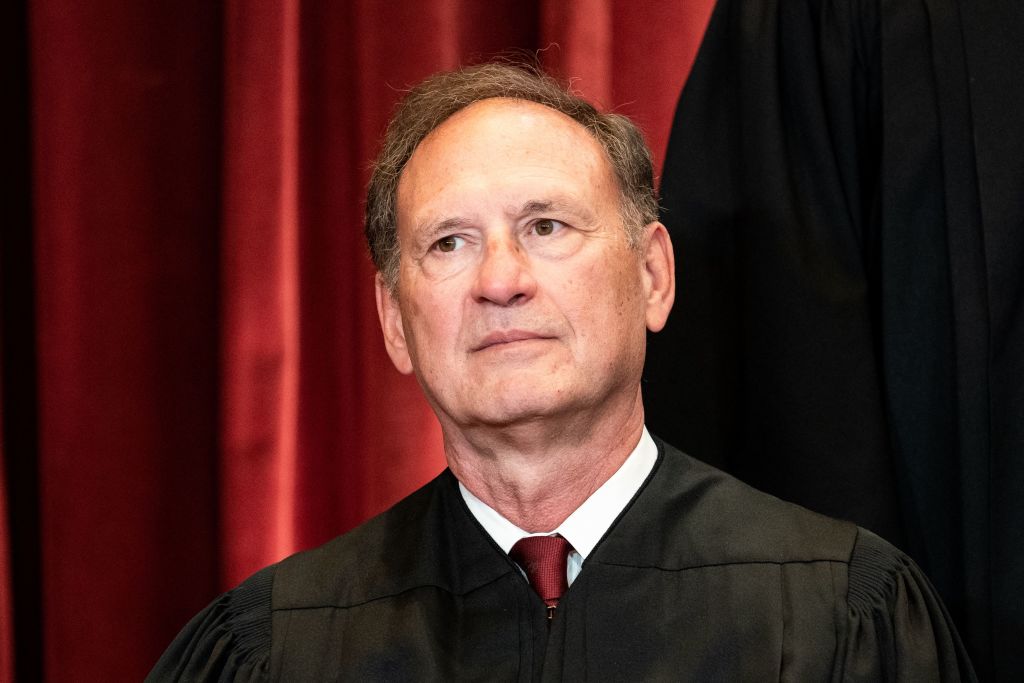
Justice Samuel Alito was more sympathetic. He asked Sauer whether the court could issue a narrower ruling for the Trump administration that did not address the constitutionality of removal provisions for institutions such as the Tax Court.
Sauer responded that it could. The Supreme Court has discouraged, he emphasized, “general pronouncements” on issues that were not before the justices.
Although there seemed to be a clear majority that was ready to rule that Trump has the power to fire FTC commissioners, it was less certain whether the justices were ready to take the additional step of overruling Humphrey’s Executor.
The Democratic appointees came out strongly against overruling that 90-year-old precedent. Sotomayor, for example, pressed Sauer to provide an example of another case in which the court had overruled a case as old as Humphrey’s Executor and, in so doing, “fundamentally altered the structure of government.”
But Justice Amy Coney Barrett told Sauer that “there’s been an eroding of Humphrey’s Executor” over the years, while Roberts suggested that the decision was merely a “dried husk.” And Justice Neil Gorsuch called the opinion “poorly reasoned” – one of the factors that the justices consider in determining whether to overrule a past precedent.
In what was likely a bad sign for Slaughter, the justices spent virtually no time on the second question presented in the case – whether, even if the FTC removal statute is constitutional, a federal judge can order the reinstatement of an official who was fired without case, or whether that official is only entitled to back pay. Kavanaugh expressed “real doubts” about the Trump administration’s theory that the official would only be entitled to back pay, telling Sauer that it would allow the government to circumvent the removal requirements. But, Kavanaugh observed, the court would not have to reach that question if it ruled for the Trump administration – which it seemed likely to do.
A decision in the case is expected by late June or early July.
Cases: Trump v. Wilcox, Trump v. Slaughter (Independent Agencies), Trump v. Boyle
Recommended Citation:
Amy Howe,
Court seems likely to side with Trump on president’s power to fire FTC commissioner,
SCOTUSblog (Dec. 8, 2025, 3:02 PM),
https://www.scotusblog.com/2025/12/court-seems-likely-to-side-with-trump-on-presidents-power-to-fire-ftc-commissioner/