Navigating the new tariff-driven reality
The 2026 Thomson Reuters Global Trade Report reveals that tariff volatility has fundamentally reshaped the trade landscape, with supply chain concerns doubling year-over-year as companies scramble to adapt to unprecedented regulatory complexity and cost pressures.
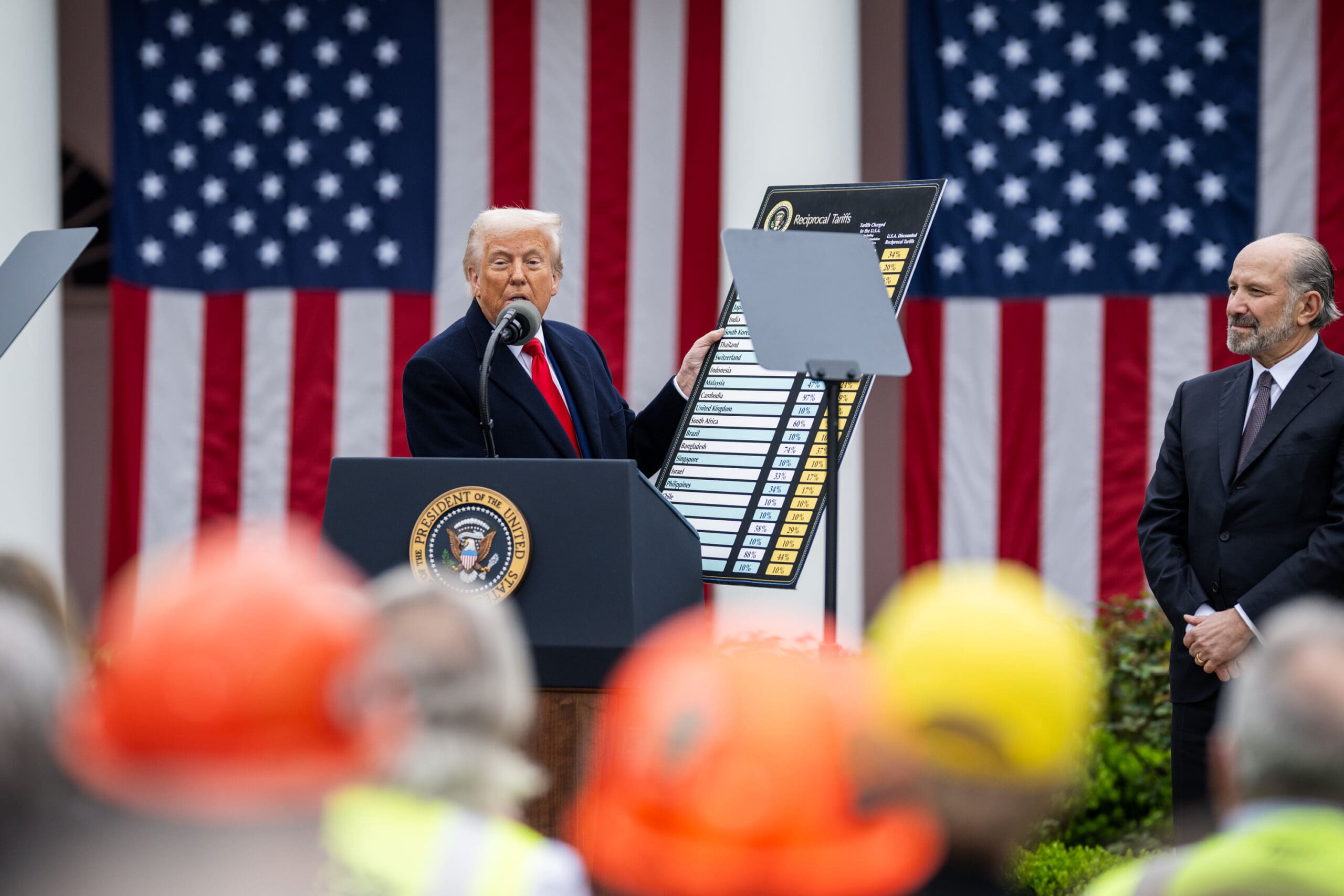
“Complexity” and “disruption” — those keywords now carry significantly more weight when describing global trade and supply chain management in 2026. But there’s a critical shift from previous years: the survey found that 72% of trade professionals identified U.S. tariff volatility as the most impactful regulatory change, a dramatic increase from just 41% the previous year.
The report, based on responses from 225 upper-level trade professionals across North America, the European Union, the United Kingdom, Latin America, and Asia Pacific, paints a picture of an industry in transformation. While challenges have intensified, many trade departments are experiencing unprecedented elevation within their organizations, shifting from cost centers to strategic business partners.
Jump to ↓
Supply chain disruption takes center stage
Supply chain management has emerged as the dominant strategic priority, cited by 68% of trade professionals — nearly double the 35% who identified it as a top concern just one year ago. This isn’t merely about day-to-day logistics anymore. Instead, companies are treating supply chain issues — from supplier reliability to customs delays — as enterprise risk. Instead, companies are treating supply chain issues — from supplier reliability to customs delays — as enterprise risk.
“Supply chain reliability is back on the radar in a big way,” noted one survey respondent, reflecting how concerns have shifted from inventory optimization toward prioritizing systemic resilience.
The root cause? Tariffs have created cascading effects across operations. Respondents overwhelmingly report cost increases concentrated in imported raw materials and components, creating compression effects on manufacturing margins and export competitiveness. But the implications extend far beyond cost.
“Product costs are increasing, and we are faced with either raising prices at the risk of lower sales or absorbing reduced profits,” one trade professional explained. In fact, 39% of respondents now report their organizations are either absorbing or considering absorbing tariff costs rather than passing them to customers — up from just 13% the previous year.
Navigating supply chain challenges in a world shaped by tariffs
More than three-quarters (76%) of trade professionals believe the new tariffs imposed by the U.S. represent a permanent approach to trade that will persist for at least the next four years, rather than a short-term negotiating tool. This perspective has fundamentally altered how companies approach strategic planning.
The cascading effects include not just costs, but also regulatory compliance burdens, quality concerns, and supply chain reconfiguration. Companies report increased documentation requirements, deeper scrutiny of tariff classification and country-of-origin claims, and more frequent inspections.
“Project schedules are [being] impacted by the complexity and delays in regulatory compliance and customs clearance,” one respondent noted, highlighting how tariffs have tightened execution windows and placed greater premium on trade accuracy and defensibility.
Meanwhile, “Tariffs make it difficult to maintain product quality when using alternate suppliers,” another professional explained, underscoring the difficult tradeoffs companies face when forced to switch suppliers based on tariff considerations rather than quality criteria.
Responses to tariffs are reshaping global supply chain operations
The response from forward-thinking companies dealing with supply chain issues has been comprehensive. The most common tariff mitigation strategy involves changing sourcing patterns (cited by 65% of respondents), followed by renegotiating supplier contracts (57%), and nearshoring or moving manufacturing back to the U.S. (51%).
“Changes in tariffs cause uncertainty in shipping and procurement, which raises logistical costs and makes maintaining agreements with exporters more difficult,” one trade professional described.
These aren’t minor adjustments — they represent fundamental restructuring of supply chains and production footprints. “The financial burden caused by tariffs led us to reorganize our supply chain and production footprint in order to reduce tariff exposure and preserve profitability,” a respondent noted. and production footprints. “The financial burden caused by tariffs led us to reorganize our supply chain and production footprint in order to reduce tariff exposure and preserve profitability,” a respondent noted.
The silver lining: Trade’s strategic advancement
Amid the turbulence, a remarkable shift is occurring: 43% of trade professionals report experiencing enhanced influence over procurement decisions, while 37% note more frequent involvement in executive decision-making.
This strategic elevation is being backed by resources. Survey respondents report increased budget allocations for hiring (43%), technology solutions (38%), and training and development (34%). Looking ahead, even higher percentages expect greater influence over procurement decisions (61%), recognition as strategic business partners (56%), and visibility within their organizations (55%) over the next 12 months.
“Trade functions within organizations are increasingly being positioned as more than simply administrators of transactional filings,” observed Andrew Moxon, Senior Product Marketing Manager at Thomson Reuters. “Trade departments are now interpreting crucial regulatory structures and policies, as well as strategically anticipating new shifts and challenges.”
Technology transformation accelerates for businesses
Perhaps most striking is the dramatic acceleration in technology exploration and adoption: 40% of respondents report their companies are now exploring emerging technologies such as AI or blockchain, compared to just 6% in 2024 — a nearly sevenfold increase.
Trade and supply chain data analytics has become the most widely used technology (58%), followed by automation for enterprise resource planning (56%), supply chain management (55%), and supply chain visibility (54%).
“I’m always floored by the trade professionals who say, ‘I still use spreadsheets,’ or ‘I have to download data from one system and then analyze it, and then upload it to another system,’” Marianne Rowden, CEO and Director at E-Merchants Trade Council (EMTC), said. “AI can pull that data together efficiently and turn it into actionable information.”
However, significant opportunities remain. Current low adoption for global trade management platforms (32%), tariff management tools (7%), and classification management systems (4%) suggests considerable room for using technology to increase efficiency.
The priorities for technology investment align with strategic challenges: better supply chain visibility tops the list, followed by supply chain security and data protection, predictive analytics, transaction compliance, and insights into tariff changes and their impacts.
Skill and talent shortages persist in the supply chain industry
For years, companies have been dealing with skill gaps in managing global trade compliance. As the regulatory landscape continues to get more complex, the skills needed for ensuring compliance are more essential than ever — and are also evolving.
Addressing this requires increased education and awareness along with investment in automation and emerging technological solutions. Many companies are turning to service providers and consultants to bridge the gaps.
“We need to recognize that trade compliance is actually a profession,” Rowden said. “It’s a multidisciplinary profession, and we have a lot of liability.”
Cross-functional collaboration emerges across organizations
Nearly one-quarter of respondents (22%) report enhanced collaboration with other departments as a result of the current tariff environment, with Finance (50%), Operations (46%), IT (30%), and Procurement/Supply Chain (30%) as the most common partners.
These collaborations carry significant competitive implications. When trade teams work more closely with Finance, they can better model P&L impacts of different tariff scenarios. Collaboration with Operations and Procurement enables more agile adjustments when disruptions occur. Partnership with IT facilitates the technological transformation necessary for data-driven decision-making.
“We’re seeing trade risk councils and cross-functional working groups emerge organically in response to tariff pressures,” Moxon noted. More than half of trade professionals expect collaboration with other departments to continue growing over the next 12 months.
ESG and supply chain ethics
ESG remains a major focus for supply chains in 2026, particularly in international markets where regulatory expectations and consumer demands for ethical sourcing continue to intensify. Ethical supply chains ensure that companies are avoiding the reputational, financial, and operational risk that come with ESG noncompliance.
To comply with ESG objectives requires diversifying supply chains.
“Companies really need to assess their sourcing vis-a-vis their consumer markets because I think the knee-jerk reaction for many companies is to say, ‘Okay, we’ll just move out of China into Southeast Asia,’ but that is filling up with capacity,” Rowden said.
With more vendors comes more complexity and more data — and, therefore, the need for efficient data management systems. “With that is going to come the need for more management, more automation,” Moxon said.
What supply chain professionals should do now
The current environment demands both immediate tactical responses and longer-term strategic positioning:
Immediate actions:
Build scenario models for different tariff outcomes to anticipate supply chain issues before they hit customers
Establish comprehensive systems for real-time regulatory tracking and updates across your entire trade footprint
Maintain auditable decision logs to defend classification and valuation choices
Operationalize cross-functional collaboration with regular touchpoints and dedicated communication channels
Strategic initiatives:
Capitalize on newfound executive visibility by developing dashboards that translate trade actions into measurable business impacts
Prioritize technology investments in data analytics and AI-assisted classification to improve efficiency and enable nimbler decisions
Form an inter-departmental “trade risk council” with Finance, Operations, Procurement, Compliance, and IT to share updates and run disruption playbooks
View trade capabilities as a strategic differentiator — involvement in early-stage planning can identify new markets and streamline supply chains for competitive advantage
Managing supply chain challenges in 2026
The picture emerging is one of functional transformation. Trade departments are no longer merely an execution layer of the supply chain — they’re becoming a strategic layer of the enterprise overall.
Organizations that will thrive are those that recognize trade as a strategic function worthy of increased investment and focused executive attention, view technology as a force-multiplier for human expertise, and maintain focus on both operational excellence and strategic value creation.
The supply chain challenges of 2026 are significant, and the road ahead may appear uncertain. But these issues pale in comparison to the opportunities available to businesses that approach trade management with strategic vision, technological sophistication, and organizational courage.
To learn more about global trends and dive deeper into the data, download the Thomson Reuters 2026 Global Trade Report.