Key Takeaways
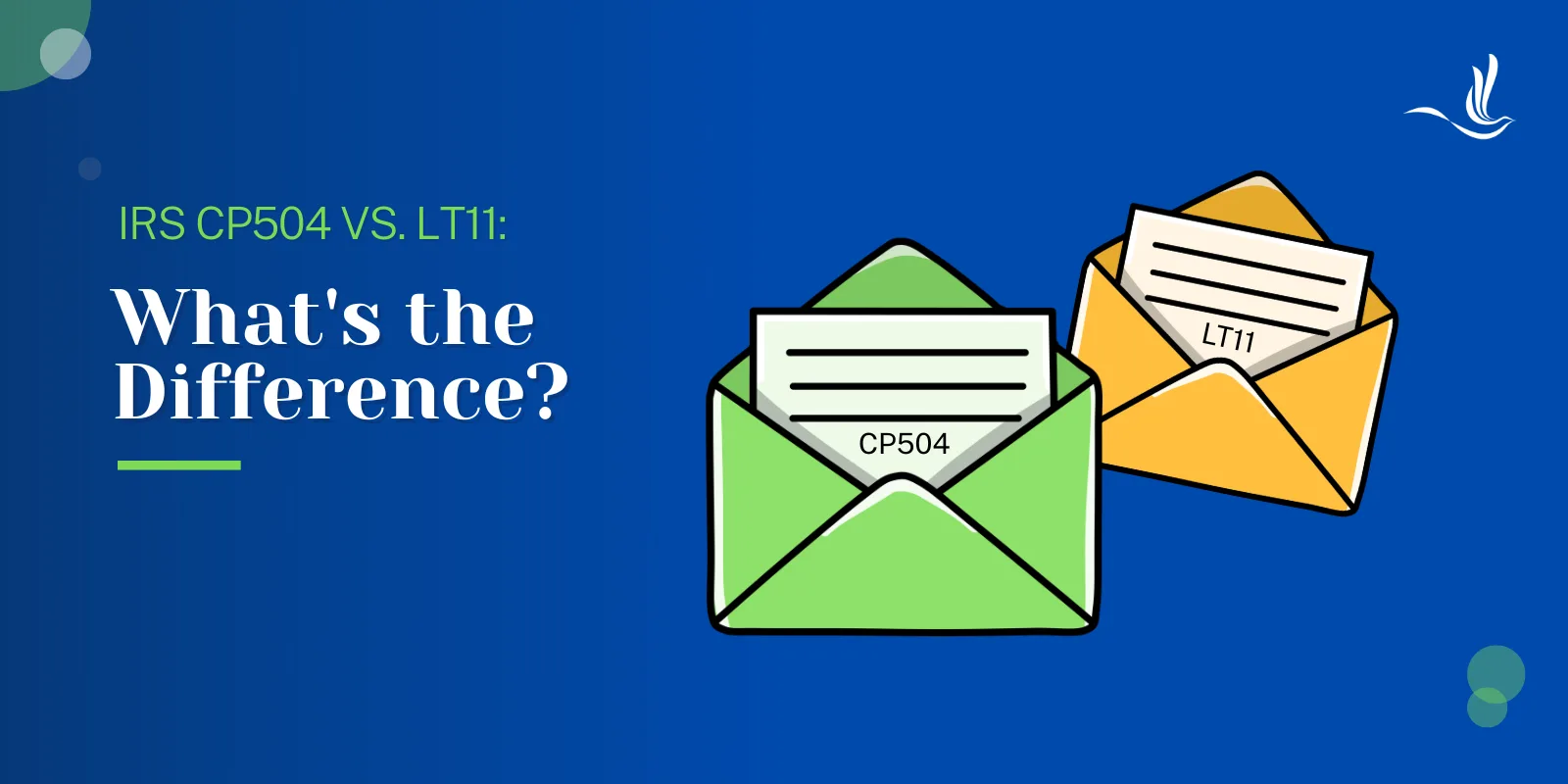
CP504 vs. LT11: A CP504 is a serious warning that the IRS intends to levy your state tax refund and may escalate collection efforts, while an LT11 is the Final Notice of Intent to Levy that gives you the legal right to request a Collection Due Process (CDP) hearing.
An LT11 is generally more serious than a CP504 because it is the final notice before the IRS can levy wages, bank accounts, and other qualifying assets if you do not respond within 30 days.
Receiving a CP504 does not usually mean the IRS will immediately garnish your wages or freeze your bank account. In most cases, the IRS must first issue a final levy notice, such as an LT11 or Letter 1058, before taking many levy actions.
Ignoring either notice can lead to increased penalties, interest, and IRS enforcement actions, including wage garnishments, bank levies, and loss of important appeal rights.
Taxpayers have several options to resolve their debt before a levy occurs, including paying in full, setting up an installment agreement, submitting an Offer in Compromise, requesting Currently Not Collectible (CNC) status, or requesting a CDP hearing after receiving an LT11.
Acting quickly after receiving a CP504 or LT11 gives you the best chance of protecting your rights and resolving your tax debt before the IRS moves forward with enforced collection.
Receiving a notice from the IRS can be stressful, especially when the letter mentions possible levy action or warns that the government may begin collecting unpaid taxes. Two notices that frequently cause confusion are the CP504 and LT11. While both relate to unpaid tax debt and potential IRS enforcement, they are not the same. Understanding the difference between CP504 vs. LT11 can help you determine how urgent your situation is, what rights you have, and what steps you should take next.
The IRS sends millions of collection notices each year as part of its standard process for collecting unpaid taxes. These notices become progressively more serious if a balance remains unpaid. Although both the CP504 and LT11 are late-stage collection notices, they serve different legal purposes. Most importantly, an LT11 gives taxpayers important appeal rights that are not included with a CP504.
This guide explains CP504 vs. LT11, where each notice fits within the IRS collection timeline, what each notice means, and how to respond before the IRS takes enforcement action.
Understanding the IRS Collection Notice Timeline
Before comparing CP504 vs. LT11, it helps to understand where each notice falls within the IRS collection process. While the exact sequence can vary depending on the taxpayer’s situation, the IRS generally follows a series of progressively more urgent notices before taking enforcement action.
Typical IRS Collection Sequence
The collection process usually begins with CP14, which notifies you that you have an unpaid tax balance. If the balance remains unresolved, the IRS may send CP501 as a reminder, followed by CP503, which serves as another request for payment. If you still do not respond, the IRS may issue CP504, notifying you that it intends to levy your state tax refund and warning that additional collection actions could follow.
If the tax debt continues to go unpaid, the IRS may then send an LT11 or Letter 1058, which serves as a Final Notice of Intent to Levy and explains your right to request a Collection Due Process (CDP) hearing. Both notices carry the same official title—Final Notice of Intent to Levy and Notice of Your Right to a Hearing—and have the same legal effect. The primary difference is how they are generated: an LT11 is generally issued through the IRS’s Automated Collection System (ACS), while Letter 1058 is typically issued by a revenue officer handling the case directly. If no action is taken after receiving either notice, the IRS may proceed with levying wages, bank accounts, or other qualifying assets.
Although many taxpayers receive notices in this order, the IRS is not required to send every notice in every case. Regardless of which notice you receive, it’s important to respond promptly before the situation escalates.
What Is an IRS CP504 Notice?
A CP504 is one of the final warning notices many taxpayers receive before the IRS intensifies its collection efforts. While it is a serious notice that should never be ignored, it is not the final legal notice required before the IRS can levy most types of property.
Why You Received a CP504
The IRS generally sends a CP504 because you still have an unpaid federal tax balance after receiving earlier collection notices. Even if you filed your tax return on time, failing to pay the amount due can eventually trigger this notice. As long as the balance remains unpaid, penalties and interest continue to accrue, causing the total amount owed to increase over time.
For many taxpayers, a CP504 arrives after several months of unsuccessful collection attempts. The IRS uses this notice to encourage taxpayers to resolve their debt before moving further into the collection process.
For example, imagine Sarah files her tax return and owes $9,800 but cannot afford to pay it. She receives several IRS reminders but sets them aside, hoping she’ll be able to deal with the balance later. After receiving no payment, the IRS mails her a CP504 warning that collection activity is becoming more serious. At this stage, Sarah still has options to resolve her debt, but waiting much longer could significantly limit those options.
What the CP504 Means
The CP504 is officially titled Notice of Intent to Levy. In it, the IRS states that it intends to levy your wages, bank accounts, or state tax refund if your balance remains unpaid. In practice, though, the state tax refund is generally the only asset the IRS can seize based on the CP504 alone. Before the IRS can levy your wages, bank accounts, or most other property, it typically must send you an additional notice — such as an LT11 or Letter 1058 — that gives you the right to a Collection Due Process hearing.
Many taxpayers mistakenly believe a CP504 means the IRS will immediately garnish their wages or freeze their bank account. In most situations, that is not the case. Instead, the notice signals that your account is moving closer to enforced collection. Before many wage and bank levies can occur, the IRS must generally provide an additional notice that includes important appeal rights.
Even though a CP504 does not typically authorize immediate wage or bank levies, it should still be treated as an urgent matter. Interest and failure-to-pay penalties continue to accumulate, and the IRS may continue preparing other collection actions, including filing or maintaining a federal tax lien and issuing additional levy notices.
What You Should Do After Receiving CP504
Receiving a CP504 does not necessarily mean enforcement action is inevitable. In many cases, taxpayers still have several options available to resolve their balance before the IRS moves forward with additional collection efforts.
If you receive this notice, you should:
Carefully review the balance owed and verify that it matches your tax records.
Pay the balance in full if you are financially able to do so.
Apply for an IRS installment agreement if you need additional time to pay.
Contact the IRS if you believe the notice was issued in error.
Explore other tax resolution options if paying the balance in full is not possible.
Consider working with a qualified tax professional before the situation becomes more complicated.
Taking action early often provides more flexibility than waiting until later collection notices arrive.
What Is an LT11 Notice?
Although a CP504 is an important warning notice, an LT11 represents a much more significant stage in the IRS collection process. The LT11 is formally titled the Final Notice of Intent to Levy and Notice of Your Right to a Hearing, making it one of the most important collection notices the IRS sends.
Why the IRS Sends LT11
An LT11 is generally issued after earlier attempts to collect a tax debt have been unsuccessful. By this point, the IRS has determined that previous notices have not resulted in payment or another acceptable resolution.
Receiving an LT11 means the IRS is preparing to begin enforced collection if the debt remains unresolved. However, the notice also serves another important purpose—it provides taxpayers with certain legal rights before many levy actions can begin.
Unlike earlier notices, an LT11 is not simply another payment reminder. It is the IRS’s final notification that collection action may soon follow unless you take immediate steps to resolve the balance.
What LT11 Means
The LT11 notifies taxpayers that the IRS intends to levy certain assets if the outstanding tax debt is not resolved within the required timeframe. Depending on the circumstances, those assets may include wages, bank accounts, Social Security benefits, business receivables, retirement income in certain situations, and other qualifying property.
Perhaps the most important feature of an LT11 is the response deadline. Taxpayers generally have 30 days from the date of the notice to request a Collection Due Process hearing. Failing to respond within this period may allow the IRS to begin many types of levy actions without providing another opportunity for a formal appeal.
Because of its legal significance, an LT11 should always be treated as one of the highest-priority IRS notices.
Collection Due Process (CDP) Rights
One of the biggest differences in CP504 vs. LT11 involves taxpayer appeal rights. Unlike a CP504, an LT11 provides the opportunity to request a Collection Due Process (CDP) hearing with the IRS Independent Office of Appeals.
A timely requested CDP hearing allows taxpayers to discuss possible alternatives before many levy actions begin. During the hearing, taxpayers may be able to:
Request an installment agreement.
Submit an Offer in Compromise.
Raise other collection alternatives.
In certain situations, challenge the underlying tax liability.
Perhaps most importantly, requesting a CDP hearing within the required deadline generally suspends levy action while the appeal is pending. This additional protection is one of the primary reasons why an LT11 carries much greater legal significance than a CP504.
RS CP504 vs. LT11: Key Differences
Although both notices relate to unpaid taxes and possible levy action, they serve different purposes within the IRS collection process. Understanding CP504 vs. LT11 can help you recognize how serious your situation has become and which rights are available to you at each stage.
The simplest way to think about these notices is that a CP504 warns you the IRS is moving closer to enforcement, while an LT11 represents the final legal notice before many levy actions can begin. The LT11 also provides important appeal rights that may temporarily stop collection efforts if exercised within the required timeframe.
Can the IRS Levy Your Bank Account After a CP504?
One of the most common questions taxpayers ask after receiving a CP504 is whether the IRS can immediately freeze their bank account or garnish their wages. The answer is generally no, although the notice should still be taken very seriously.
What CP504 Does—and Doesn’t—Authorize
The CP504 specifically warns that the IRS intends to levy your state tax refund if your balance remains unpaid. It also notifies you that additional collection action could follow if the debt is not resolved.
However, before the IRS can levy most bank accounts or wages, it generally must issue a Final Notice of Intent to Levy that includes Collection Due Process rights, such as an LT11 or Letter 1058. This additional notice provides taxpayers with an opportunity to request a hearing before many levy actions begin.
For example, imagine John owes several years of back taxes. After ignoring multiple IRS notices, he receives a CP504 but decides not to respond because he assumes nothing will happen immediately. A few weeks later, he receives an LT11 giving him 30 days to request a Collection Due Process hearing. If John ignores that notice as well, the IRS may proceed with levying his bank account or wages once the response period expires.
This distinction is one of the most important aspects of understanding CP504 vs. LT11. Although a CP504 signals that your situation is becoming more serious, taxpayers generally still have another opportunity to protect important appeal rights before many levy actions begin.
What Happens If You Ignore Either Notice?
Ignoring IRS notices rarely makes tax problems disappear. Instead, the IRS collection process generally continues moving forward, and the available options for resolving your tax debt may become more limited over time.
Consequences of Ignoring CP504
Ignoring a CP504 often leads to additional collection activity rather than making the problem go away. Interest and penalties continue to increase the amount you owe, while the IRS continues preparing for more aggressive enforcement measures. If the balance remains unresolved, you may eventually receive an LT11, bringing you one step closer to wage garnishments, bank levies, or other collection actions.
Although receiving a CP504 is serious, taxpayers still have time to work with the IRS, establish a payment arrangement, or explore other tax relief options before the collection process reaches its final stages.
Consequences of Ignoring LT11
Ignoring an LT11 carries much greater risk because it allows the IRS to move closer to enforced collection after the response deadline expires. Once your opportunity to request a timely Collection Due Process hearing passes, the IRS may proceed with levying wages, bank accounts, certain federal payments, business assets, and other qualifying property if your balance remains unresolved.
Perhaps just as important, failing to respond means losing valuable appeal rights that could have delayed collection activity while your case was reviewed. For that reason, taxpayers who receive an LT11 should act as quickly as possible rather than waiting to see what happens.
Options to Resolve Your Tax Debt Before a Levy
Receiving either a CP504 or LT11 does not necessarily mean a levy is unavoidable. The IRS offers several programs that may help taxpayers resolve their outstanding balance depending on their financial circumstances. Taking action early generally provides the greatest number of available options.
Pay the Balance in Full
Paying your tax debt in full is the fastest way to stop the collection process. Once your balance has been satisfied, the IRS generally ends collection activity related to that debt, and additional failure-to-pay penalties stop accruing. While this option is not realistic for everyone, it can prevent further notices and enforcement actions.
Installment Agreement
If paying your balance all at once is not financially possible, an IRS installment agreement may allow you to pay your tax debt over time through affordable monthly payments. Many taxpayers qualify for payment plans, and remaining current on the agreement can generally prevent additional levy action while the plan remains in good standing.
An installment agreement can also provide peace of mind by replacing uncertainty with a structured repayment schedule that fits your financial situation.
Offer in Compromise
An Offer in Compromise (OIC) allows certain taxpayers to settle their tax debt for less than the full amount owed when paying the entire balance would create a significant financial burden. The IRS reviews factors such as your income, assets, necessary living expenses, and overall ability to pay before approving an offer.
While not everyone qualifies, an Offer in Compromise can provide meaningful relief for taxpayers who meet the IRS’s strict eligibility requirements.
Currently Not Collectible (CNC) Status
Taxpayers experiencing significant financial hardship may qualify for Currently Not Collectible (CNC) status. If approved, the IRS temporarily suspends active collection efforts because paying the tax debt would prevent the taxpayer from meeting necessary living expenses.
Although penalties and interest generally continue to accrue while an account is in CNC status, this option can provide valuable financial breathing room until the taxpayer’s circumstances improve.
Requesting a Collection Due Process Hearing
If you receive an LT11, requesting a Collection Due Process hearing within the required 30-day period may preserve your appeal rights and generally delays many levy actions while the IRS Independent Office of Appeals reviews your case.
During the hearing, you may be able to propose a payment plan, submit an Offer in Compromise, request Currently Not Collectible status, or discuss other collection alternatives based on your financial circumstances.
Working With a Tax Professional
IRS collection notices can become increasingly difficult to navigate as the process progresses. An experienced tax professional can review your notices, evaluate your eligibility for various relief programs, communicate directly with the IRS on your behalf, and help you develop a strategy for resolving your tax debt before enforcement actions occur.
For many taxpayers, seeking professional guidance after receiving a CP504 or LT11 can help avoid costly mistakes and improve the likelihood of reaching a manageable resolution.
Companies That Help With IRS Notice CP504
Receiving a CP504 notice can be overwhelming, especially if you’ve received multiple IRS letters or already face a larger tax balance or an LT11 notice. While some taxpayers resolve their issues directly with the IRS, others benefit from working with a tax resolution company that can help explain options and handle communication with the IRS. Getting help early may also prevent the situation from escalating and reduce the risk of more serious collection actions.
How Optima Tax Relief Can Help with IRS Notices
If you’ve received a CP504 or LT11 notice, taking prompt action can make a meaningful difference in the outcome of your case. Optima Tax Relief has helped taxpayers resolve IRS collection issues by evaluating their financial circumstances and identifying the most appropriate resolution strategy based on IRS guidelines. Every situation is unique, which is why the first step is understanding the nature of the tax debt, reviewing the notices received, and determining which relief options may be available.
Depending on your eligibility, Optima Tax Relief may help pursue solutions such as an IRS installment agreement, Offer in Compromise, Currently Not Collectible status, penalty relief, or other collection alternatives. The team also works directly with the IRS on behalf of clients, helping them respond to collection notices, navigate the resolution process, and work toward becoming compliant with their tax obligations before enforcement actions become more severe.
Frequently Asked Questions
What notice comes after CP504?
For many taxpayers, the next significant IRS collection notice is an LT11, also known as Letter 1058, which serves as the Final Notice of Intent to Levy and Notice of Your Right to a Hearing. However, the IRS collection process can vary depending on your circumstances, so not every taxpayer receives notices in the exact same order. If you receive a CP504, it is best to resolve the balance or contact the IRS before your account progresses to the next stage of collection.
What is an IRS LT11 notice?
An IRS LT11 notice is the Final Notice of Intent to Levy and Notice of Your Right to a Hearing. It informs taxpayers that the IRS intends to levy certain assets—such as wages or bank accounts—if the tax debt remains unpaid. Unlike a CP504, an LT11 also gives taxpayers 30 days to request a Collection Due Process (CDP) hearing, which may temporarily stop levy action while the IRS Independent Office of Appeals reviews the case.
What companies help with IRS notice CP504?
Optima Tax Relief is one of the companies that helps taxpayers who have received an IRS CP504 notice by reviewing their tax situation and explaining available resolution options. Their team works directly with the IRS to pursue solutions such as installment agreements, Offers in Compromise, penalty relief, or Currently Not Collectible status when eligible. By handling communication with the IRS and guiding the process, Optima Tax Relief helps clients move toward resolving their tax debt and avoiding further collection actions.
Tax Help for People Who Owe
Understanding CP504 vs. LT11 can help you make informed decisions when facing IRS collection notices. Both indicate unpaid taxes and escalating collection efforts, but they occur at different stages and carry different implications. A CP504 is a warning that the IRS intends to levy your state tax refund and may take further action if the balance remains unresolved. An LT11 is the Final Notice of Intent to Levy and provides Collection Due Process rights, allowing you to challenge or resolve the action before most levies begin.
The key takeaway is that neither notice should be ignored. Acting quickly after a CP504 may help you resolve your tax debt before a final levy notice is issued. If you’ve received an LT11, responding within 30 days is critical to preserve your appeal rights and explore resolution options. Whether you pay in full, set up a payment plan, pursue an Offer in Compromise, or work with a tax professional, addressing the issue early can help you avoid more serious collection actions and resolve your tax debt. Optima Tax Relief is the nation’s leading tax resolution firm with over $3 billion in resolved tax liabilities.
If You Need Tax Help, Contact Us Today for a Free Consultation.