A half dozen years ago, planner Joe Ottaviano began thinking about the succession plan at Knoxville, Tennessee-based APC Financial Planning. The second-generation owner of the registered investment advisory firm had a medical emergency, and Ottaviano became president and CEO of the company founded by planning pioneer P. Kemp Fain Jr. 50 years earlier.
Processing Content
After he “decided then and there that I needed to be thinking about a succession plan” and followed up by doing “a lot of homework” through research, practice management consultations and hiring M&A advisory firm Hue Capital Partners, Ottaviano completed one of the most important steps in the process last month. Rockford, Illinois-based Savant Wealth Management acquired APC, which had nearly $500 million in client assets, for an undisclosed sum.
Savant Wealth Management
As new member-owners of Savant, Ottaviano and planner Adam Kornegay and their six other team members can now watch the succession plan come to fruition under a new structure with more scale and resources at a new parent firm of 47 offices and $38 billion in client assets.
“I had spent a lot of time journaling what was important for our clients, for our team, what were the things I would call dealbreakers,” said Ottaviano, citing firm culture and values as the most important nonnegotiables. “When we went to the marketplace, it made it honestly pretty easy once I met with the various suitors to determine who was the best fit.”
In other words, Ottaviano has navigated one of the most basic yet widespread problems across the industry leading to a bad succession plan — not having one. Succession plans entail many more aspects than one for continuity in the event of unforeseen emergencies, and they pose a long-term challenge in an industry in which client relationships are the most valuable assets. The founders and top executives of RIAs and other advisory practices must decide between selling to an external buyer or carrying out internal transitions to a new generation.
Build a career path for potential successors
For a profession that is facing looming mass retirements and a possible shortage of financial advisors in the future, succession questions vex wealth management firms of any size and tenures. That’s why firms that aim to keep their succession within their teams must plan out a concrete career course that enables them to build a client base and reach the ownership level someday, said Joseph Femia, a managing partner with Poughkeepsie, New York-based Ameriprise advisory practice Seven Bridges Wealth Advisors.
A 12-year industry veteran, Femia was promoted to his current role alongside fellow managing partners Andrew Buscetto, Max DiSesa and David Mazzetti this month after joining the firm in 2022. Seven Bridges uses a mix of mentorship, guided 12-month handovers of other advisors’ client bases and compensation incentives to encourage in-house succession.
“The mistakes that a lot of firms make is, the partners see themselves as the partners and they see everyone else as revenue generators, not future partners,” Femia said. “I think the big frustration with [second-generation] advisors is not having clarity. Designing and creating a clear pathway to partnership, allowing them to hit goals step-by-step — it allows the younger advisors to make decisions for themselves on whether to stick with the firm or not.”
READ MORE: Planning for internal RIA succession? Experts say it takes a decade
Take your time
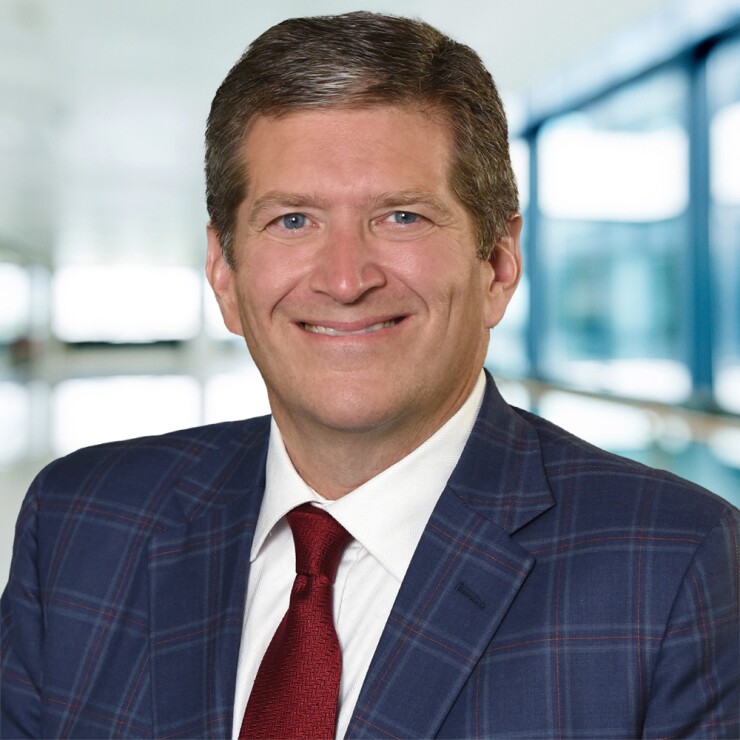
Even going the shorter route of an external deal demands a lot of time and energy, according to Brent Brodeski, founder of Savant, which is the No. 5 firm on Financial Planning’s RIA Leaders ranking of the largest fee-only RIAs. Founders who plan to sell must avoid the understandable urges to get a deal done quickly with the highest bidders, Brodeski said.
Arizent
“If it’s only about a price tag, then expect a buyer who’s going to fire all your employees, because that’s how they make their money,” he said, comparing finding the right fit in a buyer to the need for understanding the inventory of elements beneath the label of an item at a grocery store or a restaurant. “You need to be deliberate. … Diligence is to truly understand the ingredients in the jar, because that’s going to make the difference about whether it tastes good or not.”
Define your goals and speak to professionals
For Ottaviano, that diligence begins with his advice to potential sellers to “just start journaling” about “who you are and why you’re doing it” with a lot of thoughts about their most important dealbreakers in any M&A transaction. His habitual journaling with “a nice cup of coffee early in the morning” made his talks with Savant that much easier down the line by identifying the most significant elements for his team and clients and places where they were open to compromise, he said. But he also credited professionals like certified public accountants, investment bankers and legal counsel with smoothing the way.
“Vet carefully — you only get one crack at it, so surround yourself with professionals who are aligned with your goals,” Ottaviano said. “Thats your team of professionals, and you really need to make sure that they’re compatible and that they know exactly what you want to accomplish.”
READ MORE: The RIA founder’s dilemma: Choose your successor or sell
Delegate and compensate
Those pursuing internal succession must take even more time cultivating staff development and promotions that could be in the works for a decade or more. With the right structure, though, sometimes that timeline can move a little more quickly.
When Femia came to Seven Bridges in 2022, he said he was managing about $5 million in client assets. Now he has roughly $140 million. On the one hand, he praised the team backing him in ways that gave him more time to work directly with clients and prospects.
“They promised me that they would partner with me to make sure that I came in and only focused on business development. They had an ironed-out process that allowed me to come in and work with existing team members that could help me with paperwork and premeeting and postmeeting follow up,” Femia said. “I don’t want to wear 10 hats. Many advisors in this industry think that wearing 10 hats makes them look smarter. What it actually does is it dilutes their value proposition.”

Seven Bridges Wealth Advisors
At the same time, he pointed out the role of compensation that does not restrict less-tenured advisors pay to a finite salary and potential bonus while providing them with opportunities for unit appreciation rights to shares in the firm.
“It allows them to feel that they are truly a part of the growth of Seven Bridges,” Femia said. “They have a financial incentive for the success of the firm.”
READ MORE: Yeske Buie’s succession plan: Q&A with the ‘C3Os’ taking over in 2026
Be ready for an emotional, laborious journey that doesn’t end with a deal
The price tag and other compensatory factors affect external M&A deals, as well. Since valuations have gotten “very frothy,” sellers should know going into the process that “you actually need to grow faster postclose than preclose,” Brodeski said.
Messages like that may prove difficult to hear for advisors who have already built their customer bases and businesses up over the preceding decades, he noted, describing the succession planning and M&A process as “exhausting” and “like a full-time job on top of your full-time job.” But that will pay off, if the firm can avoid the typical pitfalls of succession planning.
“It’s emotional and it’s a lot of work, but it’s important to do that work to make sure that you get that fit, that you get that right alignment,” he said. “It’s going through, iterating, to really find the right fit, the right alignment, the right shared vision.”