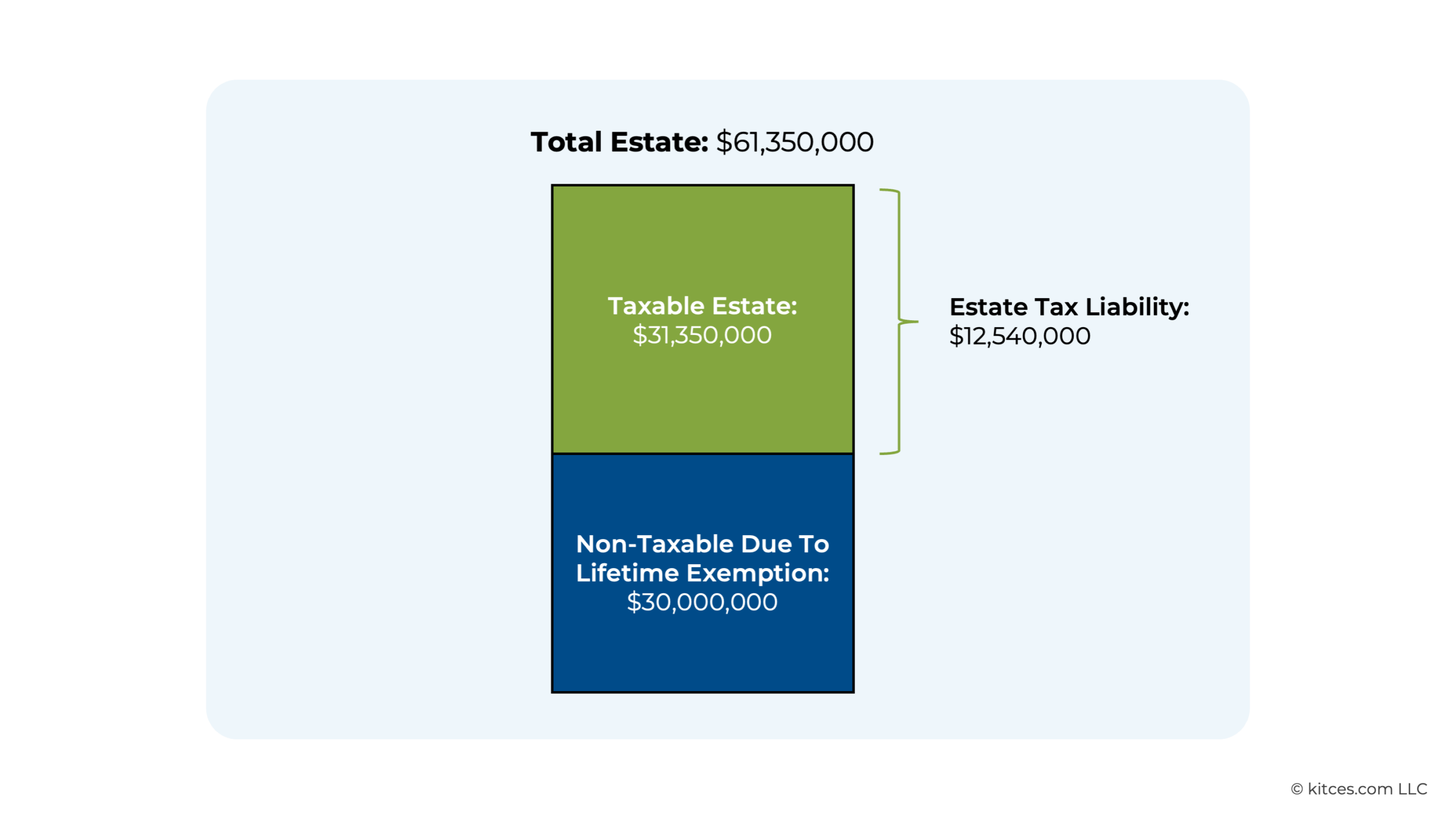
Business ownership can be an all-encompassing endeavor, from the time spent working on – and in – the business to the significant portion of an owner’s net worth that the business may represent. And entrepreneurs whose businesses grow substantially over time can end up with an asset worth many millions of dollars, creating a potential ‘problem’ of exceeding the estate tax exemption amount. Which, in turn, can lead some of these individuals to ask their financial advisors for ideas on how to reduce or eliminate their potential estate tax exposure.
In this guest post, Anna Pfaehler, CFP, AEP, a Partner and Wealth Advisor at Constellation Wealth Advisors, explores one powerful tool to reduce the size of a business owner’s estate: gifting shares in the business, whether directly to individuals or to a trust that removes those shares from the owner’s estate. Notably, this strategy can be especially effective when shares are gifted before a dramatic increase in the value of the business or before the business is sold at a premium, as the gift and estate tax exemption applies to the value of the shares at the time of the gift. Which means that future appreciation in the value of the shares occurs outside of their estate.
Another way to increase the value of gifting shares in a business is to apply valuation discounts, which can reduce the dollar value of gifts and use up less of the business owner’s remaining gift and estate tax exemption. Such discounts can be applied for lack of control (as an arm’s-length investor would likely pay less for shares of a company for which they have no say in decision-making) and lack of marketability (as an investor might pay less for shares in a company that is relatively illiquid). Importantly, though, given close IRS scrutiny of valuation discounts, having a professional valuation of the business can help avoid challenges to the transaction and ensure that the gifted shares are valued appropriately.
Despite the potential benefits of executing a gifting strategy, some business-owner clients might be reluctant to go through with it, perhaps because they don’t want to give up control of or upside in the business, even though the strategy can potentially be structured to keep control of voting shares in the hands of the owner. Some business owners might also assume they don’t need to engage in such a strategy because their business is currently worth well below the estate tax exemption amount. In those cases, an advisor could note that future appreciation in the business could push the owner past the exemption level and that gifting when the business value is lower may use less of the exemption.
Ultimately, the key point is that because businesses have the potential for significant appreciation over time, they can create unexpected estate tax exposure for their owners. This gives financial advisors an opportunity to potentially help business-owner clients save millions of dollars in estate taxes by working with clients and related professionals, such as estate attorneys and valuation professionals, to create a gifting plan that aligns with the client’s financial needs and legacy goals!
Read More…