Few financial advisors today set out to work in wealth management. Many will say they simply “fell into” the industry, one that long operated as a Wild West of titles and credentials, blurring the line between fiduciary planners, commissioned stockbrokers and insurance salespeople.
Processing Content
That era is beginning to fade. Today, a more structured, academic and “human-centric” generation is taking shape within the halls of universities and colleges across the United States. From undergraduate minors and certificate programs to pioneering doctoral research, financial planning education is reinforcing the industry’s shift away from commission-driven models and building a framework for a more fiduciary-focused profession.
Academic faculty are developing programs within their schools and building partnerships beyond them in an effort to formalize what has long been a patchwork of titles and certifications.
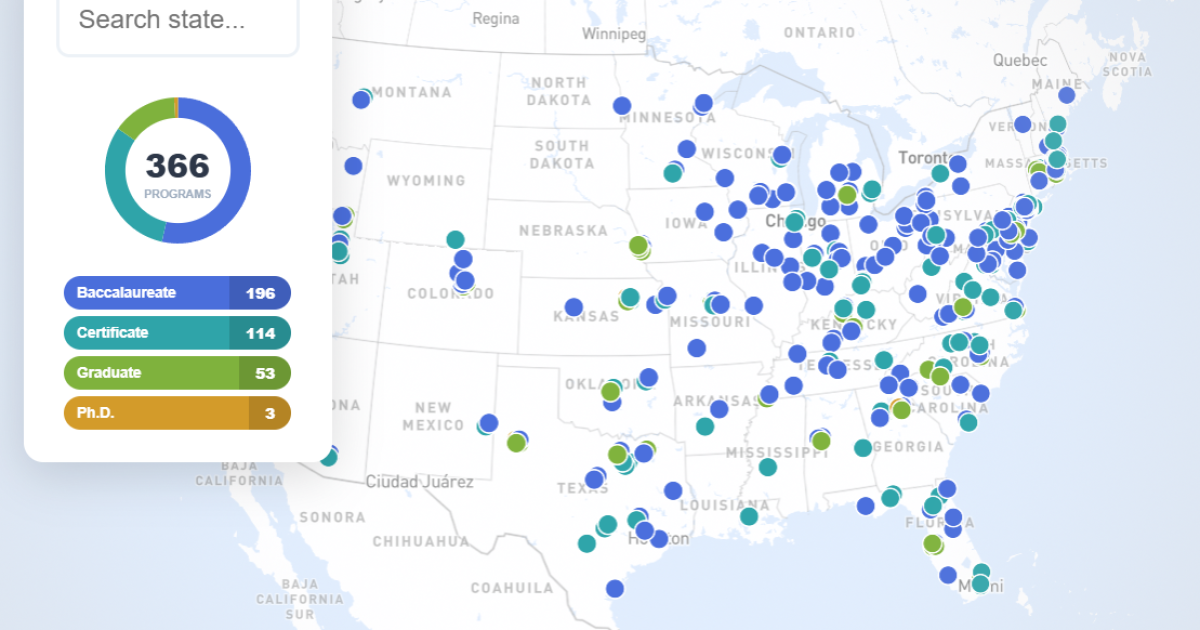
At the center of that effort is the CFP Board. Already a cornerstone of the profession with more than 100,000 certified financial planners, the organization is now shaping the next generation through more than 360 CFP Board-registered programs at colleges and universities nationwide. Since 2020, CFP Board-registered programs have grown 16% across certificate, undergraduate and graduate programs.
“[The] CFP Board understands the importance of education in the advancement and growth of the financial planning profession,” said Johel Brown-Grant, the board’s director of education. “The goal of the partnership with academic programs is to expand opportunities for access to educational resources, support the efforts of academic institutions to prepare students for the CFP exam, strengthen the pipeline from the classroom to firms and promote research that will expand and grow the field.”
Faculty say those efforts are already paying off. As the profession establishes clearer standards for what it means to be a financial advisor, the industry’s rougher, sales-first image is starting to fade.
READ MORE: Edward Jones fed client data to LinkedIn, Google for ads, lawsuits say
The death of the ‘sales-first’ stigma
For many students entering the field today, the “Wolf of Wall Street” archetype is not an inspiration — it’s a deterrent.
“I have had students going, like, ‘Yeah, if this was all sales, I would never have done this, because that’s just not me,'” said Stephen Schiestel, director of the financial planning and wealth management minor and master’s programs at Michigan State University.
Schiestel, who joined MSU after more than 15 years as an advisor and portfolio manager, said that the university’s programs have exploded from a handful of students to over 150 undergraduate and master’s students in just a few years.
That shift in student motivation is a recurring theme across the country. Linda Lepe, program director of the financial planning major at the University of Wisconsin-Madison, said that the modern student is looking to make an impact rather than just make a paycheck.
“I went to college in the ’80s, and it was more like, ‘Greed is good. Get your skill set and get out [there],'” Lepe said. “I just think there’s a little more awareness of impact with some of the younger people.”
“And I think that’s maybe one of the reasons why this profession, or at least our enrollment, has blossomed recently,” she added. “This is a profession where you can make a good income, but then you can also help people.”
READ MORE: Bill would shield restored Social Security benefits from tax
CFP Board curriculum shaping the next generation
While universities award the degrees and certificates, the CFP Board effectively shapes what students learn.
To become a board-registered program, a university must submit an application to the CFP Board, including “course and faculty details, principal knowledge topic coverage, course syllabi and self‐evaluation.” The CFP Board has 70 knowledge topics in total, covering ethics, economic concepts and more.
Once registered, programs enter a three-year cycle, reporting enrollment and diversity data in the first two years before undergoing a full review in year three. Schools must also log every student who completes the coursework through the Board’s education verification system, which determines eligibility to sit for the CFP exam. Most programs, with the exception of doctoral programs, also require a financial plan development capstone course.
The CFP Board periodically updates its knowledge topics based on practice analysis studies conducted every five years. Its 2021 review led to the addition of “psychology of financial planning” as a new core domain in 2022, prompting schools to update their curricula to match the revised standards.
Within that framework, academic faculty say they still maintain flexibility in course design.
“The CFP Board gives a lot of freedom about how you design [the program],” Schiestel said. “It’s kind of like they lay the requirements out and then it’s up to the programs to design how they want them to look.”
Swarn Chatterjee, who oversees the University of Georgia’s financial planning doctoral program, said the CFP Board has regularly consulted faculty nationwide, including during the development of its standards for behavioral finance knowledge.
“They reached out to faculty from around the country and said, ‘We are incorporating this, but to build that body of knowledge, maybe we need a textbook that academic programs can follow.'” Chatterjee said. “So they reached out to a colleague at Kansas State … Sonya Lutter, and then Dave Yeske at Golden Gate University, and I, and we wrote that book. And so they’ve been good about collaborating with us.”
With the CFP Board poised to conduct another practice analysis study in 2026, Brown-Grant said, “the input of financial planning educators will be vital to any decisions affecting the education requirement for the CFP certification.”
READ MORE: What the SCOTUS Trump tariff decision means for portfolios
From spreadsheets to psychology
Like the broader industry, these programs are moving beyond fiscal optimization to focus more on the complexities of human behavior.
At the University of Kentucky, Director Will Gerken said many of the students enrolled in its certificate program are traditional finance majors looking to add a “human” layer to their technical skills.
“Students of this generation are more interested in work-life balance. They’re more interested in careers that they perceive as helping people,” Gerken said. “And I think financial planning has a lot of both aspects there.”
It’s a similar story at other programs across the country.
The undergraduate program at the University of Wisconsin-Madison, which has amassed nearly 500 actively enrolled students, emphasizes a “human-centric approach” to financial planning, according to Program Director Linda Lepe.
“It’s not just, ‘Can you throw some numbers in a spreadsheet and do projections to see if they can retire?’ It gets deeper … into the faultiness of the human brain. … Logic isn’t always what people act upon,” Lepe said. “And I think that attracts students.”
Solving the succession crisis
For current firm owners, these programs represent a key solution to the industry’s looming talent shortage. But for the faculty running them, bridging the gap between academia and industry can present challenges.
At the University of Kentucky, Gerken said the certificate program works closely with Fidelity, but building connections with smaller, local RIAs is more challenging.
“In Lexington, where UK is located, there are 120 RIAs,” he said. “How do we get the students in front of these small RIAs?”
One approach the school has taken is what Gerken refers to as “micro internships.” Instead of arranging season-long commitments, Gerken helps connect students with local firms where they can go and shadow an advisor for a day or a week to see what the “look and feel” of a small firm is like.
At Michigan State, Schiestel said he doubles as the de facto career services office for financial planning students. “The firms know to come to me because I have the students,” he said.
For that pipeline to work, however, Schiestel said the effort needs to go both ways.
“I kind of steer from the standpoint that the profession is asking me … to provide the education to the young talent to find a gateway into the profession,” he said. “Then I turn around and go, ‘The industry better be here with jobs.’ I make these pronouncements like, ‘Guys, this is the greatest profession. You’re helping people make life-changing decisions, and these people want you,’ and then I’m like, ‘Okay, they better come through now.'”
The Ph.D. factor
Perhaps the most significant sign of the profession’s formalization is the growth of doctoral programs. At the University of Georgia, one of just a handful of schools offering a Ph.D. in financial planning, doctoral students are central to that push.
“We wanted trained experts who could train undergraduate students and other graduates to go out there and be ambassadors for the field,” Chatterjee said. “And so with that in mind, we started the doctoral program with those three goals in mind — to be trained educators in the field, to lead the research in the area and to serve the community with their financial planning needs.”
Most graduates go on to teach at other universities, but entering a profession still in its formative stages comes with unique hurdles. While many schools have established departments in finance, accounting or economics, financial planning departments are often new or exist only as programs. In preparation for that, UGA trains its doctoral students to not only teach but also to launch new programs, handle CFP Board registration and manage the practical aspects of running a department.
For Chatterjee, the goal is to move beyond the “organic growth” of the industry’s past into a more formal system, similar in structure to the legal practice or accounting.
“It’s a natural evolution that is happening,” he said. “But I think there are more opportunities for graduates from the doctoral programs to shape that future for the industry, for the profession.”
READ MORE: Nearly 3 in 4 advisors say their firms invest in career development
A developing profession
While the CFP Board and academic faculty help shape these programs, students themselves may also play a significant role in influencing the future of the industry.
Faculty across programs say that many students show greater interest in steady fee-based models than in the commission-heavy roles that defined much of the profession in past decades.
At UWM, Lepe said the RIA channel appeals to most students, though not universally.
“We have a lot of alums that have gone that route, and those alums help open doors for us,” Lepe said. “But we do have students that go into the broker-dealer world, or go into a hybrid model, where they work for someone who can provide a fee side and then maybe the commission side.”
Lepe suggested that such preferences among young talent have accelerated changes to the industry’s once commission-heavy makeup.
“The broker-dealer world has become much more hybrid. It was starting that way in the ’90s when I started in the industry, but now it’s changed up quite a bit,” she said. “So if I had to say what industry segment a lot of our students go toward, it’s probably RIA, followed by those broker-dealers that have done a good job of pivoting away from the traditional broker-dealer model and providing more breadth of offerings.”
Schiestel said MSU students share a similar preference, one based on the idea that they can make a good living while helping people as a financial advisor. And for all the talk of a talent shortage, Schiestel said that the growing number of students gravitating toward the profession because of that idea gives him hope.
“The profession is in great hands,” Schiestel said. “We’ve got some rock stars coming down the pipe.”