No Result
View All Result
SUBMIT YOUR ARTICLES
  • Login
Sunday, April 26, 2026
TheAdviserMagazine.com
  • Home
  • Financial Planning
    • Financial Planning
    • Personal Finance
  • Market Research
    • Business
    • Investing
    • Money
    • Economy
    • Markets
    • Stocks
    • Trading
  • 401k Plans
  • College
  • IRS & Taxes
  • Estate Plans
  • Social Security
  • Medicare
  • Legal
  • Home
  • Financial Planning
    • Financial Planning
    • Personal Finance
  • Market Research
    • Business
    • Investing
    • Money
    • Economy
    • Markets
    • Stocks
    • Trading
  • 401k Plans
  • College
  • IRS & Taxes
  • Estate Plans
  • Social Security
  • Medicare
  • Legal
No Result
View All Result
TheAdviserMagazine.com
No Result
View All Result
Home College

How Trump is deploying multiple agencies to set education policy

by TheAdviserMagazine
10 months ago
in College
Reading Time: 7 mins read
A A
How Trump is deploying multiple agencies to set education policy
Share on FacebookShare on TwitterShare on LInkedIn


Listen to the article
7 min

This audio is auto-generated. Please let us know if you have feedback.

The Trump administration is tapping agencies other than the U.S. Department of Education to implement its agenda in colleges and K-12 schools, sometimes circumventing typical rulemaking procedures that would allow districts months to give feedback on and prepare for policy changes before they roll out. 

The use of other agencies to set or enforce education policy marks a significant shift from typical K-12 policymaking, some education policy experts say. 

“This is a paradigm shift on the part of how the federal government articulates and connects some of these tools to their education priorities,” said Kenneth Wong, a professor of education policy at Brown University. “So I think going forward, we might be seeing broader use of this wider range of policy tools in the area of education policy changes.” 

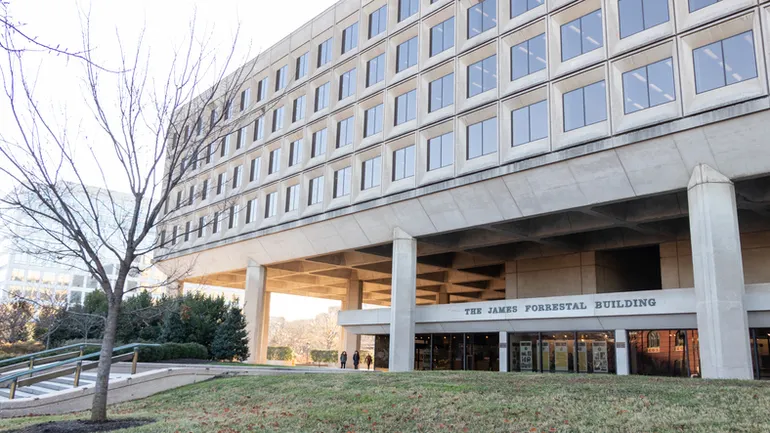
This month, for example, a policy change from the U.S. Department of Energy could take effect that would undo some students’ protections related to sex discrimination under Title IX, disability discrimination under Section 504 and racial discrimination under Title VI. 

The changes would only apply to colleges receiving Energy Department funds, as opposed to public institutions nationwide — which would have been the case had the rules come from the Education Department. The Energy Department provides over $2.5 billion in research funding to more than 300 colleges annually. The agency also distributed just over $160 million to 28 schools in fiscal year 2025, according to department spokesperson Ben Dietderich.

As a result of the quietly proposed policy changes, colleges receiving Energy Department grants would no longer, among other things:

Be required to facilitate noncontact sports team tryouts for women if there is no equivalent women’s team. For example, if a college had a men’s baseball team but no women’s softball team, women would no longer be guaranteed the opportunity to try out for a spot on the men’s baseball team.
Be permitted to proactively “overcome the effects of conditions that resulted in limited participation therein by persons of a particular sex.” This would remove protections that allow schools to have gender-conscious after-school or college programs to provide women and girls opportunities they have historically been denied, such as in STEM fields and technical training, according to Shiwali Patel, senior director of Safe and Inclusive Schools at National Women’s Law Center and a Title IX attorney.  
Be required to prevent systemic racial discrimination that may result from seemingly neutral policies, as a result of the department rescinding guardrails protecting against policies that cause a “disparate impact” on underserved students. Disparate impact investigations have previously addressed issues such as Black students being disciplined at higher rates than students of other races.  

The agency issued the policy changes through a process called direct final rulemaking, which allows it to issue a rule without going through the rulemaking process twice to incorporate changes based on public feedback and publish a final version. The expedited process is usually used for noncontroversial changes and when an agency does not expect significant pushback.

The rules are to take effect July 15 as long as no “significant adverse comments” were received by June 16. Dietderich did not respond as to whether the agency received significant adverse comments.

However, a review of some publicly available comments show that the direct final rules — posted May 16 — have been controversial, with multiple civil rights organizations explicitly telling the Energy Department they are submitting “significant, adverse” comments for its review.

Other agencies launch civil rights investigations and enforcement

The Energy Department situation isn’t the first time the Trump administration has deployed agencies other than the Education Department to set or enforce education policy. In fact, the administration has used the departments of Justice, Agriculture, and Health and Human Services over the past few months to investigate sex and race discrimination at schools and enforce compliance. 

The administration notably used these agencies in an unprecedented investigation into the Maine Department of Education, spurred by a public disagreement between President Donald Trump and Maine Gov. Janet Mills, a Democrat, over the state’s athletic policy allowing transgender athletes on women’s and girls’ sports teams. 

That dispute kicked off a string of Title IX investigations by several federal agencies that provide funds to Maine. 

They included a four-day probe launched by HHS. And because HHS rather than the Education Department conducted the probe, it didn’t have to follow the standards spelled out in the Education Department’s Office for Civil Rights case processing manual. That manual ensures the Education Department conducts investigations according to certain timelines, for example, allowing up to 90 calendar days for negotiations to take place and 10 days for schools or states to sign onto a resolution agreement. 

In addition, the U.S. Department of Agriculture froze funds to some of the state’s schools over the Maine Department of Education’s alleged Title IX violations. 

“USDA, alongside other federal agencies, will continue to pause and, where appropriate, terminate categories of education programming in Maine if these Title IX violations are not resolved to the satisfaction of the Federal Government,” said an April 2 letter from Agriculture Secretary Brooke Rollins to Mills. 

A court order eventually overturned the USDA funding freeze as part of an agreement struck in May between Maine and the USDA. 

These Title IX enforcement actions through HHS, USDA and the Education Department culminated in the Trump administration referring the cases to the Department of Justice, which announced a civil lawsuit against Maine over Title IX compliance in April. 

Since then, the administration has used these agencies to initiate and enforce other investigations into schools and states — including over antisemitism under Title VI — in states like California and Minnesota. 

Sonja Trainor, executive director of the National School Attorneys Association, acknowledged that federal agencies have been setting and enforcing education policy outside of formal legal channels for many years. 

But “what’s different now is the speed with which policy priorities are materializing into funding terminations and direct enforcement,” Trainor said in an email. “Of particular concern, of course, is funding and the prospect of being sued from many possible angles when policy shifts quickly.”

Wong said the Energy Department policy changes potentially taking effect could serve as a test case, as the Maine case did for civil rights investigations. 

That means if the Energy Department’s changes went uncontested by districts concerning significant adverse effects, and thus go through in about 60 days as is usual for direct final rules, other agencies will also try setting education policy this way, Wong said. 

“Basically every single school, in practically every single school district, has some grants from one of the many agencies in the federal government,” said Wong. 

So while the immediate impact of the Energy Department changes would be limited to those that receive its funding, ultimately many more schools could be affected. 

Policies related to diversity, equity and inclusion and Title IX are particularly susceptible here, said Wong. “I think there’s a whole bunch of standards that the current secretary of education is redefining, and so these other agencies are likely to provide a vehicle to kind of challenge the practice in the local school systems.”


Source link

Tags: AgenciesdeployingeducationMultiplePolicysetTrump
ShareTweetShare
Previous Post

15 Restaurant Chains That Are Popping up All Over the Place

Next Post

Federal retirements hit new highs as advisors brace for more

Related Posts

edit post
Anna Maria College in Massachusetts to close

Anna Maria College in Massachusetts to close

by TheAdviserMagazine
April 24, 2026
0

Listen to the article 3 min This audio is auto-generated. Please let us know if you have feedback. Dive Brief:...

edit post
New Zealand hits study destination target a decade early

New Zealand hits study destination target a decade early

by TheAdviserMagazine
April 24, 2026
0

The Global Brand Health and Awareness Survey found that 22% of prospective international students now place New Zealand among their...

edit post
Mediation Is a Calling That Can Change the World

Mediation Is a Calling That Can Change the World

by TheAdviserMagazine
April 24, 2026
0

  by Daniel B. Griffith Jack_the_sparow/Shutterstock Do you have a personal vision for changing the world? Do you see the...

edit post
College to Career: How Faculty Can Help Students Translate Their Humanities Education – Faculty Focus

College to Career: How Faculty Can Help Students Translate Their Humanities Education – Faculty Focus

by TheAdviserMagazine
April 24, 2026
0

Challenges to the utility of Humanities education have become louder and more frequent. The declining number of Humanities majors and the increasing number of applied...

edit post
The Attention Gap: What Faculty and Students Can Do About Distraction

The Attention Gap: What Faculty and Students Can Do About Distraction

by TheAdviserMagazine
April 23, 2026
0

SeventyFour/Shutterstock This podcast episode continues a previous conversation with Dr. Michelle Miller, professor of psychological sciences at Northern Arizona University,...

edit post
IDP expands into Malaysia amid shifting student preferences

IDP expands into Malaysia amid shifting student preferences

by TheAdviserMagazine
April 23, 2026
0

IDP Education has announced that it will expand its study abroad portfolio to support students wishing to study in Malaysia,...

Next Post
edit post
Federal retirements hit new highs as advisors brace for more

Federal retirements hit new highs as advisors brace for more

edit post
5 of the Best Places to Retire in Alaska — and Why You Should Consider the State

5 of the Best Places to Retire in Alaska — and Why You Should Consider the State

  • Trending
  • Comments
  • Latest
edit post
Illinois’ Paid Leave for All Workers Act Takes Effect — Every Employee Now Gets Guaranteed Time Off

Illinois’ Paid Leave for All Workers Act Takes Effect — Every Employee Now Gets Guaranteed Time Off

March 27, 2026
edit post
Virginia Permits ADULT MIGRANT MEN To Attend High School

Virginia Permits ADULT MIGRANT MEN To Attend High School

March 30, 2026
edit post
A 58-year-old left NYC for Miami to save on taxes — then retired early thanks to hidden savings. Here’s the math

A 58-year-old left NYC for Miami to save on taxes — then retired early thanks to hidden savings. Here’s the math

March 30, 2026
edit post
Tax Flight Accelerates In Massachusetts

Tax Flight Accelerates In Massachusetts

April 6, 2026
edit post
Property Tax Relief & Income Tax Relief

Property Tax Relief & Income Tax Relief

April 1, 2026
edit post
The Stevia Loophole Why Some Sweetened Drinks are Still SNAP-Legal While Others are Banned in Texas

The Stevia Loophole Why Some Sweetened Drinks are Still SNAP-Legal While Others are Banned in Texas

April 4, 2026
edit post
‘He has the market in a chokehold’: Stocks swing as Trump posts

‘He has the market in a chokehold’: Stocks swing as Trump posts

0
edit post
Iran War: Israel Strikes Lebanon, Trump’s Negotiations Rug Pull

Iran War: Israel Strikes Lebanon, Trump’s Negotiations Rug Pull

0
edit post
1 in 3 Crypto Traders Cut Spending Amid Market Slump: Survey

1 in 3 Crypto Traders Cut Spending Amid Market Slump: Survey

0
edit post
Elon Musk says saving for retirement is irrelevant because AI will create a world of abundance

Elon Musk says saving for retirement is irrelevant because AI will create a world of abundance

0
edit post
Top Wall Street analysts pick these 3 stocks for reliable income

Top Wall Street analysts pick these 3 stocks for reliable income

0
edit post
How to file previous years taxes for free

How to file previous years taxes for free

0
edit post
Elon Musk says saving for retirement is irrelevant because AI will create a world of abundance

Elon Musk says saving for retirement is irrelevant because AI will create a world of abundance

April 26, 2026
edit post
12 Key Things Christians Should Think About Before Choosing Cremation

12 Key Things Christians Should Think About Before Choosing Cremation

April 26, 2026
edit post
The Nasdaq Is on Fire. Here Are the 2 Best Artificial Intelligence (AI) Growth Stocks That Still Look Cheap.

The Nasdaq Is on Fire. Here Are the 2 Best Artificial Intelligence (AI) Growth Stocks That Still Look Cheap.

April 26, 2026
edit post
Yair Lapid and Naftali Bennett merge parties

Yair Lapid and Naftali Bennett merge parties

April 26, 2026
edit post
It took me until 44 to realize that the most dangerous comfort is a life that’s bearable — not bad enough to leave, not good enough to feel like living

It took me until 44 to realize that the most dangerous comfort is a life that’s bearable — not bad enough to leave, not good enough to feel like living

April 26, 2026
edit post
1 in 3 Crypto Traders Cut Spending Amid Market Slump: Survey

1 in 3 Crypto Traders Cut Spending Amid Market Slump: Survey

April 26, 2026
The Adviser Magazine

The first and only national digital and print magazine that connects individuals, families, and businesses to Fee-Only financial advisers, accountants, attorneys and college guidance counselors.

CATEGORIES

  • 401k Plans
  • Business
  • College
  • Cryptocurrency
  • Economy
  • Estate Plans
  • Financial Planning
  • Investing
  • IRS & Taxes
  • Legal
  • Market Analysis
  • Markets
  • Medicare
  • Money
  • Personal Finance
  • Social Security
  • Startups
  • Stock Market
  • Trading

LATEST UPDATES

  • Elon Musk says saving for retirement is irrelevant because AI will create a world of abundance
  • 12 Key Things Christians Should Think About Before Choosing Cremation
  • The Nasdaq Is on Fire. Here Are the 2 Best Artificial Intelligence (AI) Growth Stocks That Still Look Cheap.
  • Our Great Privacy Policy
  • Terms of Use, Legal Notices & Disclosures
  • Contact us
  • About Us

© Copyright 2024 All Rights Reserved
See articles for original source and related links to external sites.

Welcome Back!

Login to your account below

Forgotten Password?

Retrieve your password

Please enter your username or email address to reset your password.

Log In
No Result
View All Result
  • Home
  • Financial Planning
    • Financial Planning
    • Personal Finance
  • Market Research
    • Business
    • Investing
    • Money
    • Economy
    • Markets
    • Stocks
    • Trading
  • 401k Plans
  • College
  • IRS & Taxes
  • Estate Plans
  • Social Security
  • Medicare
  • Legal

© Copyright 2024 All Rights Reserved
See articles for original source and related links to external sites.